
Greek Orthodox Icon of Saint Theodora
Estimated value
$1,200 - $1,800Rarity
Average(4/10)Type
Museum ObjectCategory
PaintingsBrand
Heutink IkonenEra
Early 20th CenturyOrigin
GreeceVisual assessment
Photo analysis
Save to revisit in your watchlist. This does not add the object to your own collection.
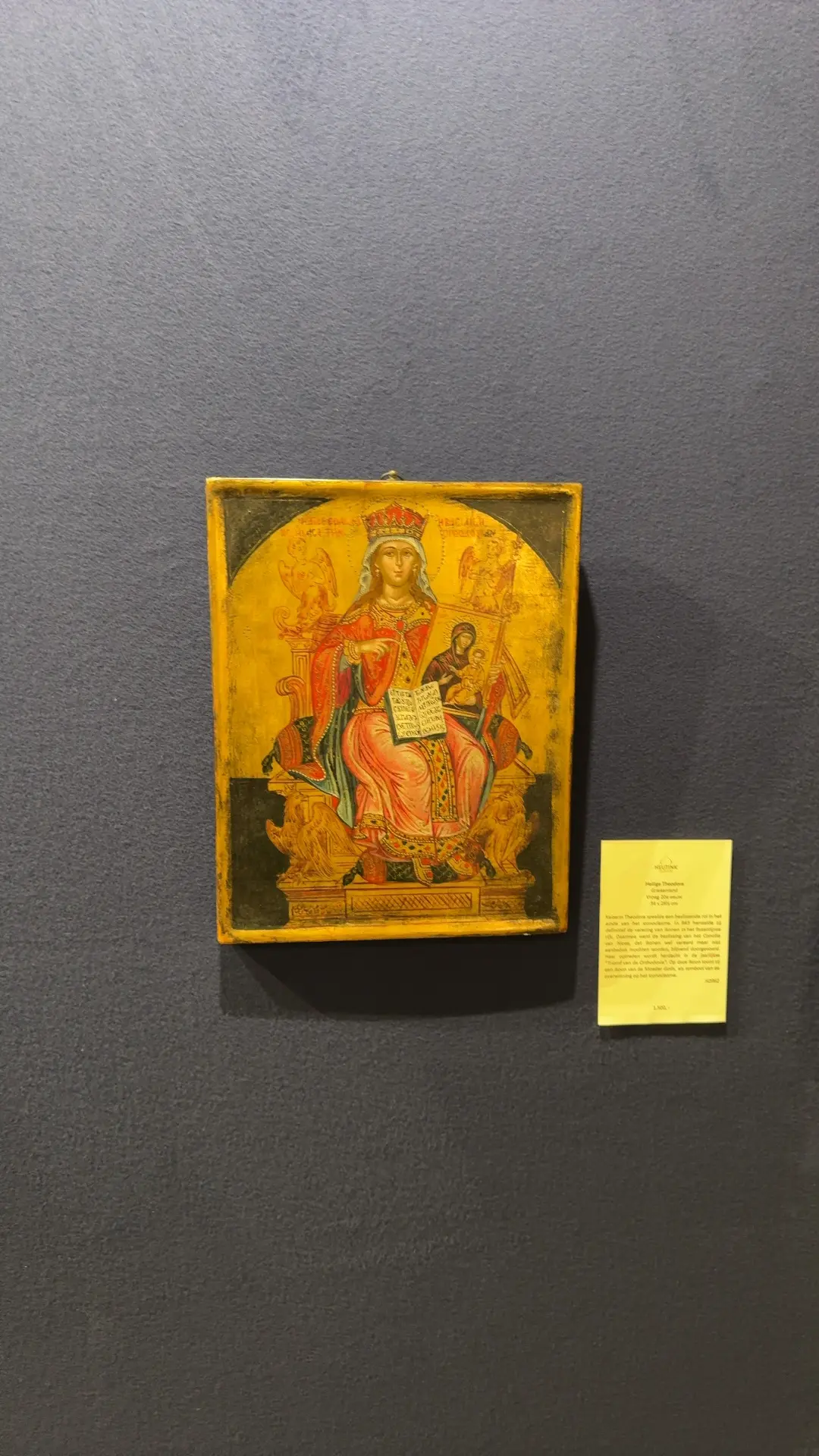
Greek Orthodox Icon of Saint Theodora
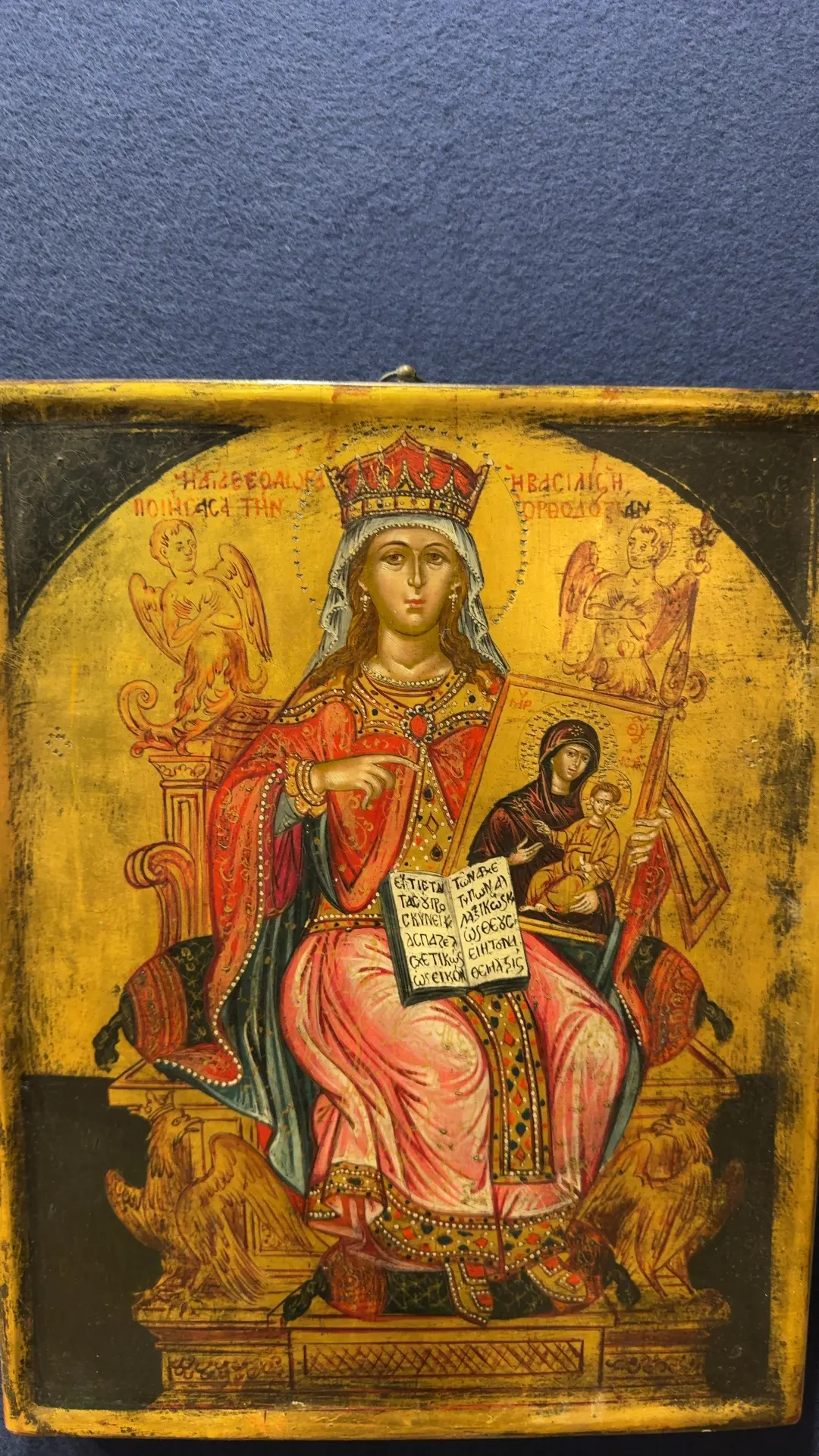
A Greek Orthodox icon painted in egg tempera and gold on a 34 x 26.5 cm gessoed wooden panel, depicting Empress Saint Theodora seated on a throne flanked by eagle armrests. The figure is shown holding an open text and a smaller icon of the Virgin Hodegetria (Mother of God). The composition is flanked by two small angels and contains Greek titulus inscriptions in the upper register identifying the subject.
Related traditions
Russian Orthodox
16th-20th Century
The 'Triumph of Orthodoxy' composition is also prevalent in Russian workshops, though typically featuring a larger assembly of saints rather than focusing solely on Empress Theodora.
Use and ceremony
Origins and context
This specific iconography commemorates the primary event of March 11, 843 AD, when Empress Theodora permanently restored the veneration of holy images in the Byzantine Empire, ending the Iconoclastic Controversy. The visual device of a saint holding an icon within an icon serves as a theological defense of image veneration, a theme central to Eastern Orthodox material culture since the Synod of Constantinople.
Further details
The inclusion of a smaller icon within the main composition—a meta-image—was a deliberate visual argument deployed by iconodules to assert that depicting the divine was orthodox doctrine.
The historical restoration of icons depicted here is still celebrated annually in the Eastern Orthodox Church on the first Sunday of Great Lent, known as the Sunday of Orthodoxy.
Attribution and evidence
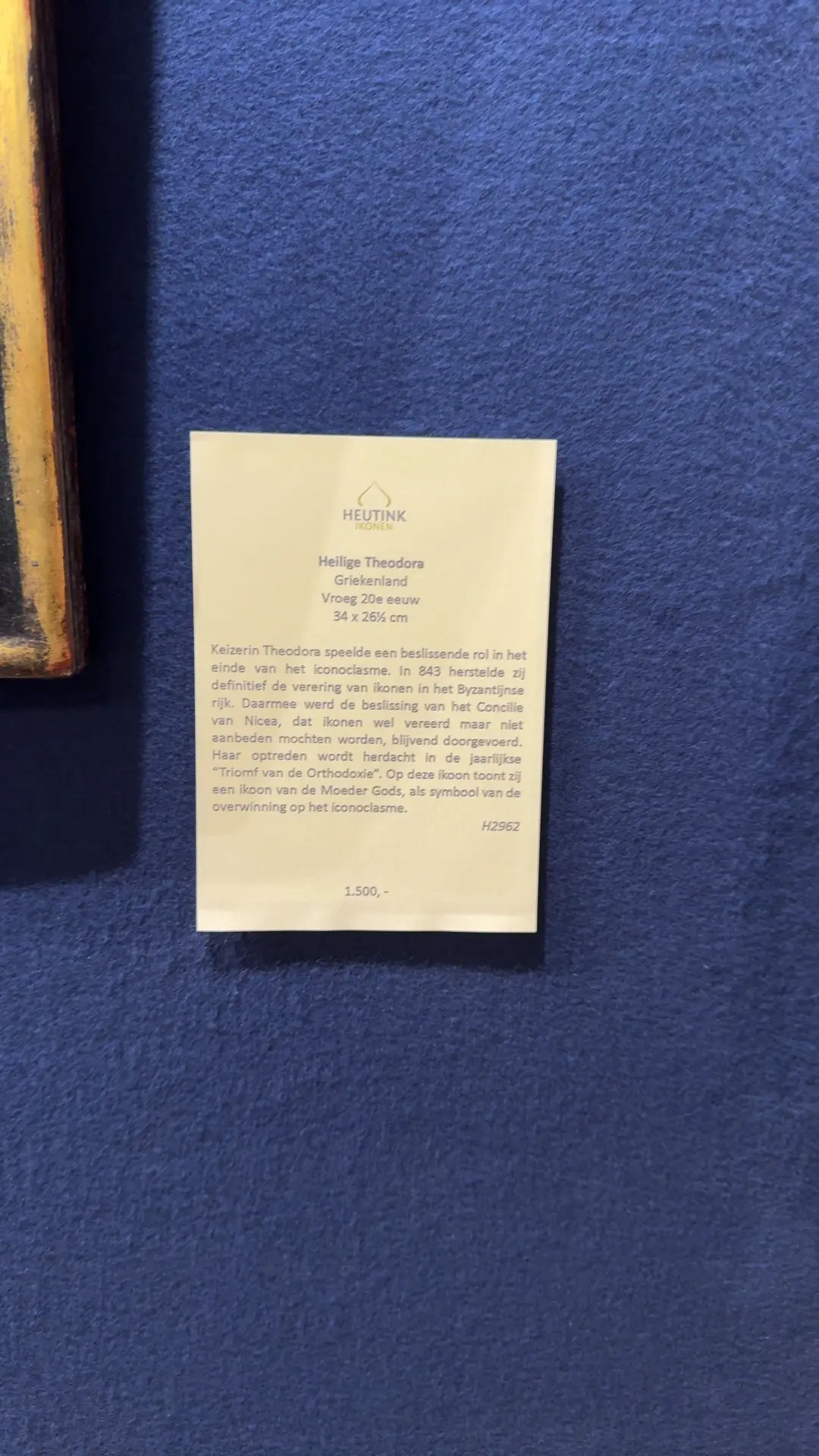
The presence of a professional gallery label providing exact dimensions, date, and subject matter, combined with high-resolution photographic evidence supporting that attribution, yields a very strong identification.
Identifying details
- 1Dealer label (Heutink Ikonen, inventory H2962) explicitly dates the piece to 'Vroeg 20e eeuw' (Early 20th century) and origins to Greece.
- 2Panel dimensions recorded exactly at 34 x 26.5 cm.
- 3Specific iconography of Empress Theodora holding the Hodegetria confirms the label's subject identification.
- 4Greek inscriptions confirm regional origin.
- 5Retail pricing anchor established by the visible €1,500 tag.
Photographs that would help
- Examination of the reverse of the panel to check for structural battens (sponki) and wood aging.
- Ultraviolet light inspection to determine the extent of modern inpainting or varnish replacement.
- X-ray fluorescence (XRF) testing of the gold ground to differentiate between gold leaf and brass-based metallic powders common in early 20th-century commercial workshops.
Terms in this record
- Gesso
- A traditional mixture of animal glue binder, chalk, and white pigment used to coat rigid surfaces such as wooden painting panels before applying paint.
- Bole
- A soft, typically red clay applied over gesso as a base layer for water gilding; it gives the gold a warmer tone and allows it to be burnished.
- Hodegetria
- An iconographic depiction of the Virgin Mary holding the Child Jesus at her side while pointing to him as the source of salvation for mankind.
- Iconodule
- A historical term for someone who supports or is in favor of religious images or icons and their veneration.
Wear and preservation
The painted surface appears structurally stable with no active flaking visible. There is minor edge wear to the gilded ground, specifically along the top and bottom margins, consistent with gallery preparation and framing.
Materials and construction
The surface exhibits a matte varnish over tempera pigments, with a flat, likely later-period bronze-powder or thin gold leaf ground that shows minor peripheral abrasion revealing the underlying red bole and white gesso ground.
Scarcity and surviving examples
Average · 4/10 estimated rarity
This is a qualitative collection score, not a measured survival count, market percentile or proof of authenticity.
What the photographs establish
Interpretation of the photographs and supplied context. This does not authenticate the object.
- Item possesses physical labeling from Heutink Ikonen, a known specialty dealer in the Netherlands.
- Craquelure and surface wear appear consistent with an early 20th-century dating.
Value and its basis
Estimate recorded: May 11, 2026
How we estimate value
Estimate context (not a documented sale): Early 20th-century Greek provincial icons of standard dimensions consistently realize between €800 and €1,500 at specialty auctions like Catawiki or through retail dealers across Europe.
Collectors and interest
Private collectors of Eastern Orthodox antiquities, theological institutions, and niche buyers focused on Byzantine history.
What supports the estimate
- •Retail province established by a recognized specialty dealer.
- •Highly legible Greek inscriptions.
- •Theological significance of the specific subject matter (defense of icons).
What could change it
- •The generally flat stylization points to a solid workshop rather than a master hand, capping its upper market ceiling.
- •Late dating (20th century) compared to highly sought-after 17th or 18th-century examples.
Comparing quality
- •Examples from Mount Athos or specific renowned mainland monasteries.
- •Use of highly burnished 24k gold leaf for the background rather than metallic paints.
The effect of condition
Integrity of the panel wood (lack of warp or rot), adhesion of the gesso ground, and preservation of facial details.
Market interest
For informational purposes only, not a formal appraisal.
Related objects
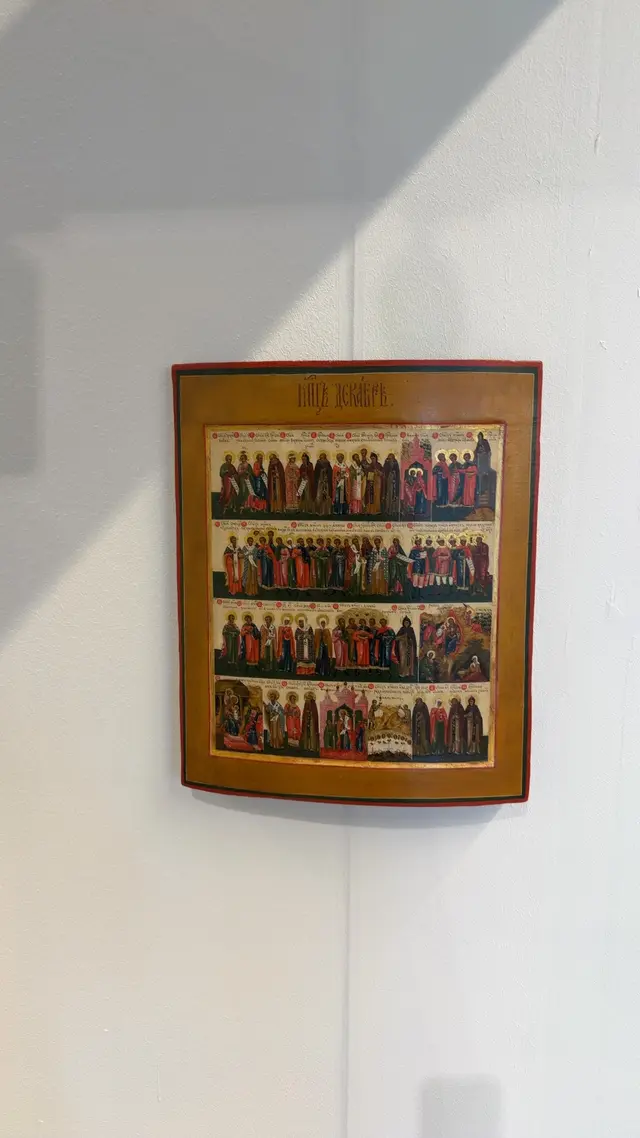
Russian Orthodox Menaion Icon for December
Shared title details

Original Greek Satirical Ink and Watercolor Drawing
Same category
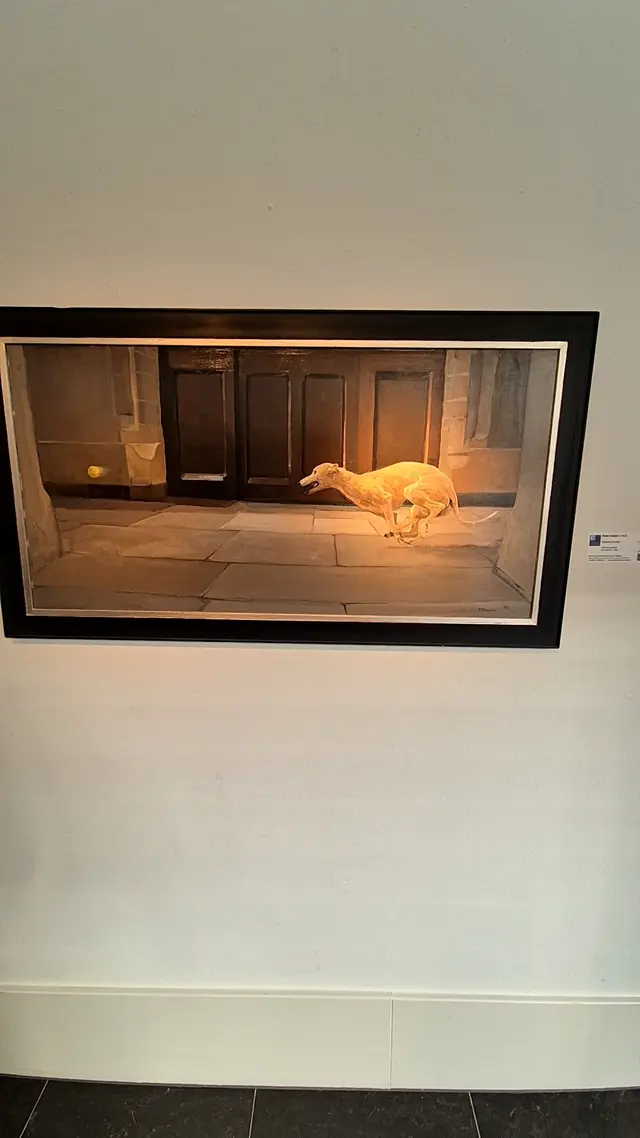
Contemporary Oil Painting of a Running Whippet or Greyhound
Same category
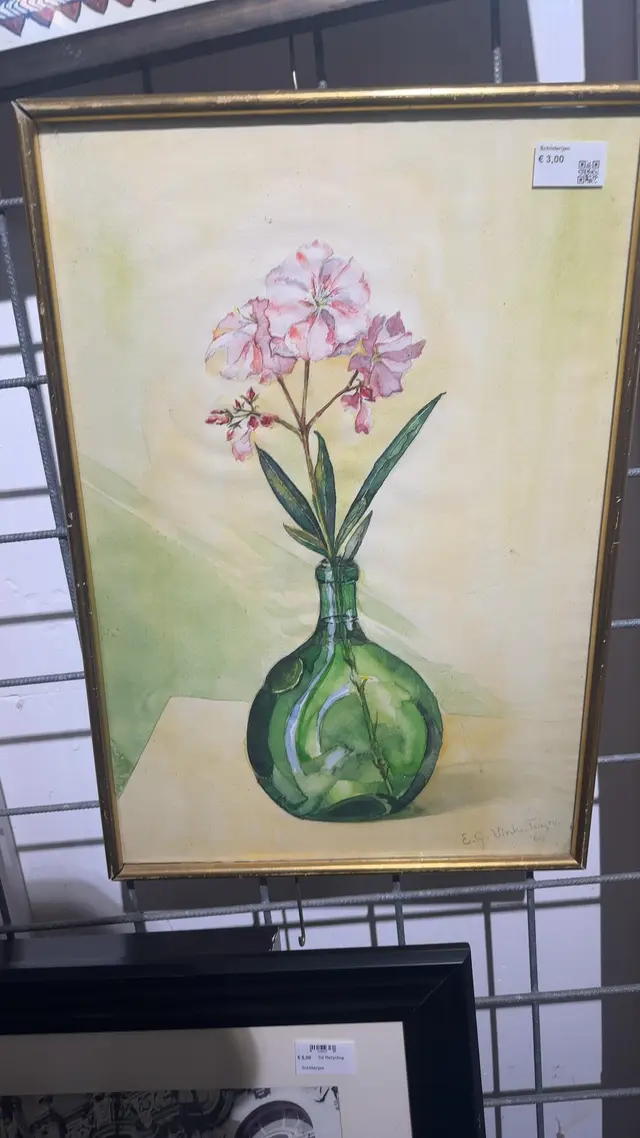
Floral Still Life in Green Bottle, Watercolor
Same category
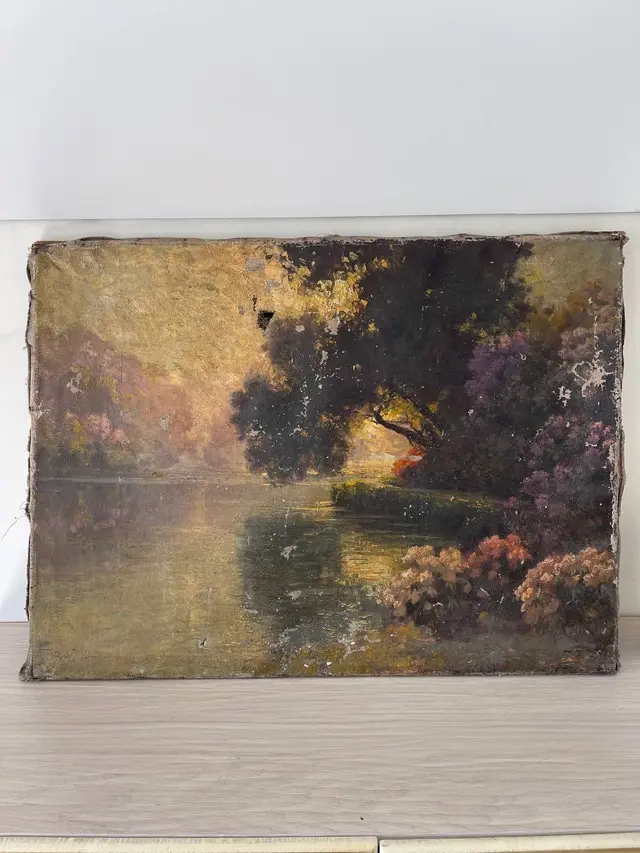
Unstretched Turn-of-the-Century Austrian Landscape Oil Painting
Same category
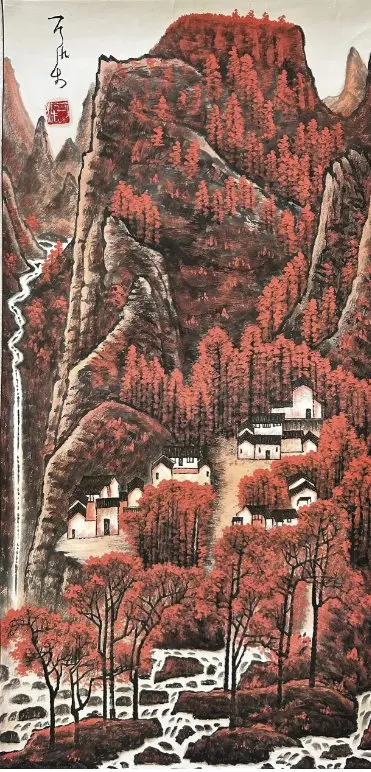
Chinese Shanshui Landscape Painting in the Style of Li Keran
Same category
Explore Paintings
Oil paintings, watercolors, acrylics, and painted works on canvas, panel, and paper.
Paintings value and rarity guideShare this find
A place for your paintings
Keep its photographs, maker’s marks and the story you know in one object record. Start with a photo.
Create an account for 10 free scans. No credit card needed.
Join the conversation
Recognise a detail or have a question? Add what you know and cite your source. Suggested corrections stay in the discussion for the owner or a moderator to review.
Sign in to leave a comment
Sign in