
Hinged Gold-Tone Bangle Bracelet
Visual assessment
Photo analysis
Save to revisit in your watchlist. This does not add the object to your own collection.
Hinged Gold-Tone Bangle Bracelet
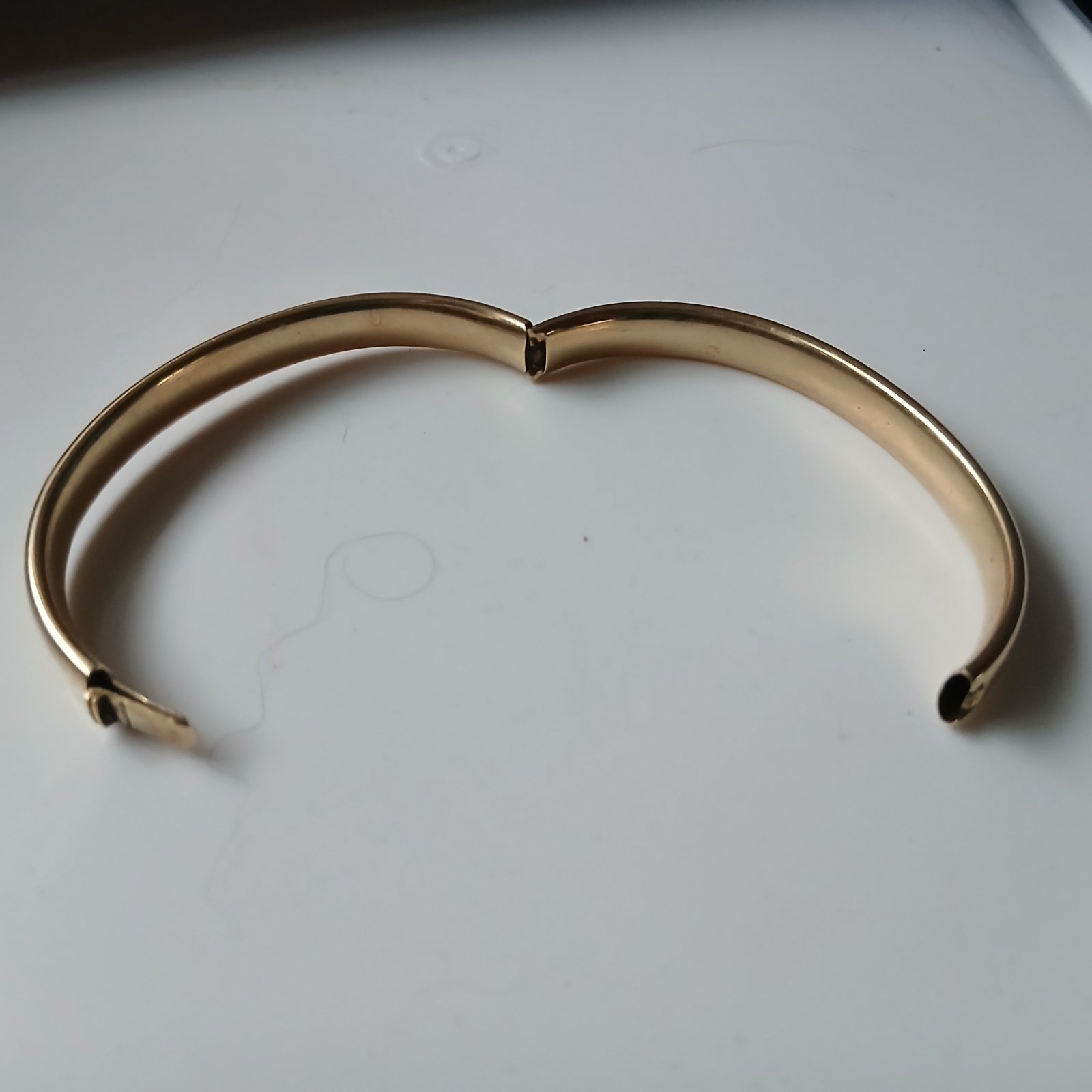
This appears to be a hinged bangle bracelet, circular in shape with a smooth, polished gold-toned surface. The design is simple and unadorned, suggesting a focus on form and potential material. The hinge mechanism and clasp are visible, indicating it was designed for easy wear and removal.
Related traditions
Roman Empire
1st-5th Century AD
Ancient Roman women wore bangles made of various metals, including gold, often in plain, unadorned styles similar in form to this piece.
Art Deco
1920s-1930s
While more elaborate designs predominated, simple, geometric forms like smooth bangles were also incorporated into everyday wear, often in gold or platinum.
Use and ceremony
Antiquity
Often symbolic of status, wealth, or tribal affiliation; sometimes believed to offer protective qualities.
Victorian Era
Worn as a fashion statement, often stacked, with symbolism sometimes derived from engravings or hidden compartments.
Modern Era
Primarily a fashion accessory, ranging from costume jewelry to high-value investment pieces, often chosen for personal style or sentiment.
Origins and context
Bangle bracelets have a long history, dating back to ancient civilizations for both decorative and symbolic purposes. Simple, unembellished bangles like this have been popular across many eras, particularly in the early to mid-20th century, often made in gold or gold-filled material, or as fashion jewelry to emulate precious metals. Their design allows them to transcend specific fashion trends.
Further details
Hinged bangles became particularly popular in the Victorian era as they were easier to put on and take off than solid, closed bangles, accommodating more wrist sizes.
The term 'bangle' originates from the Hindi word 'bangri' or 'bangali', meaning 'ring-shaped ornament'.
Attribution and evidence
The confidence level is moderate because the form and wear patterns are clearly visible, allowing for a general identification of the object type and condition. However, crucial details such as metal composition and the presence of maker's marks are not discernible from the provided images, which limits a precise attribution or valuation to a significant degree.
Identifying details
- 1Hinged construction suggests ease of wear and potentially a practical design approach.
- 2Smooth, polished gold-toned surface indicates either solid precious metal, gold-filled, or gold-plated material.
- 3Visible surface scratches and wear patterns are consistent with an older, used piece of jewelry.
- 4Lack of discernible hallmarks prevents immediate material or maker identification.
Open questions
- •The exact metal composition (solid gold, gold-filled, gold-plated) cannot be determined from images alone, which is crucial for valuation.
- •Absence of visible maker's marks or purity stamps leads to uncertainty regarding origin and specific age.
Photographs that would help
- Examine the interior of the bracelet thoroughly with a jeweler's loupe for any faint hallmarks, stamps, or maker's marks.
- Measure the internal diameter and width of the bangle for accurate sizing.
- Perform a metal acid test to determine the purity of the gold alloy or confirm if it is plated metal.
- Measure the weight of the bracelet to further assess if it is hollow or solid.
Terms in this record
- Bangle
- A rigid bracelet, typically without a clasp, that slips over the hand, or a hinged version that opens for wear.
- Gold-filled
- A layer of gold mechanically bonded to a base metal under heat and pressure, providing a much thicker gold layer than plating.
- Hallmark
- An official mark or series of marks stamped on a piece of metal, often jewelry, to guarantee its fineness or purity, and sometimes to identify the maker or assay office.
Wear and preservation
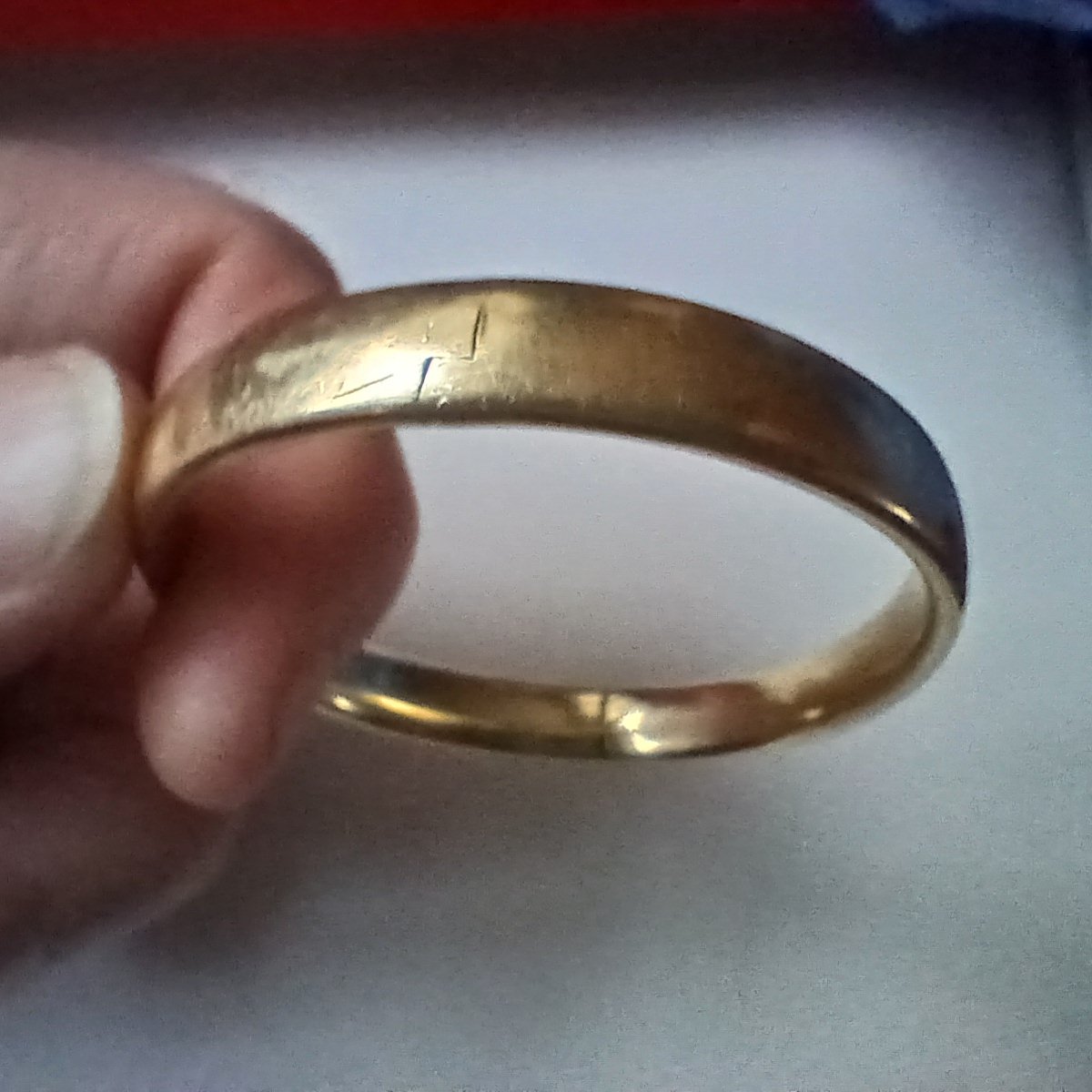
The bracelet shows noticeable surface wear, including scratches and scuffs, particularly visible in the third image. The plating (if present) appears intact overall, but close inspection for areas of thinning or loss would be necessary to fully assess its integrity. The hinge mechanism seems functional from the images provided.
Materials and construction
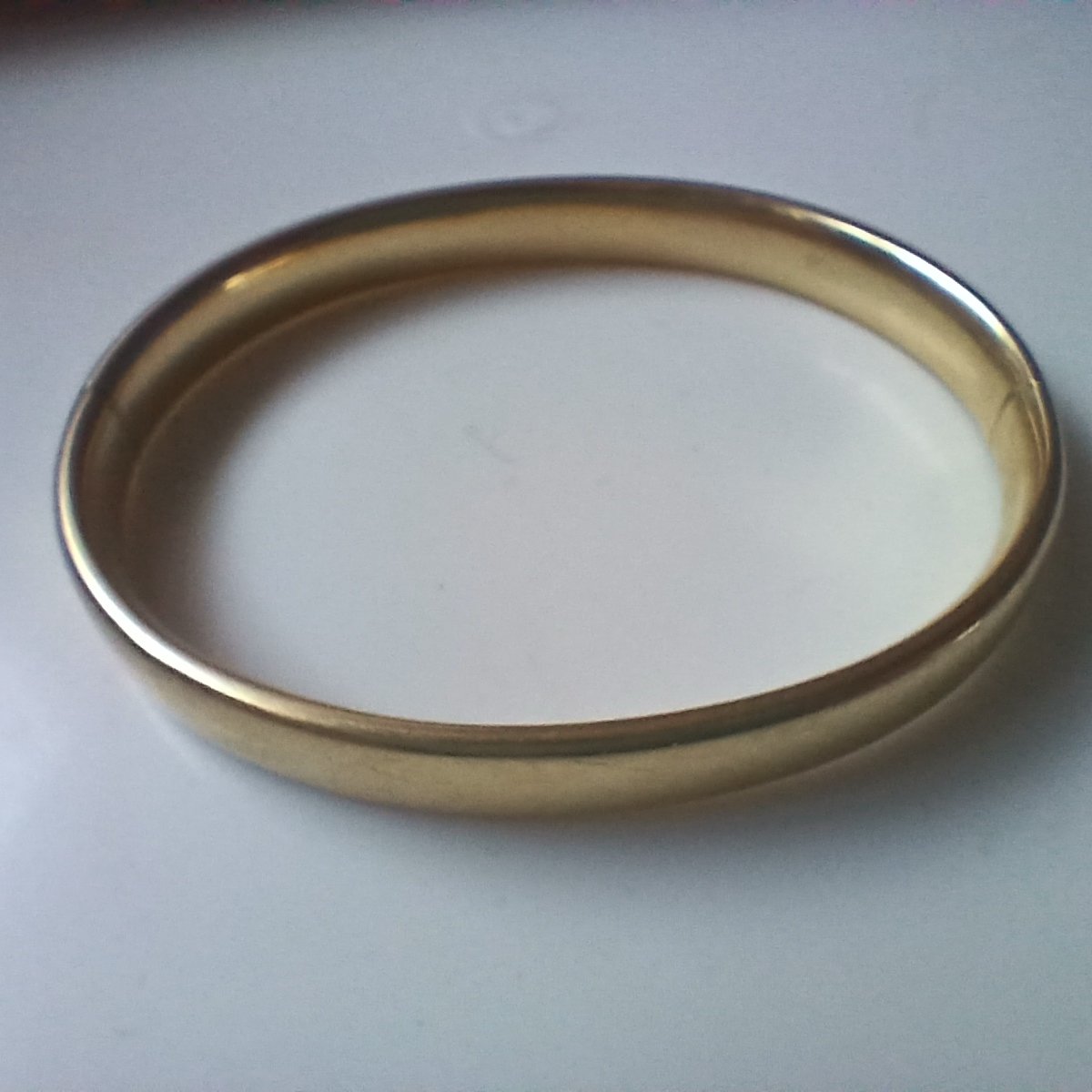
The surface is smooth and appears to have a polished, reflective gold-tone finish. Some surface scratches and minor abrasions are visible, consistent with wear. The overall sheen suggests a metal or metal-plated material.
Recorded physical details
Based on the width and apparent material, it likely has a moderate weight but is not exceptionally heavy, suggesting it could be hollow-formed or a base metal with plating.
Scarcity and surviving examples
Ordinary · 3/10 estimated rarity
This is a qualitative collection score, not a measured survival count, market percentile or proof of authenticity.
What the photographs establish
Interpretation of the photographs and supplied context. This does not authenticate the object.
- Lack of visible hallmarks makes definitive metal identification difficult.
- The material could range from solid gold to gold-filled or plated base metal, significantly impacting value and authenticity.
- Simple design is easily replicable across various eras and materials.
Value and its basis
Estimate recorded: Feb 27, 2026
How we estimate value
- No documented comparable sales are shown for this estimate
- Condition, completeness & craftsmanship
- Demand assumptions may not reflect current transactions
- The range is an estimate, not an asking price or sale result
For informational purposes only, not a formal appraisal.
Related objects
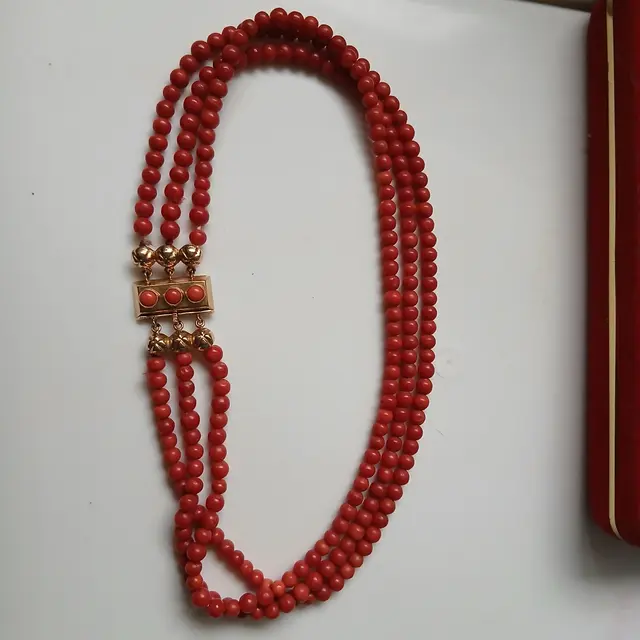
Triple-Strand Coral Bead Necklace with Gold-Tone Box Clasp
Shared title details
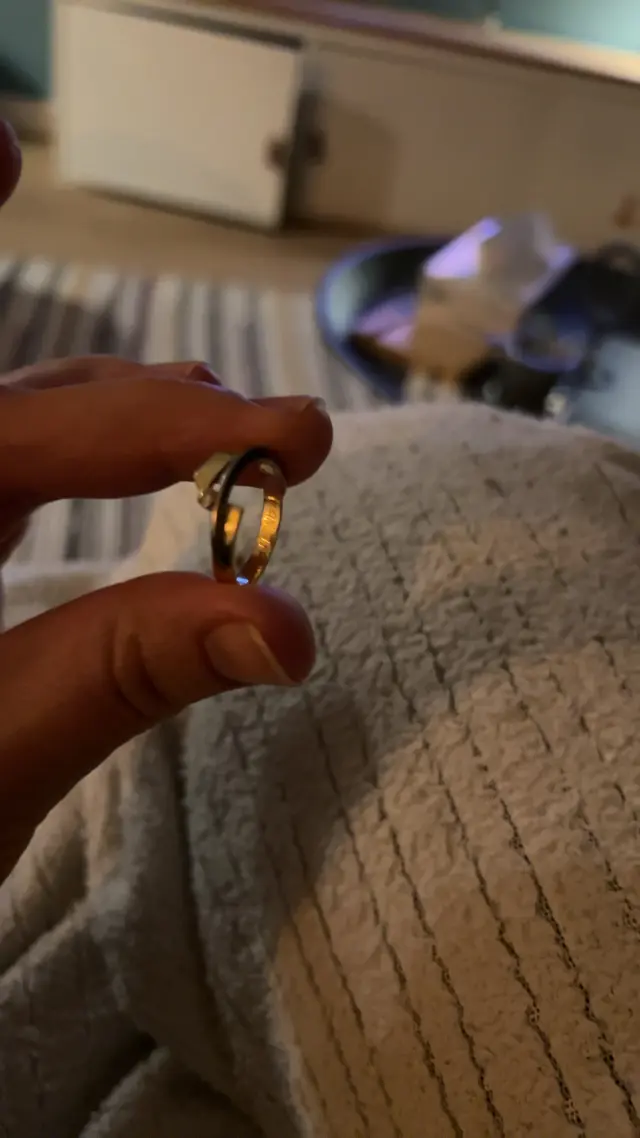
Contemporary Gold-Tone Band with Illusion Set Round Stone
Shared title details
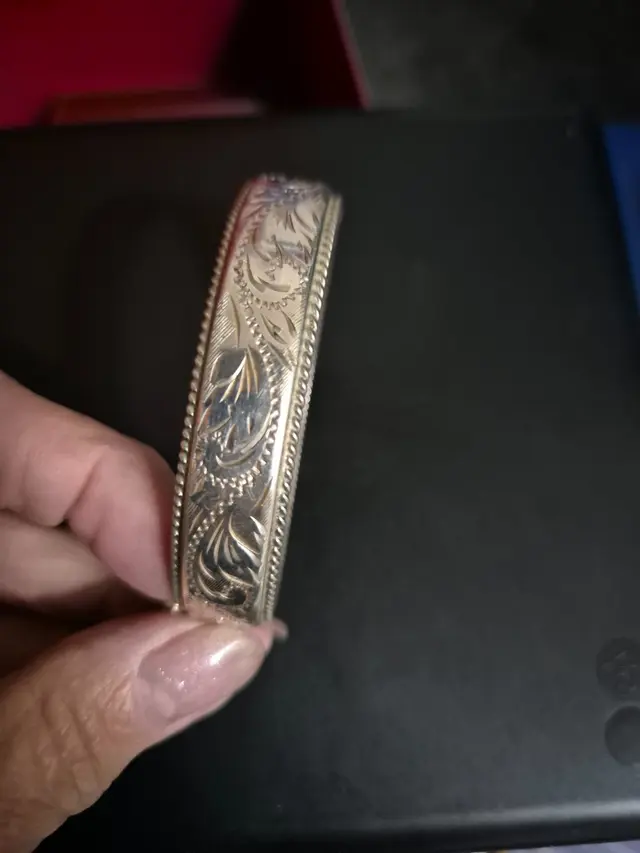
Engraved Bangle Bracelet
Shared title details
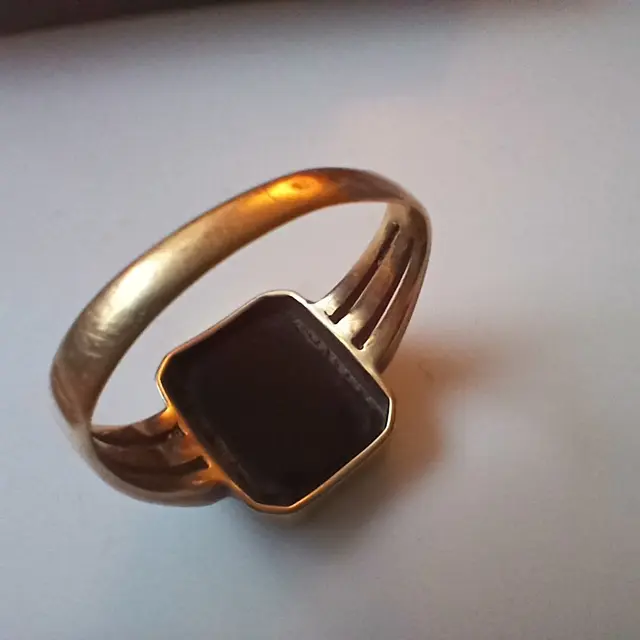
Gentleman's Gold-Tone Signet Ring with Dark Inlay
Shared title details
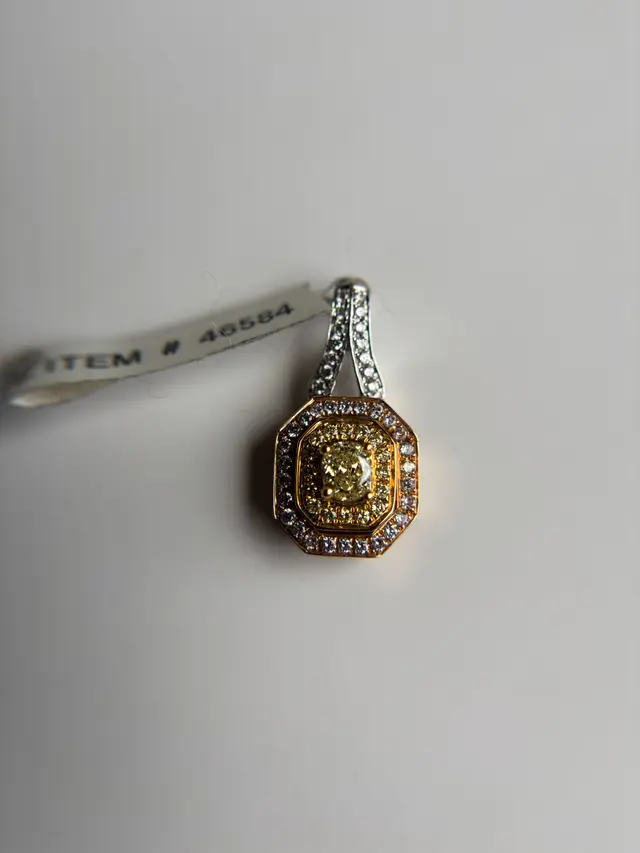
18K Two-Tone Gold Double Halo Pendant by RI
Shared title details
Mid-Century 14K White Gold Modernist Star Ring
Same category
Explore Jewelry
Fine jewelry, costume pieces, rings, necklaces, bracelets, and brooches.
Jewelry value and rarity guideShare this find
A place for your jewelry
Keep its photographs, maker’s marks and the story you know in one object record. Start with a photo.
Create an account for 10 free scans. No credit card needed.
Join the conversation