
Gentleman's Gold-Tone Signet Ring with Dark Inlay
Visual assessment
Photo analysis
Save to revisit in your watchlist. This does not add the object to your own collection.
Gentleman's Gold-Tone Signet Ring
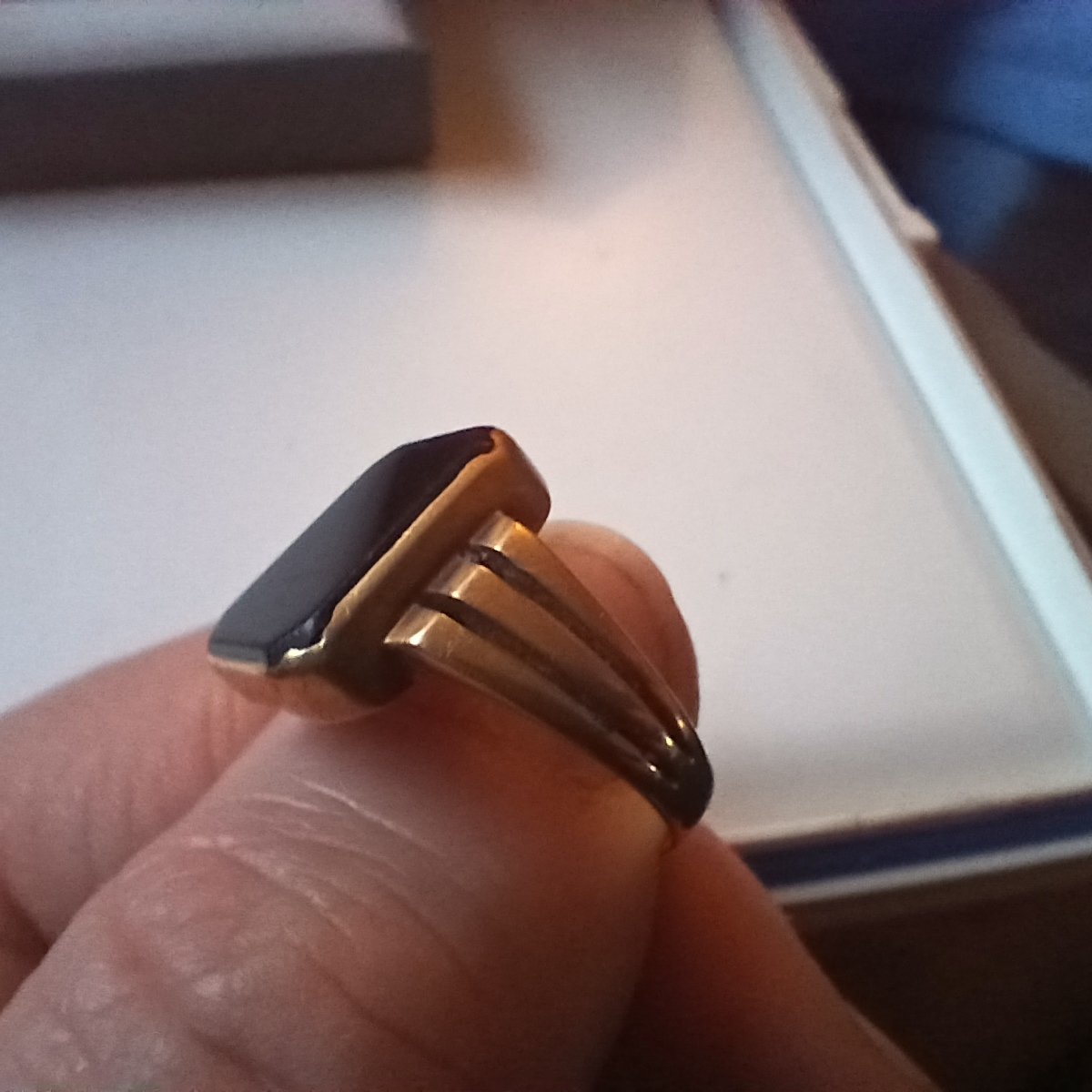
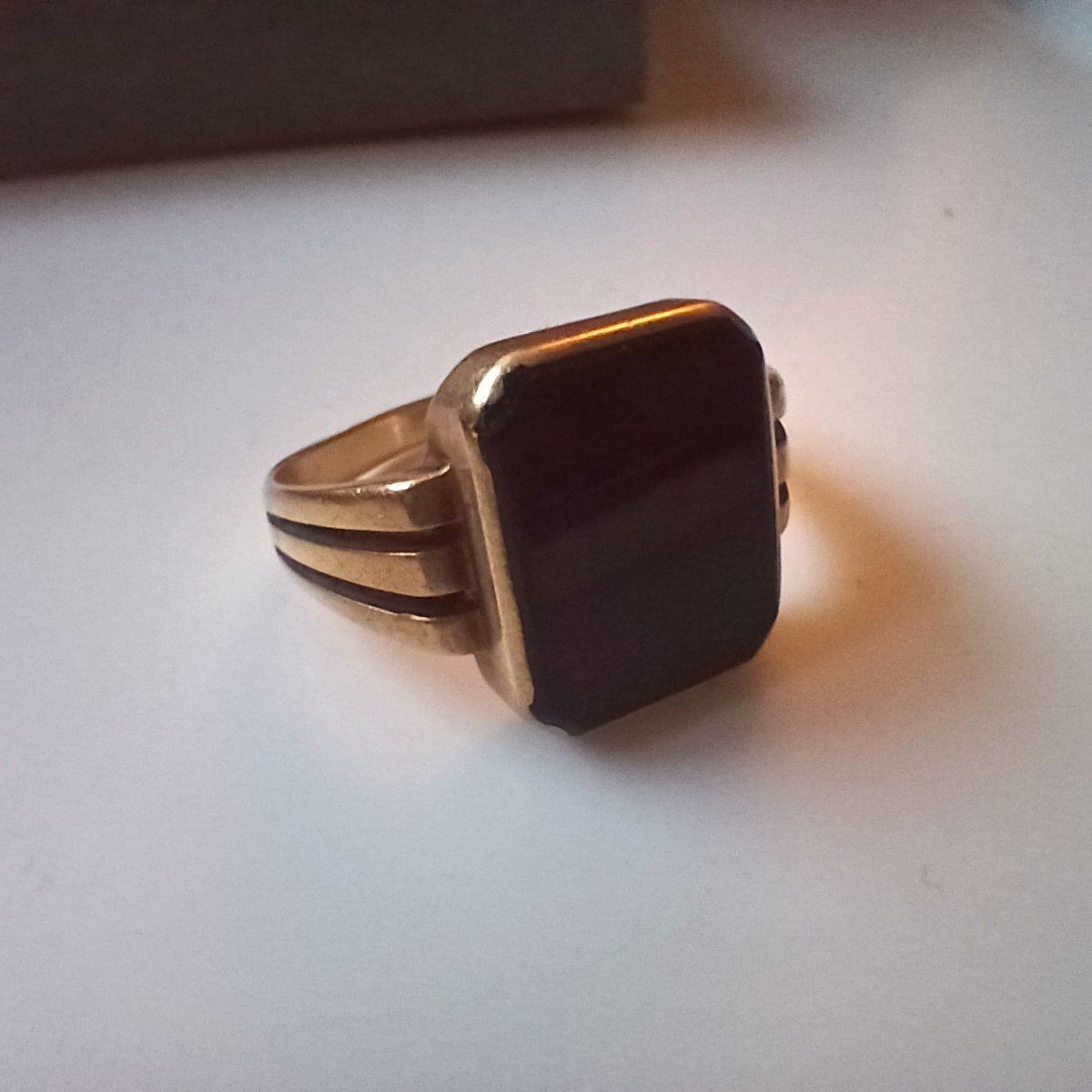
This appears to be a gentleman's signet-style ring, characterized by its rectangular, flat-topped bezel. The ring features a broad, angular shank that splits into three distinct bands at the shoulders before converging into the main band. The metal, which appears gold-toned, securely holds a rectangular, dark cabochon inlay, likely a gemstone or a synthetic material, set flush with the bezel's surface. The design is robust and masculine, suggestive of an era where such rings often served as personal seals or statements of identity.
Related traditions
Roman Empire
Antiquity
Early signet rings were used by Roman officials and citizens to stamp official documents and letters, signifying authenticity and authority.
Victorian Era
19th Century
During this period, signet rings often featured family crests or monograms and were passed down through generations, embodying family heritage.
Art Deco Movement
1920s-1930s
The clean lines and geometric forms of this ring align well with the aesthetic principles of Art Deco, which favored bold, simplified designs in jewelry.
Use and ceremony
Classical Antiquity
Primarily a functional tool for sealing documents, a symbol of authority and authenticity.
Medieval to Early Modern Europe
Evolved into a status symbol and a marker of aristocratic identity, often engraved with armorial bearings.
19th-20th Century
Shifted to personal adornment and expression, moving beyond pure function to represent personal style, club affiliations, or educational achievements.
Origins and context
Signet rings have a history dating back to antiquity, traditionally used to emboss a wax seal with a family crest or personal monogram. While their function as a seal largely faded by the 19th century, the signet ring style persisted as a symbol of status, heritage, or personal expression, particularly popular among men during the 20th century. This particular style, with its strong lines and dark, flat inlay, became quite fashionable from the Art Deco period through the mid-century, reflecting a preference for bold, geometric designs.
Further details
Historically, the signet ring was often destroyed upon the owner's death to prevent unauthorized use of their personal seal.
Despite their decline in practical use, signet rings remained a popular medium for expressing regimental affiliations, club memberships, or academic achievements.
Attribution and evidence
Confidence is good regarding the ring's style and approximate era based on visible design elements and construction. However, the lack of visible hallmarks and the inability to identify the inlay material significantly reduce certainty about material composition and thus, potential value.
Identifying details
- 1The overall robust construction and broad shoulders are typical of a gentleman's signet ring.
- 2The multi-band shank design is a common stylistic treatment seen from the mid-20th century.
- 3The dark, rectangular inlay is cut as a cabochon, suggesting materials like onyx, black chalcedony, or a synthetic.
- 4The gold-tone metal appears worn in areas, hinting that it might be plated or gold-filled, not solid gold, though this requires testing.
Open questions
- •No visible hallmarks to indicate metal purity or maker, which reduces confidence in material identification.
- •The exact nature of the dark inlay (gemstone vs. synthetic) cannot be determined from images, which impacts value.
- •The extent of plating wear (if it is plated) is not fully clear from the images.
Photographs that would help
- A clear, magnified image of the inner band is needed to check for any hallmarks or maker's stamps.
- Close-up images of the setting and any edges of the dark inlay would help determine if it's natural stone or another material.
- An X-ray fluorescence (XRF) test would definitively identify the metal composition (e.g., solid gold, gold-filled, plated base metal).
- A gemological examination of the inlay under magnification would be necessary to identify the material and rule out synthetics.
Terms in this record
- Signet Ring
- A ring with a flat bezel, often engraved with a personal cipher, family crest, or emblem, traditionally used to make a seal in wax.
- Cabochon
- A gemstone cut without facets, typically polished into a smooth, rounded, domed shape.
- Shank
- The part of the ring that encircles the finger, excluding the head or setting.
- Bezel Setting
- A type of setting where a metal rim encircles the girdle of a gemstone, holding it securely in place.
Wear and preservation
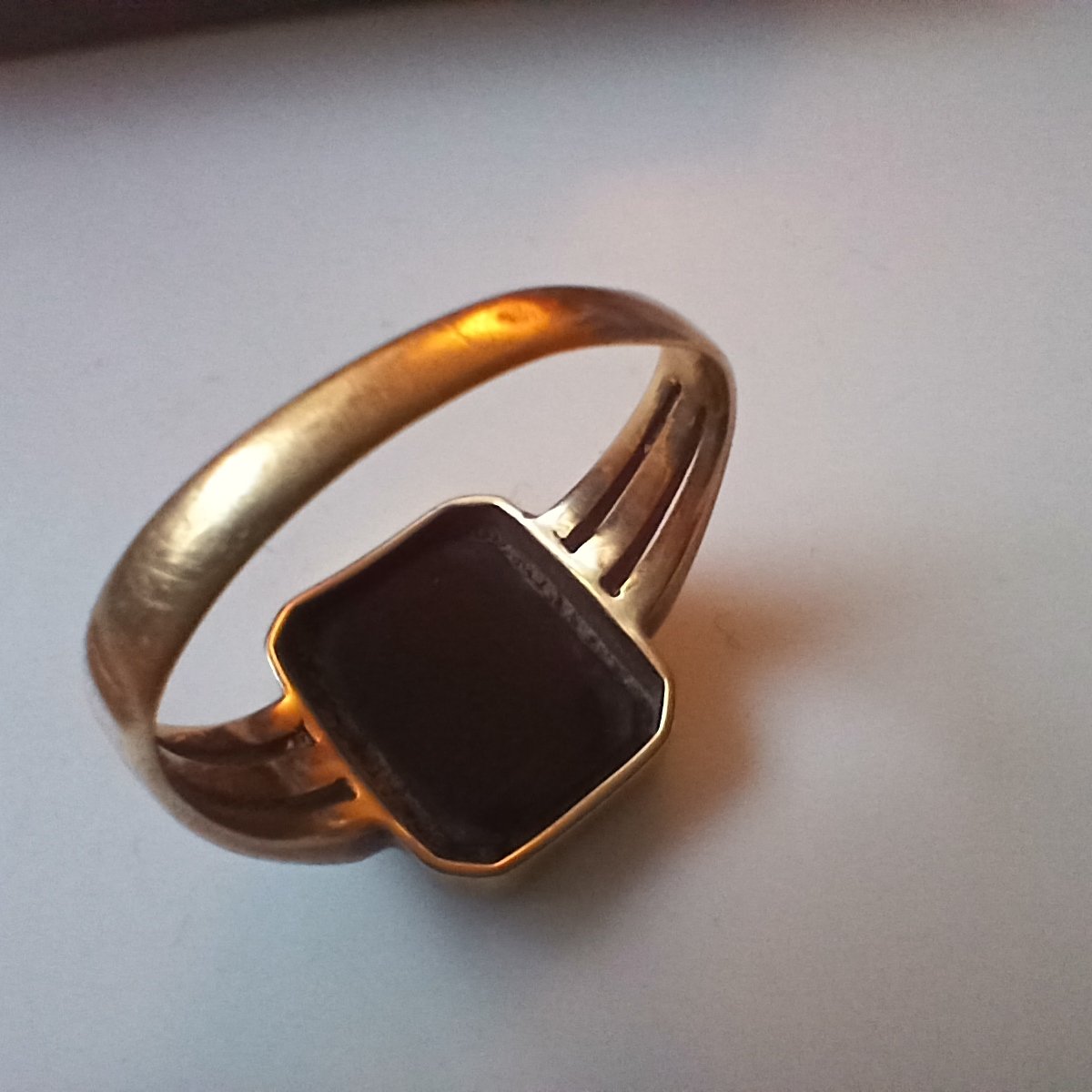
The ring appears to be in good vintage condition with visible surface wear, including minor scratches and rubbing on the band and bezel. The dark inlay appears intact and securely set, without any visible chips or cracks. The overall integrity of the piece seems sound, with no obvious signs of repair.
Materials and construction
The metallic surfaces exhibit a smooth, polished texture with some minor abrasions consistent with wear. The interior of the band and recessed areas show some darkening, which could be natural patination or residue. The dark, rectangular inlay has a smooth, glossy surface, showing no overt signs of scratches or significant wear.
Recorded physical details
Based on its substantial design and the apparent thickness of the metal, the ring likely feels solid and moderately weighty on the finger, as is typical for a gentleman's signet ring.
Scarcity and surviving examples
Ordinary · 3/10 estimated rarity
This is a qualitative collection score, not a measured survival count, market percentile or proof of authenticity.
What the photographs establish
Interpretation of the photographs and supplied context. This does not authenticate the object.
- Absence of visible hallmarks or maker's marks is a concern for material verification.
- The dark inlay could be a variety of materials (onyx, black glass, synthetic), which significantly impacts value.
- Without closer inspection, it's difficult to determine if the gold-tone is solid gold, gold-filled, or plated, which is crucial for valuation.
Value and its basis
Estimate recorded: Feb 27, 2026
How we estimate value
- No documented comparable sales are shown for this estimate
- Condition, completeness & craftsmanship
- Demand assumptions may not reflect current transactions
- The range is an estimate, not an asking price or sale result
For informational purposes only, not a formal appraisal.
Related objects
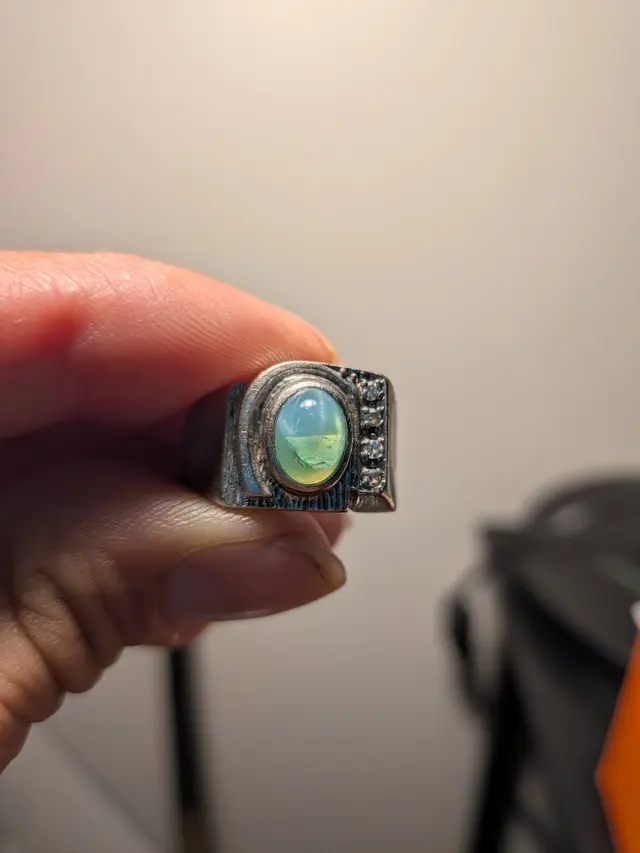
Mid-Century 14K White Gold Modernist Star Ring
Shared title details
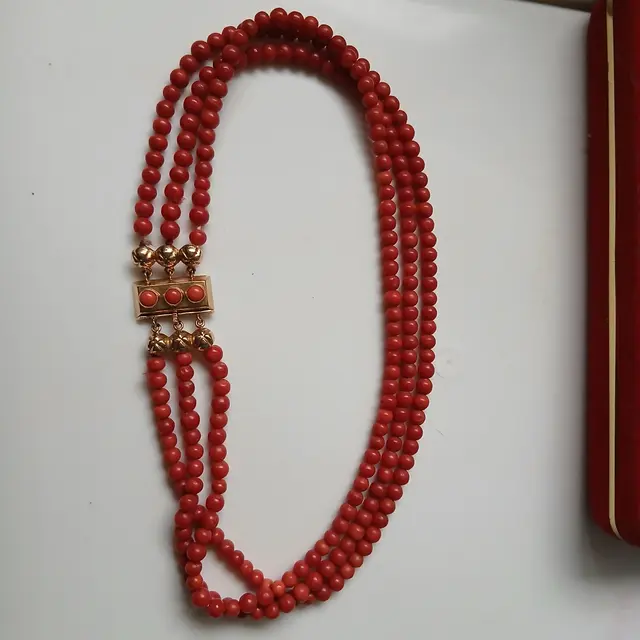
Triple-Strand Coral Bead Necklace with Gold-Tone Box Clasp
Shared title details
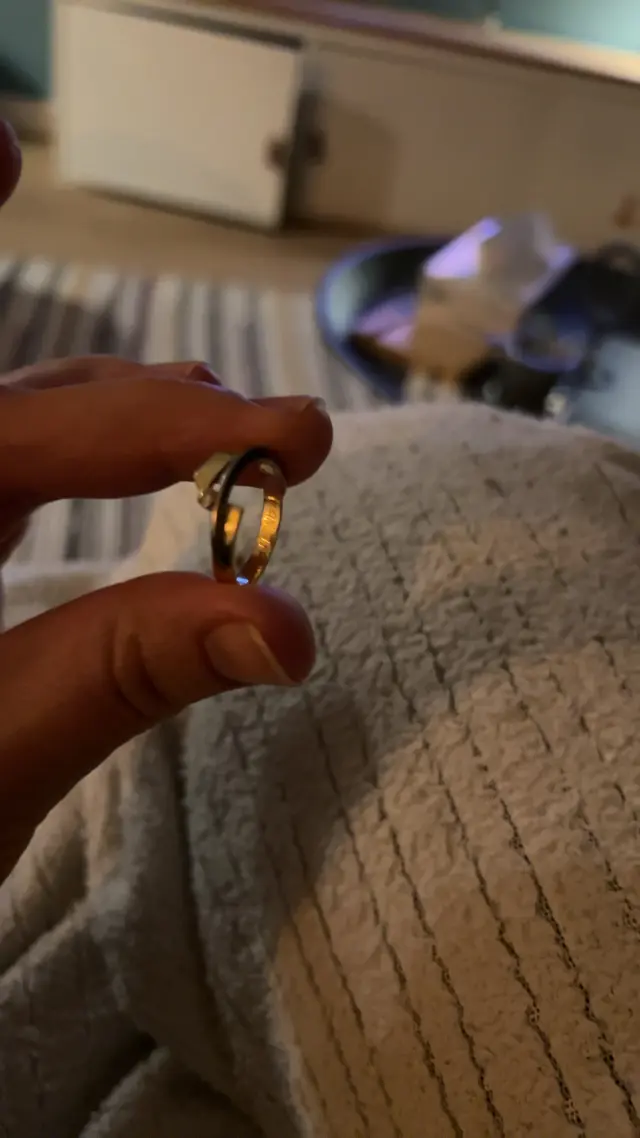
Contemporary Gold-Tone Band with Illusion Set Round Stone
Shared title details
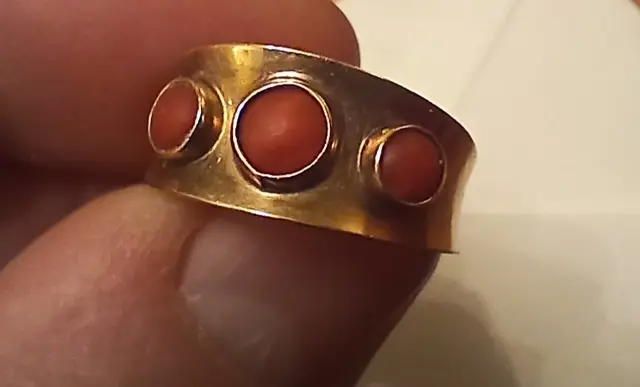
Mid-20th Century Gold Ring with Coral Cabochons
Shared title details
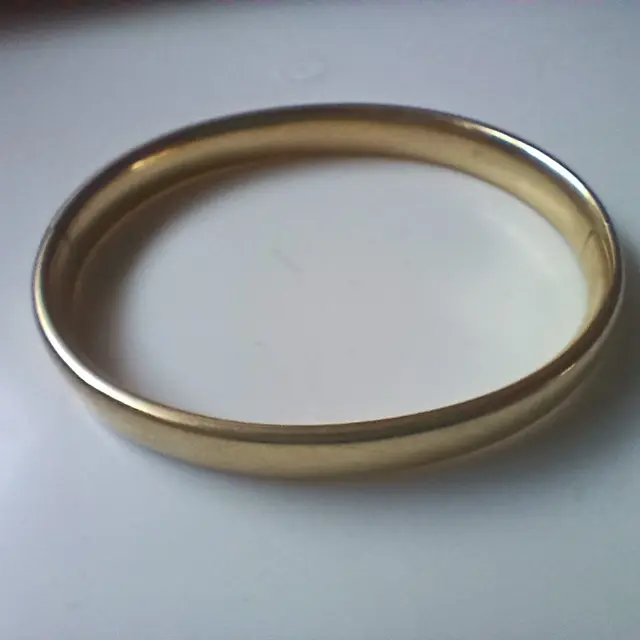
Hinged Gold-Tone Bangle Bracelet
Shared title details
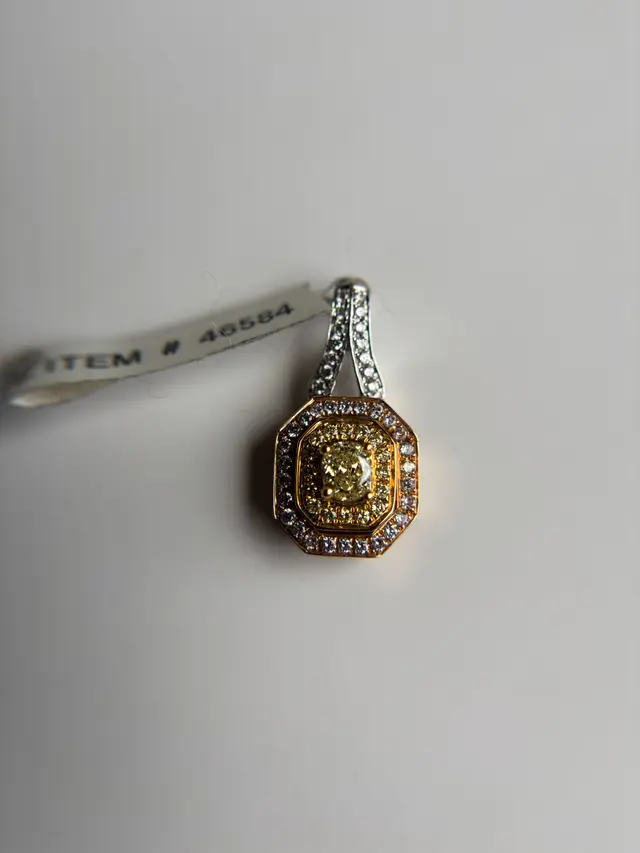
18K Two-Tone Gold Double Halo Pendant by RI
Shared title details
Explore Jewelry
Fine jewelry, costume pieces, rings, necklaces, bracelets, and brooches.
Jewelry value and rarity guideShare this find
A place for your jewelry
Keep its photographs, maker’s marks and the story you know in one object record. Start with a photo.
Create an account for 10 free scans. No credit card needed.
Join the conversation