
Silver Filigree Brooch with Blue Paste or Glass Centerpiece
Estimated value
$45 - $120Rarity
Average(4/10)Category
JewelryEra
Mid-20th Century, circa 1945-1965Origin
InternationalVisual assessment
Photo analysis
Save to revisit in your watchlist. This does not add the object to your own collection.
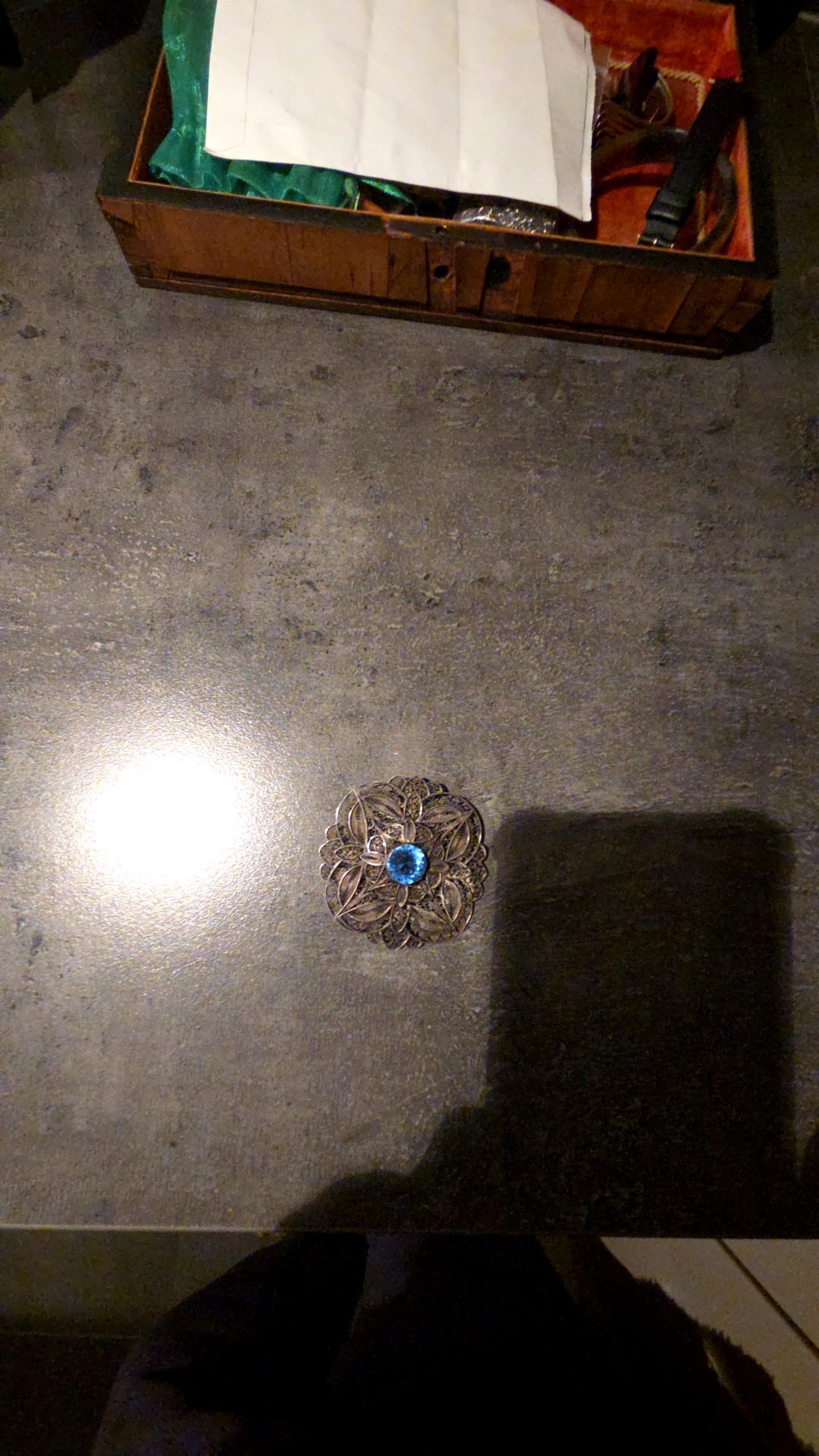
Silver Filigree Brooch
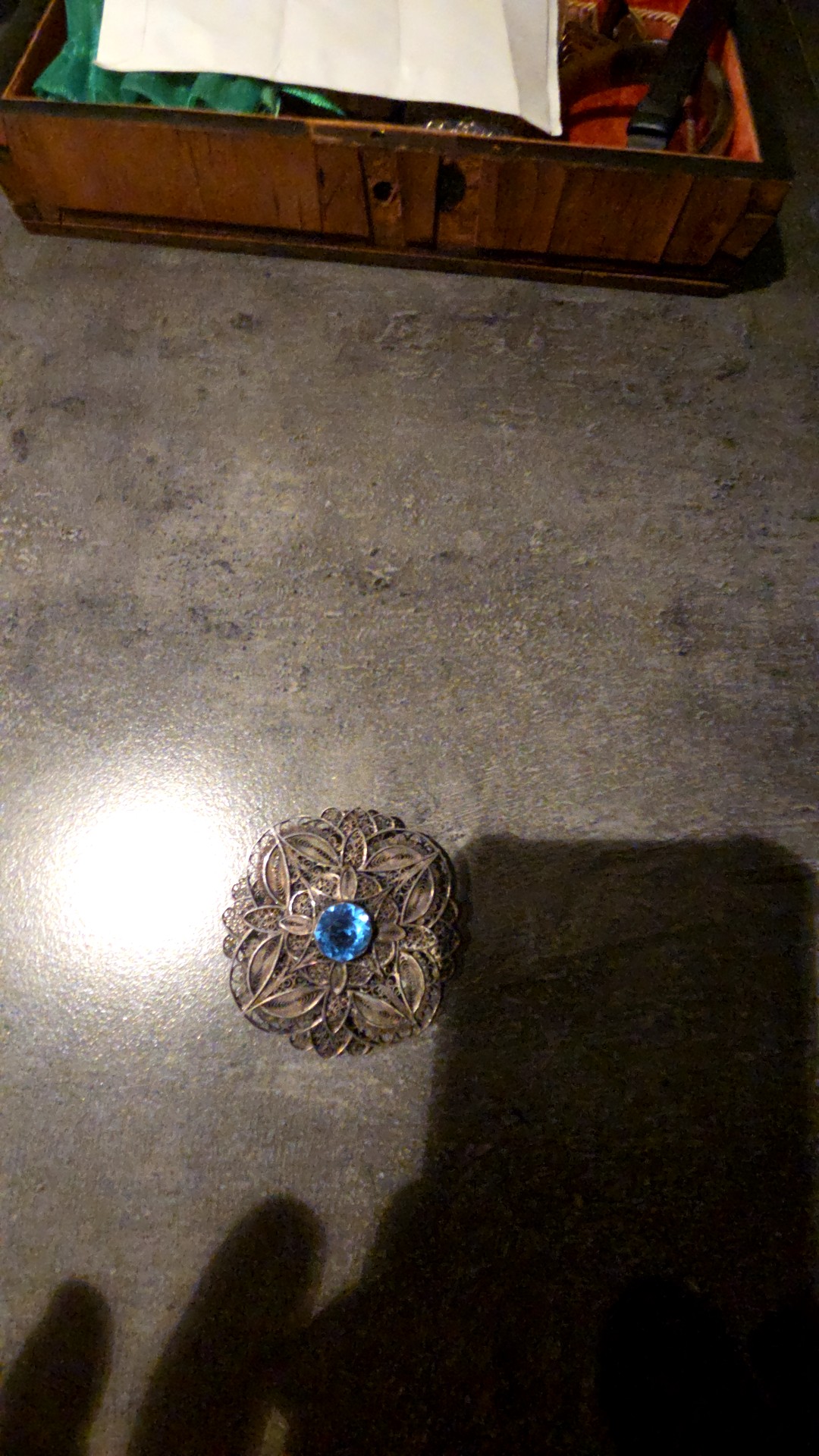
A circular brooch featuring intricate silver filigree metalwork in a floral or mandala motif. The piece centers on a single, round-faceted blue stone measuring approximately 8-10mm in diameter. The metal construction consists of fine twisted wires soldered into a framework, characteristic of mid-20th century European or North African souvenir jewelry. The mounting appears to be bezel-set, though the outer filigree petals provide the primary decorative structure.
Related traditions
Portuguese Craft Tradition
18th Century to present
Echoes the 'Coração de Viana' filigree techniques used in traditional folk jewelry from Northern Portugal.
Use and ceremony
Mid-20th Century
Represented accessible elegance and a token of international travel.
Origins and context
Filigree jewelry of this style saw a significant resurgence in production during the 1940s through the 1960s, particularly in regions like Italy, Portugal, and Malta, where it was often sold as high-quality tourist ware. This specific floral arrangement, while traditional, lacks the hallmarks of 19th-century Victorian hand-soldered wirework, which typically utilized thinner gauge silver and more varied textures. Similar pieces were frequently exported to the US market post-WWII as accessible luxury items.
Further details
Traditional filigree work during the 1950s was often produced in the 'Genoese' style, where artisans used specialized tweezers to hand-bend every individual wire scroll.
The blue stone in such brooches is frequently 'paste' or glass, specifically designed to mimic the appearance of Ceylon sapphires or aquamarines at a fraction of the cost.
Attribution and evidence
Identification is stable based on the recognizable filigree style and mounting, though absence of hallmarks and stone testing limits full certainty.
Identifying details
- 1Twisted wire filigree diameter is consistent with 20th-century jewelry gauges
- 2Bezel setting on center stone is a standard mid-century industrial application
- 3Tarnish color indicates high silver content, likely.800 or.925 purity
- 4Faceting style of blue stone suggests machine-cut glass or synthetic spinel
Open questions
- •The blue stone's saturated color and clarity strongly suggest a glass or synthetic simulant rather than a natural gemstone
- •Lack of visible hallmarks on the reverse prevents definitive metal purity confirmation
Photographs that would help
- Obtain a clear photo of the brooch's reverse side to identify hallmarks or maker's marks
- Perform a simple magnet test; genuine silver will not be attracted to the magnet
- Examine the stone's facet edges with a 10x loupe; rounded edges indicate glass
Wear and preservation
Filigree wires appear intact with no crushed sections; oxidation is heavy in the recesses which may require professional cleaning to restore luster.
The metal shows signs of moderate oxidation typical of vintage silver; the center stone remains securely set but exhibits light surface wear when viewed under magnification.
Materials and construction
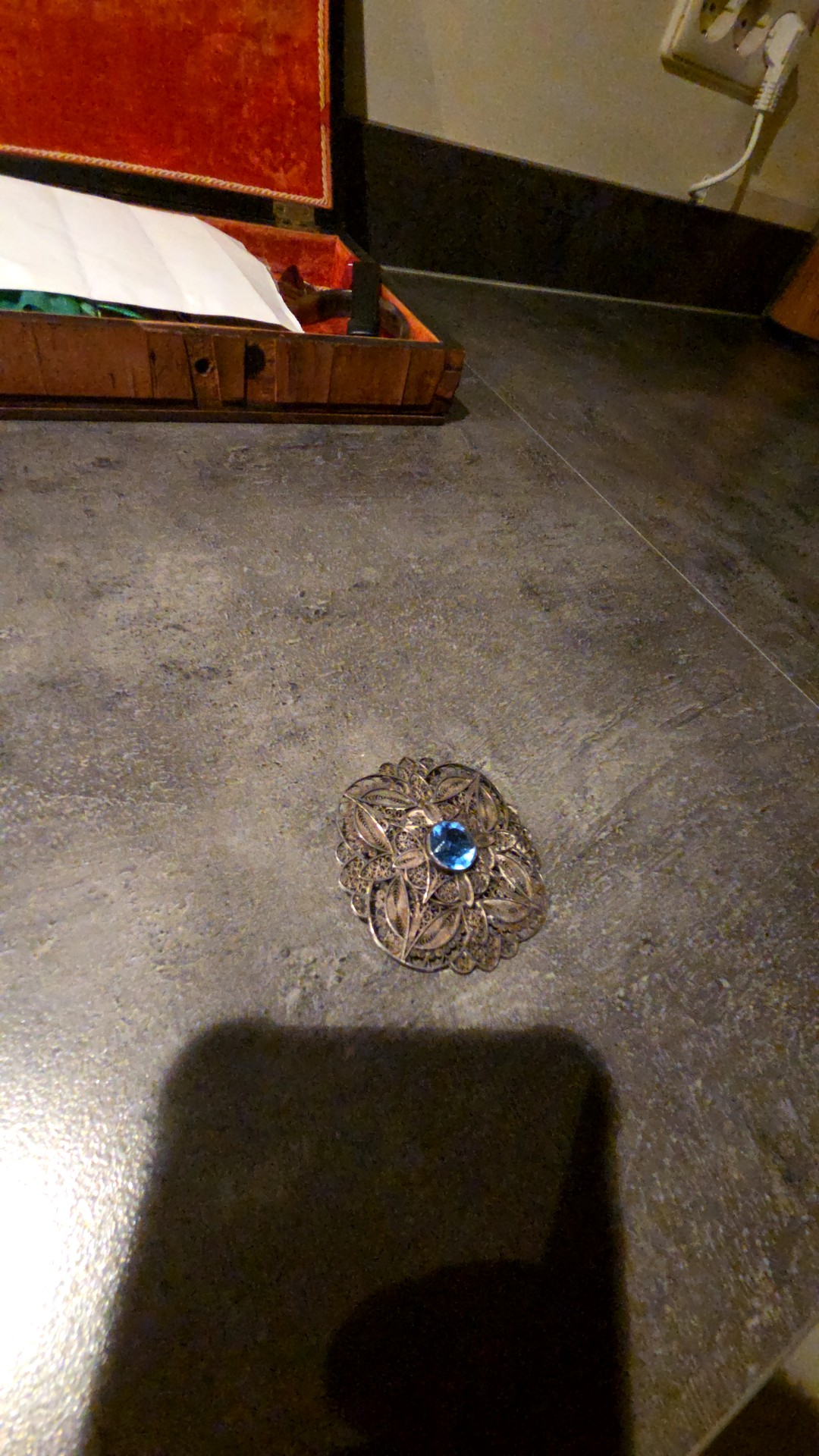
Oxidized silver finish with visible tarnish in the recessed filigree scrolls; the center stone shows a high-gloss vitreous luster with some minor edge abrasions.
Recorded physical details
Estimated weight of 12-18 grams; likely feels lightweight and delicate due to the airy, open-work filigree construction.
Scarcity and surviving examples
Average · 4/10 estimated rarity
This is a qualitative collection score, not a measured survival count, market percentile or proof of authenticity.
What the photographs establish
Interpretation of the photographs and supplied context. This does not authenticate the object.
- Construction method is consistent with mid-century mass-market filigree
- Oxidation pattern suggests genuine aged silver or silver-plated base metal
- Center stone lacks the internal inclusions typical of natural sapphire or spinel
Value and its basis
Estimate recorded: May 11, 2026
How we estimate value
Estimate context (not a documented sale): Similar Italian-made silver filigree brooches typically sell for $35-$75 on platforms like eBay and Etsy, while documented Portuguese examples can reach $150.
Collectors and interest
Vintage jewelry enthusiasts and collectors of European souvenir silver from the mid-century period.
What supports the estimate
- •Integrity of the filigree work (no broken wires)
- •Presence of a '925' or 'Sterling' hallmark
- •Uncommon stone colors or large sizes
What could change it
- •Broken or crushed filigree sections
- •Loose center stone mounting
- •Heavy permanent pitting in the metal
Comparing quality
- •Signed by a known workshop (e.g., Peruzzi of Florence)
- •Original safety chain attached
- •Fine gauge wirework with no visible solder blobs
The effect of condition
Completeness of the wire framework and the clarity/scratch-rating of the central stone.
Market interest
For informational purposes only, not a formal appraisal.
Related objects
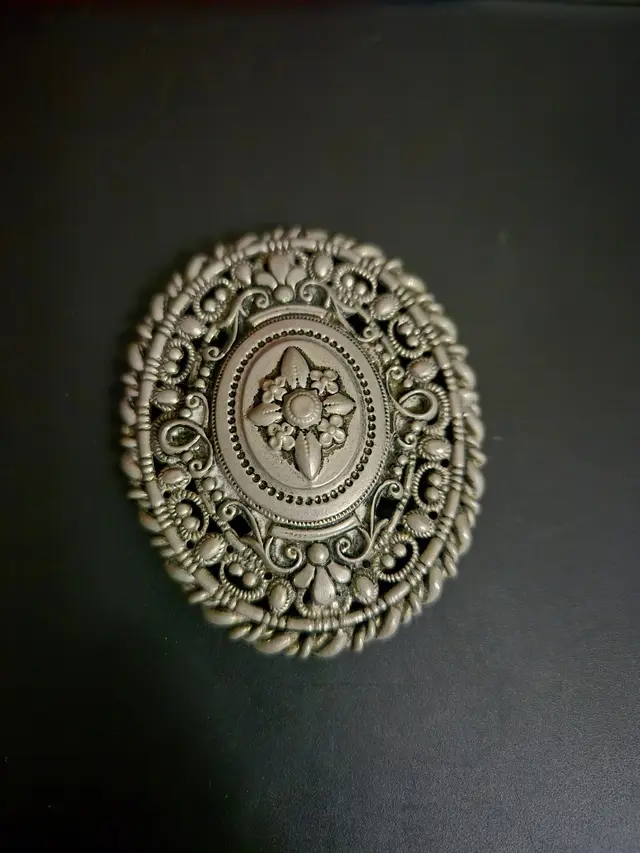
Intricately Filigreed Silver-Tone Brooch or Pendant
Shared title details
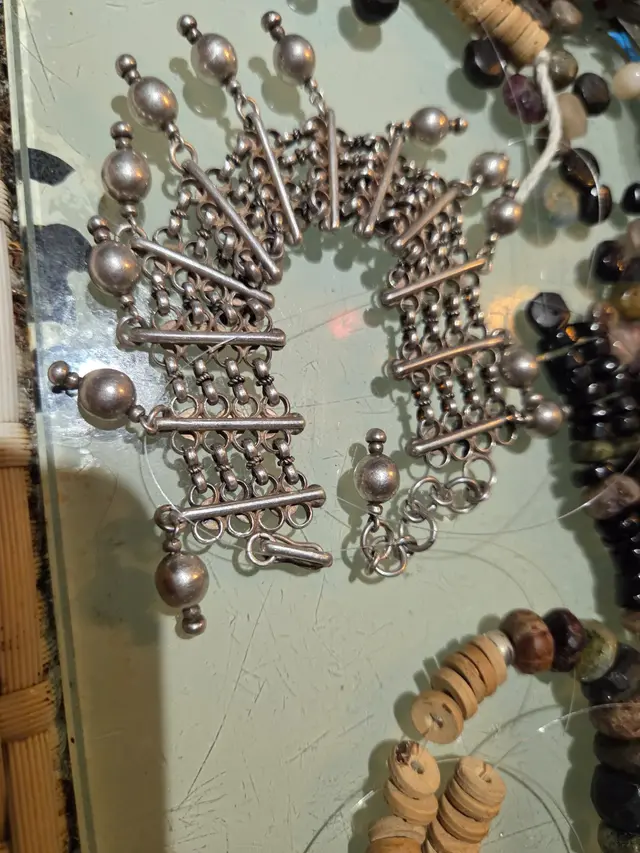
Indian Tribal Silver Ghughroo Dangle Bracelet c.1950-1980
Same category
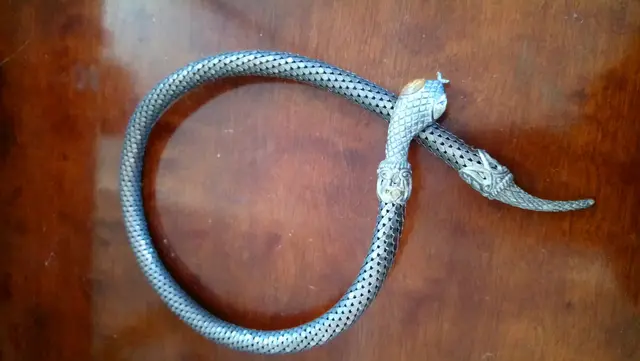
Victorian Style Silver Plate Snake Mesh Belt or Necklace c.1960-1980
Same category
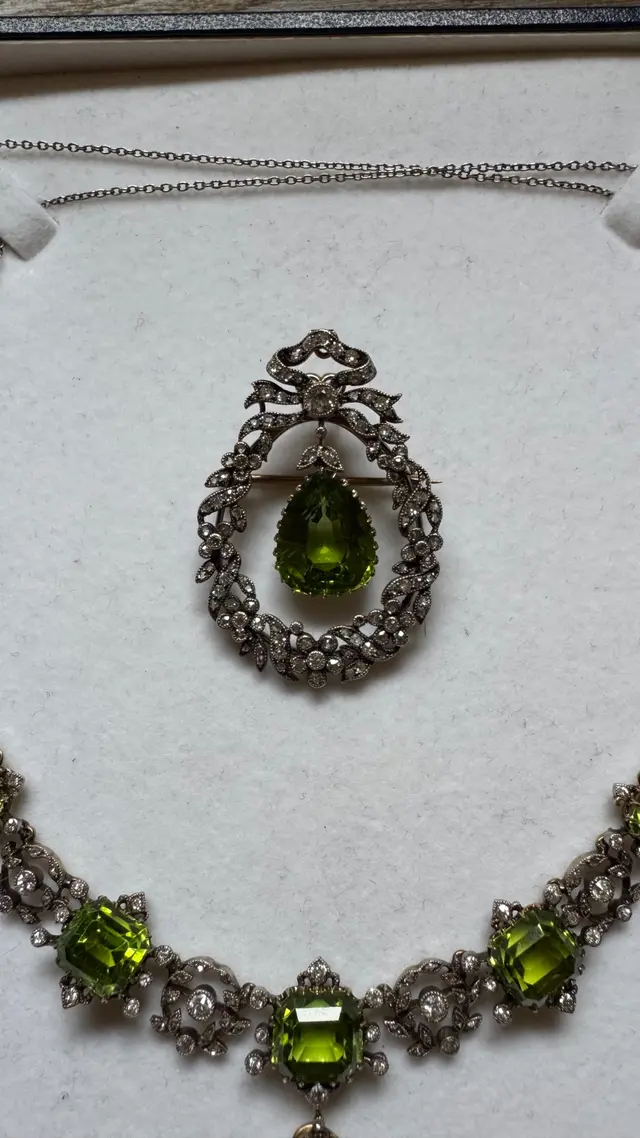
Edwardian Peridot & Diamond Garland Brooch/Pendant c.1905
Same category
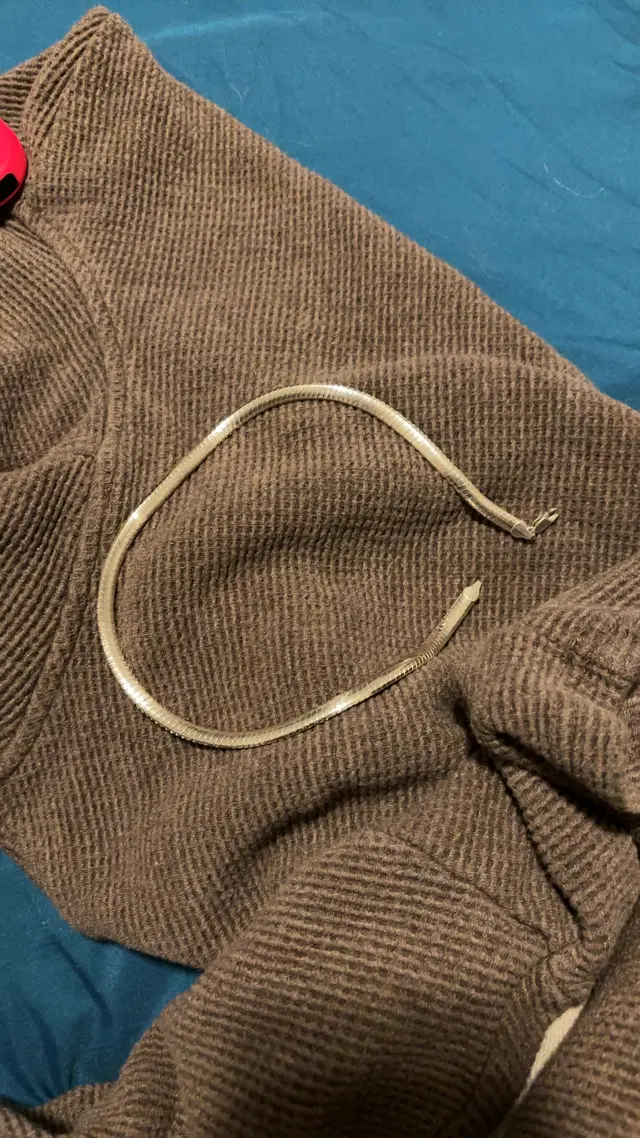
Italian Sterling Silver Herringbone Necklace (925 Fine)
Same category
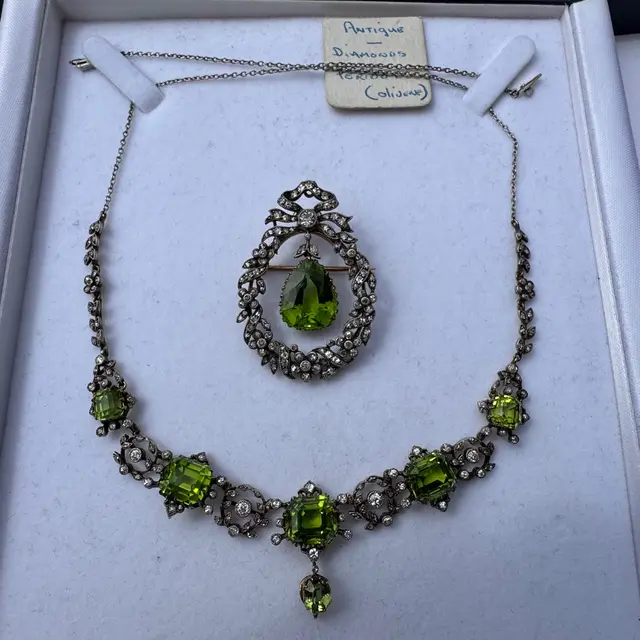
Late Victorian Peridot and Diamond Necklace and Brooch Suite c.1890
Same category
Explore Jewelry
Fine jewelry, costume pieces, rings, necklaces, bracelets, and brooches.
Jewelry value and rarity guideShare this find
A place for your jewelry
Keep its photographs, maker’s marks and the story you know in one object record. Start with a photo.
Create an account for 10 free scans. No credit card needed.
Join the conversation