
14-Karat Gold Pendant Bail with Geometric Maker's Mark
Visual assessment
Photo analysis
Save to revisit in your watchlist. This does not add the object to your own collection.
14-Karat Gold Pendant Bail
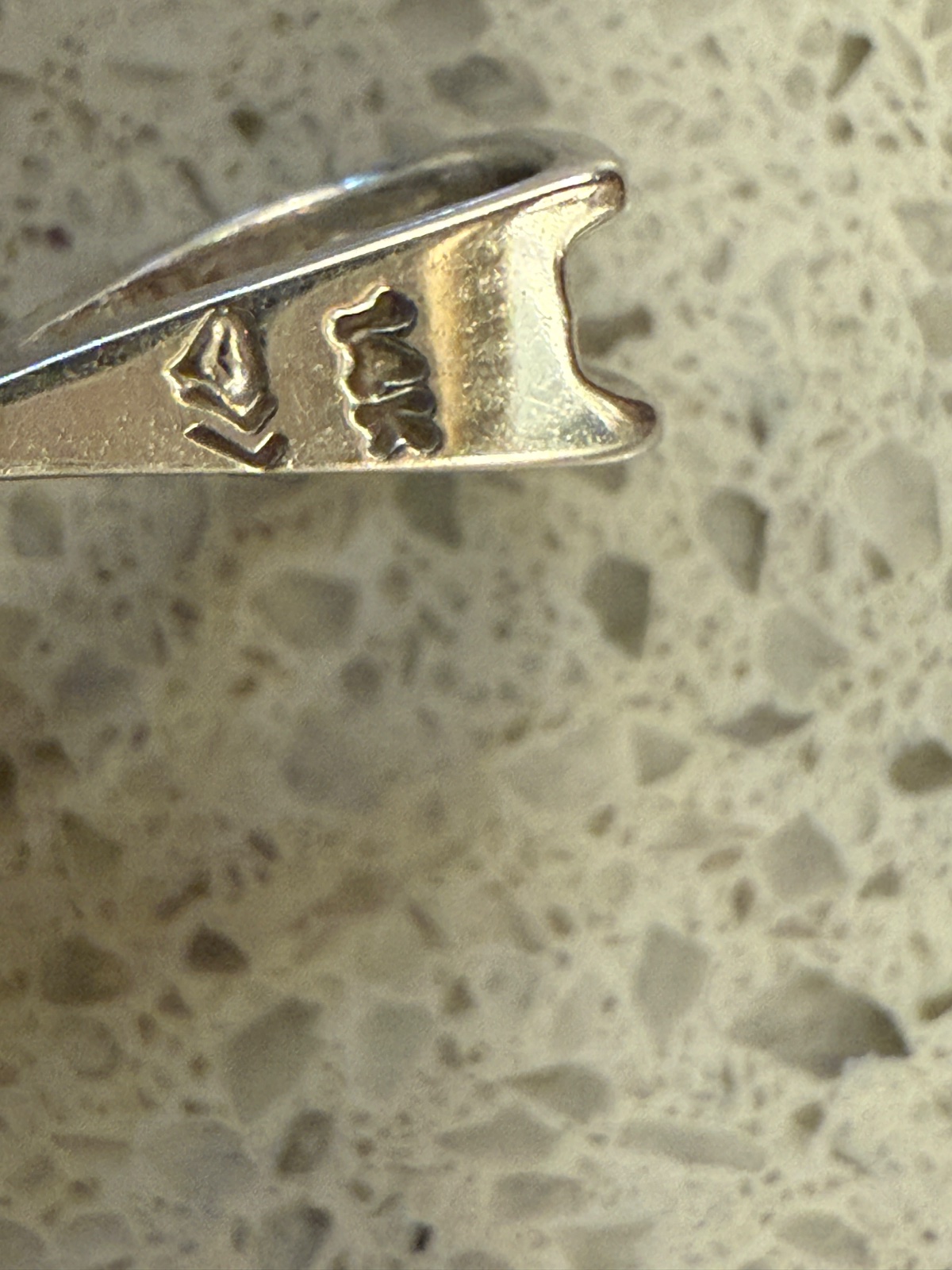
A macro examination reveals a die-struck pendant bail manufactured from 14-karat gold, evidenced by the standard American '14K' purity stamp. Beside the karat designation sits a distinct geometric manufacturer's hallmark—a stylized, hollow diamond or arrow form suspended above a wider chevron. The component demonstrates standard tapering construction with flared lower edges designed to accommodate a jump ring or direct pendant connection.
Origins and context
The use of the simple '14K' block stamp without the accompanying '585' metric equivalent strongly indicates American domestic market production. Following the National Gold and Silver Stamping Act amendments in 1961, US manufacturers were federally required to accompany karat marks with a registered trademark, explaining the precise placement of the geometric maker's logo directly adjacent to the purity stamp.
Further details
The mandatory pairing of a maker's mark alongside a karat stamp became US federal law in 1961 via an amendment to the National Gold and Silver Stamping Act.
Pendant bails of this flared 'rabbit ear' shape became standardized in commercial jewelry manufacturing during the 1950s to prevent flat pendants from flipping over while worn.
Attribution and evidence
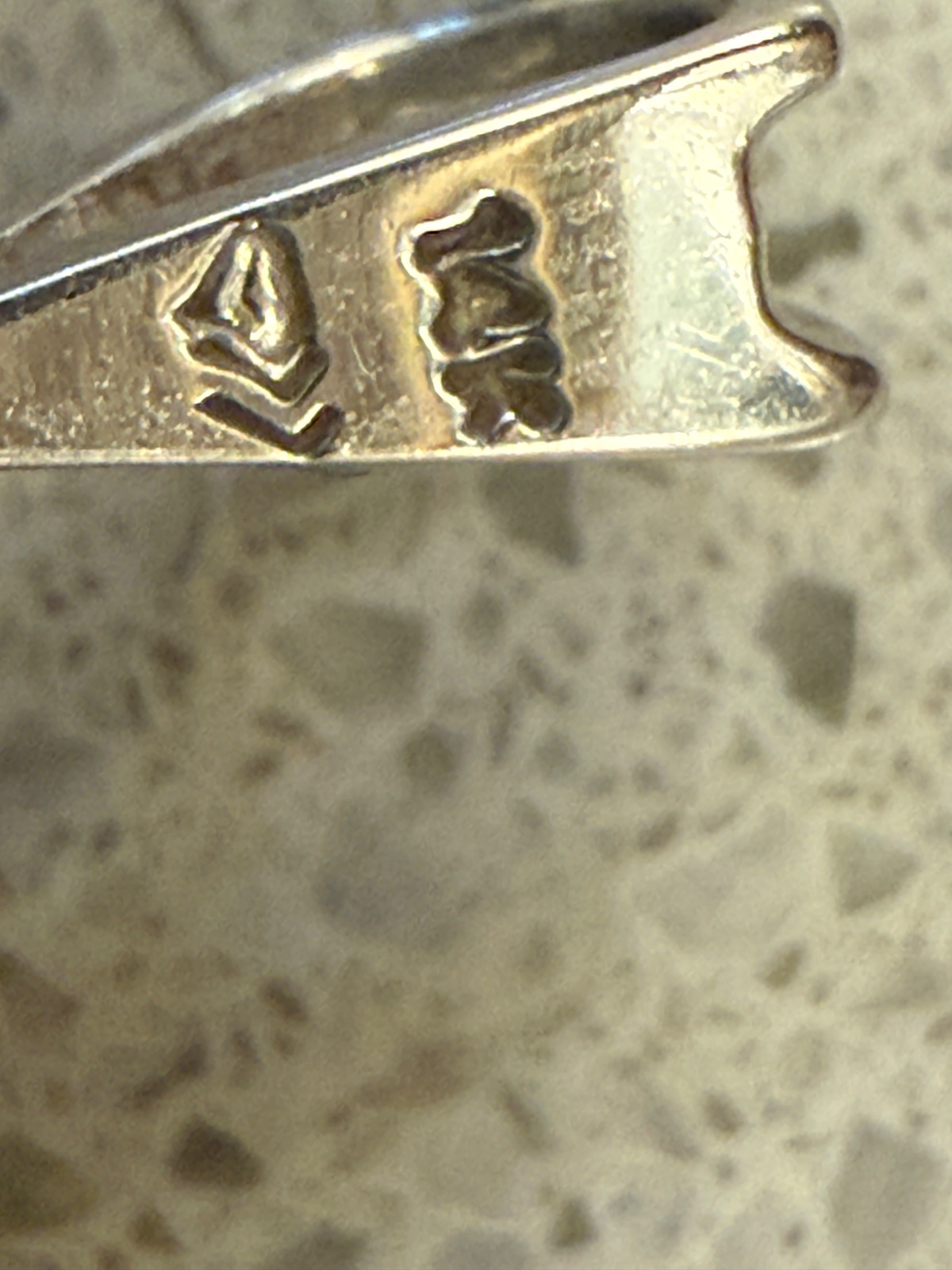
The macro photography provides excellent visibility of the die-struck hallmarks, allowing for high certainty regarding the component type and stated metal purity, though the specific manufacturer remains unassigned.
Identifying details
- 1Standard American '14K' die-struck purity stamp
- 2Presence of an identifying geometric manufacturer's trademark
- 3Flared style bail construction
- 4Directional surface abrasions indicative of chain friction
Photographs that would help
- Acid or XRF testing to definitively verify the 14-karat gold alloy content
- Full-item photography to evaluate the attached pendant or gemstone context
- Reference search in post-1960 domestic trademark registries to identify the specific geometric logo
Terms in this record
- Bail
- The structural jewelry component attached to a pendant that allows it to hang from a chain.
- Die-struck
- A manufacturing process where metal is stamped under high pressure between two steel dies, creating crisp, dense marks.
- Maker's Mark
- A registered trademark stamped on jewelry to identify the manufacturer, required by US law to accompany purity marks since 1961.
Wear and preservation
The hallmarks remain crisp and highly legible with distinct interior angles, and the metal shows only superficial surface wear without structural deformation or thinning at the apex.
The structural integrity of the bail remains excellent with no visible stress fractures or deep gouges, while the surface displays uniform micro-scratching consistent with normal friction against a metal chain.
Materials and construction
The metal surface exhibits a polished finish that has dulled over time, punctuated by random directional micro-abrasions and minor oxidation within the recesses of the die-struck hallmarks.
Recorded physical details
As a standalone component, this hollow-formed or lightly cast bail likely weighs under 0.5 grams, presenting a minimal physical profile intended primarily for structural support.
Scarcity and surviving examples
Ordinary · 3/10 estimated rarity
This is a qualitative collection score, not a measured survival count, market percentile or proof of authenticity.
What the photographs establish
Interpretation of the photographs and supplied context. This does not authenticate the object.
- The hallmarks are cleanly die-struck with proper metal displacement, typical of original manufacturing rather than cast reproductions.
- The '14K' stamp font and proportions align with standard mid-century American commercial jewelry production tools.
Value and its basis
Estimate recorded: Jul 23, 2026
How we estimate value
Estimate context (not a documented sale): Standard 14K gold vintage replacement bails routinely sell on jewelry supply platforms and secondary markets like eBay for $30 to $70 depending on gross weight.
Collectors and interest
Bench jewelers and restoration specialists seeking period-correct structural gold components for vintage pendant repairs.
What supports the estimate
- •Legibility of the original hallmarks
- •Lack of thinning or deep grooving on the interior curve where the chain rests
What could change it
- •Excessive wear at the friction point
- •Solder damage if improperly removed from an original pendant
Comparing quality
- •Heavy gauge gold construction
- •Identifiable signatures from highly sought-after vintage design houses
The effect of condition
Crispness of the stamped hallmarks and the thickness of the metal at the primary friction point.
Market interest
For informational purposes only, not a formal appraisal.
The collector’s account
Supporting details
- User's 'Mid-century' estimation aligns with the stamping style and the 1961 federal requirements for paired purity and maker's marks.
- User's 'Minor wear' assessment is confirmed by the presence of superficial micro-abrasions visible on the exterior surface.
Related objects
18K Two-Tone Gold Double Halo Pendant by RI
Shared title details
Artisan Studio Silver Pendant with Applied Maker Cartouche
Shared title details
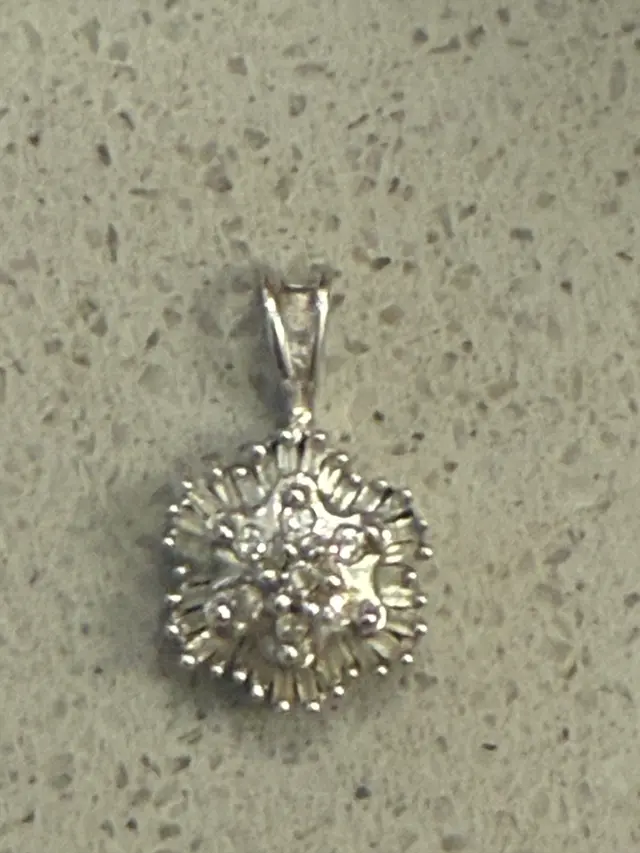
14K White Gold Cluster Pendant
Shared title details
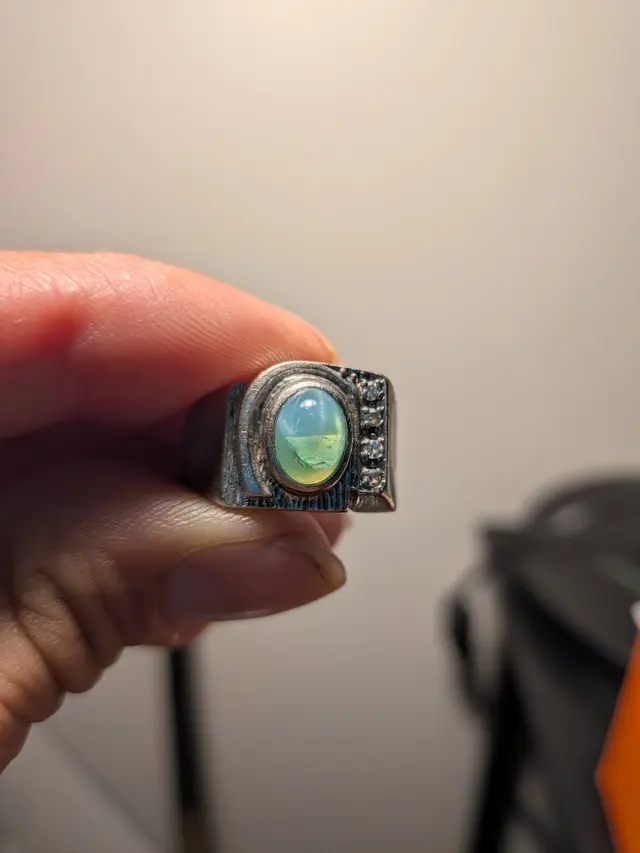
Mid-Century 14K White Gold Modernist Star Ring
Same category
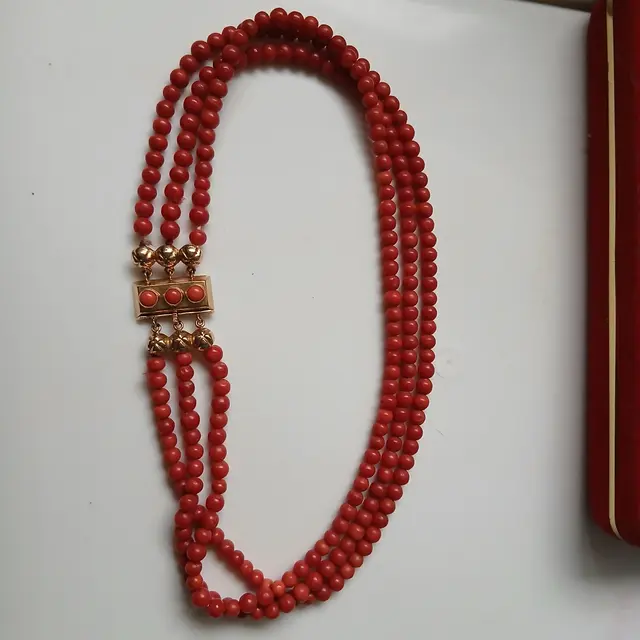
Triple-Strand Coral Bead Necklace with Gold-Tone Box Clasp
Same category
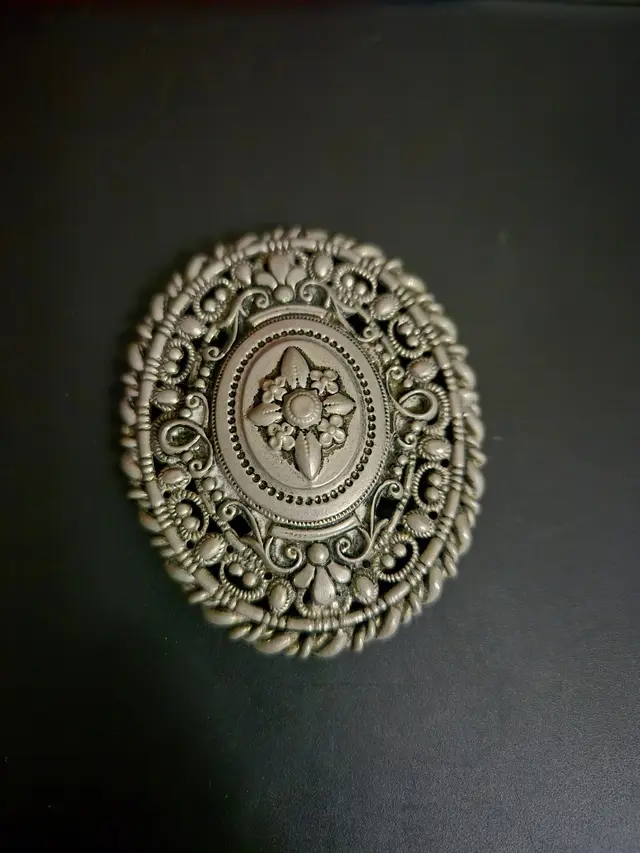
Intricately Filigreed Silver-Tone Brooch or Pendant
Same category
Explore Jewelry
Fine jewelry, costume pieces, rings, necklaces, bracelets, and brooches.
Jewelry value and rarity guideShare this find
A place for your jewelry
Keep its photographs, maker’s marks and the story you know in one object record. Start with a photo.
Create an account for 10 free scans. No credit card needed.
Join the conversation