
French Rococo Revival Armchair
Visual assessment
Photo analysis
Save to revisit in your watchlist. This does not add the object to your own collection.
French Rococo Revival Armchair
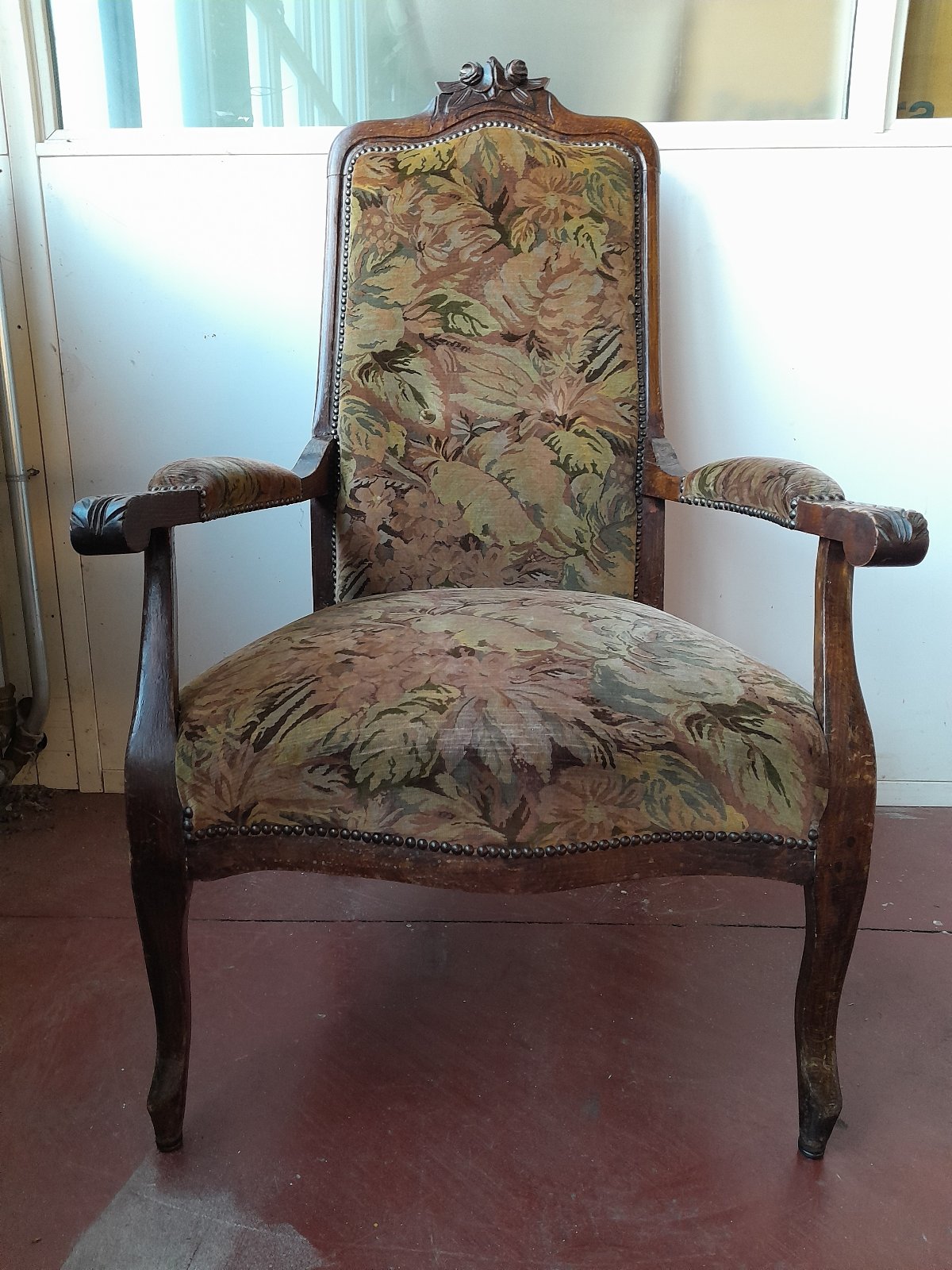
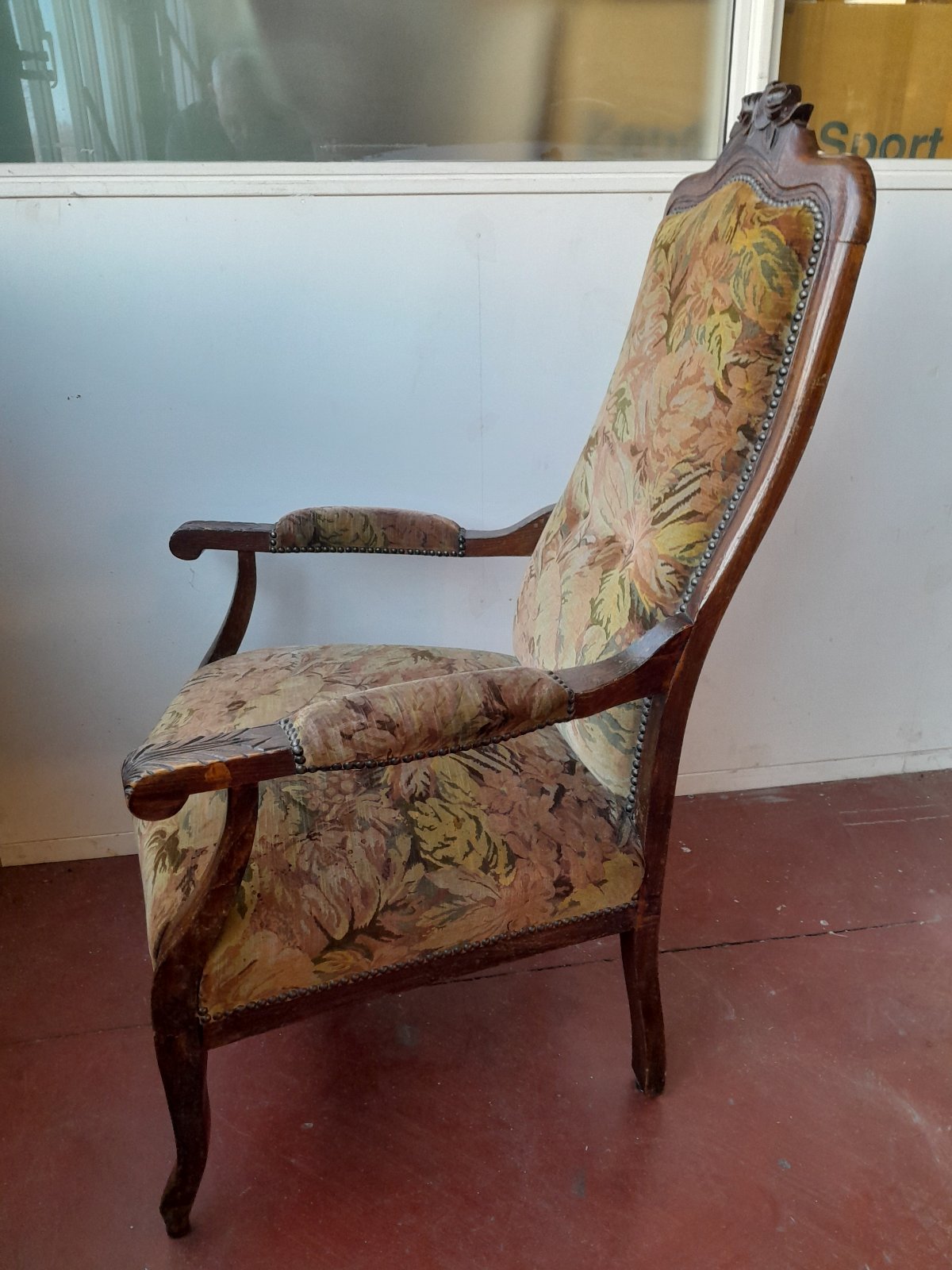
This appears to be a French Rococo Revival armchair, likely from the late 19th or early 20th century. My visual inspection highlights the carved crest rail with its shell and foliage motifs, and the curvilinear forms of the arms and cabriole legs. The upholstery, a floral tapestry-like fabric, is affixed with decorative nailheads, a common detail for this period.
Related traditions
Victorian England
Mid-to-late 19th Century
The Rococo Revival style was highly influential in Victorian design, particularly in parlor and drawing-room furniture, echoing the grandeur and ornate tastes of the era.
Belle Époque France
Late 19th to early 20th Century
The opulence and decorative excess of the Rococo Revival suited the aesthetic sensibilities of the Belle Époque, where comfort and elaborate design were.
Use and ceremony
18th Century Rococo
Symbolized the elegance and playful whimsy of the French aristocracy, associated with light, intimate salons.
19th Century Rococo Revival
Reinterpreted for a growing middle class, it signified upward mobility, historical appreciation, and a desire for ornate, visually rich home furnishings, often with more robust construction for everyday use.
Origins and context
The Rococo Revival style, peaking in the mid-19th century, drew heavily from the original 18th-century French Rococo, characterized by its playful asymmetry, elaborate curves, and decorative carving inspired by shells, scrolls, and natural forms. While the original Rococo was a reaction against Baroque grandeur, the 19th-century revival often combined these elements with a more robust construction, appealing to Victorian tastes for ornate yet comfortable household furnishings.
Further details
The 'cabriole leg' design, prominent on this chair, is inspired by a leaping goat, characterized by its s-shaped curve ending in an outward-pointing foot.
During the Rococo Revival, furniture makers often used steam-bending techniques to achieve the characteristic curves more efficiently than hand-carving alone.
Attribution and evidence
The visual cues strongly suggest a Rococo Revival style from the late 19th to early 20th century. My confidence is high regarding the stylistic identification, but moderate on exact dating and provenance due to the lack of visible construction details or maker's marks.
Identifying details
- 1Distinctive carved shell and foliage motifs on the crest rail and arm supports, characteristic of Rococo Revival.
- 2Cabriole legs and curvilinear frame reflect French Rococo aesthetics.
- 3Decorative nail head trim secures the upholstery, a common period application.
- 4The dark, aged wood finish and wear patterns suggest significant age, consistent with turn-of-the-century furniture.
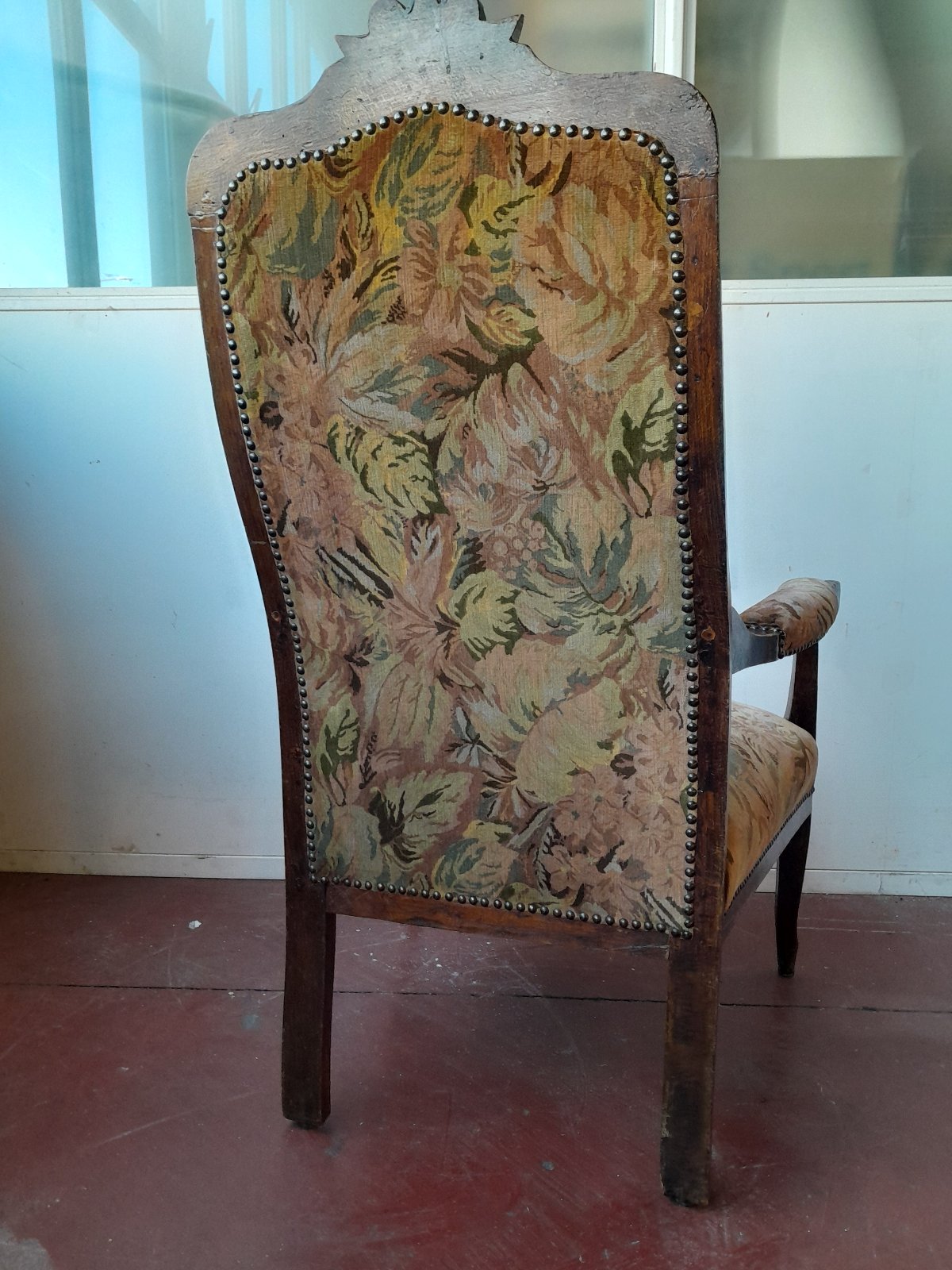
- 5The floral tapestry-like upholstery is typical of the decorative preferences of the late 19th and early 20th centuries.
Open questions
- •Lack of visible maker's marks or labels.
- •Uncertainty regarding the originality of the upholstery.
- •Potential for modern reproduction mimicking period style without clear construction insights.
Photographs that would help
- Examine the underside of the chair for any labels, stamps, or chalk marks.
- Photograph the joinery (e.g., where legs meet frame, arm attachment points) for evidence of hand-cut versus machine-cut connections.
- Remove a few nailheads or carefully inspect under the upholstery edge to assess construction methods and secondary wood species.
- Inspect hardware (e.g., any screws used) for type and tooling marks.
- Test the finish (e.g., UV light) for any evidence of later restoration or overpainting.
Terms in this record
- Cabriole Leg
- A furniture leg curved outwards from the top, then inwards at the bottom, terminating in an ornamental foot, mimicking the leap of a goat.
- Crest Rail
- The top, horizontal rail of a chair back, often carved or decorated.
- Nailhead Trim
- Decorative metal tacks or studs used to secure upholstery to a furniture frame, often arranged in a linear pattern.
- Patina
- A surface appearance of something grown beautiful with age or use; on wood, it refers to the mellowing of the finish and wood grain over time.
Wear and preservation
The chair appears structurally sound, though there is general wear to the wood finish, particularly on the lower portions of the legs. The upholstery shows signs of age, including some minor fraying and potential dirt accumulation, suggesting it may be original or an early re-upholstery. The securing nailheads appear largely intact.
Materials and construction
The wood surface appears to have a dark, possibly original, finish with a visible patina of age. The carved details show some softening from wear. The textile upholstery, while visually intact, exhibits some fading and compression, consistent with age and use.
Recorded physical details
Based on the apparent solid wood construction and the size, this chair would likely be moderately heavy, feeling substantial but not overly cumbersome.
Scarcity and surviving examples
Average · 4/10 estimated rarity
This is a qualitative collection score, not a measured survival count, market percentile or proof of authenticity.
What the photographs establish
Interpretation of the photographs and supplied context. This does not authenticate the object.
- No visible maker's marks or labels to confirm origin or period beyond stylistic cues.
- Reproduction Rococo Revival chairs were made for many decades; distinguishing a late 19th-early 20th century piece from a mid-20th century interpretation can be difficult without closer inspection of joinery and internal construction.
- Upholstery is old, but its originality to the chair's first period of manufacture (rather than an early re-upholstery) is not confirmable visually.
Value and its basis
Estimate recorded: Feb 27, 2026
How we estimate value
- No documented comparable sales are shown for this estimate
- Condition, completeness & craftsmanship
- Demand assumptions may not reflect current transactions
- The range is an estimate, not an asking price or sale result
For informational purposes only, not a formal appraisal.
Related objects
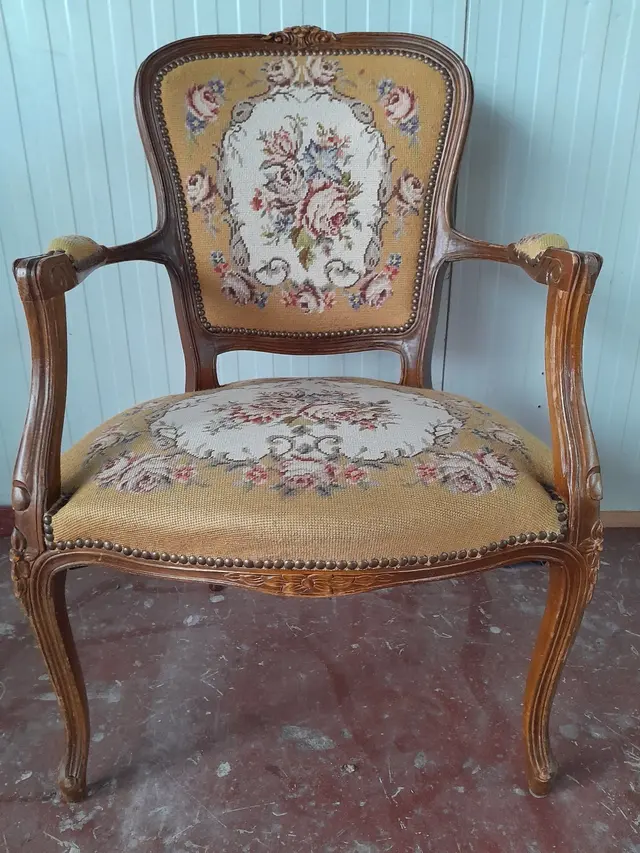
French Rococo Revival Armchair
Shared title details
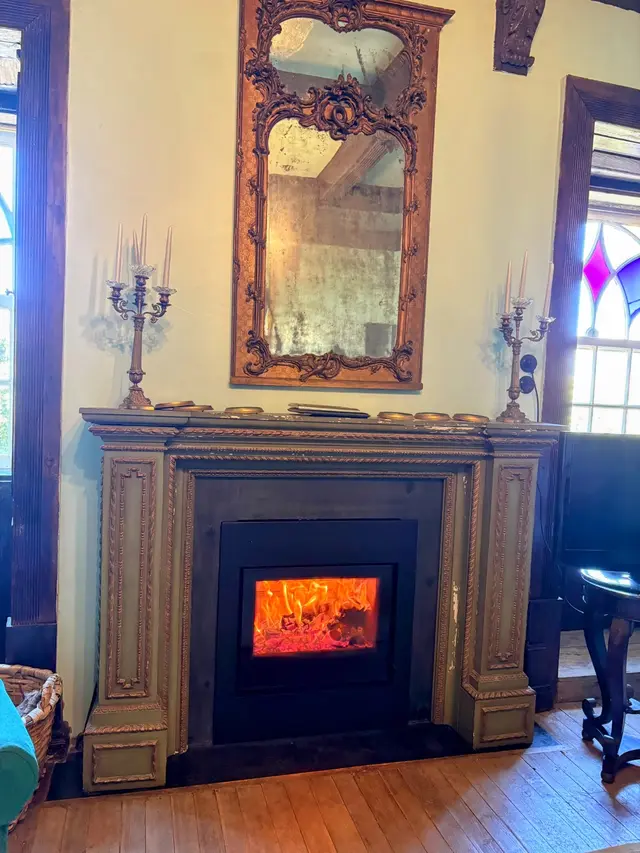
Neoclassical Painted Fireplace Mantel with Rococo Pier Mirror
Same category
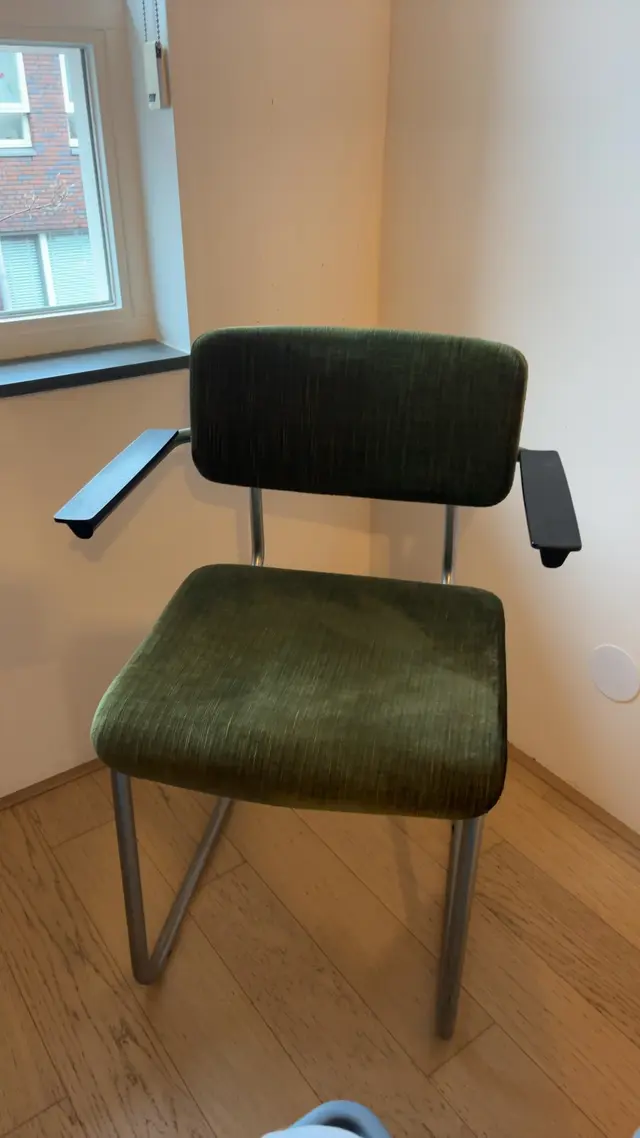
Mid-Century Modern Cantilever Armchair
Same category
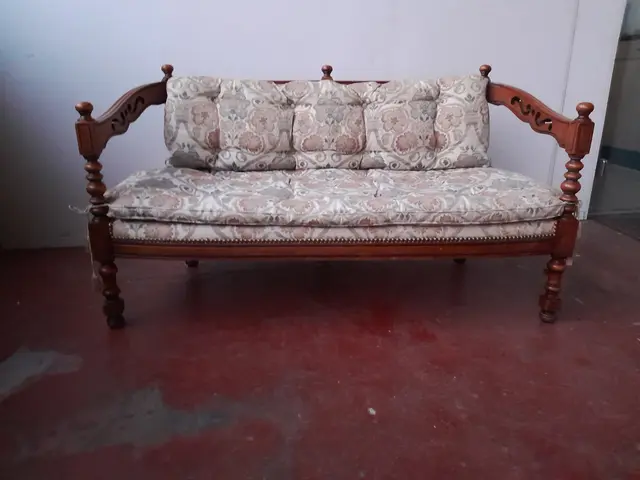
Victorian-Revival Upholstered Settee
Same category

Modern Fitted Kitchen with Neff Appliances
Same category
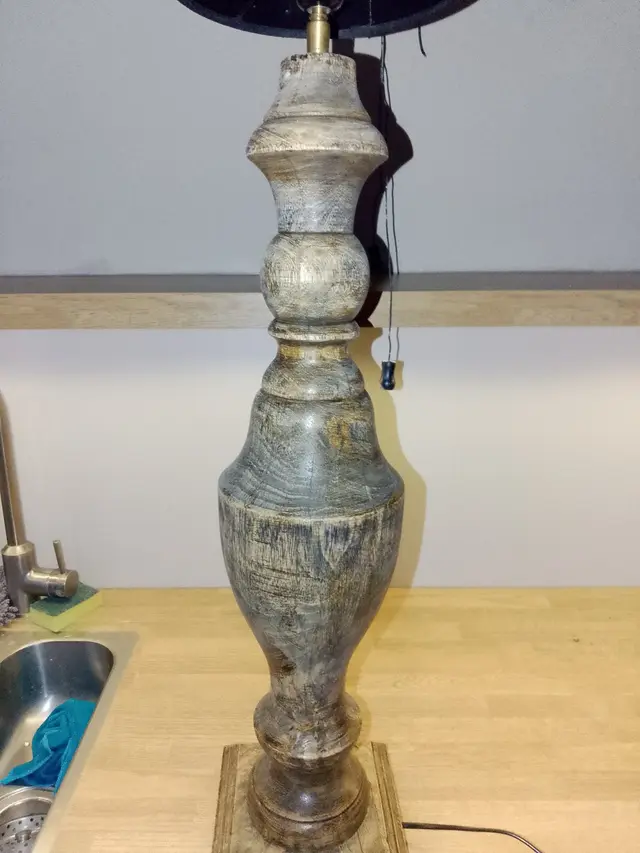
Turned Wood Table Lamp with Distressed Finish
Same category
Explore Interior
Furniture, lamps, lighting, chandeliers, decorative objects for the home.
Interior value and rarity guideShare this find
A place for your interior
Keep its photographs, maker’s marks and the story you know in one object record. Start with a photo.
Create an account for 10 free scans. No credit card needed.
Join the conversation