Pair of Regency/Biedermeier Style Side Chairs
Authenticity
PAIR OF REGENCY/BIEDERMEIER STYLE SIDE CHAIRS: IDENTIFICATION
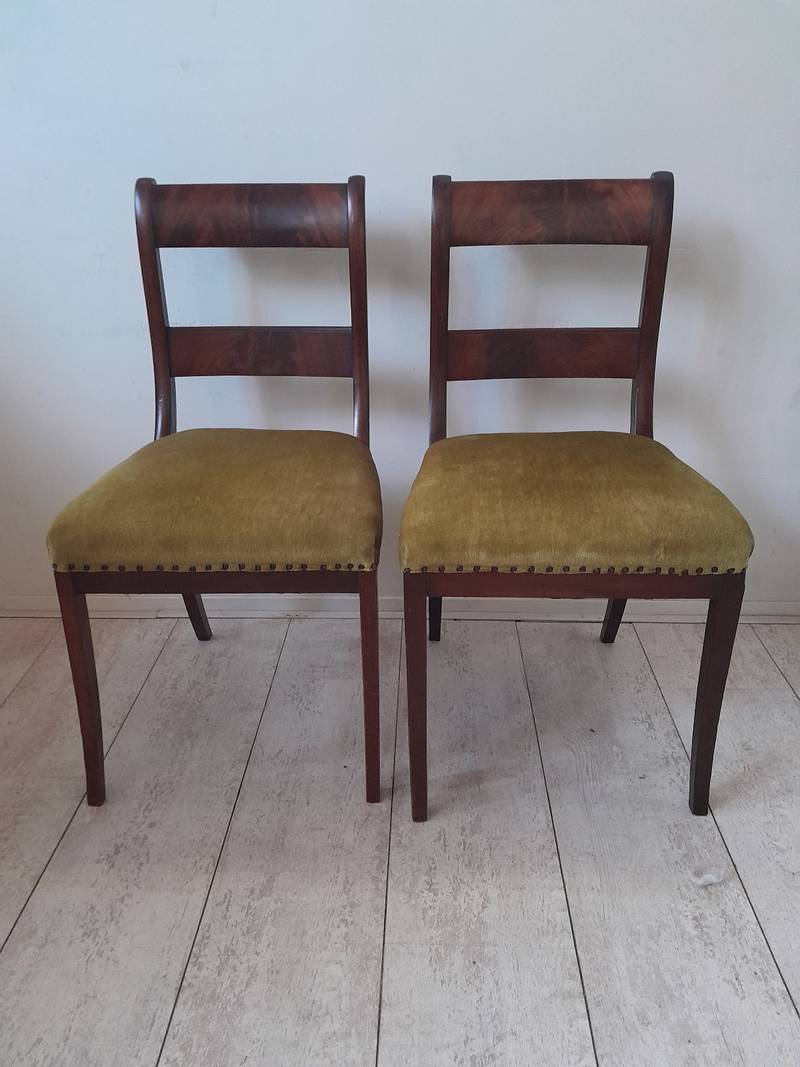
These appear to be a pair of side chairs, likely dating to the first half of the 19th century, exhibiting characteristics of both the English Regency and Central European Biedermeier styles. The primary wood is a warm-toned, figured hardwood, possibly mahogany or a similar timber, with a well-developed patina. The design is simple yet elegant, featuring saber legs and a ladder-back design on the crest rail, suggesting a neoclassicism that favored clean lines over excessive ornamentation. The upholstered seats, secured with decorative nail heads, provide a softened contrast to the polished timber.
CROSS-CULTURAL PARALLELS
Where This Object Echoes
The chairs' clean lines, saber legs, and emphasis on classical forms are hallmarks of the Neoclassical movement that influenced furniture design across Europe and America during the early 19th century.
Similar forms, particularly the saber leg and horizontal back slats, were popular in American furniture during the Federal period, demonstrating the transatlantic exchange of design ideas.
Ritual & Ceremonial Use
- •These chairs would have been used for formal dining or as occasional seating in drawing rooms or parlors, central to social gatherings and domestic life of the upper and middle classes.
- •The restrained elegance reflects a societal shift towards more intimate and comfortable home environments, moving away from the grander, more formal furniture of previous eras.
Meaning Through Time
These chair designs symbolized a refined taste, an appreciation for classical antiquity, and a sense of ordered elegance within the home.
Today, chairs of this style are often appreciated for their design, historical character, and ability to blend with both traditional and contemporary interiors, offering a touch of sophisticated vintage charm.
PRODUCTION PERIOD
SCARCITY
Typical antique shop fare. Requires some searching but regularly available. This is where most genuine antiques fall.
Typical Characteristics
- Standard antique shop items
- Regularly available
- Moderate collector interest
Confidence Factors
- Difficulty in definitively distinguishing period reproductions from true originals of this style without examining joinery details.
- Biedermeier and Regency styles have been widely replicated throughout subsequent periods, necessitating close inspection of construction.
- The upholstered seats could be later replacements, which does not necessarily detract from authenticity but impacts originality.
DESIGN HISTORIAN'S TAKE
Furniture Historian & Restoration Specialist
Confidence is good based on the overall classic lines, visible patina, and styling consistent with the Regency and Biedermeier periods. However, the lack of detailed joinery photos or specific historical marks limits a more precise attribution or definitive statement on originality.
KEY EVIDENCE
- 1Saber legs and horizontal slat back design align with early 19th-century Regency/Biedermeier styles.
- 2Rich, aged patina on the wood surface is consistent with antique furniture.
- 3Upholstered seat with decorative nail heads is a common feature of chairs from this period.
- 4Visible seat webbing construction on the underside indicates traditional upholstery methods, though likely re-webbed.
UNCERTAINTIES
- •Absence of clear joinery details (e.g., drawer construction, leg-to-seat frame attachment) makes definitive dating challenging.
- •Image quality does not allow for identification of original hardware or tool marks.
WHAT WOULD IMPROVE CERTAINTY
- →Obtain clear, well-lit close-up photographs of the joinery, particularly where legs meet the seat frame and any exposed structural joints.
- →Examine the underside of the wooden frame for any maker's marks, stamps, or labels.
- →Remove a few nail heads and inspect the wood beneath for evidence of prior upholstery fabric or finishing.
- →Inspect the screws used for the webbing or any structural repairs, noting screw slot type and shape (machine vs. hand cut).
CONDITION & GRADE
Condition
The chairs appear structurally sound from the visible angles. The seat webbing, as seen from the underside, shows some repair or re-webbing, which is common for chairs of this age. The upholstery itself seems fairly clean but may not be original, and the decorative nail heads are consistent. Minor surface wear and patination are present, which is desirable for antique furniture.
DESIGN MARKET VALUE
Updated: Feb 27, 2026
- Market comparables from auctions & retail
- Condition, completeness & craftsmanship
- Current collector demand & trends
- Low = quick sale, high = patient seller
For informational purposes only, not a formal appraisal.
ABOUT INTERIOR
Furniture, lamps, lighting, chandeliers, decorative objects for the home.
Interior value and rarity guideSHARE THIS CURIOSITY
Have your own curiosities to discover?
Scan Your Curiosity
COMMENTS