
Chinese Jadeite or Chalcedony Tools/Ornaments
Estimated value
$40 - $150Rarity
Average(4/10)Category
GemstonesEra
20th Century to ContemporaryOrigin
InternationalVisual assessment
Photo analysis
Save to revisit in your watchlist. This does not add the object to your own collection.
Chinese Jadeite or Chalcedony Tools/Ornaments
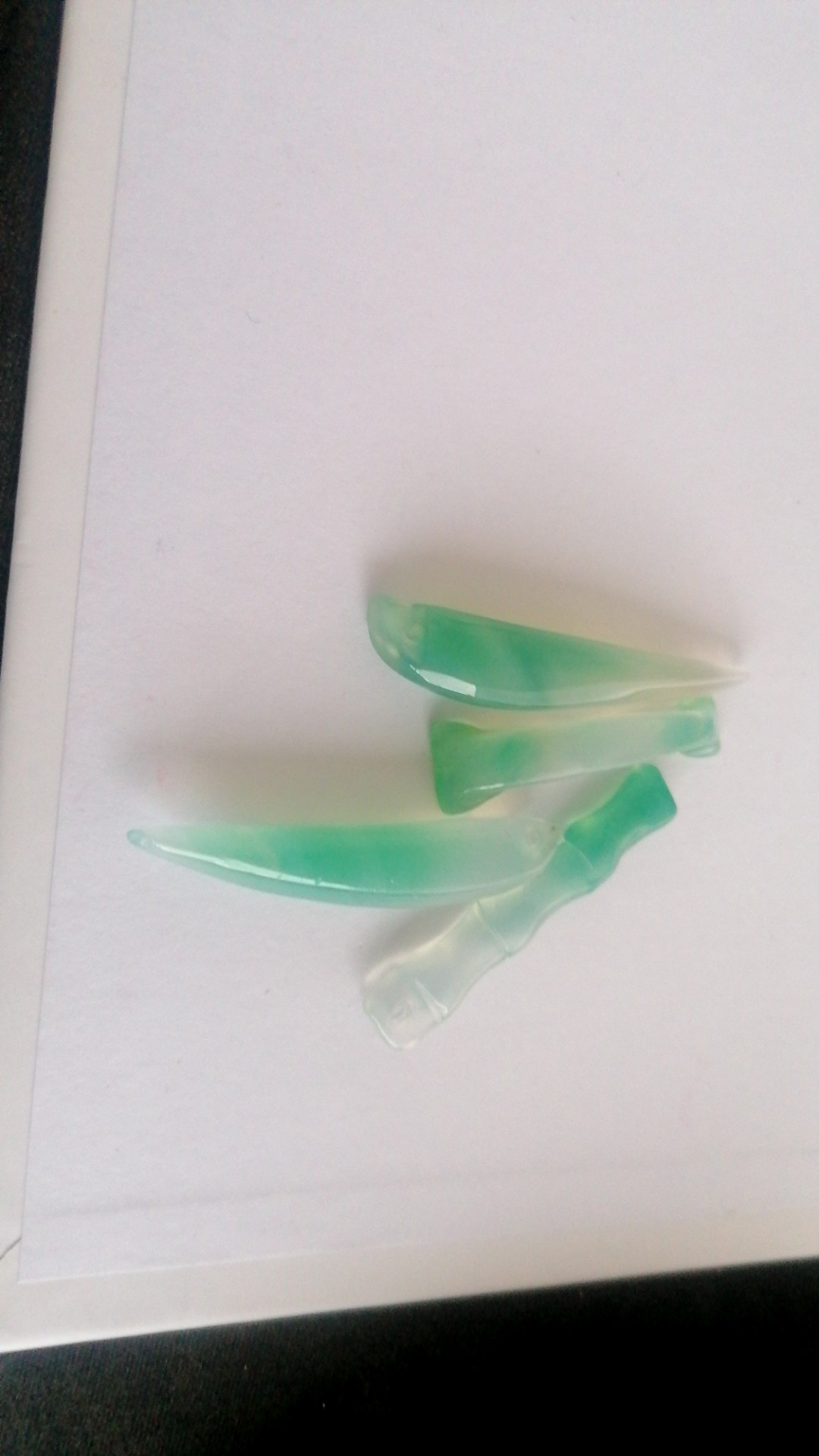
This image presents four carved translucent objects, exhibiting a delightful gradient from milky white to vibrant green. Their forms suggest they could be decorative elements, perhaps for hairpins or small tools, or even components for larger assemblages characteristic of traditional East Asian craftsmanship. The translucency points towards a quartz variety like chalcedony or potentially jadeite, typically valued for its lustrous finish and rich color variations.
Related traditions
Chinese Artistry
Neolithic to Contemporary
The traditional reverence for jade and similar translucent stones, carved into items for adornment, ritual, or scholarly appreciation.
Ancient Egyptian Jewelry
Dynastic periods
Use of chalcedony and similar quartz varieties for amulets and decorative elements, for color and perceived metaphysical properties.
Use and ceremony
Ancient China
Jade was seen as a bridge between heaven and earth, symbolizing immortality, purity, and imperial power.
18th-19th Century Europe
Chalcedony and other 'hardstones' were collected as curiosities and admired for their natural beauty in cabinets of wonder, often set into ornate decorative objects.
Origins and context
The carving of minerals like jade and chalcedony into decorative and functional objects has a long and history in East Asia, stretching back millennia. Such pieces often held symbolic meaning, representing purity, longevity, or protection. While these specific forms are somewhat ambiguous, they align with a broader tradition of meticulously carved gemstones used for personal adornment, ritual, or scholarly accoutrements.
Further details
Chalcedony, a form of crypto-crystalline quartz, can come in a vast array of colors, from the familiar blue to green (chrysoprase) and reddish-brown (carnelian).
In ancient China, jade (both nephrite and jadeite) was considered more precious than gold, often associated with imperial power and immortality.
Attribution and evidence
My confidence is moderate as the visual evidence strongly suggests high-quality carved gemstone pieces, but specific identification of the mineral (jadeite vs. chalcedony) and definitive age or origin remains speculative without further physical analysis or clear provenance.
Identifying details
- 1Translucent properties of the material, consistent with chalcedony or jadeite.
- 2Smooth, polished surfaces with no discernible tool marks, indicating fine lapidary work.
- 3Color gradient from milky white to vibrant green, suggestive of natural stone variations.
- 4Shapes appear to be carved and polished components rather than raw mineral specimens.
Open questions
- •Absence of scale makes precise size assessment difficult.
- •Ambiguity in specific stone identification without further testing.
- •Lack of manufacturing or artist marks for attribution.
Photographs that would help
- Obtain close-up images of any hidden corners or edges for tool mark analysis.
- Perform a specific gravity test to help distinguish between jadeite and chalcedony.
- Consult a qualified gemologist for definitive material identification.
- Measure the precise dimensions of each piece.
Terms in this record
- Chalcedony
- A cryptocrystalline form of silica, composed of very fine intergrowths of quartz and moganite. It has a waxy luster, and can be translucent or semi-translucent.
- Jadeite
- A pyroxene mineral, one of the two types of jade (the other being nephrite). Highly valued for its intense green color and exceptional toughness, particularly in East Asian cultures.
- Lapidary
- The art of cutting, shaping, and polishing stones, particularly gemstones, into decorative objects, cabochons, or facets.
Wear and preservation
The overall condition appears excellent, with a well-maintained polished finish. I observe no visible chips, cracks, or significant abrasions on the surfaces from the images provided. The integrity of the carving seems intact.
Materials and construction
The objects possess a smooth, polished, and glossy surface, displaying good translucency. The color transition, particularly notable in the two larger pieces, suggests natural variation within the material rather than artificial coloring. There are no obvious signs of significant wear or surface degradation, maintaining a clean, vibrant aesthetic.
Recorded physical details
Given their size and apparent material, these pieces likely feel relatively substantial for their small scale, embodying the cool, dense characteristic of carved stone. They would not feel lightweight or hollow.
Scarcity and surviving examples
Average · 4/10 estimated rarity
This is a qualitative collection score, not a measured survival count, market percentile or proof of authenticity.
What the photographs establish
Interpretation of the photographs and supplied context. This does not authenticate the object.
- Gemstone identification from images alone is indicative, not definitive; specific type (jadeite vs. chalcedony) requires testing.
- Small carved objects are frequently replicated or made from synthetic materials, especially for popular stone types.
- Lack of maker's marks or detailed provenance makes precise attribution difficult.
- Difficulty in ruling out dyed natural stones or composite materials without physical examination.
Value and its basis
Estimate recorded: Feb 27, 2026
How we estimate value
- No documented comparable sales are shown for this estimate
- Condition, completeness & craftsmanship
- Demand assumptions may not reflect current transactions
- The range is an estimate, not an asking price or sale result
For informational purposes only, not a formal appraisal.
Related objects
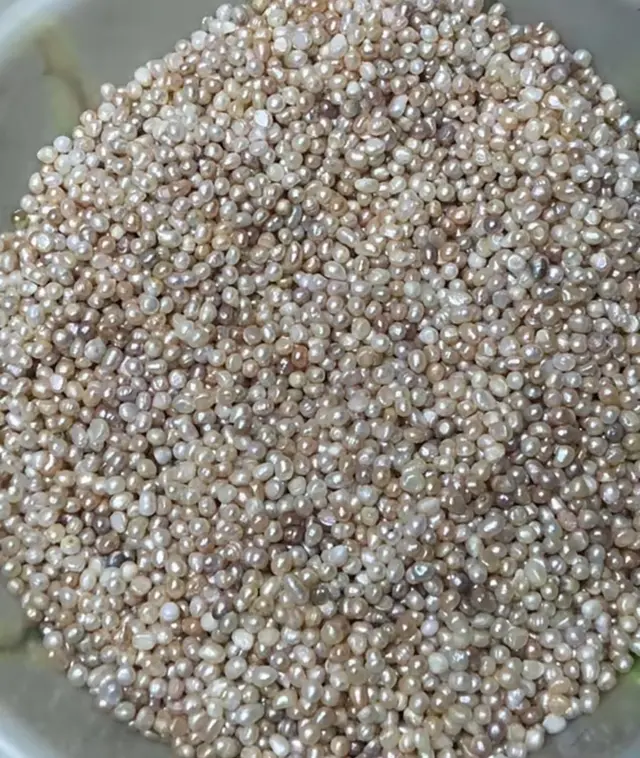
Chinese Freshwater Baroque Pearl Loose Parcel (500g)
Same category
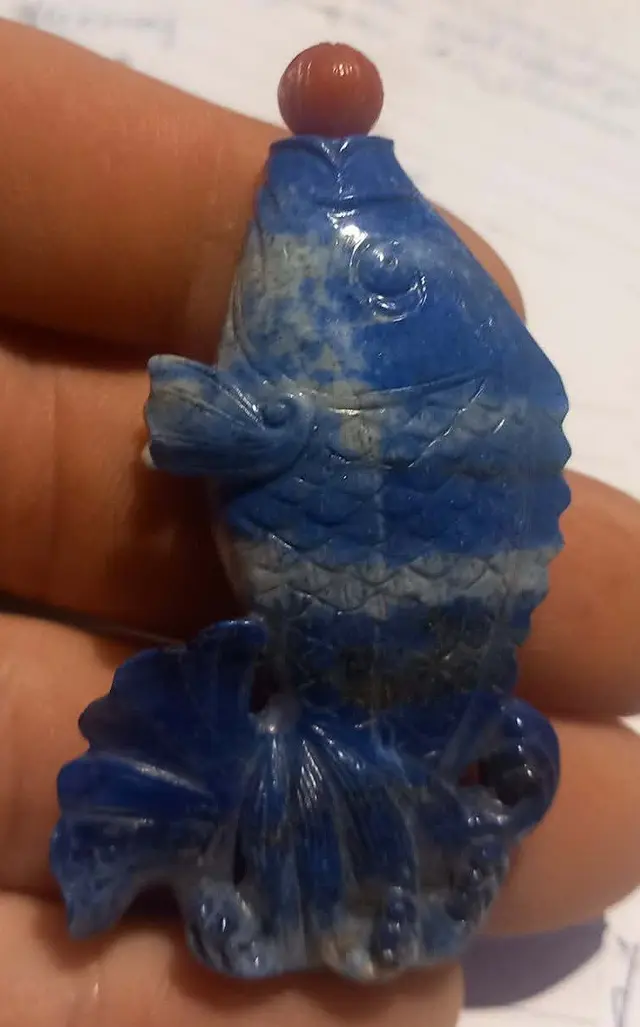
Chinese Lapis Lazuli Carp Pendant with Carnelian Bead
Same category
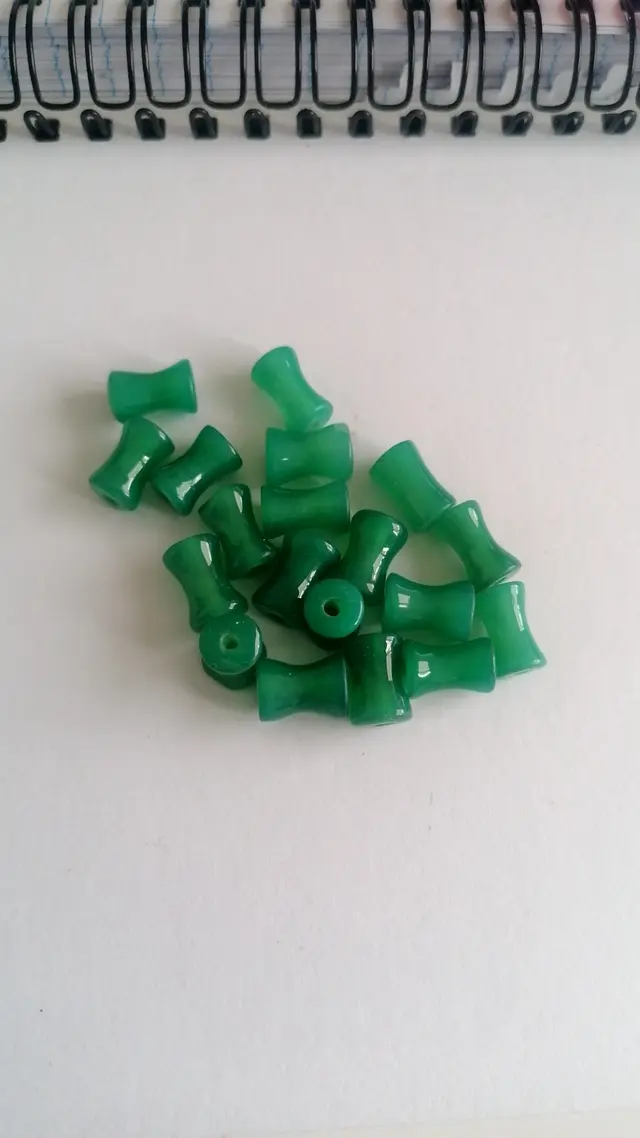
Green Agate Bi-Cone Beads
Same category
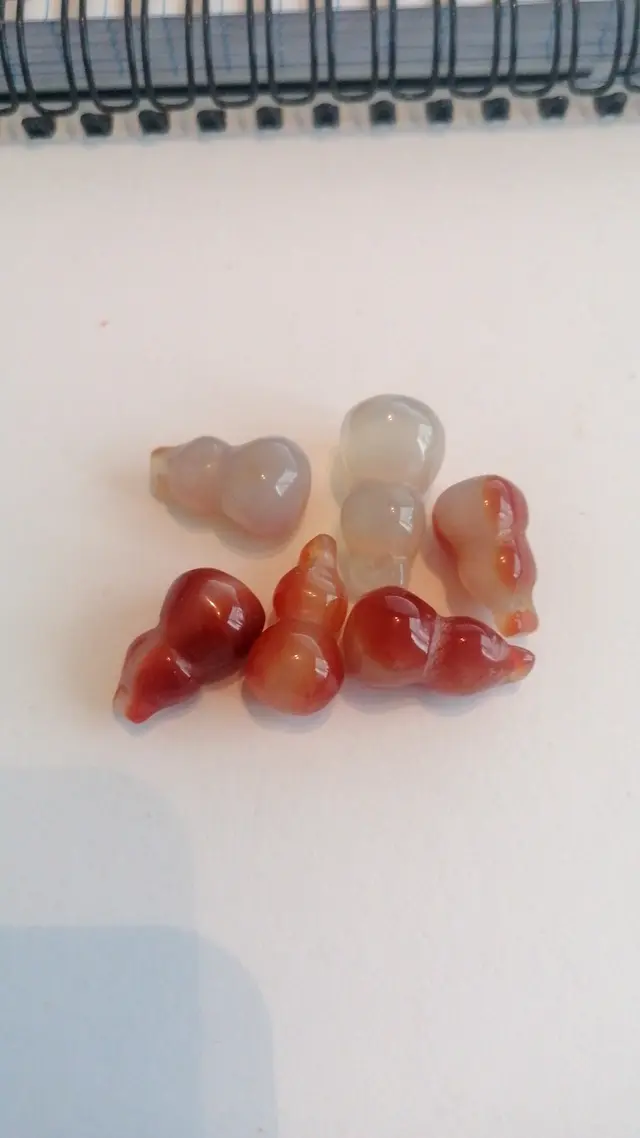
Carved Agate Gourd (Hulu) Beads/Charms
Same category
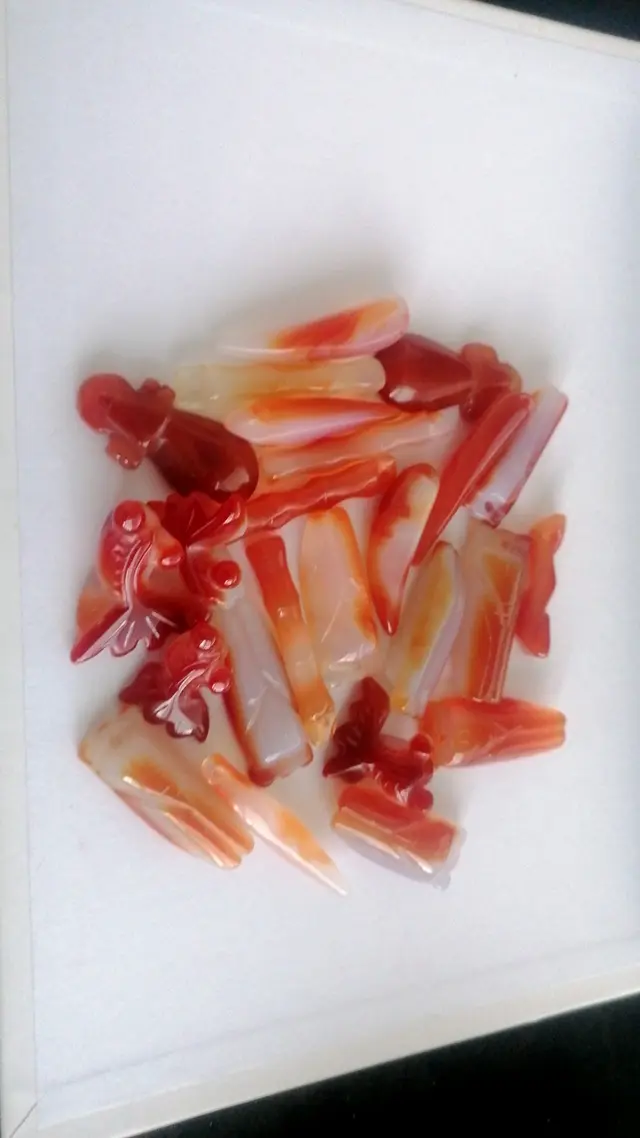
Mixed Lot of Carved Carnelian and Agate Cabochons/Pendant Blanks
Same category
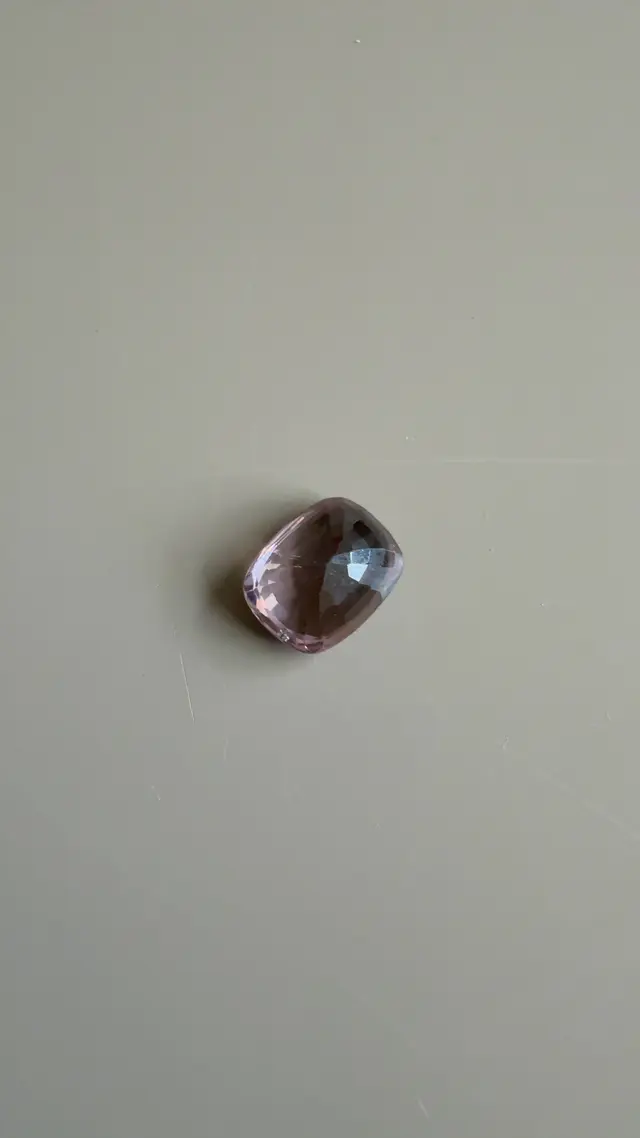
Pink cushion-cut stone, described as spinel by ALGT
Same category
Explore Gemstones
Precious stones, semi-precious gems, minerals, crystals, and geological specimens.
Gemstones value and rarity guideShare this find
A place for your gemstones
Keep its photographs, maker’s marks and the story you know in one object record. Start with a photo.
Create an account for 10 free scans. No credit card needed.
Join the conversation