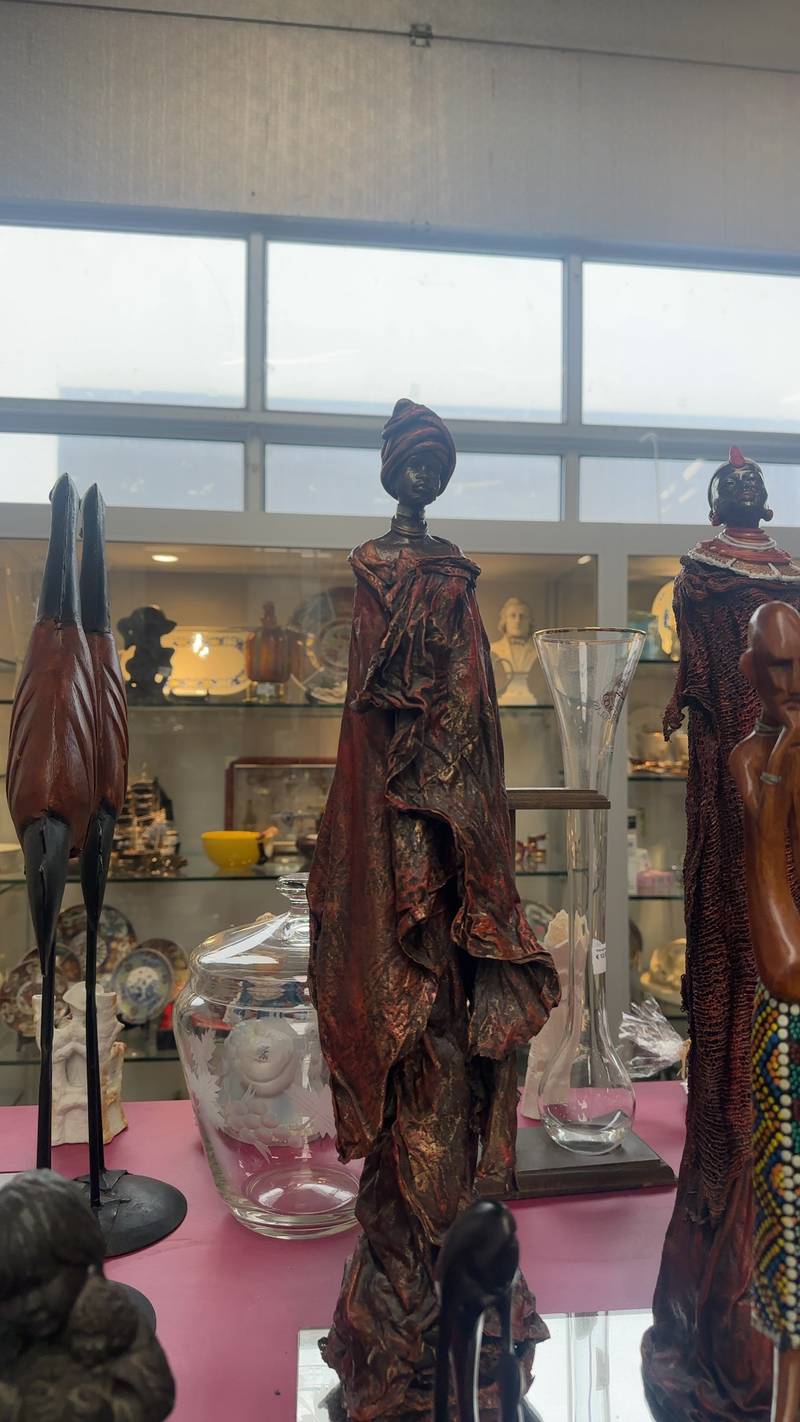
Figurine of a North African or Middle Eastern Woman
Estimated value
$40 - $120Rarity
Ordinary(3/10)Category
Decorative ObjectsEra
Late 20th Century to Early 21st CenturyOrigin
InternationalAuthenticity
FIGURINE OF A NORTH AFRICAN OR MIDDLE EASTERN WOMAN: IDENTIFICATION
This appears to be a decorative figurine, depicting a woman in draped attire, possibly a North African or Middle Eastern figure given the head covering. The material suggests a resin or composite with a metallic finish, mimicking bronze or patinated copper. The draping of the garment is quite expressive, indicating an emphasis on sculptural form and texture rather than fine detail in the facial features.
SCARCITY
Standard antiques commonly found at estate sales and flea markets. Plentiful supply meets modest demand.
Typical Characteristics
- Moderate production runs
- Common at estate sales
- Entry-level collectibles
Confidence Factors
- This type of decorative item is not commonly faked.
- The material and finish are consistent with contemporary decorative production.
- There are no claims of valuable materials (e.g., bronze) that would invite forgery.
DECORATIVE ARTS EXPERT'S TAKE
Decorative Arts Specialist
Confidence is good as the general type, material impression, and likely age are clearly discernible. However, precise material and origin without any marks remain an estimation.
KEY EVIDENCE
- 1The sculptural style emphasizes draped fabric and texture, suggesting a more modern decorative approach.
- 2The metallic finish over what appears to be a composite material, rather than solid cast metal.
- 3Lack of discernible artist signature or foundry marks, common for mass-produced decorative items.
- 4The general aesthetic aligns with contemporary home decor trends that draw inspiration from global cultures.
UNCERTAINTIES
- •The specific material is difficult to ascertain precisely from the image alone (bronze vs. resin with metallic finish).
WHAT WOULD IMPROVE CERTAINTY
- →Examine the base for any maker's marks, labels, or inscriptions.
- →Gently tap the figure; a hollow, resonant sound would suggest resin or composite, while a dull 'thud' would suggest solid material.
- →Observe the specific color and texture of the 'metal' close up to determine if it's painted resin, patinated bronze, or another material.
- →Consider holding the piece to gauge its weight, which could help differentiate between materials.
CONDITION & GRADE
Condition
From the image, the condition appears generally good. There are no obvious chips or breaks. The metallic finish shows some wear or intentional distressing, contributing to its aged aesthetic.
DECORATIVE ARTS VALUATION
Updated: Feb 27, 2026
- Market comparables from auctions & retail
- Condition, completeness & craftsmanship
- Current collector demand & trends
- Low = quick sale, high = patient seller
For informational purposes only, not a formal appraisal.
ABOUT DECORATIVE OBJECTS
Silver, glassware, metalwork, enamelwork, and decorative arts.
Decorative Objects value and rarity guideSHARE THIS CURIOSITY
Have your own curiosities to discover?
Scan Your Curiosity
COMMENTS