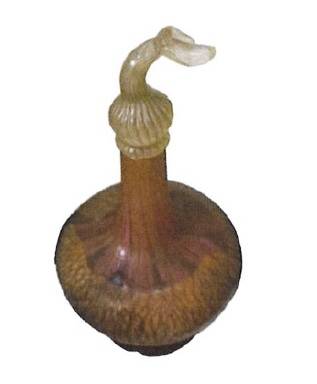
Emile Gallé Art Nouveau Glass 'Bulbe d'Oignon' Flacon - c.1900
Estimated value
$1,200 - $2,800Rarity
Scarce(6/10)Category
Decorative ObjectsBrand
GalléEra
circa 1900Origin
FranceArtist / Creator
Émile GalléAuthenticity
EMILE GALLÉ ART NOUVEAU GLASS 'BULBE D'OIGNON' FLACON - C.1900: IDENTIFICATION
A late 19th or early 20th-century glass flacon featuring an 'onion bulb' (bulbe d'oignon) form, a signature motif of the Ecole de Nancy. The vessel is composed of multi-layered cameo glass, displaying a gradient of amber to deep brown tones with an acid-etched or wheel-carved botanical texture. The stopper is hand-formed with a vertical organic twist and a flaring finial, characteristic of Gallé's 'verre parlant' or nature-inspired output.
CROSS-CULTURAL PARALLELS
Where This Object Echoes
The asymmetrical organic form reflects the late 19th-century European fascination with Japanese Edo-period ceramics and nature studies.
Ritual & Ceremonial Use
- •The use of perfume flacons in the late Victorian/Edwardian boudoir served as a status symbol of hygiene and luxury.
Meaning Through Time
A high-art object celebrating the synthesis of industrial technique and natural poetry.
A blue-chip investment piece for collectors of Art Nouveau and European glass history.
PRODUCTION PERIOD
COLLECTOR NOTES
Emile Gallé often used a 'star' mark next to his signature on pieces produced shortly after his death in 1904, helping collectors date production to the 1904-1906 window.
The 'onion bulb' shape was specifically inspired by Gallé's own botanical garden in Nancy, which contained over 3,000 plant species used for direct study.
SCARCITY
Genuinely harder to find. Perhaps only dozens come to market annually. Collectors actively watch for these pieces.
Typical Characteristics
- Dozens per year at market
- Documented provenance valued
- Active collector pursuit
Confidence Factors
DECORATIVE ARTS EXPERT'S TAKE
Decorative Arts Specialist
Identification of the form and style is high, but the prevalence of sophisticated modern reproductions in this specific category necessitates a cautious confidence score until the signature is verified.
CONDITION & GRADE
Grading breakdown
Grade assigned based on the presence of the original matching stopper and lack of visible internal clouding or exterior surface scratches.
Condition
Visually consistent with the user's 'Mint' assessment; no visible fleabites to the rim or chips to the delicate stopper finial are apparent in the provided view.
DECORATIVE ARTS VALUATION
Updated: Sep 3, 2026
- Market comparables from auctions & retail
- Condition, completeness & craftsmanship
- Current collector demand & trends
- Low = quick sale, high = patient seller
For informational purposes only, not a formal appraisal.
YOUR INPUT VS. SCAN
How your provided context compares with Curiosa.com scanner findings.
What Aligned
- User's identification as 'flacon verre bulbe d'oignon' aligns perfectly with the visual silhouette and Ecole de Nancy design language.
- Attribution to Gallé is consistent with the botanical motif and layered glass technique.
ABOUT DECORATIVE OBJECTS
Silver, glassware, metalwork, enamelwork, and decorative arts.
Decorative Objects value and rarity guideSHARE THIS CURIOSITY
Have your own curiosities to discover?
Scan Your Curiosity
COMMENTS