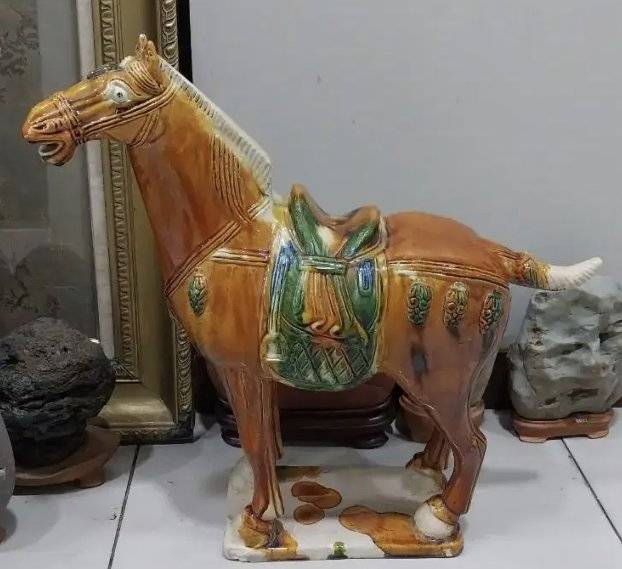
Tang-Style Sancai Glazed Ceramic Horse
Estimated value
$150 - $450Rarity
Ordinary(3/10)Category
Ceramics & PotteryEra
mid-to-late 20th centuryOrigin
ChinaAuthenticity
TANG-STYLE SANCAI GLAZED CERAMIC HORSE: IDENTIFICATION
A lead-glazed earthenware tomb figure modeled in the Tang Dynasty style, featuring a caparisoned horse standing on a rectangular plinth. The body is decorated with amber, green, and cream lead silicates, known as sancai (three-color) glaze. The figure displays molded floral medallions on the harness and a green-glazed saddle cloth with draped stirrup guards. Visual evidence suggests 20th-century production rather than 8th-century origin, noted by the uniform density of the glaze pooling and the crispness of the molded tassels.
PRODUCTION & FIRING
SCARCITY
Standard antiques commonly found at estate sales and flea markets. Plentiful supply meets modest demand.
Typical Characteristics
- Moderate production runs
- Common at estate sales
- Entry-level collectibles
Confidence Factors
- Glaze shows no sign of 'silvery' lead decomposition or iridescence expected in 1,200-year-old pieces
- Overall sharpness of molded details on the medallions suggests modern mold usage
- Color palette is overly saturated compared to excavated Tang specimens
Expert review recommended. Consider consulting a specialist before making purchasing decisions.
CERAMICIST'S ASSESSMENT
Ceramics Historian & Kiln Specialist
Identification of the style and production era is high based on glaze behavior and molded details, though a definitive date requires physical inspection of the paste texture.
KEY EVIDENCE
- 1Lead-glaze palette consistent with 'sancai' export wares from the 1960s-1980s.
- 2Absence of authentic craquelure or glaze 'stripping' common in buried ceramics.
- 3Form matches standard export models listed in Christies and Sothebys low-value decorative sales.
- 4The plinth shows deliberate pigment splattering rather than natural mineral accretion.
UNCERTAINTIES
- •Lack of 'root marks' or calcium deposits on the unglazed portions.
- •Glaze pooling colors are too uniform and lack the chemical variation of traditional wood-fired kilns.
WHAT WOULD IMPROVE CERTAINTY
- →Inspect the underside of the base for kiln spur marks or modern factory stamps.
- →Perform a 'lick test' on the unglazed portion; authentic porous earthenware will stick slightly to the tongue.
- →Examine under 10x magnification for modern crazing (often induced by thermal shock).
CONDITION & GRADE
Grading breakdown
The figure lacks structural breaks or repairs, common in older ceramics. Minor surface scratching is present but consistent with 40-60 years of age.
Condition
Slight abrasions visible on the amber glaze of the neck and flanks. The white base plinth shows artificial staining to simulate soil immersion, though the glaze integrity suggests indoor display and nominal age.
CERAMICS MARKET VALUE
Updated: May 11, 2026
Who buys this
Interior designers and collectors of Asian-inspired decor rather than institutional antiquities buyers.
What increases value
- •Large scale (over 15 inches height)
- •Vibrant green glaze retention
- •Lack of visible limb repairs
What lowers value
- •Market saturation of 20th-century Tang-style replicas
- •Low demand for unauthenticated earthenware among high-tier collectors
What makes top-tier examples
- •Authentic TLD (Thermoluminescence) dating to the Tang period
- •Naturally occurring 'silvery' iridescence on the glaze surface
Grade & condition
Completeness of the tail and ears; lack of chips on the fragile harness medallions; glaze gloss levels.
Rarity & demand
For informational purposes only, not a formal appraisal.
ABOUT CERAMICS & POTTERY
Pottery, porcelain, stoneware, earthenware, and kiln-fired objects.
Ceramics & Pottery value and rarity guideSHARE THIS CURIOSITY
Have your own curiosities to discover?
Scan Your Curiosity
COMMENTS