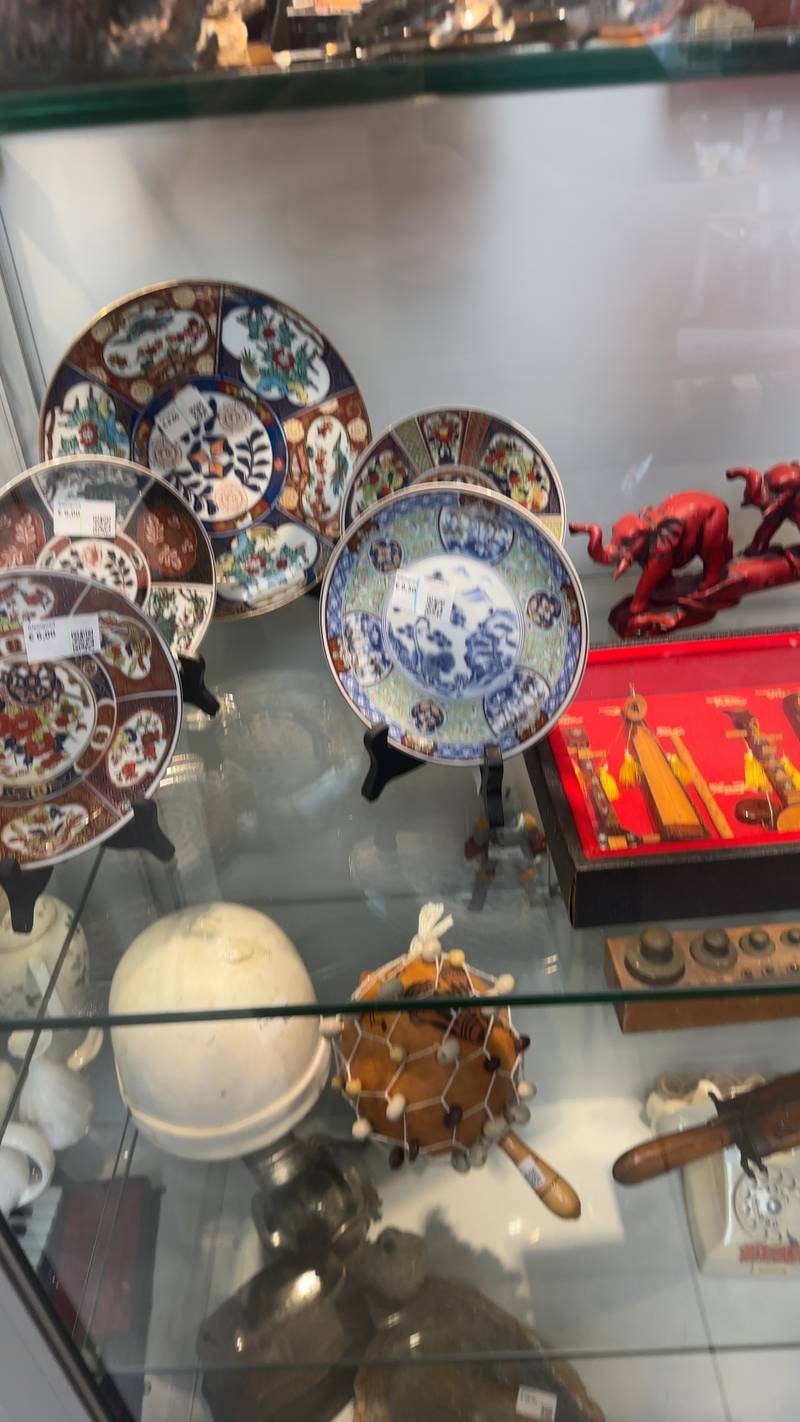
Japanese Imari-style Porcelain Plate with Landscape Motif
Estimated value
$40 - $120Rarity
Average(4/10)Category
Asian ArtEra
Late 19th to Early 20th Century (Meiji-Taisho Period)Origin
JapanAuthenticity
JAPANESE IMARI-STYLE PORCELAIN PLATE WITH LANDSCAPE MOTIF: IDENTIFICATION
This appears to be a Japanese porcelain plate, rendered in what is commonly referred to as Imari style. The central medallion features a traditional blue and white landscape scene, depicting mountains, water, and perhaps a building or two. This central design is then encircled by panels of colored enamels – green, rust-red, and gold – against a white ground, typically including floral or geometric patterns. While displaying characteristics of the Imari palette and decorative layout, the style of the blue and white landscape suggests a later production, potentially Meiji period or later, aiming to combine different decorative traditions within a single piece.
DYNASTY & PROVENANCE
SCARCITY
Typical antique shop fare. Requires some searching but regularly available. This is where most genuine antiques fall.
Typical Characteristics
- Standard antique shop items
- Regularly available
- Moderate collector interest
Confidence Factors
- High volume of reproductions and later reinterpretations of Imari style.
- Lack of visible maker's marks or kiln stamps on the reverse.
- Difficulty in precisely dating from iconography alone without physical inspection of footrim and paste.
ASIAN ART SCHOLAR'S TAKE
Asian Art Specialist
The visual evidence strongly points to a Japanese Imari-style porcelain plate due to its characteristic color palette and decorative layout. However, the exact period attribution remains somewhat generalized without inspecting the base and tactile qualities.
KEY EVIDENCE
- 1Distinctive use of underglaze blue and overglaze red and gold enamels, characteristic of the Imari palette.
- 2Traditional compartmentalized decoration with a central design surrounded by decorative panels.
- 3The landscape motif in the center, rendered in blue and white, is a common feature in later Imari and Arita wares.
- 4The overall stylistic elements suggest Japanese manufacture, likely from the Meiji or Taisho era.
UNCERTAINTIES
- •No visible base or footrim to inspect for manufacturing nuances or possible marks.
- •The small 'price tag' obscures a portion of the design, preventing full assessment of detail and condition in that area.
WHAT WOULD IMPROVE CERTAINTY
- →Obtain clear, high-resolution images of the reverse of the plate, particularly the footrim and any potential marks.
- →Inspect the plate out of the display case for any hairline cracks, repairs, or wear not visible through the glass.
- →Evaluate the quality of the enamels and gilding under magnification for signs of contemporary application vs. later restoration.
CONDITION & GRADE
Condition
The visible surface appears to be in good condition, with no obvious chips, cracks, or significant losses to the enamel or gilding from what can be observed through the glass. There may be minor surface wear consistent with age and handling.
ASIAN ART VALUATION
Updated: Feb 27, 2026
- Market comparables from auctions & retail
- Condition, completeness & craftsmanship
- Current collector demand & trends
- Low = quick sale, high = patient seller
For informational purposes only, not a formal appraisal.
ABOUT ASIAN ART
Chinese, Japanese, Korean, and other Asian art and antiques.
Asian Art value and rarity guideSHARE THIS CURIOSITY
Have your own curiosities to discover?
Scan Your Curiosity
COMMENTS