
F. Hundertwasser Styled Architectural Print/Work
Estimated value
$150 - $800Rarity
Average(4/10)Category
ArtEra
Late 20th Century (post-1960s)Origin
AustriaArtist / Creator
Friedensreich Hundertwasser (Attributed - see red_flags)Visual assessment
Photo analysis
Save to revisit in your watchlist. This does not add the object to your own collection.
F. Hundertwasser Styled Architectural Print/Work
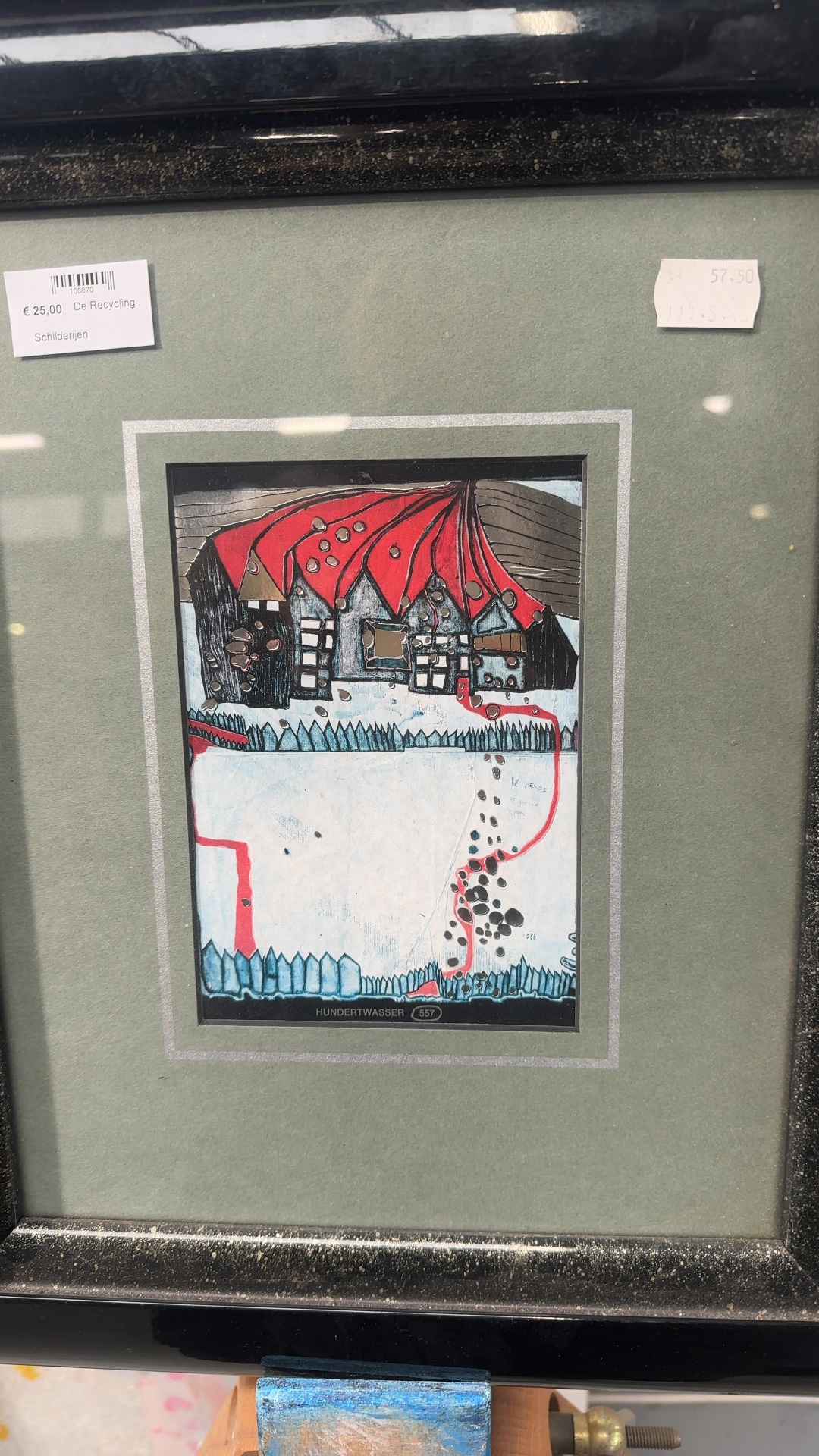
This appears to be a framed artwork, possibly a print or a mixed media work, depicting a whimsical architectural landscape in the style characteristic of Friedensreich Hundertwasser. The composition features a structure with undulating, often brightly colored, organic forms, reminiscent of Hundertwasser's 'onion dome' or 'tree tenant' architectural designs. The use of bold outlines, irregular patterns, and varied textures visible in the image, such as what appears to be metallic foil elements within the design, suggests an engagement with his unique aesthetic.
Related traditions
Art Nouveau
Late 19th - Early 20th Century
Hundertwasser's organic forms and rejection of straight lines share a spiritual kinship with Art Nouveau's embrace of nature and curvilinear ornament.
Expressionism
Early 20th Century
His use of vibrant, non-naturalistic colors and emphasis on emotional expression connects to the Expressionist movement, particularly Austrian Expressionism.
Use and ceremony
Mid-20th Century
During this period, his work represented a radical departure from modernist austerity, symbolizing rebellion against functionalism and a return to romantic aesthetics.
Late 20th - Early 21st Century
His designs evolved to symbolize ecological consciousness and sustainable living, demonstrating architectural possibilities that prioritize nature and human well-being.
Origins and context
Friedensreich Hundertwasser (1928-2000) was an Austrian artist and architect who rejected the straight line and conventional architecture. His designs often incorporated elements of nature, bright colors, and an organic irregularity, advocating for a more harmonious coexistence between humans and their environment. He believed in designing buildings that were more diverse, playful, and integrated with nature, often including trees growing from windows and undulating floors. This piece clearly echoes his post-World War II rejection of monotony and embrace of individual expression in art and architecture, aligning with movements promoting environmental art and non-conformist design.
Further details
Hundertwasser was famous for his commitment to 'tree tenants,' where trees were planted inside buildings, growing out of windows and balconies, symbolizing environmental integration.
He designed several architectural projects, including the Hundertwasserhaus in Vienna, a vibrant apartment block that has become a major tourist attraction, characterized by its irregular floors and verdant rooftops.
Attribution and evidence
Confidence is moderate. The visual style is undeniably Hundertwasser-esque, and the inscription 'HUNDERTWASSER' strongly suggests his authorship or attribution. However, without inspecting the print out of its frame and closely examining the printing technique and paper quality, definitive authentication as an original graphic work by the artist is not possible from images alone. The low price tag raises significant questions about its authenticity as an official edition.
Identifying details
- 1Distinctive architectural style with organic forms, irregular shapes, and vibrant coloration, strongly indicative of Friedensreich Hundertwasser's aesthetic.
- 2The visible text 'HUNDERTWASSER' and a numbered sequence '657' on the lower edge, common indicators for his official prints and editions.
- 3Use of metallic foil or reflective elements within the composition aligns with Hundertwasser's experimentation with diverse materials and textures.
Open questions
- •The presence of the name 'HUNDERTWASSER' and a number does not guarantee authenticity as an original print; many authorized and unauthorized reproductions exist.
- •Image quality does not allow for close examination of print quality, paper type, or potential plate marks which are crucial for authentication.
- •The price sticker of '€25.00' seems incredibly low for an authenticated Hundertwasser print, even a small one, suggesting it may be a poster or an unauthorized reproduction.
Photographs that would help
- Examine the work out of the frame: Look for edition numbers (e.g., /xxx), artist's signature (often signed in pencil), printer's chop marks, and watermarks on the paper.
- Inspect the reverse of the work for any gallery labels, auction stickers, or provenance documentation.
- Obtain high-resolution images of the entire piece, particularly the signature area and the edges of the print for any indications of print technique (e.g., dot patterns for offset lithography vs. rich ink for screenprint).
- Consult a catalogue raisonné of Hundertwasser's graphic works to attempt to match the image and edition number.
Terms in this record
- Offset Lithography
- A common printing technique where an inked image is transferred from a plate to a rubber blanket, then to the printing surface. Often used for reproductions and posters.
- Screenprint (Serigraph)
- A printing technique where ink is forced through a mesh screen onto a substrate. Produces vibrant colors and distinct texture, often used for limited edition art prints.
- Catalogue Raisonné
- A comprehensive, scholarly catalogue of all the known works by an artist, often including detailed descriptions, provenance, and authentication information. Essential for verifying authenticity.
Wear and preservation
The artwork appears to be in good condition behind glass, with no immediately visible damage to the print or mixed media elements. The mat surrounding the artwork is clean, and the frame shows minimal wear, though some dust is visible on the inner edge of the frame.
Scarcity and surviving examples
Average · 4/10 estimated rarity
This is a qualitative collection score, not a measured survival count, market percentile or proof of authenticity.
What the photographs establish
Interpretation of the photographs and supplied context. This does not authenticate the object.
- Hundertwasser reproductions and prints are common, and official authentication requires close inspection of print marks and paper.
- The visible 'HUNDERTWASSER' signature and number '657' are common on authorized editions, but can also be replicated on unauthorized copies.
- Without examination out of the frame, it's difficult to determine if this is a genuine print (e.g., lithograph, screenprint) or a more common reproduction.
Value and its basis
Estimate recorded: Feb 27, 2026
How we estimate value
- No documented comparable sales are shown for this estimate
- Condition, completeness & craftsmanship
- Demand assumptions may not reflect current transactions
- The range is an estimate, not an asking price or sale result
For informational purposes only, not a formal appraisal.
Related objects
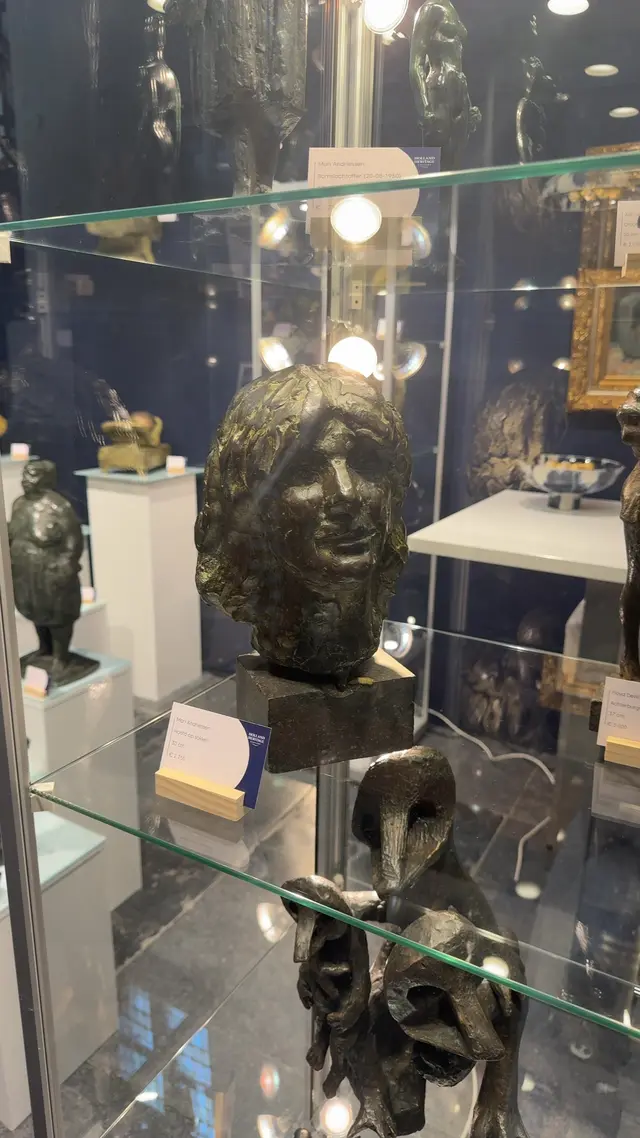
Mari Andriessen (Dutch, 1897-1979) - Hoofd op Sokkel, Bronze, c. 1950-1970
Same category

Contemporary Mixed Media Resin Assemblage with Samurai Silhouette and Steampunk Elements, c. 2020-2026
Same category
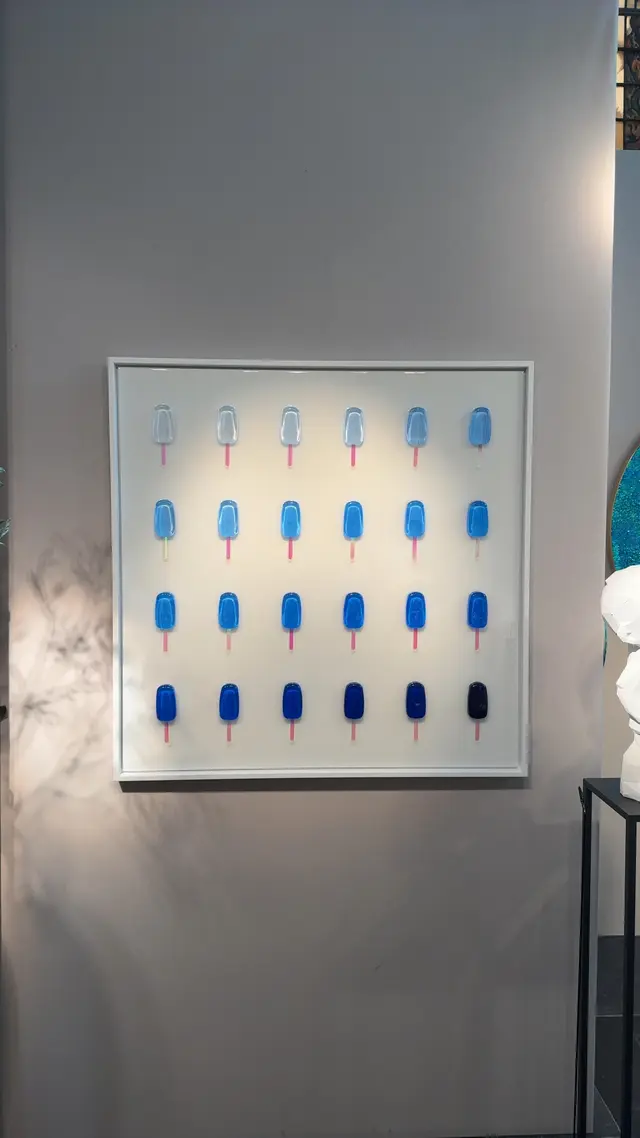
Contemporary Mixed Media 'Popsicle' Wall Sculpture
Same category
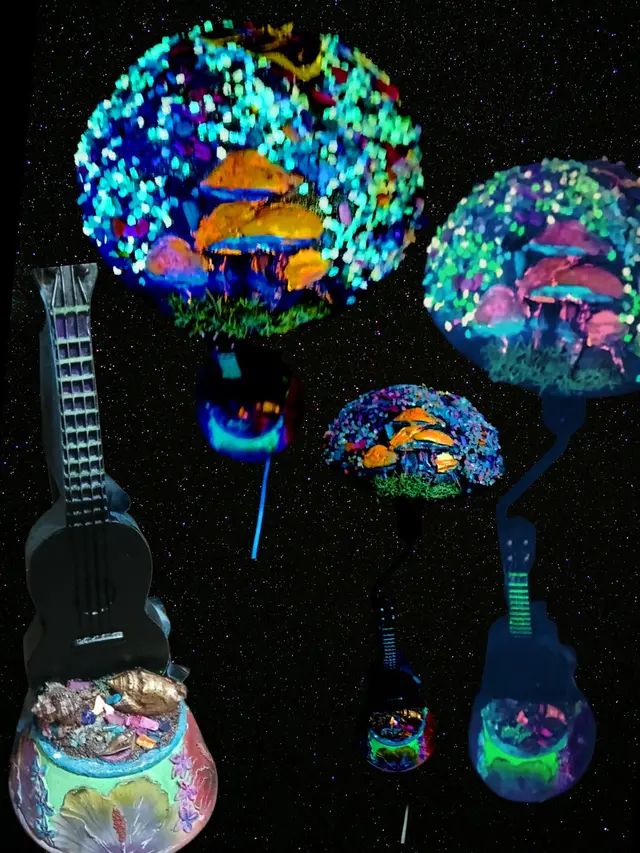
Dash Rodgerz Mixed-Media Blacklight Sculpture with Ukulele and Mushroom Motif
Same category
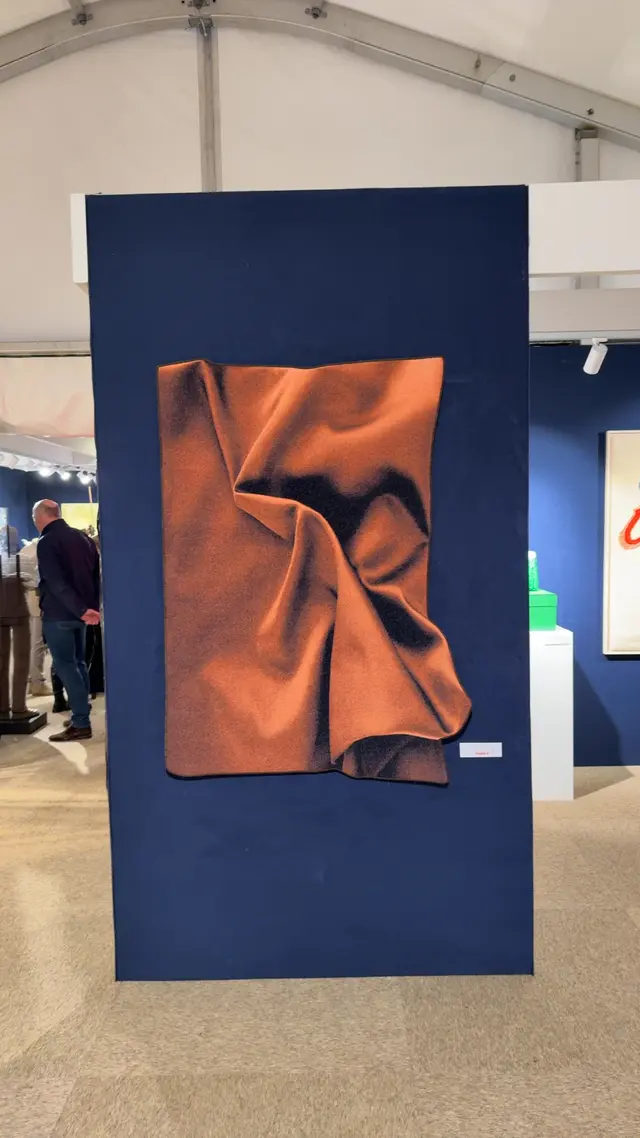
Canela Brown, textile wall artwork, labeled Celia Hadeler
Same category

Dash Rodgerz Fluorescent Resin Waterfall Diorama Sculpture
Same category
Share this find
A place for your art
Keep its photographs, maker’s marks and the story you know in one object record. Start with a photo.
Create an account for 10 free scans. No credit card needed.
Join the conversation