
German Gesteinstein-Pfeife (Alpine Hunter's Pipe)
Visual assessment
Photo analysis
Save to revisit in your watchlist. This does not add the object to your own collection.
German Gesteinstein-Pfeife
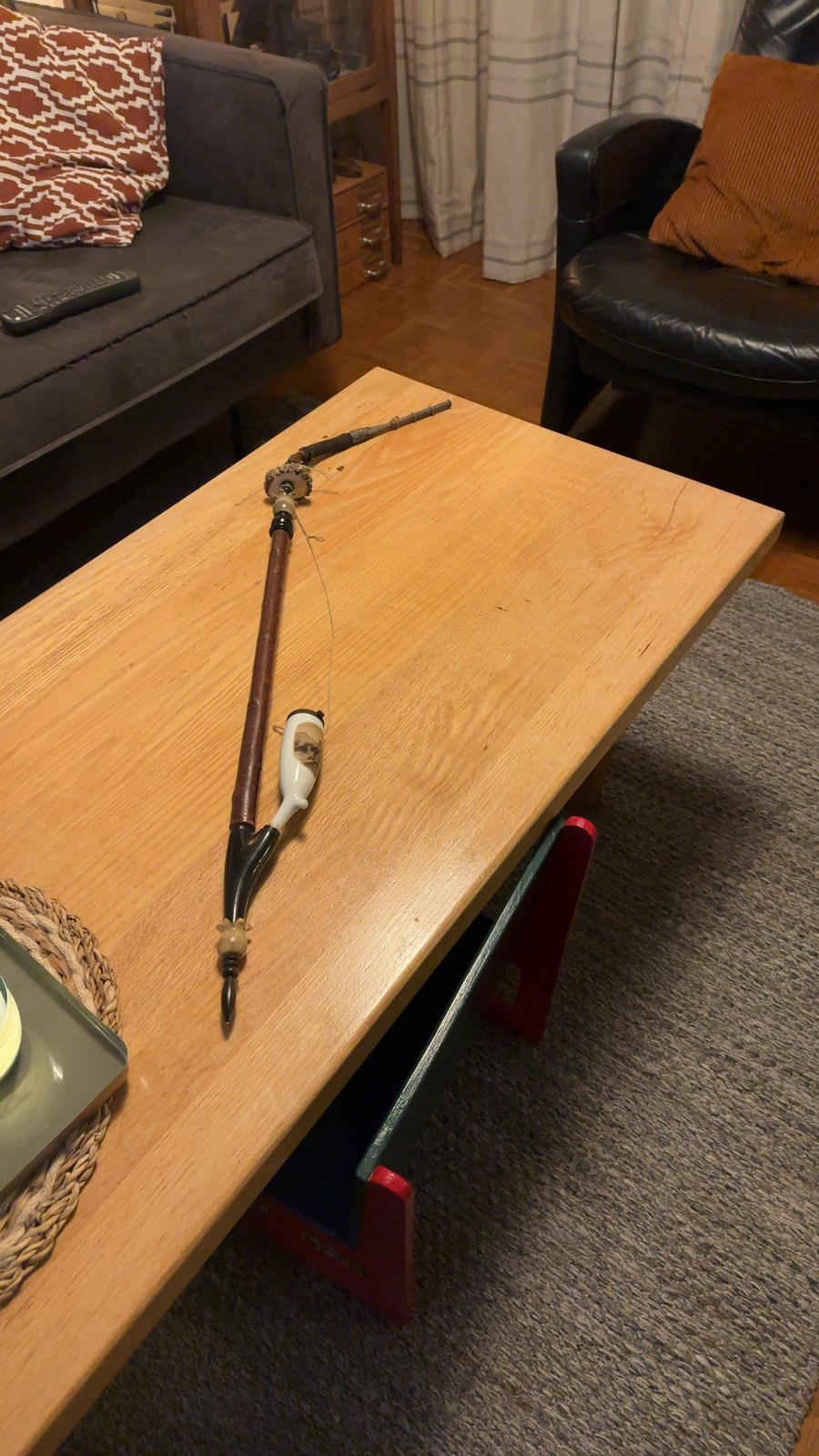
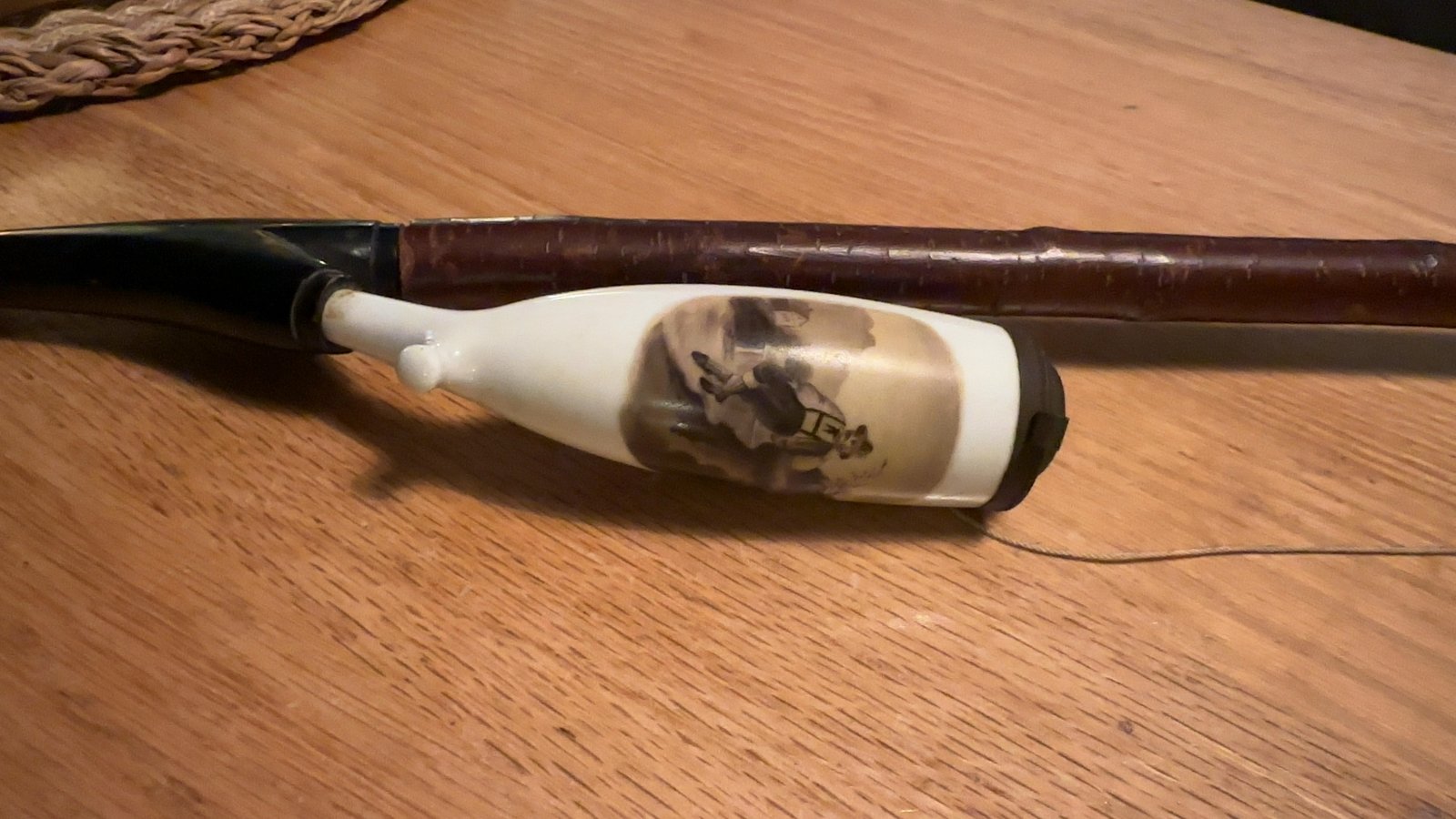
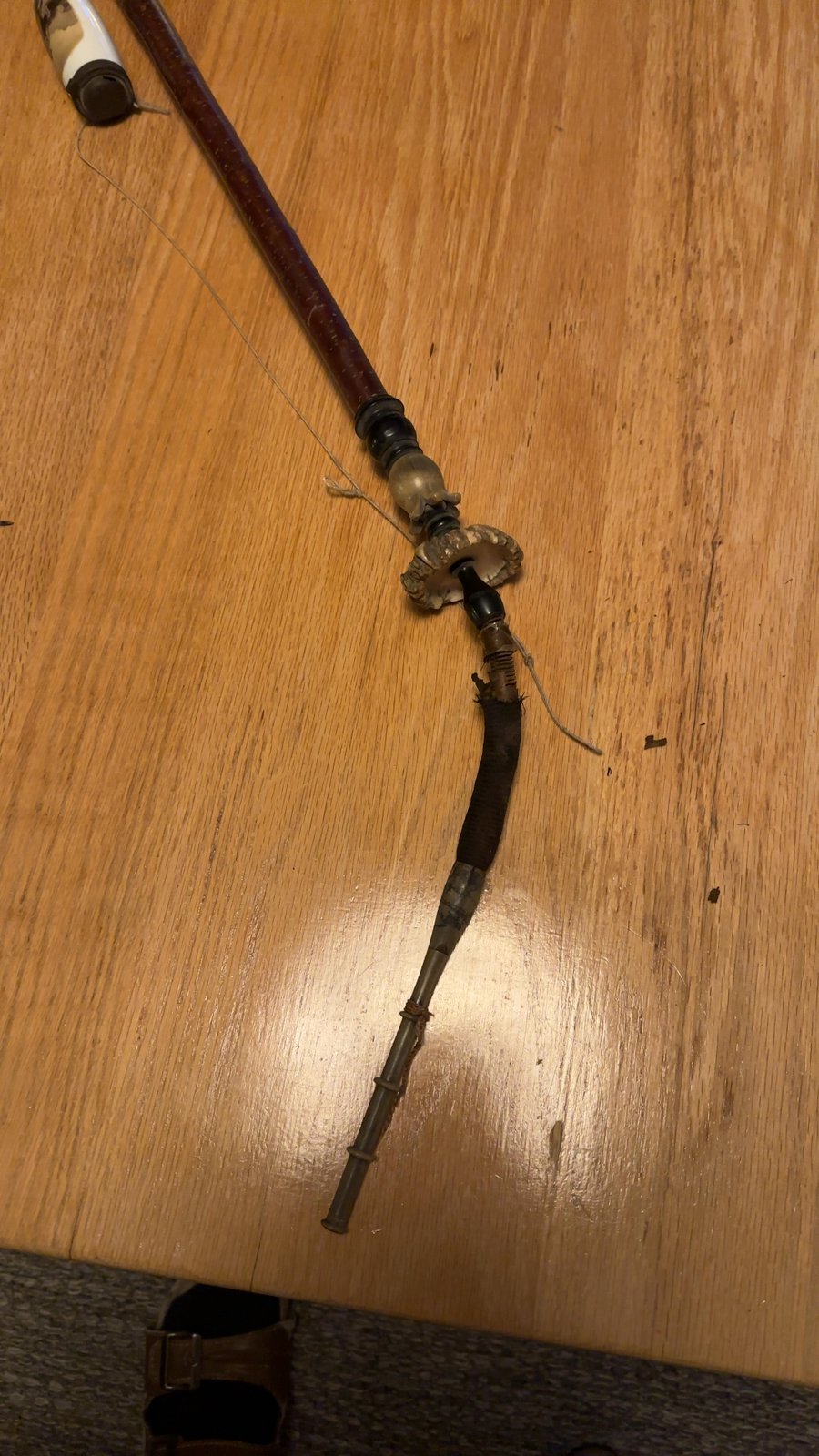
A multi-component ceremonial smoking pipe featuring a porcelain stummel (bowl), a cherry wood (Weichsel) stem section, and decorative horn/antler mountings. The porcelain bowl is decorated with a polychrome transfer scene depicting a traditional hunter in Alpine dress. The long-stemmed construction includes a flexible braided section and a stag horn rosette spacer near the mouthpiece.
Related traditions
Bavarian and Austrian Folklore
19th Century
The 'Jäger' (hunter) motif on the bowl reflects the idealized Alpine outdoor life central to 19th-century Germanic identity.
Use and ceremony
Late 1800s
A functional tool for outdoor endurance and social prestige among hunting fraternities.
Modern Era
A decorative 'Kitsch' or nostalgia object representing a bygone rural European lifestyle.
Origins and context
Originating in the German-speaking Alpine regions of Bavaria and Austria, these communal or ceremonial pipes became highly popular during the mid-to-late 19th century. This specific modular design was engineered to provide a cool smoke through the long stem distance, often utilized during social gatherings or hunting expeditions. The use of cherry wood stems, known for their aromatic qualities when heated, was a standard manufacturing practice in the Ruhla region of Germany circa 1880-1910.
Further details
The distinctive long stem was originally designed to allow hunters to smoke while keeping the hot bowl far from their faces and equipment during long waits in the field.
The reservoir section at the bottom of the bowl, known as a 'Gesteinstein', was designed to collect moisture and tobacco juice, preventing it from reaching the smoker's mouth.
Attribution and evidence
The item follows a highly standardized regional design pattern with materials (cherry wood, antler, porcelain) that are diagnostic for this specific category and era.
Identifying details
- 1Porcelain stummel with Alpine hunter transfer print
- 2Cherry wood (Weichsel) stem construction
- 3Stag horn/antler rosette decorative spacer
- 4Modular push-fit assembly typical of Central European pipes
- 5Gesteinstein moisture trap design
Open questions
- •The cord connecting the bowl to the stem may be a later non-original string replacement
- •Fragility of the braided flexible tubing suggests it may no longer be airtight for functional use
Photographs that would help
- Check the interior of the porcelain bowl for makers' marks (often found near the transition to the stem)
- Examine the metal lid (if present) for hallmarks or factory stamps
- Gently test the friction fit of the wood sections to ensure they haven't swollen or cracked
Terms in this record
- Stummel
- The porcelain or briar bowl of the pipe.
- Weichsel
- A type of sour cherry wood favored for pipe stems due to its fragrance.
- Gesteinstein
- The decorative and functional moisture trap located below the pipe bowl.
Wear and preservation
Significant wear is visible on the flexible braided stem section, showing fraying and loss of structural integrity. The porcelain bowl appears intact, though the metal mounting and safety cord show heavy oxidation and replacement-level wear.
Glaze and painted decoration
The porcelain bowl exhibits a glossy glaze with a sepia-toned transfer print, while the wood stem shows a natural reddish-brown bark patina (cherry wood). The horn components are polished but show organic graining and some age-related desiccation.
Recorded physical details
Approximately 250-350 grams; the object is top-heavy due to the porcelain bowl and long wooden shaft, designed for two-handed handling or resting against the body.
Scarcity and surviving examples
Average · 4/10 estimated rarity
This is a qualitative collection score, not a measured survival count, market percentile or proof of authenticity.
What the photographs establish
Interpretation of the photographs and supplied context. This does not authenticate the object.
- Materials (porcelain, cherry wood, antler) are consistent with late 19th-century German manufacturing
- Wear patterns on the braided flexible section suggest authentic age rather than modern reproduction
- Transfer print style matches Bavarian motifs common between 1890 and 1910
Value and its basis
Estimate recorded: May 11, 2026
How we estimate value
Estimate context (not a documented sale): Similar German hunting pipes sold at specialist auction houses like Hermann Historica or on eBay Germany (eBay.de) typically range between €80 and €150 depending on bowl artwork quality.
Collectors and interest
Tobacciana collectors and enthusiasts of Black Forest or Alpine folk art antiques.
What supports the estimate
- •Integrity of the porcelain bowl transfer print
- •Originality of the antler components
- •Presence of the moisture trap and metal fitting
What could change it
- •Severe fraying of the flexible stem section
- •Cracks in the porcelain bowl or loss of the metal lid
- •Non-original cord replacements
Comparing quality
- •Hand-painted bowls vs. transfer prints
- •Silver-mounted fittings rather than base metal
- •Full provenance to a specific Bavarian hunting club
The effect of condition
Condition of the flexible stem, clarity of the bowl artwork, and completeness of all modular pieces.
Market interest
For informational purposes only, not a formal appraisal.
Related objects

Flemish or Dutch Oak Foot Warmer (Stoof) - c. late 19th Century
Same category

Victorian Marcel Curling Tongs (Hair Styling Iron)
Same category

Louis XV Style Fauteuil à la Reine
Same category

Mission Style Oak Dutch Cupboard (Kast)
Same category

Continental Pewter Baluster Measure - 'Lidded Pinte' (Acorn Thumbpiece) c. 1820-1860
Same category

Bronze-Finished Musician Cherub Figurine, after the Antique
Same category
Explore Antiques
Objects over 100 years old with historical and aesthetic value.
Antiques value and rarity guideShare this find
A place for your antiques
Keep its photographs, maker’s marks and the story you know in one object record. Start with a photo.
Create an account for 10 free scans. No credit card needed.
Join the conversation