Fossil Megalodon Shark Tooth (Otodus megalodon)
QUICK FACTS
Categories
Era
Miocene-Pliocene (c. 23 - 3.6 million years ago)
Origin
🌍 International
Rarity
Average (4/10)
Discovered
Jan 22, 2026
1 months ago
DESCRIPTION
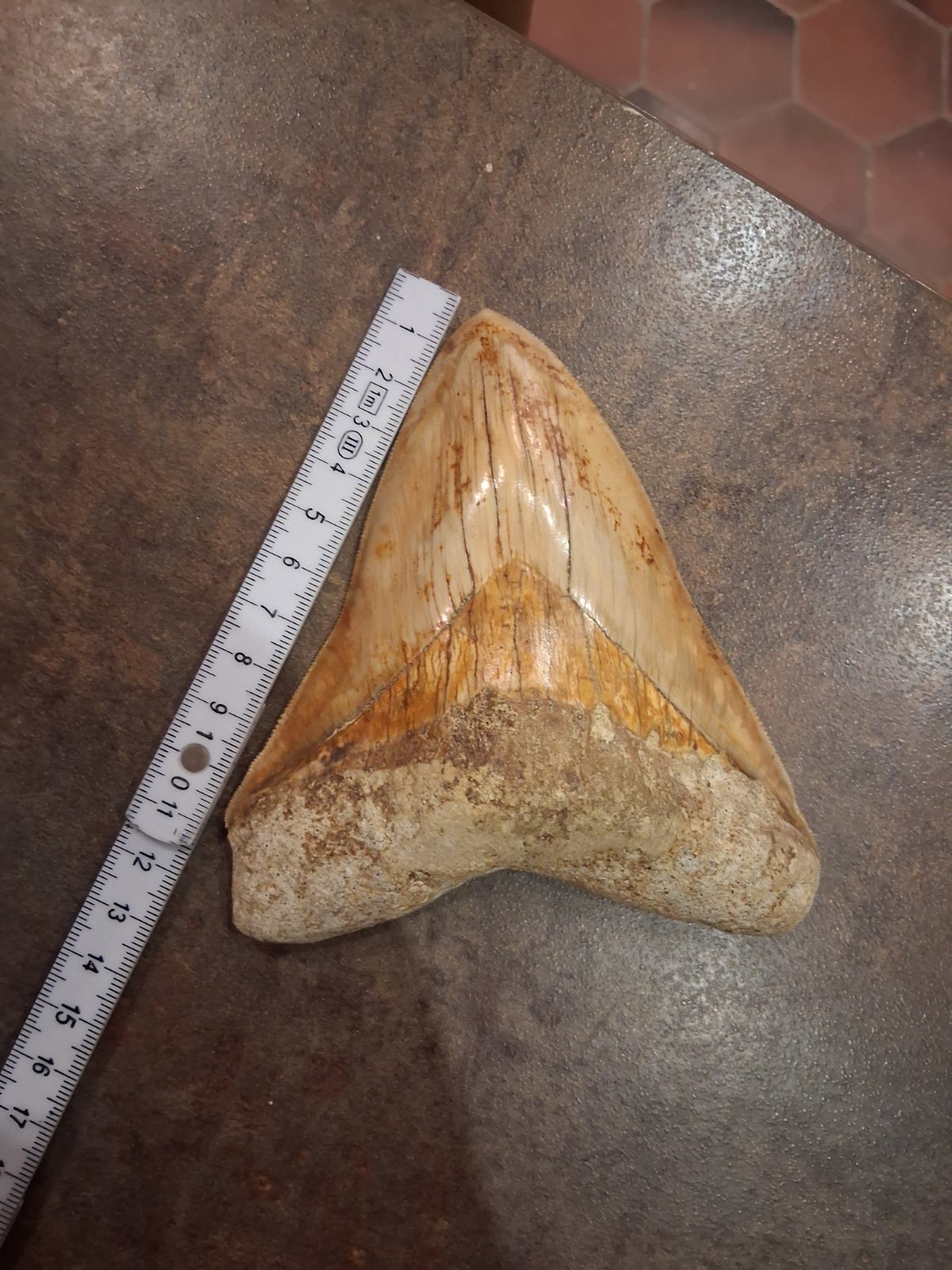
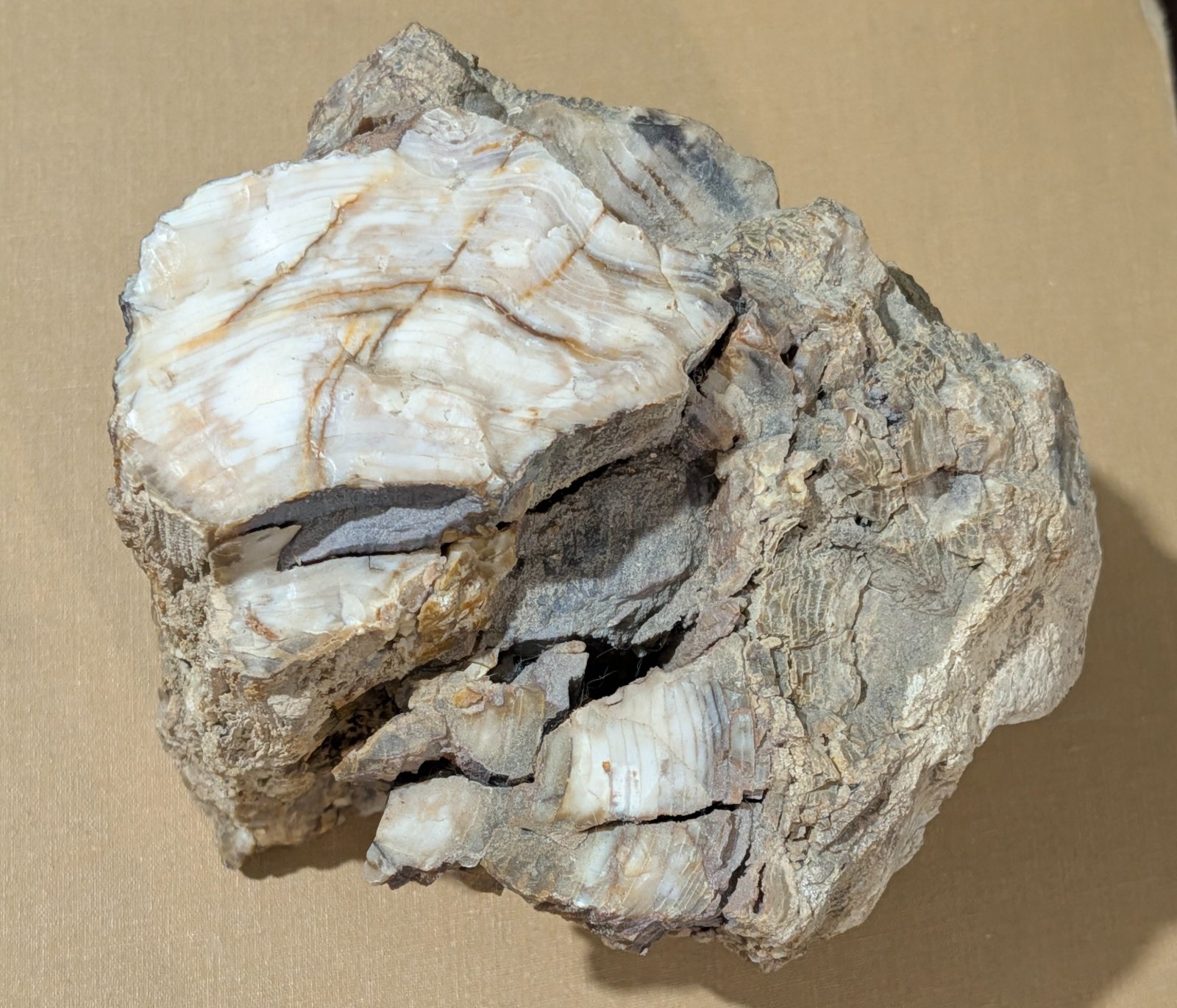
This is a fossil tooth from the extinct megatooth shark, *Otodus megalodon*. Based on the slant height of approximately 10.5 cm (4.1 inches), it belonged to a sub-adult or average-sized individual. The tooth exhibits the classic broad, triangular crown and fine, regular serrations characteristic of the species. The enamel displays good luster with a light tan coloration and attractive iron staining, while the bourlette—the dark, transitional band above the root—is clearly defined. A portion of the root remains embedded in the original sedimentary matrix, a common presentation for specimens recovered from certain deposits.
CULTURAL ECHOES
Where This Object Echoes
Known as 'glossopetrae' (tongue stones), these fossils were believed to be the tongues of dragons or snakes, as documented by naturalists like Conrad Gessner. They were often mounted in silver or gold as pendants.
According to legend, when St. Paul was shipwrecked on Malta, he was bitten by a viper but suffered no harm. He then blessed the island, turning all snake tongues to stone, explaining the abundance of fossil shark teeth found there.
Ritual & Ceremonial Use
- •Modern collecting and display as natural history art or a symbol of ancient power.
- •Historical use as an amulet or talisman to protect against poison and venom.
Meaning Through Time
Mythological object: A dragon's tongue or a talisman against poison.
Scientific object: Correctly identified as the tooth of a giant, ancient shark.
Pop culture icon & collector's item: A symbol of prehistoric power and a staple of fossil collections.
HISTORICAL STORY
DID YOU KNOW?
Unlike most fossils which are bone, nearly all we know about Megalodon comes from its teeth, as a shark's skeleton is made of cartilage which rarely fossilizes.
The bite force of a Megalodon is estimated to have been between 110,000 to 180,000 newtons, strong enough to crush the skull of a prehistoric whale.
MATERIAL & CONDITION
Surface
The labial face shows glossy, permineralized enamel with fine superficial striations and adhering mineral deposits. The serrations along the cutting edge appear mostly intact. The root is porous and chalky, partially obscured by a sandy, consolidated matrix.
Weight & Feel
Judging by its size and mineral composition, the tooth would feel dense and substantial in the hand, weighing several hundred grams.
Condition
The specimen appears largely complete, with a sharp tip and well-preserved enamel. There is minor, expected wear to the serrations. The matrix obscuring the root makes a full assessment of its completeness impossible without further preparation.
RARITY ANALYSIS
Typical antique shop fare. Requires some searching but regularly available. This is where most genuine antiques fall.
Typical Characteristics
- Standard antique shop items
- Regularly available
- Moderate collector interest
EXPERT ANALYSIS
Paleontology Specialist
The tooth's morphology, including its size, shape, and serrations, strongly aligns with Otodus megalodon. Confidence is held at 0.85 because image-based analysis cannot definitively rule out common issues like restoration or compositing, especially with matrix obscuring the root.
KEY EVIDENCE
- 1Broad, triangular crown shape is classic for Otodontidae.
- 2Fine, regular serrations are visible and characteristic of O. megalodon.
- 3The size, approximately 4.1 inches, is consistent with an average adult or sub-adult specimen.
- 4The presence of a distinct bourlette (dark band below enamel) is a key diagnostic feature.
- 5Enamel quality and coloration appear natural for a fossil of this type.
UNCERTAINTIES
- •The matrix covering the root prevents a full assessment of its completeness and integrity.
- •It is impossible to rule out minor restoration (crack filling, tip enhancement) from images alone.
WHAT WOULD IMPROVE CERTAINTY
- →Examine the tooth under UV light to check for adhesives, which often fluoresce and indicate repair or restoration.
- →Carefully inspect the seam between the root and the crown for any signs of it being a composite (two different teeth joined).
- →If possible, have a professional gently clean the matrix from the root to assess its full condition.
ESTIMATED VALUE
Updated: Feb 26, 2026
- Market comparables from auctions & retail
- Condition, completeness & craftsmanship
- Current collector demand & trends
- Low = quick sale, high = patient seller
For informational purposes only, not a formal appraisal.
ABOUT FOSSILS
Prehistoric specimens, dinosaur fossils, amber inclusions, and ancient life forms.
Browse all FossilsSHARE THIS CURIOSITY
Have your own curiosities to discover?
Scan Your Curiosity
COMMENTS (1)
Very cool!! Where did you buy/find this?
Sign in to leave a comment