Ammonite Fossil - Mortoniceras cf. inflatum
QUICK FACTS
Categories
Era
Cretaceous Period (110-90 Ma)
Origin
🌍 International
Rarity
Average (4/10)
Discovered
Jan 22, 2026
1 months ago
DESCRIPTION
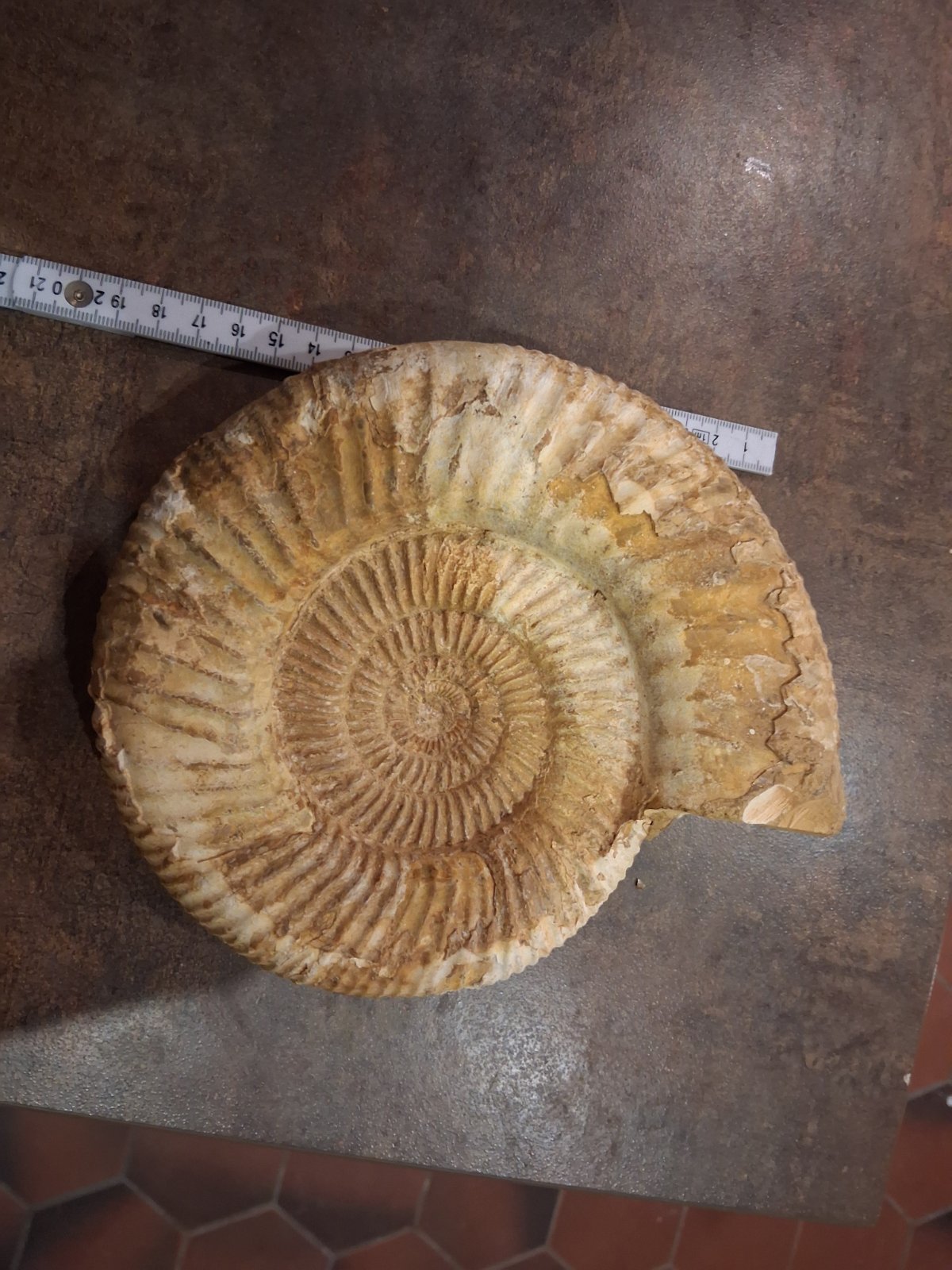
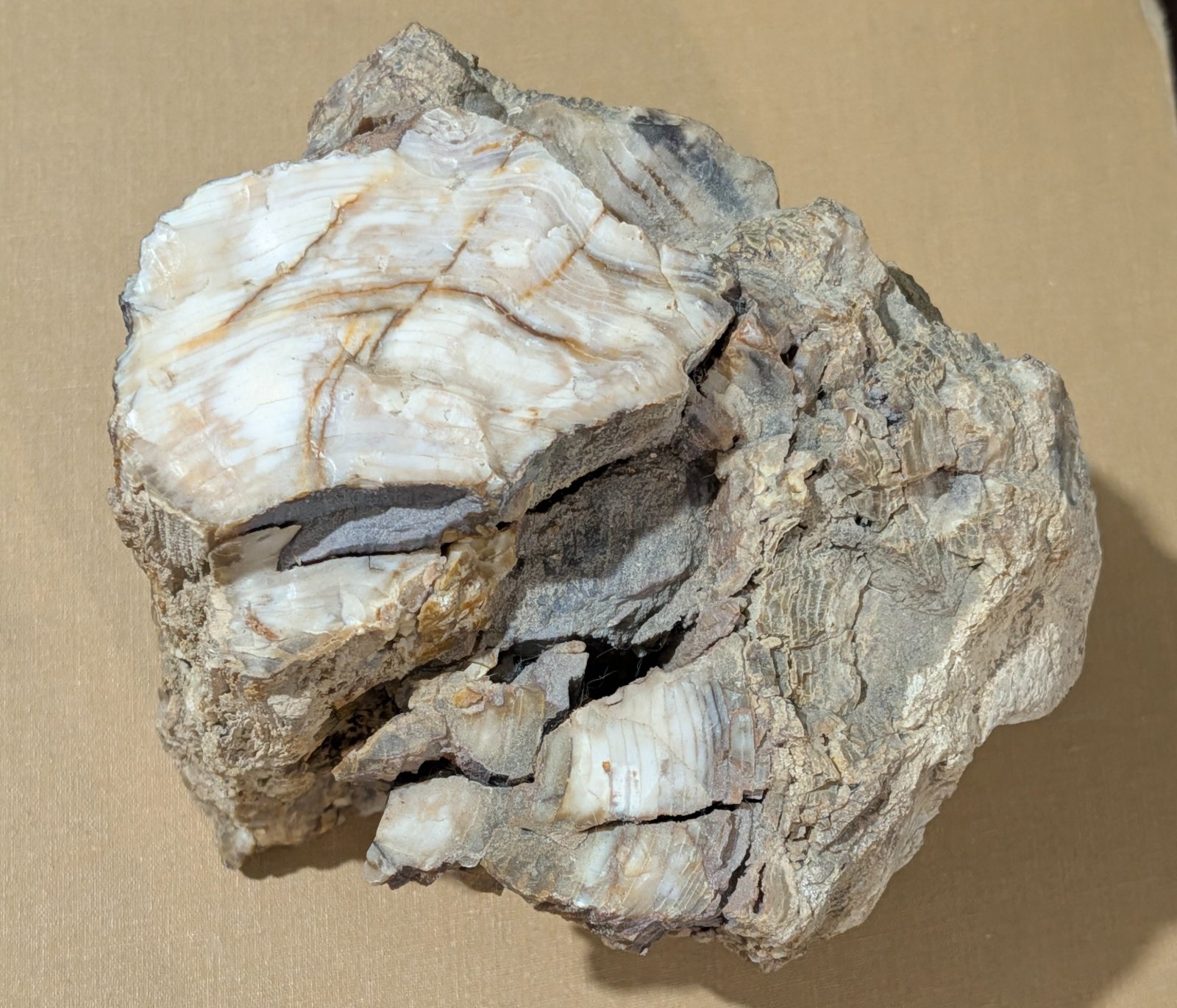
This appears to be a large ammonite fossil, likely a Mortoniceras species, given its size and general morphology, particularly the prominent ribbing and tuberculate ornamentation, which is characteristic of the Mortoniceratinae subfamily. The fossil is preserved as an internal mold, showcasing the intricate suture lines and coiling pattern.
CULTURAL ECHOES
Where This Object Echoes
Ammonites were often called 'Ammon's horns' due to their resemblance to the curved horns of the Egyptian god Ammon, who was worshipped by the Greeks.
In some parts of Europe, ammonites were known as 'snake stones' or 'snakestones', believed to be petrified snakes, and were sometimes carved to resemble a snake's head at the wide end for folklore purposes.
Meaning Through Time
Often seen as curiosities, mythical objects, or even evidence of supernatural events.
Recognized as fossilized remains of extinct marine organisms, providing key evidence for geological time and evolution.
Valued scientifically for biostratigraphy and paleoecology, and aesthetically as decorative natural objects and collector's items.
HISTORICAL STORY
Ammonites were incredibly diverse marine cephalopods that lived during the Mesozoic Era. Their rapid evolution and widespread distribution make them excellent index fossils for dating sedimentary rocks. Species like Mortoniceras cf. inflatum were particularly prevalent during the mid-Cretaceous period, a time of significant marine biodiversity.
DID YOU KNOW?
Ammonites are more closely related to octopuses and squids than to the modern Nautilus, despite their external shell resemblance.
The name 'ammonite' comes from the coiled shape of their shells, which resembles the horns of the Egyptian ram-headed god Ammon.
MATERIAL & CONDITION
Surface
The surface exhibits a coarse, somewhat granular texture, typical of calcareous or argillaceous matrix. The prominent ribs show some erosion and minor abrasion, revealing the internal structure and coloration of the fossilized shell material, which ranges from a creamy white to ochre brown.
Weight & Feel
Based on its apparent size (around 20-25 cm in diameter) and likely preservation as a solid internal mold in a rock matrix, this specimen would feel substantial and dense, probably weighing several kilograms.
Condition
The fossil appears largely complete, though with some minor matrix abrasion or loss on the outer whorls. The inner whorls and ribbing are well-preserved, suggesting good preparation. There are no obvious signs of significant repair or composite work visible in the images.
RARITY ANALYSIS
Typical antique shop fare. Requires some searching but regularly available. This is where most genuine antiques fall.
Typical Characteristics
- Standard antique shop items
- Regularly available
- Moderate collector interest
EXPERT ANALYSIS
Paleontology Specialist
The clear images allow for confident identification of the specimen as a large ammonite, and the morphological details strongly point to the Mortoniceras genus. The preservation and approximate geological age are also consistent with this identification.
KEY EVIDENCE
- 1Distinctive planispiral coiling and strong ribbing are characteristic of ammonites.
- 2Size and prominent sculpture suggest a species within the Mortoniceras genus, common in the mid-Cretaceous.
- 3The visible preservation type is that of an internal mold, with some residual shell material or coloration.
- 4Measuring tape provides clear scale, indicating a significant specimen size of approximately 20-25 cm.
UNCERTAINTIES
- •Without direct examination, it's difficult to confirm if any repairs, restoration, or composite work on the matrix or shell have been done, although none are overtly apparent.
- •Precise species identification (e.g., Mortoniceras inflatum vs. closely related species) requires examination of specific morphological features not entirely clear from the images.
WHAT WOULD IMPROVE CERTAINTY
- →Examine the reverse side of the specimen for completeness and any preparation marks or labels.
- →Inspect under UV light to detect potential areas of restoration or composite work, as modern adhesives often fluoresce.
- →Gently prod the matrix and fossil with a dental pick (if knowledgeable) to assess consistency and reveal any separation lines from composite assembly.
- →Review any accompanying documentation regarding its locality (geological formation, country, specific site) as this significantly impacts scientific value.
ESTIMATED VALUE
Updated: Feb 26, 2026
- Market comparables from auctions & retail
- Condition, completeness & craftsmanship
- Current collector demand & trends
- Low = quick sale, high = patient seller
For informational purposes only, not a formal appraisal.
ABOUT FOSSILS
Prehistoric specimens, dinosaur fossils, amber inclusions, and ancient life forms.
Browse all FossilsSHARE THIS CURIOSITY
Have your own curiosities to discover?
Scan Your Curiosity
COMMENTS
No comments yet. Be the first to share your thoughts!
Sign in to leave a comment