Contemporary Link Chain Necklace
QUICK FACTS
Categories
Era
2000s-Present
Origin
🌍 International
Rarity
Common (2/10)
Discovered
Feb 18, 2026
1 weeks ago
DESCRIPTION
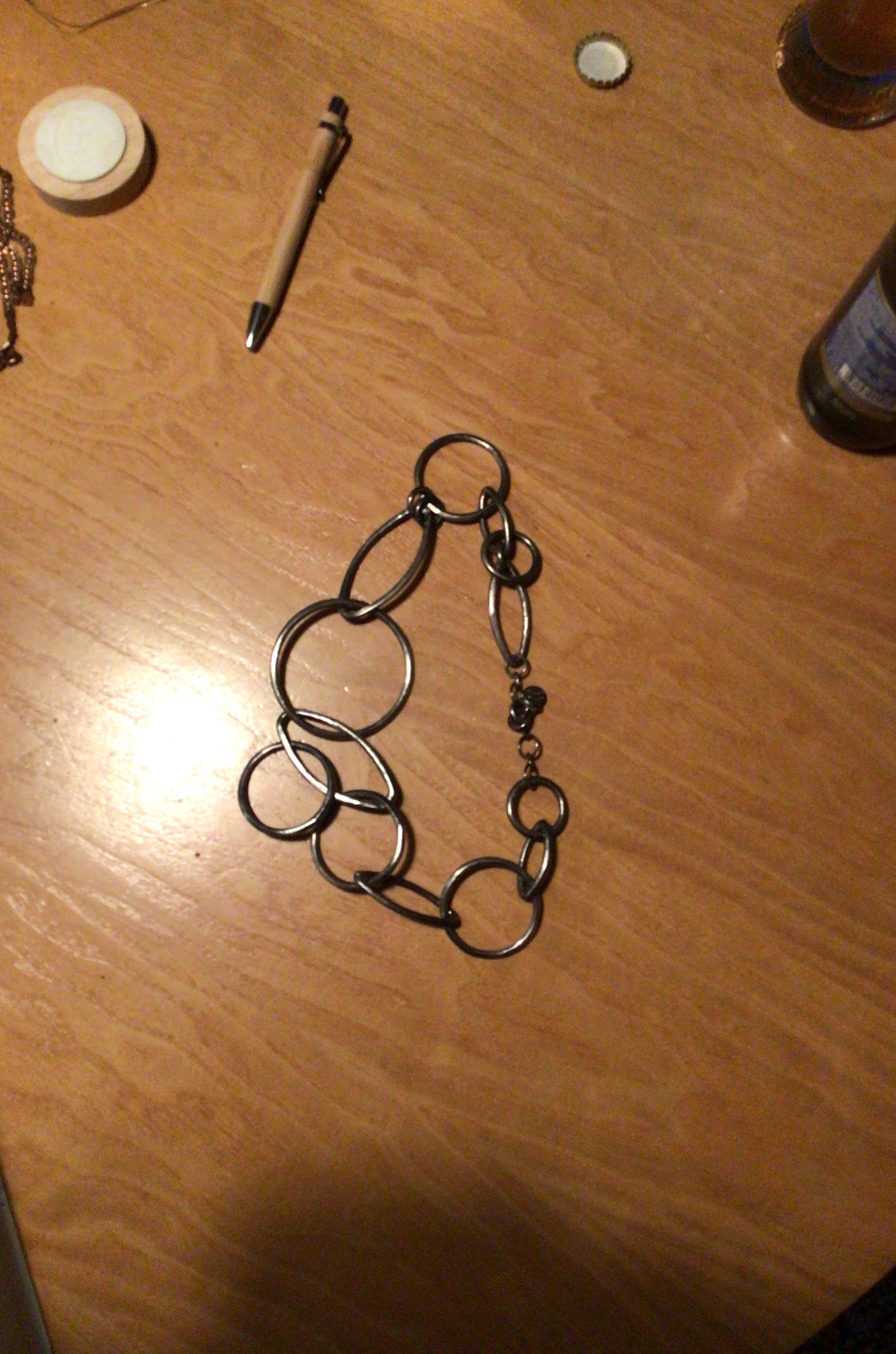
This appears to be a contemporary necklace featuring an alternating pattern of large, round and elongated oval links. The metal has a dark, possibly antiqued or gunmetal finish, suggesting it's likely a base metal alloy rather than a precious metal. The design is bold and statement-making, characteristic of modern fashion jewelry.
CULTURAL ECHOES
Where This Object Echoes
Bold, industrial chain designs were heavily adopted and popularized in these counter-culture movements, often symbolizing rebellion or non-conformity.
Many high-fashion designers have experimented with oversized and architectural jewelry, turning simple forms like chains into sculptural pieces.
Ritual & Ceremonial Use
- •Personal adornment for expressing individual style and keeping up with contemporary fashion trends.
- •Gift-giving for casual occasions or as a fashionable accessory.
Meaning Through Time
Chains often symbolized status, wealth, or even servitude, made from precious metals and worn by royalty or as military honors.
Chains evolved into more intricate designs, often featuring pendants, and were integrated into broader jewelry ensembles as symbols of affection, mourning, or religious devotion.
Chains became less formal, appearing in costume jewelry and reflecting changing social norms and an increasing desire for accessible, stylish accessories.
HISTORICAL STORY
DID YOU KNOW?
Large link chains, while seemingly modern, draw inspiration from historical armor and even medieval chainmail, reimagining strength and structure as fashion statements.
The 'gunmetal' or 'antiqued' metal finish on fashion jewelry often involves electroplating and chemical treatments to create a darker, more industrial aesthetic than traditional polished silver or gold.
MATERIAL & CONDITION
Surface
The metal links exhibit a uniformly dark, possibly gunmetal grey or antiqued silver-tone finish. It appears smooth but not highly polished, suggesting either a matte or lightly brushed surface with some reflective qualities under direct light.
Weight & Feel
Given the size of the links, this piece would likely feel moderately heavy and substantial to wear, consistent with statement fashion jewelry.
Condition
The visible links appear to be in good condition, with no obvious signs of significant wear, scratches, or loss of plating. The overall integrity of the chain structure appears sound.
RARITY ANALYSIS
Older mass-produced items still widely available. Easy to find on eBay, antique malls, and estate sales in large quantities.
Typical Characteristics
- Mass produced historically
- High survival rate
- Readily available everywhere
EXPERT ANALYSIS
Jewelry Historian & Gemologist-Informed Appraiser
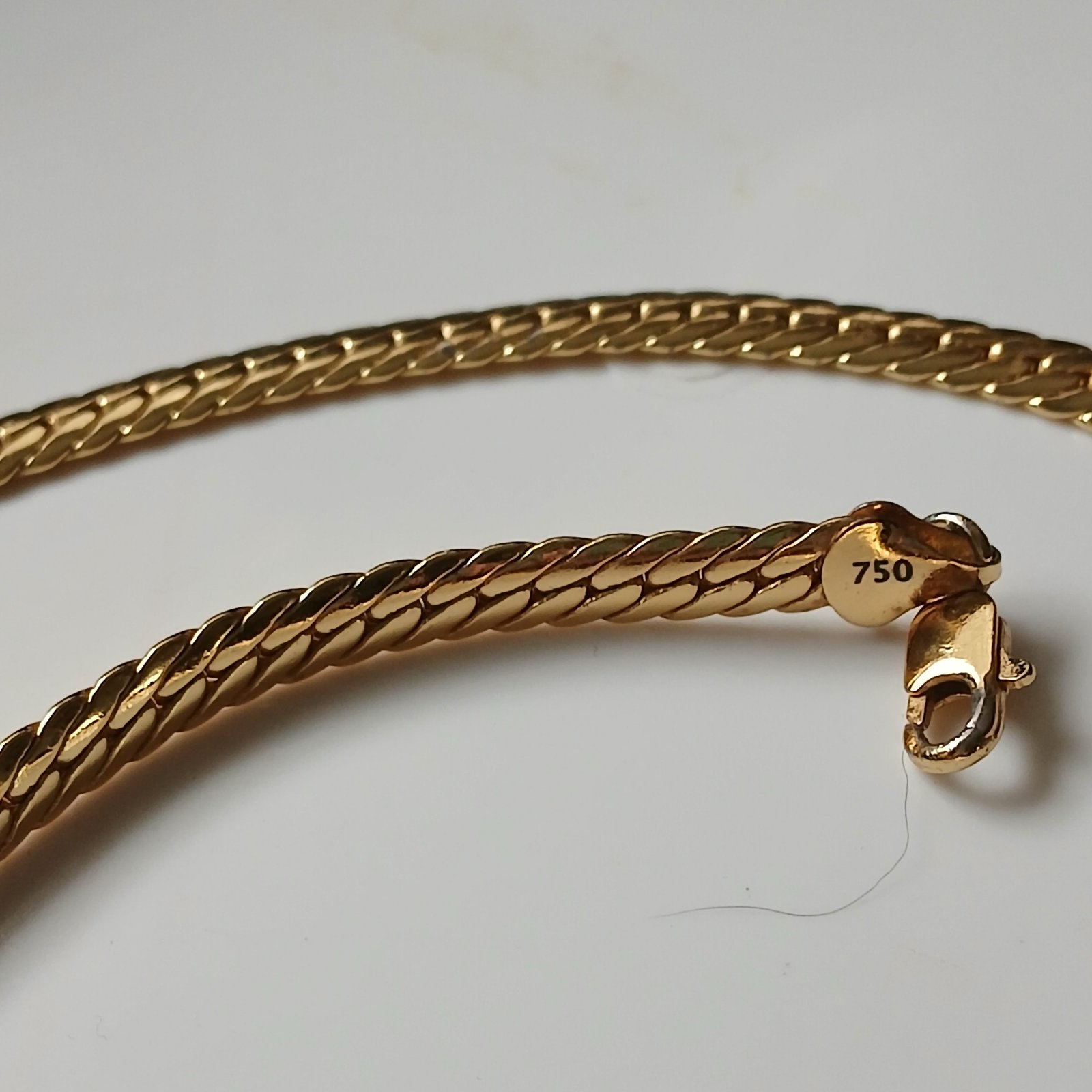
Confidence is moderate due to the clear visual identification of the chain style and material appearance, typical of modern fashion jewelry. However, the absence of visible hallmarks or closer detail on the clasp mechanism prevents a more definitive attribution or material identification.
KEY EVIDENCE
- 1Statement design with large, alternating round and oval links.
- 2Dark, uniform metal finish resembling gunmetal or antiqued silver-tone, typical of fashion jewelry materials.
- 3The presence of a small decorative element or charm near the clasp, common in contemporary mass-produced pieces.
- 4No visible hallmarks or maker's marks from the provided images, suggesting it's not fine jewelry.
UNCERTAINTIES
- •Lack of clear close-up images prevents identification of any potential hallmarks or specific clasp mechanisms.
- •The exact material composition (e.g., zinc alloy, plated brass) cannot be determined visually.
WHAT WOULD IMPROVE CERTAINTY
- →Provide very clear, focused close-up photos of the clasp and any small tags or links for potential hallmarks.
- →Examine the piece under magnification for any stamps indicating metal purity (e.g., '925', 'Sterling', '18K', '750') or maker's marks.
- →A magnet test could indicate if the base metal is ferrous.
- →If interested in material composition, an X-ray fluorescence (XRF) test by a jeweler would definitively identify the metal alloy.
ESTIMATED VALUE
Updated: Feb 27, 2026
- Market comparables from auctions & retail
- Condition, completeness & craftsmanship
- Current collector demand & trends
- Low = quick sale, high = patient seller
For informational purposes only, not a formal appraisal.
ABOUT JEWELRY
Fine jewelry, costume pieces, rings, necklaces, bracelets, and brooches.
Browse all JewelrySHARE THIS CURIOSITY
Have your own curiosities to discover?
Scan Your Curiosity
COMMENTS
No comments yet. Be the first to share your thoughts!
Sign in to leave a comment