Intricately Filigreed Silver-Tone Brooch or Pendant
DESCRIPTION
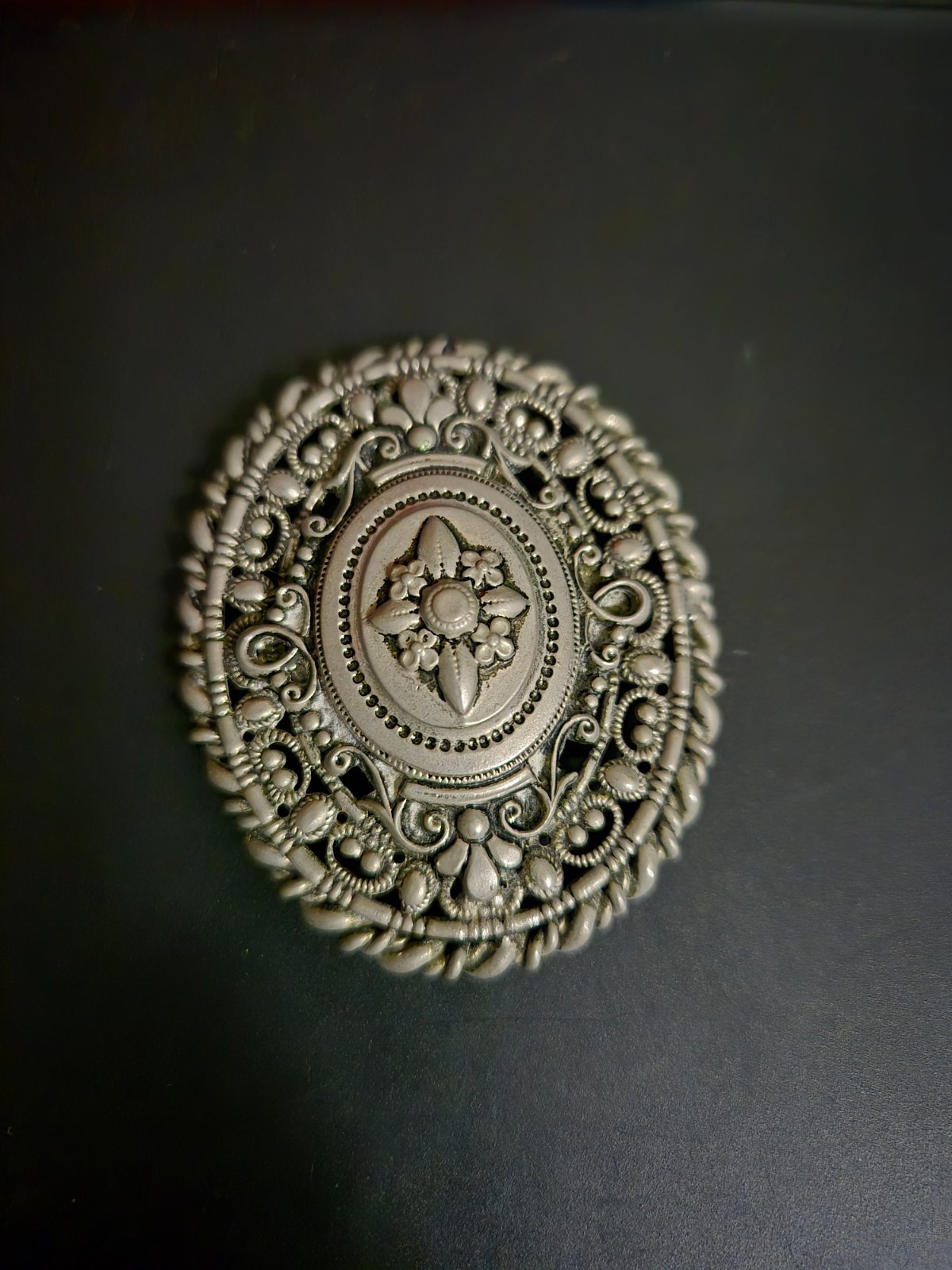
This appears to be a large, oval-shaped brooch or pendant, crafted with significant attention to filigree and granulated detailing. The piece features a central raised medallion with a floral or starburst motif, encircled by a rope-like border and an outer ring of beaded and scrolled filigree work. The overall aesthetic suggests it is made from silver or a silver-toned base metal, possibly due to its substantial patina which highlights the intricate design.
CULTURAL ECHOES
Where This Object Echoes
Rich tradition of intricate silver filigree and granulation in jewelry, often with floral and geometric motifs.
Traditional jewelry often features ornate silver work with similar stylistic elements, including mandalas and elaborate floral patterns.
Ritual & Ceremonial Use
- •Personal adornment for special occasions or daily wear, signifying status or cultural affiliation.
- •Gift-giving tradition, often marking significant life events or celebrations.
Meaning Through Time
Ornate jewelry has symbolized wealth, social status, and cultural identity.
The resurgence of historical and 'exotic' design elements became popular, influencing jewelry styles to incorporate intricate details.
HISTORICAL STORY
DID YOU KNOW?
Filigree, the art of creating intricate designs with tiny beads or twisted threads of metal, is an ancient technique believed to have originated in Mesopotamia and was perfected by various civilizations throughout history.
Granulation is another ancient decorative technique used in jewelry making, where small spheres of metal are fused onto a metal surface, requiring immense skill and precision.
MATERIAL & CONDITION
Surface
The surface exhibits a patinated, matte silver-tone finish that beautifully accentuates the raised filigree and granulated textures. The intricate details are sharp, indicating either good preservation or a casting process that faithfully replicated a detailed original. Some areas show deeper oxidation in recesses, providing contrast.
Weight & Feel
Based on its size and apparent metal construction, it likely has a moderate, substantial weight, typical for a well-made piece of this decorative style. It would not feel flimsy or overly lightweight.
Condition
The item appears to be in good vintage condition, exhibiting a natural patina consistent with age. There are no obvious signs of significant damage such as breaks in the filigree or missing components. Further inspection would be needed to assess wear on any potential pin mechanism or bail.
RARITY ANALYSIS
Typical antique shop fare. Requires some searching but regularly available. This is where most genuine antiques fall.
Typical Characteristics
- Standard antique shop items
- Regularly available
- Moderate collector interest
EXPERT ANALYSIS
Jewelry Historian & Gemologist-Informed Appraiser
Confidence is good regarding the object type and estimated era based on the visible design elements and craftsmanship. However, material identification and exact origin are uncertain due to the lack of visible hallmarks and images of the reverse.
KEY EVIDENCE
- 1Intricate filigree and granulation work, indicative of traditional metalworking techniques.
- 2Oval shape with central medallion and floral/starburst motif, common in historic decorative jewelry.
- 3Patinated silver-tone appearance, suggesting silver or a silver-plated base metal with age.
- 4Lack of visible gemstones, focusing the design on metal craftsmanship.
UNCERTAINTIES
- •Absent visible hallmarks, making metal identity and origin uncertain.
- •Functionality (brooch pin or pendant bail) cannot be assessed without viewing the reverse side.
WHAT WOULD IMPROVE CERTAINTY
- →A clear, well-lit photograph of the reverse side to identify any hallmarks, maker's marks, or the type of clasp/bail.
- →An acid test or XRF analysis to confirm metal composition (e.g., sterling silver, silver plate, pewter).
- →Weight measurement would help assess its material density.
ESTIMATED VALUE
Updated: Feb 27, 2026
- Market comparables from auctions & retail
- Condition, completeness & craftsmanship
- Current collector demand & trends
- Low = quick sale, high = patient seller
For informational purposes only, not a formal appraisal.
ABOUT JEWELRY
Fine jewelry, costume pieces, rings, necklaces, bracelets, and brooches.
Browse all JewelrySHARE THIS CURIOSITY
Have your own curiosities to discover?
Scan Your Curiosity
COMMENTS
No comments yet. Be the first to share your thoughts!
Sign in to leave a comment