Victorian / Edwardian Era Floral Lapel Pin with Chain and Pendant
DESCRIPTION
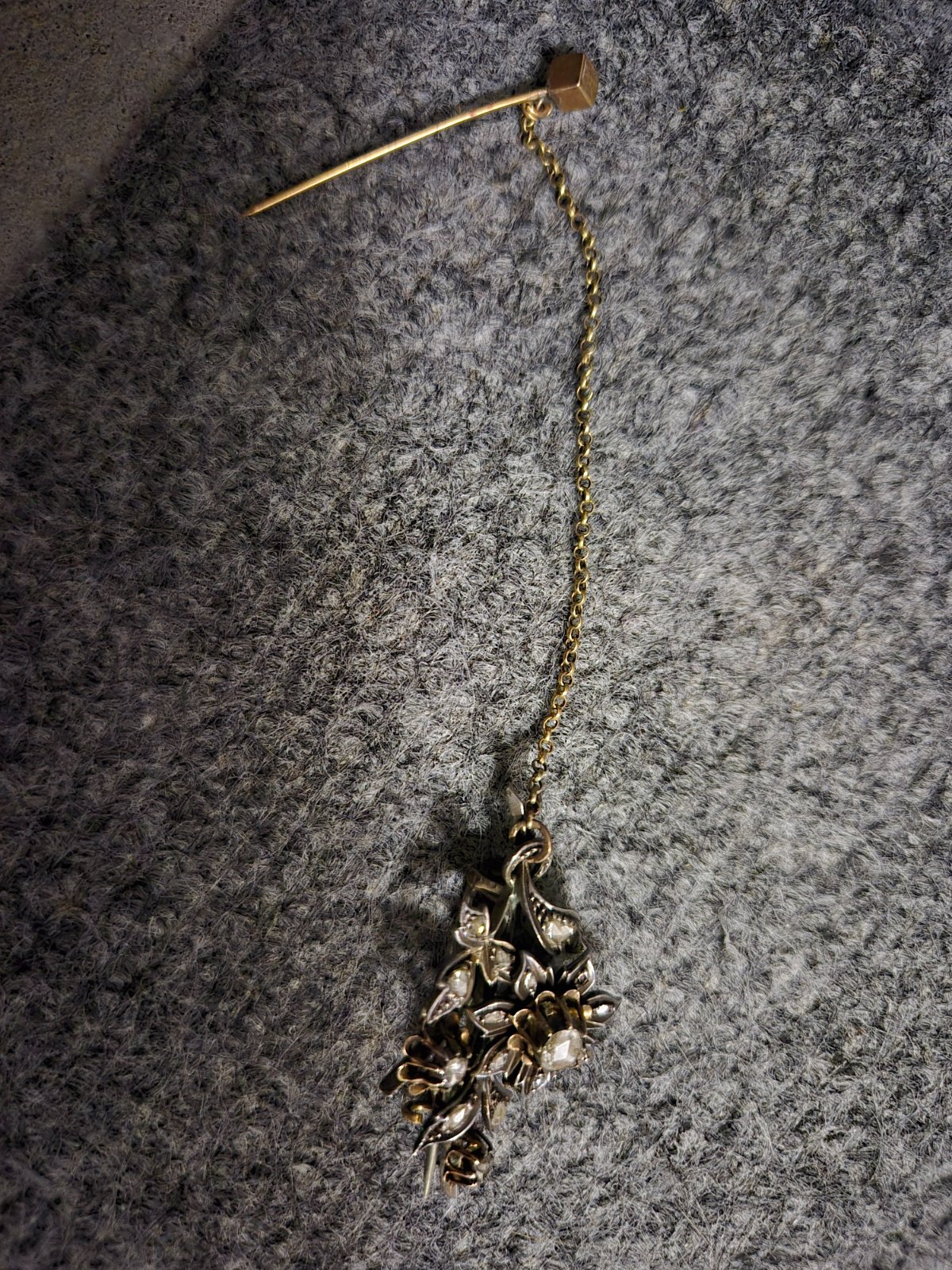
This appears to be a charming antique lapel pin, characterized by its long, straight pin and squared stopper at one end, which is connected via a delicate chain to a floral-themed pendant. The entire piece seems to be crafted from metal, likely a plated base metal or possibly gilt silver, given the mixed tones visible in the floral motif. The pin itself maintains a warm, yellow-gold hue, suggesting it may be a different metal or plating than the pendant. The pendant features a bouquet of flowers and leaves, some sections appearing to be a darker, oxidized metal, while others retain a brighter, yellowish finish. Several small, colorless stones are set within the floral elements, adding a decorative sparkle.
CULTURAL ECHOES
Where This Object Echoes
The naturalistic floral motifs and use of various metal finishes were hallmarks of jewelry design during these periods, reflecting a romantic sensibility and connection to nature.
While not fully Art Nouveau, the organic, flowing lines of the floral elements share an aesthetic lineage with the movement's emphasis on natural forms and asymmetry.
Ritual & Ceremonial Use
- •Wearing of decorative pins and brooches as a staple of daily dress to accessorize collars, lapels, and scarves.
- •Gift-giving of symbolic floral jewelry, often with hidden meanings attached to specific flower types.
Meaning Through Time
Jewelry served as a canvas for sentimentality and coded messages, with florid designs often carrying symbolic weight in the 'language of flowers'.
While still appreciated for their beauty, these pins are often viewed as historical artifacts or unique statement pieces, rather than everyday accoutrements.
HISTORICAL STORY
DID YOU KNOW?
During the Victorian era, different flowers were often used to convey secret messages; a floral 'bouquet' on a piece of jewelry could represent an entire sentiment or coded message to the wearer or observer.
Lapel pins with chains were sometimes used to secure small articles like a spectacle case, a watch, or even a small pocket knife, preventing them from being lost while adding a decorative element.
MATERIAL & CONDITION
Surface
The surface of the pin segment exhibits a smooth, polished appearance, while the chain displays typical fine link construction. The pendant's surface is more complex, featuring sculpted textures for floral details, with variations in finish suggesting a combination of brighter metallic areas and possibly oxidized or patinated darker sections. Small stone settings are present, adding faceted sparkle.
Weight & Feel
Given its delicate appearance and small scale, this piece would likely feel quite lightweight. The metal components, while intricate, appear thin, contributing to a sense of daintiness rather than substantial heft.
Condition
The pin shows some general surface wear consistent with age, particularly a slight dulling or darkening of the metallic finish, especially on the pendant's recessed areas, which could be natural patination or tarnish. No significant damage like breaks or missing stones are immediately apparent, though closer inspection for minor abrasions or loose settings would be prudent.
RARITY ANALYSIS
Typical antique shop fare. Requires some searching but regularly available. This is where most genuine antiques fall.
Typical Characteristics
- Standard antique shop items
- Regularly available
- Moderate collector interest
EXPERT ANALYSIS
Jewelry Historian & Gemologist-Informed Appraiser
The visual characteristics strongly suggest a turn-of-the-century lapel pin, grounded in historical design conventions of the era. My confidence is moderate due to the lack of clear material identification and absence of any visible markings.
KEY EVIDENCE
- 1Dainty proportions and construction typical of late 19th/early 20th-century formal accessories.
- 2Floral motif, a prevalent design element in Victorian and Edwardian jewelry.
- 3Presence of a long pin with a stopper, characteristic of lapel or stick pins.
- 4Mixed metal appearance (or possibly mixed plating/gilding) on the pendant, indicating a common antique finishing technique.
- 5Small colorless stones are likely paste, glass, or low-grade diamonds, typical for this period and style.
UNCERTAINTIES
- •Inability to ascertain metal purity or gemstone identity without physical examination and testing.
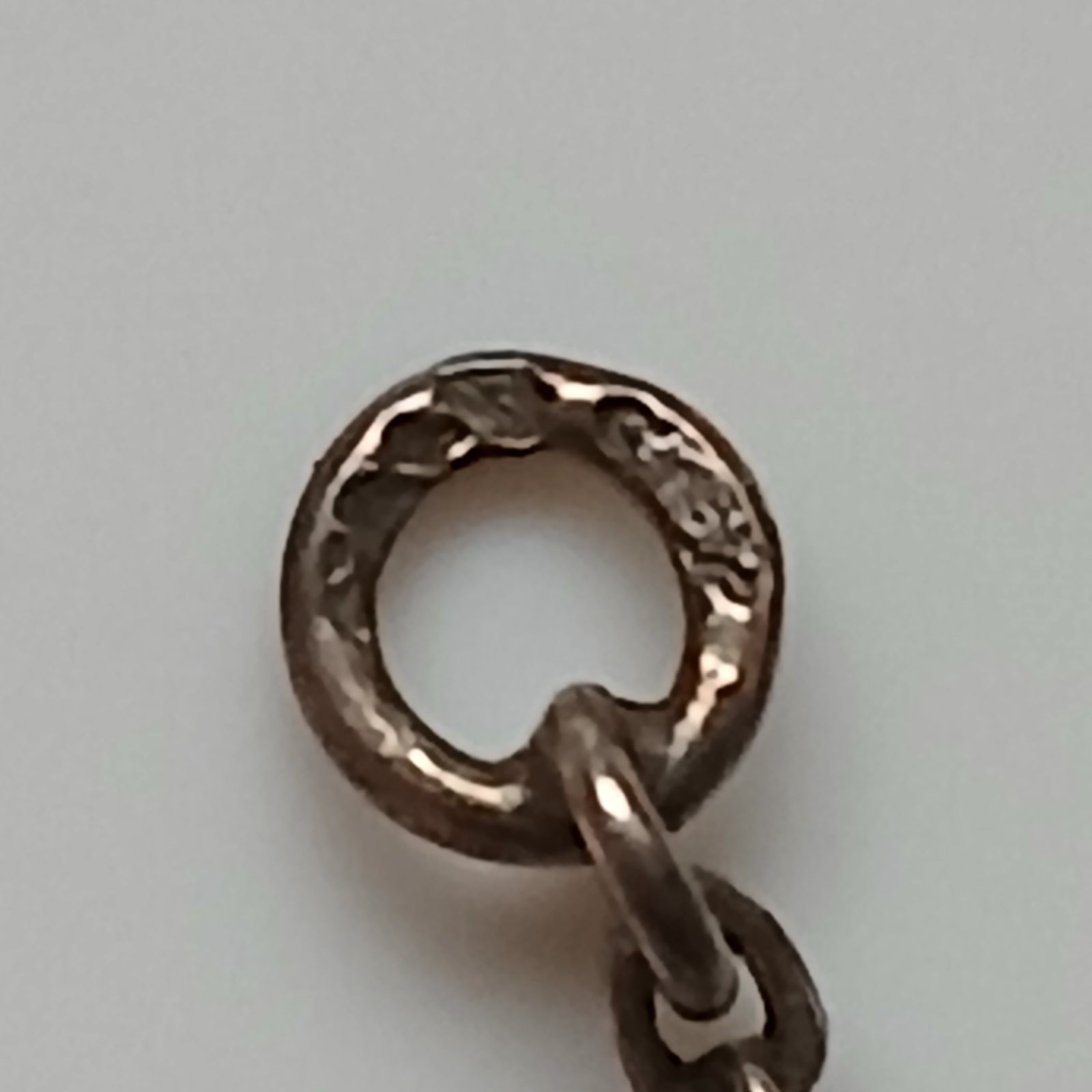
- •Absence of detectable hallmarks or maker's marks vital for exact attribution.
- •The extent of darkening on parts of the pendant is unclear; it could be intentional oxidation, tarnish, or wear to plating.
WHAT WOULD IMPROVE CERTAINTY
- →Examine the pin and pendant under magnification for any hidden hallmarks or maker's marks.
- →Conduct a precise specific gravity test and acid test to determine the metal composition(s) of the pin, chain, and pendant.
- →Loupe examination of the colorless stones to identify cut style, clarity, and possible inclusions, which could indicate natural diamond, paste, or other materials.
- →Measure the overall length of the pin and the dimensions of the pendant for a clearer understanding of its scale and potential purpose.
ESTIMATED VALUE
Updated: Feb 27, 2026
- Market comparables from auctions & retail
- Condition, completeness & craftsmanship
- Current collector demand & trends
- Low = quick sale, high = patient seller
For informational purposes only, not a formal appraisal.
ABOUT JEWELRY
Fine jewelry, costume pieces, rings, necklaces, bracelets, and brooches.
Browse all JewelrySHARE THIS CURIOSITY
Have your own curiosities to discover?
Scan Your Curiosity
COMMENTS
No comments yet. Be the first to share your thoughts!
Sign in to leave a comment