Megalodon Tooth (Carcharocles megalodon)
QUICK FACTS
Categories
Era
Miocene-Pliocene Epoch (approx. 23 to 3.6 million years ago)
Origin
🌍 International
Rarity
Average (4/10)
Discovered
Jan 6, 2026
1 months ago
DESCRIPTION
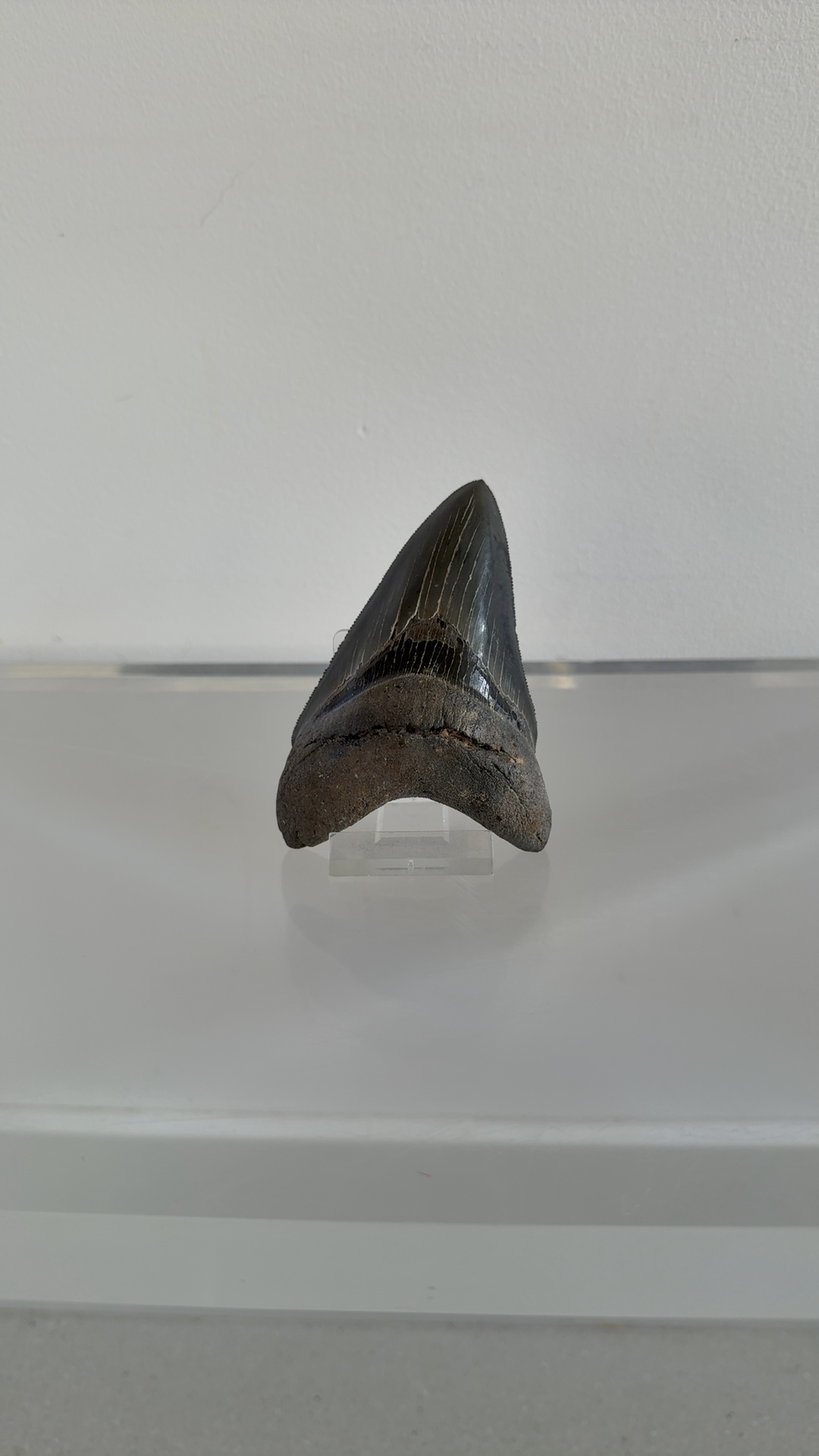
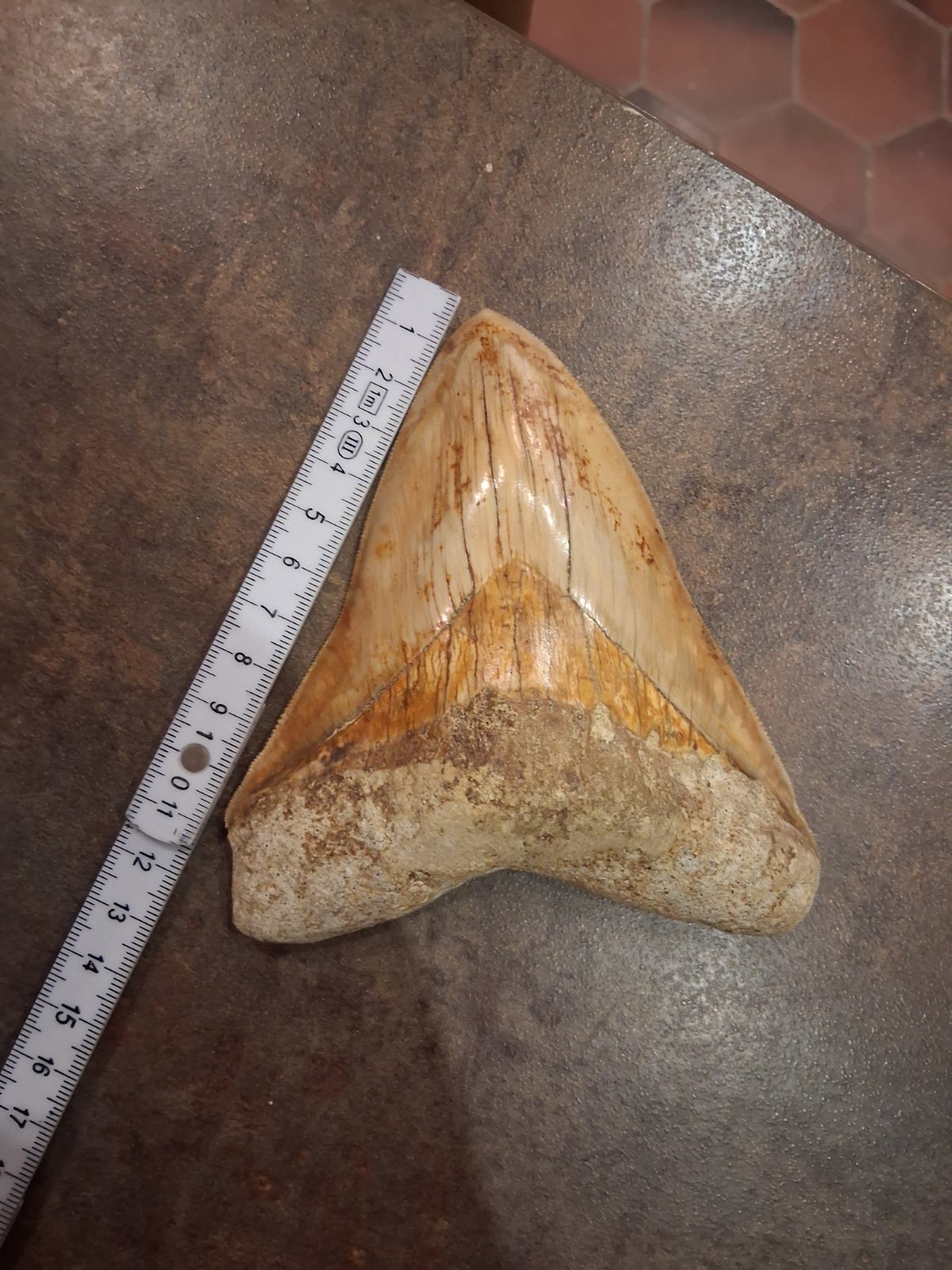
This specimen is a fossilized tooth from a Megalodon shark, *Carcharocles megalodon*. It presents the characteristic triangular shape, broad crown, and distinct bourlette (the dark, often glossy band separating the enamel from the root) typical of this iconic extinct apex predator. The serrations along the cutting edges appear visible, though somewhat worn, which is common in many retrieved specimens.
CULTURAL ECHOES
Where This Object Echoes
The fascination with prehistoric megafauna, particularly large predators like Megalodon, is a significant theme in modern paleo-art, documentaries, and popular monster movies.
Fossils like Megalodon teeth are highly valued by scientific institutions for research into ancient ecosystems and shark biology.
Ritual & Ceremonial Use
- •Fossil hunting and collecting as a recreational and scientific pursuit, often involving systematic searching in known fossil localities.
- •Displaying natural history specimens as educational tools or decorative objects in homes and museums.
Meaning Through Time
Fossil shark teeth were often mistaken for the tongues of dragons or mythical serpents, known as 'glossopetrae'.
Naturalists like Nicolaus Steno correctly identified glossopetrae as fossilized shark teeth, contributing to the nascent field of paleontology and geology.
Megalodon teeth have become iconic symbols of primordial power and the vast unknown depths of ancient oceans, serving as both scientific curiosities and popular collector's items.
HISTORICAL STORY
DID YOU KNOW?
Megalodon teeth are not just found on land; divers often find them on the ocean floor, particularly off the coast of Florida, North Carolina, and other regions where rich fossil beds exist.
The sheer size of a Megalodon tooth, compared to modern shark teeth, provides direct evidence of its massive body size, making it one of the largest macropredators in Earth's history.
MATERIAL & CONDITION
Surface
The enamel of the crown is largely intact, exhibiting a dark, glossy, almost jet-black coloration with some lighter striations visible. The root, in contrast, shows a rougher, granular texture, typical of fossilized bone or dentin, with a distinct bourlette separating it from the crown.
Weight & Feel
Given its size and fossilized nature, this tooth would feel quite substantial and dense in hand, suggesting thorough mineralization.
Condition
The tooth appears to be in good overall condition with clear definition of the crown and root. There is some visible wear to the serrations, indicative of its natural history and recovery process. No obvious breaks or large chips are apparent from the provided images.
RARITY ANALYSIS
Typical antique shop fare. Requires some searching but regularly available. This is where most genuine antiques fall.
Typical Characteristics
- Standard antique shop items
- Regularly available
- Moderate collector interest
EXPERT ANALYSIS
Paleontology Specialist
The distinct morphology, characteristic coloration, and overall preservation point strongly to this being an authentic Megalodon tooth. The images offer clear views of the major identifying features.
KEY EVIDENCE
- 1Characteristic triangular shape and robust form consistent with a Megalodon upper lateral tooth.
- 2Presence of a distinct bourlette and visible, albeit worn, serrations along the cutting edges.
- 3Typical dark coloration and enamel texture for a well-mineralized fossil shark tooth.
- 4Absence of any modern features or materials suggesting forgery.
WHAT WOULD IMPROVE CERTAINTY
- →Measure the length along the diagonal slant to get an accurate size for identification and valuation.
- →Examine the root closely for any evidence of repair or consolidation, particularly small cracks or differing textures.
- →Inspect the serrations under magnification to check for enhancement or etching.
- →If possible, obtain provenance information regarding the collection locality and geological formation.
ESTIMATED VALUE
Updated: Feb 26, 2026
- Market comparables from auctions & retail
- Condition, completeness & craftsmanship
- Current collector demand & trends
- Low = quick sale, high = patient seller
For informational purposes only, not a formal appraisal.
ABOUT FOSSILS
Prehistoric specimens, dinosaur fossils, amber inclusions, and ancient life forms.
Browse all FossilsSHARE THIS CURIOSITY
Have your own curiosities to discover?
Scan Your Curiosity
COMMENTS
No comments yet. Be the first to share your thoughts!
Sign in to leave a comment