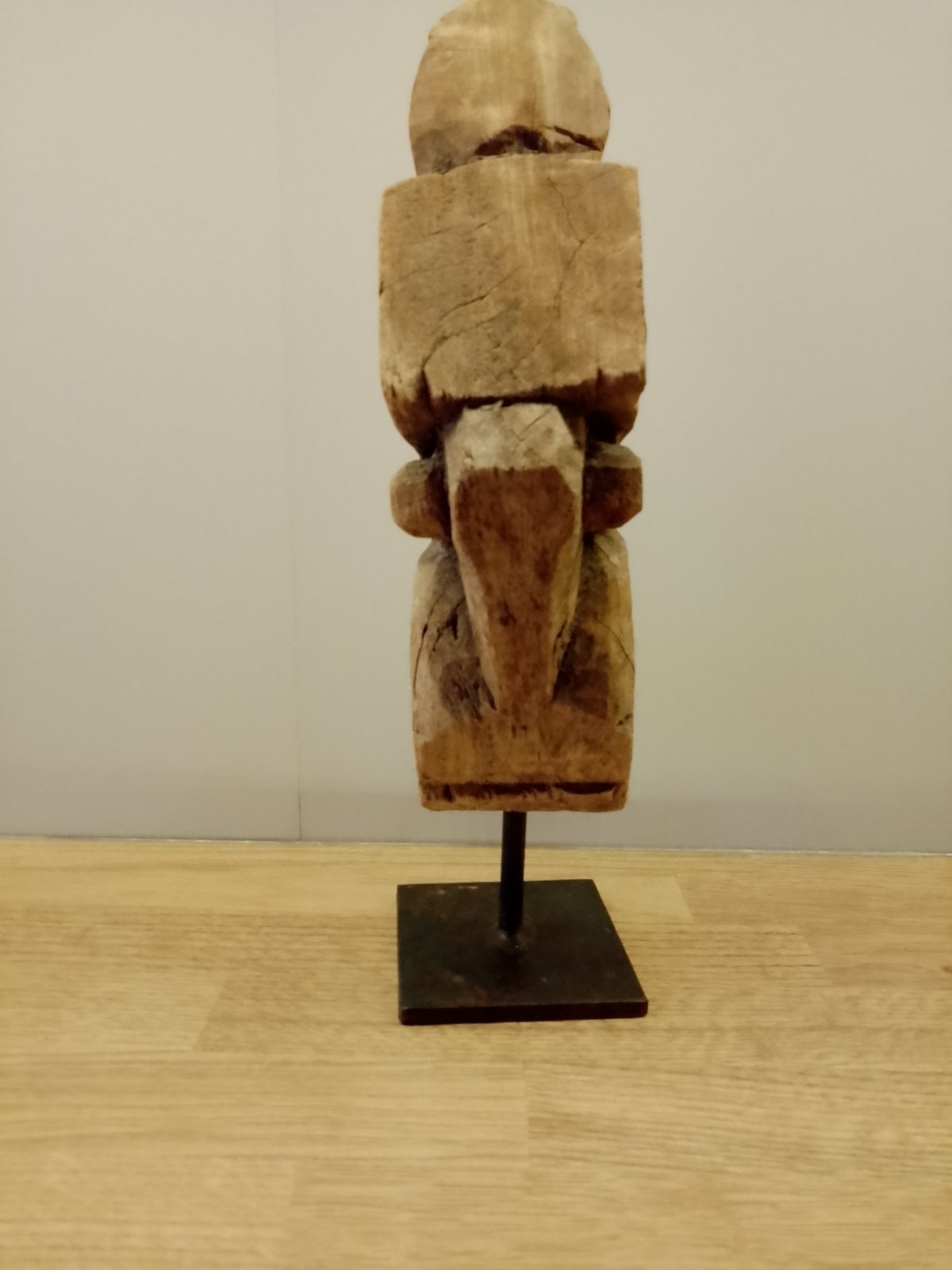
Southeast Asian Carved Wooden Figure Fragment on Stand
QUICK FACTS
Categories
Era
late 19th - mid 20th Century
Origin
🌍 International
Artist/Maker
onbekend
Rarity
Average (4/10)
Discovered
Jan 26, 2026
1 months ago
DESCRIPTION
This appears to be a fragment of a carved wooden figure, presented on a modern metal display stand. The carving style suggests a Southeast Asian origin, likely from an architectural element or a larger cultic figure, now weathered and abstracted.
CULTURAL ECHOES
Where This Object Echoes
Stylized human or deity figures are common in architectural carvings (like lintels, posts) and freestanding effigies, often serving protective or spiritual roles.
The abstracted human form and emphasis on textural weathering share aesthetic similarities with some West African sculpture styles, though the carving details differ.
Ritual & Ceremonial Use
- •Such figures might have been part of ancestor veneration rituals, harvest festivals, or rites of passage, embodying spirits or deities.
- •Used as architectural guardians, protecting temples or community longhouses from malevolent forces or marking sacred spaces.
Meaning Through Time
Likely a functional or spiritual object, imbued with cultural and religious significance within its community of origin.
Recontextualized as a decorative art object or 'ethnic' accent for Western interiors, valued for its aesthetic form and perceived exoticism rather than its original sacred purpose.
HISTORICAL STORY
DID YOU KNOW?
Wood in Southeast Asia holds deep cultural significance, often believed to possess spiritual properties or house ancestral spirits, making carved figures conduits for connection to the divine.
The weathered appearance, while challenging for precise dating, also offers aesthetic appeal as 'wabi-sabi' in some contemporary design contexts, valuing imperfection and the passage of time.
MATERIAL & CONDITION
Surface
The wooden surface exhibits significant weathering, with pronounced grain patterns, deep fissures, and remnants of what appears to be a lighter, possibly bleached or sun-faded, patina. Hand carving marks are visible, indicating manual creation rather than machine tooling.
Weight & Feel
Given its size and the apparent density of the wood, the fragment itself would likely feel moderately weighty. The metal stand would add significant stability and a proportionate base weight.
Condition
The wood is heavily aged, showing numerous cracks, some deep, consistent with prolonged exposure to elements or a dry climate. The edges are soft and worn, losing original crispness. It appears to be a fragment, not a complete original sculpture.
RARITY ANALYSIS
Typical antique shop fare. Requires some searching but regularly available. This is where most genuine antiques fall.
Typical Characteristics
- Standard antique shop items
- Regularly available
- Moderate collector interest
EXPERT ANALYSIS
Asian Art Specialist
My confidence is good for identifying it as a genuinely aged, carved wooden fragment from Southeast Asia. However, without more specific details, marks, or contextual information, narrowing down the exact origin, function, or precise age remains challenging.
KEY EVIDENCE
- 1The carving style, characterized by simplified, blocky forms softened by age, is consistent with certain Southeast Asian ethnographic traditions.
- 2The prominent wood grain and deep fissures indicate genuine aging and weathering, not a superficial treatment.
- 3The visible tool marks on the surface suggest hand-carving techniques.
- 4The general form, although fragmented, hints at an anthropomorphic or zoomorphic origin, common in tribal artifacture.
UNCERTAINTIES
- •Absence of specific ethnographic detail (e.g., origin tribe, exact function) makes precise cultural attribution difficult.
- •The possibility of this being a modern decorative carving made to look old, though the inherent weathering appears genuine.
- •The current presentation on a modern stand isolates it from its original context, hindering full understanding.
WHAT WOULD IMPROVE CERTAINTY
- →A close-up image of the base of the carving to inspect the footrim or attachment points for clues about its original use.
- →Magnified images of the surface to better discern carving tool marks and the nature of the wood's deterioration.
- →Consultation with an expert specializing in Southeast Asian ethnographic art for a more precise regional and tribal attribution.
- →Identification of the specific wood type could offer clues regarding its geographic origin.
ESTIMATED VALUE
Updated: Feb 27, 2026
- Market comparables from auctions & retail
- Condition, completeness & craftsmanship
- Current collector demand & trends
- Low = quick sale, high = patient seller
For informational purposes only, not a formal appraisal.
ABOUT TRIBAL & ETHNOGRAPHIC
Tribal art, masks, ethnographic objects, and indigenous crafts.
Browse all Tribal & EthnographicSHARE THIS CURIOSITY
Have your own curiosities to discover?
Scan Your Curiosity
COMMENTS
No comments yet. Be the first to share your thoughts!
Sign in to leave a comment