Carved Wooden Decorative Panel on Stand, Tribal Style
QUICK FACTS
Categories
Era
Mid-20th Century to Contemporary
Origin
🌍 International
Rarity
Ordinary (3/10)
Discovered
Jan 26, 2026
1 months ago
DESCRIPTION
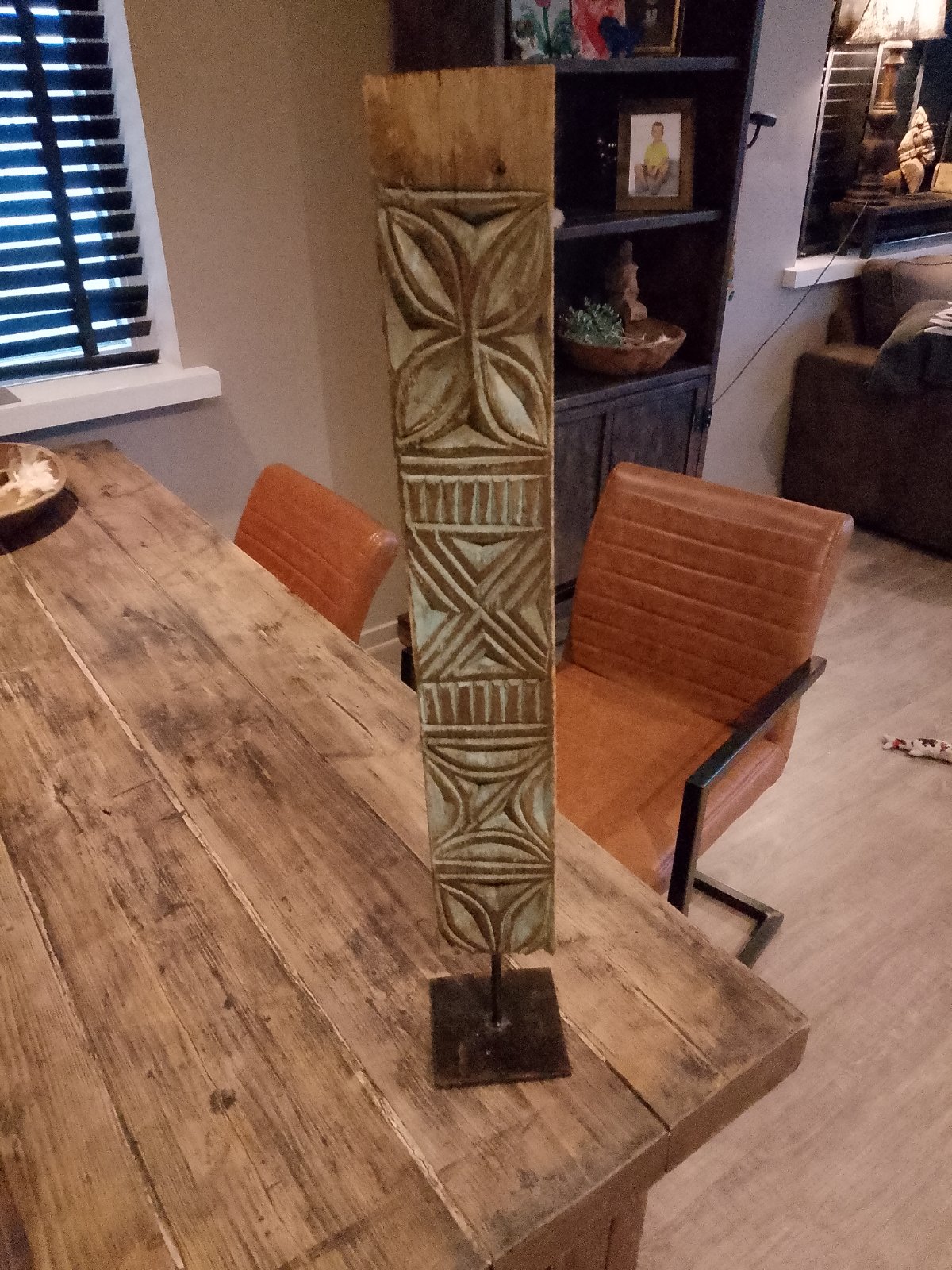
This appears to be a carved wooden panel, presented vertically on a metal stand, suggesting a decorative art piece. The carving features geometric and stylized floral motifs, segmented into distinct registers, reminiscent of traditional tribal folk art from various regions. The wood itself shows signs of age and weathering, contributing to its rustic aesthetic. While the carving style evokes Polynesian or Oceanic influences, it's prudent to consider it a decorative piece in a 'tribal style' without specific attribution due to the lack of definitive cultural markers.
CULTURAL ECHOES
Where This Object Echoes
Traditional carvings from cultures like Maori (New Zealand), Samoan, or Marquesan often feature dense geometric patterns and stylized anthropomorphic or natural elements on wooden surfaces.
Regions like Indonesia (especially Bali) and Thailand have rich traditions of wood carving for decorative, architectural, and spiritual purposes, often incorporating intricate repeating motifs.
Ritual & Ceremonial Use
- •In many traditional societies, carved wooden panels are integral to architecture, protecting homes or sacred spaces, or marking important social boundaries.
- •The act of carving itself can be a meditative or ritualistic process, conveying cultural narratives or spiritual beliefs through symbolic motifs.
Meaning Through Time
Such carvings often held deep spiritual, social, or historical meaning, serving as visual language within their originating culture.
Objects inspired by traditional carvings transitioned into the Western decorative arts market, valued for their aesthetic qualities and 'exotic' appeal, sometimes detached from their original cultural context.
HISTORICAL STORY
DID YOU KNOW?
Carved wooden posts and panels play significant roles in various indigenous cultures, often serving as architectural elements, ceremonial markers, or story-telling devices.
The use of repeating geometric patterns in carving is a common artistic expression found globally, often conveying rhythm, balance, and interconnectedness.
MATERIAL & CONDITION
Surface
The wooden surface exhibits a dry, weathered appearance with visible grain and a light, perhaps bleached or naturally aged, patination. The carved areas show a slightly deeper tone, suggesting accumulation in the recesses. The metal stand appears to be iron or steel, with a dark, perhaps intentionally oxidized or painted, finish.
Weight & Feel
Given its size and wood construction, the piece likely feels moderately heavy and substantial. The metal base would add stability and contribute to the overall heft.
Condition
The wood appears to be in good, stable condition for its style, with expected signs of age and possibly intentional distressing or weathering. There are no immediately visible signs of major cracks, breaks, or repairs. The base seems secure.
RARITY ANALYSIS
Standard antiques commonly found at estate sales and flea markets. Plentiful supply meets modest demand.
Typical Characteristics
- Moderate production runs
- Common at estate sales
- Entry-level collectibles
EXPERT ANALYSIS
Asian Art Specialist
The confidence is moderate because the object type is clear (carved decorative panel), but a precise cultural origin or exact age is difficult to determine from the images provided. The style is common across many 'tribal' inspired decorative pieces.
KEY EVIDENCE
- 1Vertical wooden panel with relief carving.
- 2Geometric and stylized floral patterns, arranged in distinct registers.
- 3Aged, weathered wood surface, suggesting some time or intentional antiquing.
- 4Mounted on a simple, modern metal stand for display.
- 5Carving style reminiscent of 'tribal' or folk art from various non-western traditions.
UNCERTAINTIES
- •No specific cultural iconography that allows for a definitive ethnic or regional attribution within Asia or Oceania.
- •The overall presentation suggests a decorative item for the Western market rather than an ethnographic artifact.
- •It is difficult to determine if the aging of the wood is natural patina or an applied finish without closer inspection.
WHAT WOULD IMPROVE CERTAINTY
- →Examine the base and underside of the wood for any maker's marks, labels, or inscriptions.
- →Inspect the carving tools marks for indications of handcraft versus machine production.
- →Take detailed close-up photos of the wood grain and any areas of wear to better assess age and weathering process.
ESTIMATED VALUE
Updated: Feb 27, 2026
- Market comparables from auctions & retail
- Condition, completeness & craftsmanship
- Current collector demand & trends
- Low = quick sale, high = patient seller
For informational purposes only, not a formal appraisal.
ABOUT TRIBAL & ETHNOGRAPHIC
Tribal art, masks, ethnographic objects, and indigenous crafts.
Browse all Tribal & EthnographicSHARE THIS CURIOSITY
Have your own curiosities to discover?
Scan Your Curiosity
COMMENTS
No comments yet. Be the first to share your thoughts!
Sign in to leave a comment