Pre-Columbian Style Terracotta Bowl with Geometric-Zoomorphic Motifs
QUICK FACTS
Categories
Era
Mid-20th Century to Present (Style-Based)
Origin
🌍 International
Rarity
Average (4/10)
Discovered
Feb 1, 2026
3 weeks ago
DESCRIPTION
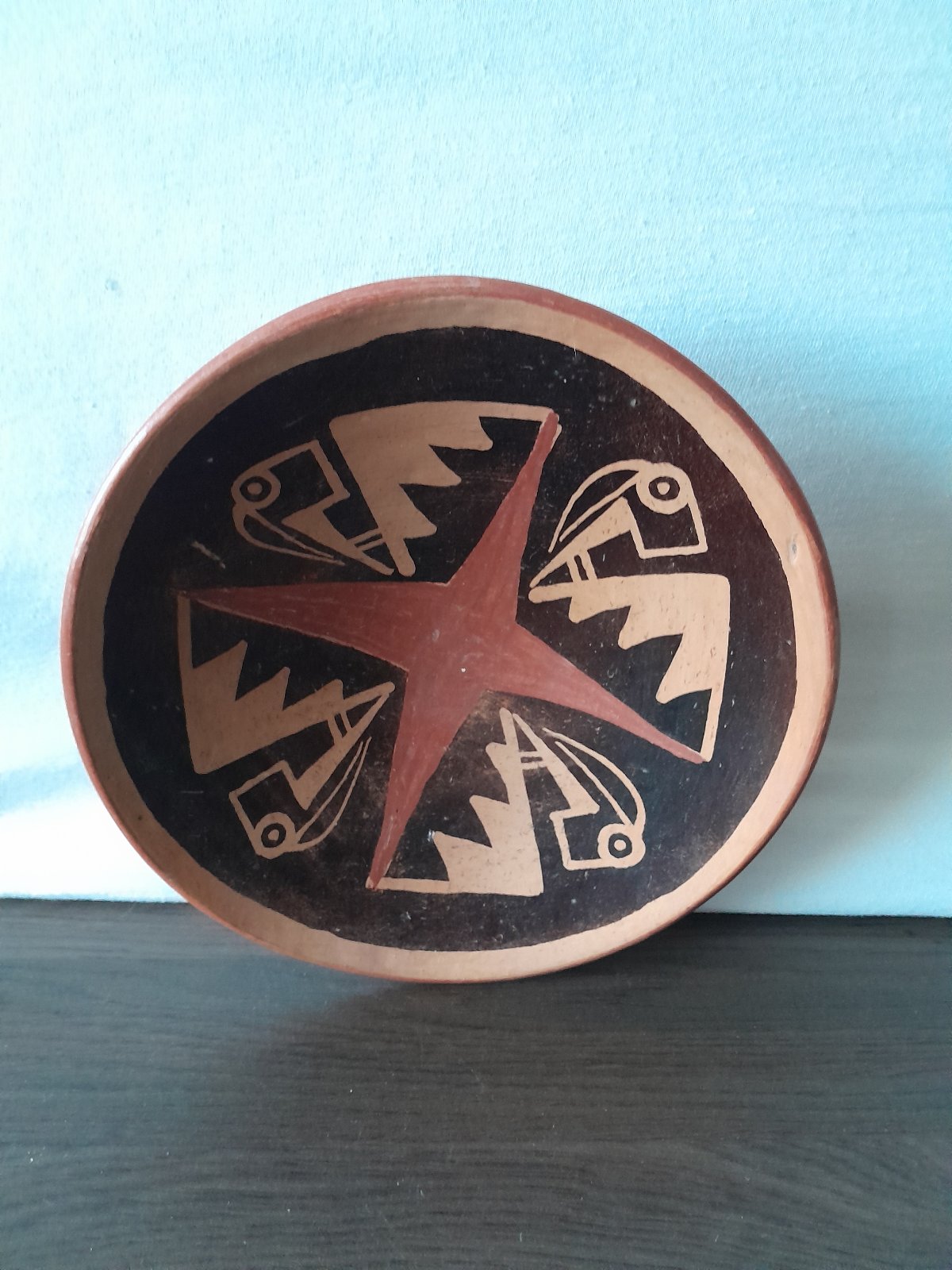
This appears to be a terracotta bowl, hand-painted with geometric and zoomorphic designs in a style evocative of ancient Andean pottery. The central motif is a four-pointed star or cross, flanked by four stylized figures which bear a resemblance to birds or anthropomorphic raptors, rendered in a light brown slip against a dark ground. The reverse shows a simple, unglazed terracotta surface with some linear painted accents.
CULTURAL ECHOES
Where This Object Echoes
Known for highly stylized ceramic iconography featuring mythical birds, fish, and anthropomorphic figures with vibrant slip painting.
Their pottery often depicted elaborate narratives, including warrior figures and zoomorphic deities, with fine line painting and modeled forms.
Ritual & Ceremonial Use
- •Such bowls in ancient cultures were often used for serving ritualistic food or drink, or as grave goods to accompany the deceased into the afterlife.
- •Symbolic motifs like stars or mythical creatures often conveyed cosmological beliefs and spiritual connections in daily life and ceremonies.
Meaning Through Time
Vessels served as both utilitarian objects and complex canvases for conveying religious beliefs, social hierarchy, and mythological narratives through their iconography.
Indigenous artistic traditions faced suppression or transformation, but motifs often persisted in folk art, sometimes detached from their original contexts.
Items in this style are often produced as tourist art or decorative pieces, celebrating indigenous heritage but primarily for commercial or aesthetic appreciation rather than original ritualistic use.
HISTORICAL STORY
DID YOU KNOW?
Pre-Columbian ceramics from cultures like the Nazca are renowned for their polychrome slip-painted designs, often featuring highly stylized birds, fish, and mythical beings.
The 'terracotta' material literally means 'baked earth,' a method of pottery making that has been practiced globally for thousands of years, typically fired at low temperatures.
MATERIAL & CONDITION
Surface
The interior surface displays a matte, painted finish with a distinct contrast between the dark brown background and the lighter, reddish-brown and tan slips of the motifs. The exterior is rough, unglazed terracotta, showing typical porosity. The pigments appear to be earth-based slips, absorbed into the clay body.
Weight & Feel
Given the terracotta material and visible thickness, the bowl likely feels substantial but not overly heavy, with a porous feel from the unglazed exterior.
Condition
The bowl appears to be in relatively good condition with some visible surface wear and slight discoloration, particularly on the unglazed exterior. There are no obvious cracks or major chips, but some of the painted details show minor fading consistent with handling and age.
RARITY ANALYSIS
Typical antique shop fare. Requires some searching but regularly available. This is where most genuine antiques fall.
Typical Characteristics
- Standard antique shop items
- Regularly available
- Moderate collector interest
EXPERT ANALYSIS
Asian Art Specialist
My confidence is moderate because while the style is clearly derivative of pre-Columbian Andean art, the visual information alone is insufficient to definitively classify it as an ancient artifact versus a more recent decorative piece. The material and technique are consistent with both.
KEY EVIDENCE
- 1The motifs and overall design clearly reference Pre-Columbian Andean ceramic traditions.
- 2Material is unglazed terracotta with slip-painted decoration, a technique common in historic and contemporary Andean pottery.
- 3The footrim is rudimentary and unrefined, consistent with traditional hand-making methods, but not exclusive to ancient pieces.
- 4Visible aging and wear patterns suggest handling and some age, but not necessarily antiquity.
UNCERTAINTIES
- •No specific archaeological context or maker's mark to indicate genuine antiquity.
- •The specific design, while evocative, does not immediately correspond to a well-documented artifact from a specific ancient site or period.
- •Terracotta is easily replicated, and the style is popular for modern decorative and tourist wares.
WHAT WOULD IMPROVE CERTAINTY
- →A close-up examination of the pigment application and clay body details under magnification to assess tool marks and firing characteristics.
- →Consultation with a specialist in pre-Columbian Andean ceramics to compare the specific iconography and execution with known authentic examples.
- →Thermoluminescence (TL) dating, if the value justifies the invasive nature of the test, to determine the last firing date of the clay.
- →Examination of the internal surface for residues that might indicate its original use, if ancient.
ESTIMATED VALUE
Updated: Feb 27, 2026
- Market comparables from auctions & retail
- Condition, completeness & craftsmanship
- Current collector demand & trends
- Low = quick sale, high = patient seller
For informational purposes only, not a formal appraisal.

ABOUT TRIBAL & ETHNOGRAPHIC
Tribal art, masks, ethnographic objects, and indigenous crafts.
Browse all Tribal & EthnographicSHARE THIS CURIOSITY
Have your own curiosities to discover?
Scan Your Curiosity
COMMENTS
No comments yet. Be the first to share your thoughts!
Sign in to leave a comment