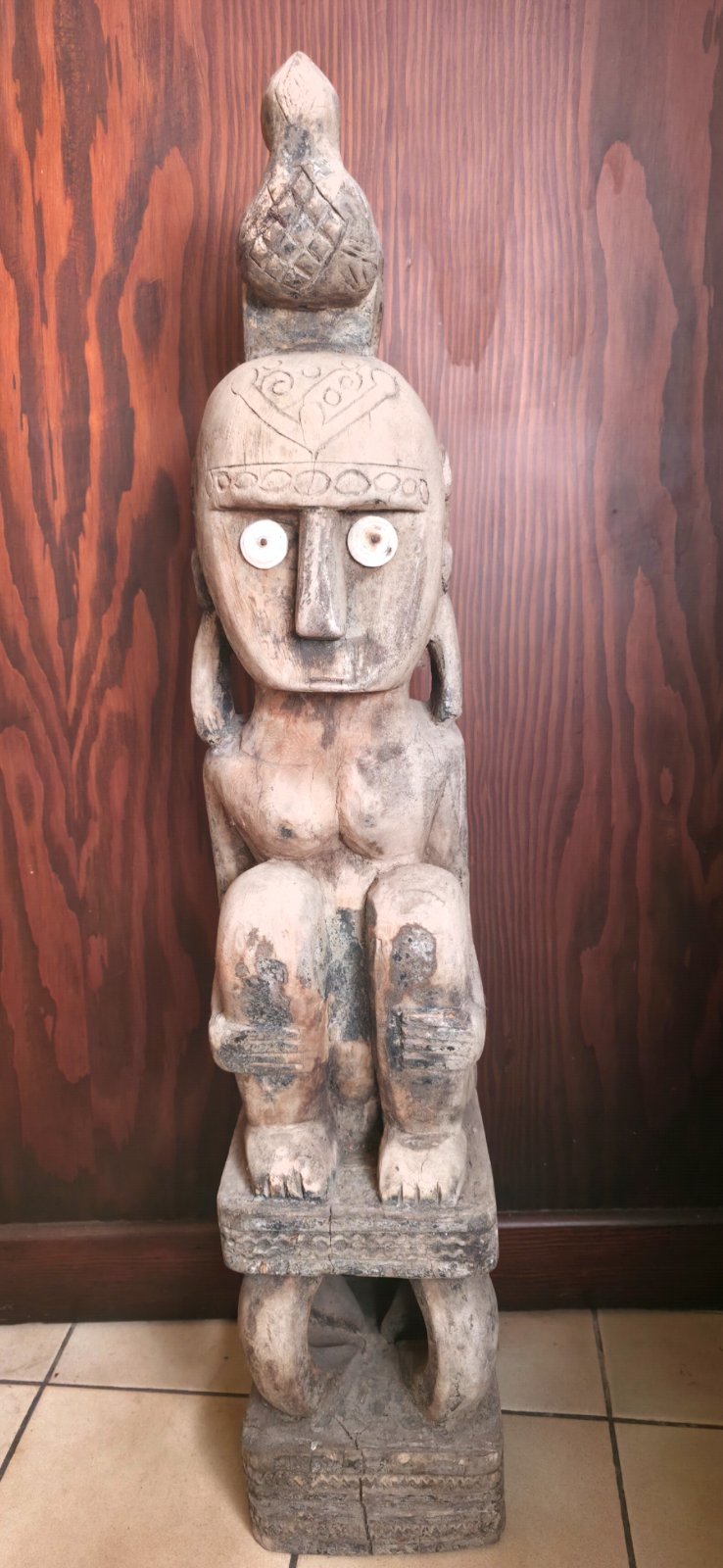
Carved Wood Ancestor Figure or Deity Sculpture
QUICK FACTS
Categories
Era
Mid-20th Century
Origin
🌍 International
Artist/Maker
Dayak bevolking
Rarity
Average (4/10)
Discovered
Feb 1, 2026
4 weeks ago
DESCRIPTION
This appears to be a carved wooden sculpture depicting an anthropomorphic figure, possibly an ancestor or a deity, characteristic of tribal art traditions. The figure is shown in a seated, squatting position, with prominent breasts, suggesting a female form or a figure of fertility. The head is adorned with a headdress or an animal figure, possibly a bird. Shell or bone inlays are used for the eyes, providing a striking contrast against the aged wood. The carving style is robust and sculptural, with visible tool marks suggesting hand-carved origins.
CULTURAL ECHOES
Where This Object Echoes
Dogon ancestor figures, often carved from wood, feature stylized forms and are central to their spiritual beliefs and rituals.
The 'bulul' figures of the Ifugao people, used in rice harvest rituals, often depict squatting ancestors or deities and share a similar material and sculptural language.
Various cultural groups in New Guinea create wooden ancestor figures with striking features and often incorporating shell inlay for eyes, used for protection and fertility.
Ritual & Ceremonial Use
- •Veneration of ancestors, where such figures serve as physical representations or dwelling places for ancestral spirits during ceremonies.
- •Fertility rituals, where figures with prominent reproductive features are invoked to ensure agricultural abundance and family prosperity.
- •Protection rituals, where figures are placed in homes or communal areas to ward off evil spirits and provide spiritual guardianship.
Meaning Through Time
Primarily viewed as sacred objects, imbued with spiritual power, and integral to the religious and social fabric of their originating communities.
Increasingly seen as 'ethnic art' or 'tribal art' by Western collectors and museums, sometimes detached from their original ritualistic context and appreciated for aesthetic qualities.
HISTORICAL STORY
DID YOU KNOW?
Many indigenous cultures believe that these figures house the spirits of ancestors or deities, acting as a direct conduit between the living and the spiritual world.
The squatting posture seen here is common in various tribal art traditions, often symbolizing a primal state, readiness, or connection to the earth.
MATERIAL & CONDITION
Surface
The wooden surface exhibits notable age, with a dry, weathered patina that suggests exposure and handling over time. The grain is visible, and the texture appears somewhat rough, consistent with hand-carving and natural aging. Some areas show a darker, almost blackened appearance, possibly from grime buildup or ritualistic application of substances.
Weight & Feel
Based on its size and solid wood construction, the sculpture appears to be substantial and fairly heavy, implying a dense wood type suitable for carving detail and durability. It would require two hands to move comfortably.
Condition
The overall condition appears fair to good for its age, showing expected wear. There are cracks and fissures in the wood, particularly in the base and legs, which are natural results of drying and environmental changes. The embedded eye elements seem intact, and while there is surface abrasion and darkening, the underlying form and carving details remain well-preserved.
RARITY ANALYSIS
Typical antique shop fare. Requires some searching but regularly available. This is where most genuine antiques fall.
Typical Characteristics
- Standard antique shop items
- Regularly available
- Moderate collector interest
EXPERT ANALYSIS
Asian Art Specialist
My confidence is good as the visual evidence strongly suggests an authentic, hand-carved wooden tribal figure with natural aging. However, the lack of specific cultural identifiers or provenance prevents a more precise attribution, impacting the highest level of certainty.
KEY EVIDENCE
- 1The carving style, particularly the robust, block-like forms and deep incisions, is consistent with traditional hand-carved tribal figures.
- 2The visible wood grain and dry, naturally aged patina suggest genuine age rather than recent artificial distressing.
- 3The use of shell or bone inlay for the eyes is a common decorative and spiritual element in various indigenous art forms.
- 4The squatting posture and emphasis on fertility elements are recurring motifs across many Southeast Asian and Oceanic spiritual sculptures.
UNCERTAINTIES
- •Without knowing the specific region or cultural group, accurate dating and attribution are limited.
- •The type of wood is difficult to identify from imagery, which could offer clues to origin.
- •The possibility of this being a 20th-century tourist piece, albeit aged, cannot be entirely ruled out without further examination.
WHAT WOULD IMPROVE CERTAINTY
- →Examine the base and underside of the figure for any inscriptions, labels, or additional tool marks.
- →Obtain high-resolution close-up photographs of the wood texture and any areas of wear or patina.
- →Consult with a specialist in Southeast Asian or Oceanic tribal art for an in-person assessment.
- →If possible, determine the type of wood used, as certain woods are characteristic of specific regions.
ESTIMATED VALUE
Updated: Feb 27, 2026
- Market comparables from auctions & retail
- Condition, completeness & craftsmanship
- Current collector demand & trends
- Low = quick sale, high = patient seller
For informational purposes only, not a formal appraisal.
ABOUT TRIBAL & ETHNOGRAPHIC
Tribal art, masks, ethnographic objects, and indigenous crafts.
Browse all Tribal & EthnographicSHARE THIS CURIOSITY
Have your own curiosities to discover?
Scan Your Curiosity
COMMENTS
No comments yet. Be the first to share your thoughts!
Sign in to leave a comment