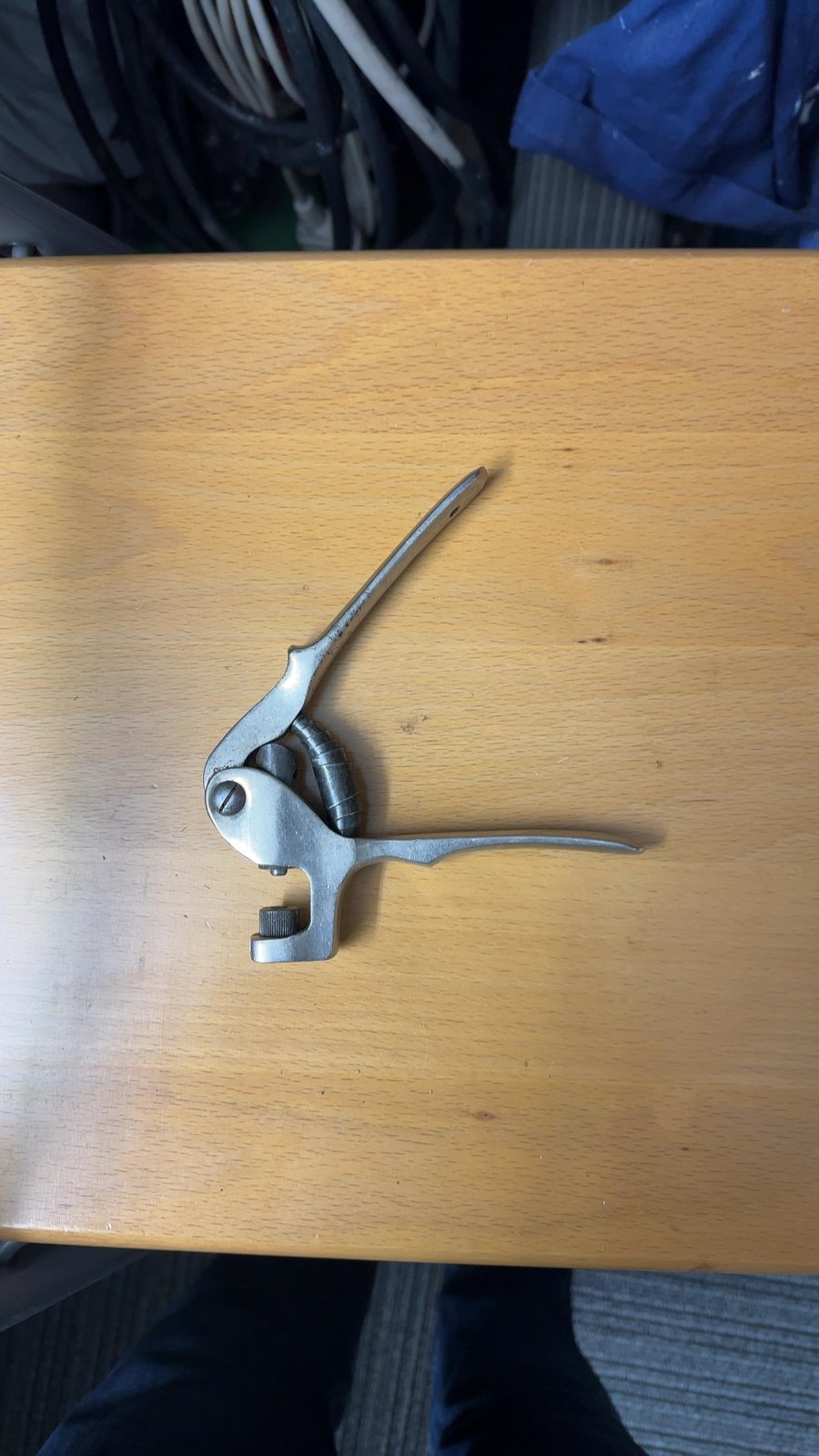
Vintage Sheet Metal Hand Seamer / HVAC Duct Tool
QUICK FACTS
Categories
Era
Mid-20th Century (1930s-1970s)
Origin
🇳🇱 Netherlands
Rarity
Ordinary (3/10)
Discovered
Jan 14, 2026
1 months ago
DESCRIPTION
This appears to be a vintage hand seamer, a specialized tool used primarily in HVAC (heating, ventilation, and air conditioning) and sheet metal fabrication. The design features substantial cast metal handles, a hinged jaw mechanism, and a spring-loaded return. The knurled nut suggests an adjustable stop or jaw compression. Such tools are used for bending, folding, and crimping edges of sheet metal, particularly for ductwork and roofing applications. The robust construction and simple mechanical design point to a durable, practical tool built for repetitive industrial or trade work.
CULTURAL ECHOES
Where This Object Echoes
Similar hand tools for metal shaping evolved from blacksmithing and coppersmithing, emphasizing manual skill and durable construction.
While professional, these tools share a lineage with robust hand tools used by homeowners for repair tasks, valuing longevity over disposability.
Ritual & Ceremonial Use
- •The rhythmic motion of crimping and bending sheet metal in construction and repair trades.
- •The careful maintenance and sharpening of hand tools as a professional practice.
Meaning Through Time
A fundamental tool of the skilled tradesman, symbolizing craftsmanship and manual expertise.
Increasingly replaced by powered machines in large-scale production, becoming a specialty tool for small jobs, repairs, or historical restoration, often valued for its vintage utility.
HISTORICAL STORY
DID YOU KNOW?
Before the advent of specialized machinery, skilled sheet metal workers would often make these hand seamers themselves or have them custom-forged to meet specific needs.
A well-maintained hand seamer could last multiple generations of tradesmen, often passed down as prized possessions due to their utility and quality construction.
MATERIAL & CONDITION
Surface
The tool exhibits a typical brushed or unfinished cast metal appearance, likely steel or a similar alloy, with areas of wear and minor surface corrosion consistent with age and use in a workshop environment. The knurled pattern on the adjusting nut is still crisp, indicating it has not been heavily worn down.
Weight & Feel
This tool appears quite substantial and dense. Its construction would lend itself to a considerable heft, likely 1 to 2 kilograms (2-4 lbs), designed for leverage and durability during demanding tasks.
Condition
The overall condition appears good for its age, showing typical signs of use such as scuffs, minor pitting, and possibly some surface discoloration from oxidation, particularly in recessed areas. The hinge mechanism and spring appear intact and functional. No obvious signs of major breaks or repairs are visible.
RARITY ANALYSIS
Standard antiques commonly found at estate sales and flea markets. Plentiful supply meets modest demand.
Typical Characteristics
- Moderate production runs
- Common at estate sales
- Entry-level collectibles
EXPERT ANALYSIS
Trading Card Market Analyst
The visual characteristics strongly match known designs for vintage sheet metal hand seamers. The materials, construction style, and evident wear patterns provide robust evidence for identification and estimated era.
KEY EVIDENCE
- 1Cast metal construction, indicative of vintage manufacturing.
- 2Hinged jaw and spring mechanism for 'seaming' or bending sheet metal.
- 3Knurled adjuster suggests a fine-tuning capability for jaw opening or stop.
- 4Wear and patina consistent with an older, working tool.
WHAT WOULD IMPROVE CERTAINTY
- →Check for any faint manufacturer's marks or patent numbers on the handles or pivot points.
- →Examine the '5552' marking more closely to determine if it is a part number, date code, or other identifier.
ESTIMATED VALUE
Updated: Feb 26, 2026
- Market comparables from auctions & retail
- Condition, completeness & craftsmanship
- Current collector demand & trends
- Low = quick sale, high = patient seller
For informational purposes only, not a formal appraisal.
ABOUT MECHANICAL & INDUSTRIAL
Vintage machines, industrial objects, tools, and mechanical curiosities.
Browse all Mechanical & IndustrialSHARE THIS CURIOSITY
Have your own curiosities to discover?
Scan Your Curiosity
COMMENTS
No comments yet. Be the first to share your thoughts!
Sign in to leave a comment