Vintage Bicycle Bell Cover
QUICK FACTS
Categories
Era
Mid-20th Century
Origin
SU
Rarity
Ordinary (3/10)
Discovered
Feb 28, 2026
1 day ago
DESCRIPTION
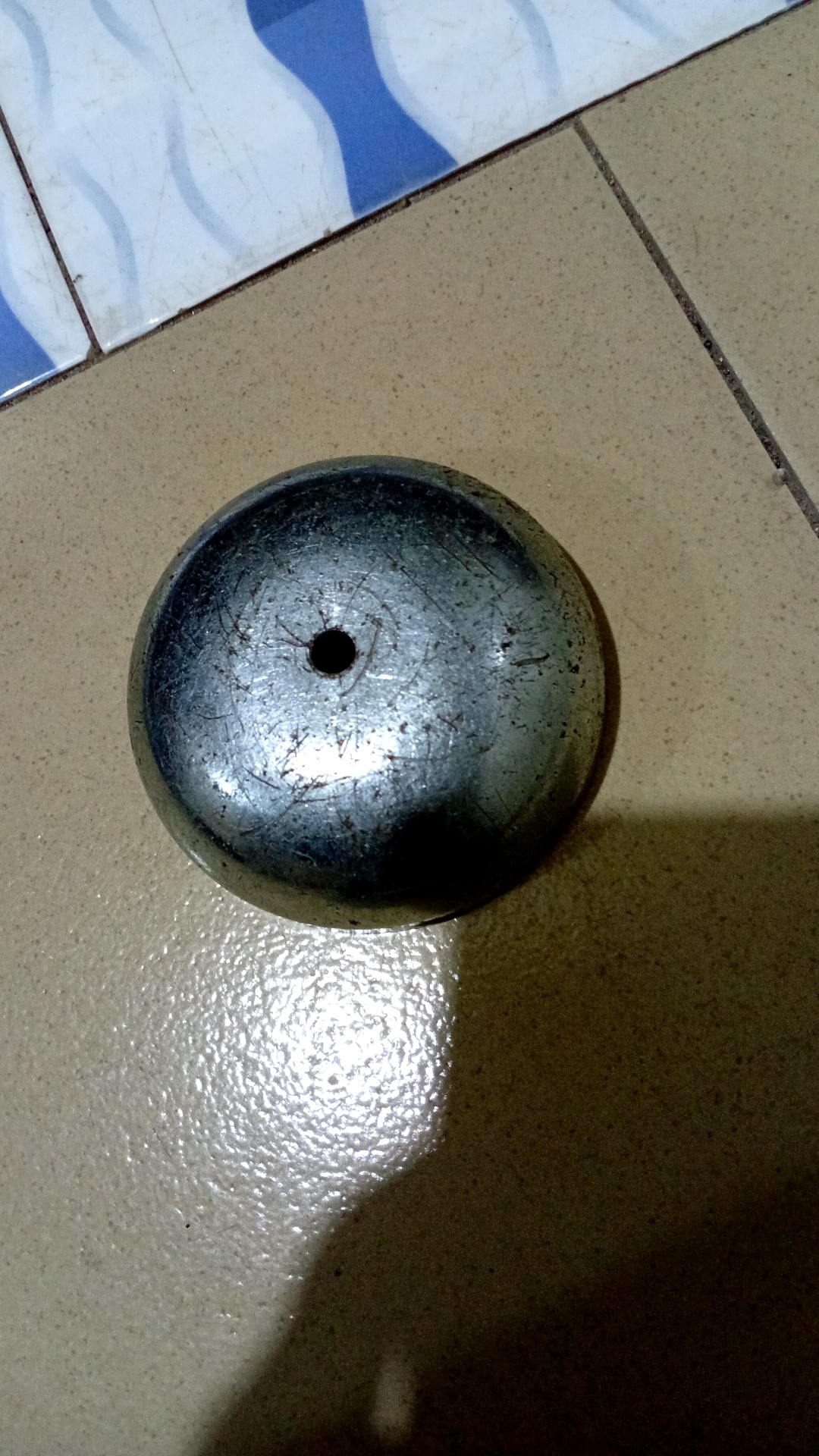
This appears to be the outer dome or cover of a vintage bicycle bell, likely made from a ferrous metal that was originally plated, possibly with nickel or chrome. The form is a simple, hemispherical dome with a central hole, which would have accommodated the striking mechanism and attachment point to the bicycle handlebar. The external surface shows characteristic wear and scratching from use, while the interior reveals significant oxidation.
CULTURAL ECHOES
Where This Object Echoes
Utilitarian design ethos focused on function and durability, common across early to mid-20th century mass-produced goods, especially in planned economies.
Ritual & Ceremonial Use
- •Daily commute and leisure cycling, where the bell served as a crucial safety device for communication on roads and paths.
Meaning Through Time
Primarily a practical safety device and a legal requirement for bicycles.
Has taken on nostalgic and decorative attributes for vintage bicycle enthusiasts, often collected as a standalone component.
HISTORICAL STORY
DID YOU KNOW?
The distinctive 'ding-ding' sound of a traditional bicycle bell is produced by the dome resonating after a hammer strikes its interior surface, much like a miniature church bell.
Bicycle bells became mandatory safety equipment in many countries by the early 20th century to alert pedestrians and other road users, a function that continues to this day.
MATERIAL & CONDITION
Surface
The exterior surface presents as a dull, scratched metallic finish, consistent with a plated ferrous metal that has seen considerable use and some degradation, possibly due to minor surface rust or wear through the plating. The interior, however, shows heavy, uneven reddish-brown oxidation, indicating the underlying metal has significantly rusted.
Weight & Feel
Based on its size and apparent metal construction, it likely feels lightweight but somewhat sturdy, consistent with sheet metal fabrication for a bicycle accessory.
Condition
The bell cover is in 'needs restoration' condition. The exterior plating is heavily scratched and worn, suggesting prolonged outdoor exposure and friction. The interior is extensively corroded with active rust, which could impact its original resonance if it were part of a complete bell mechanism.
RARITY ANALYSIS
Standard antiques commonly found at estate sales and flea markets. Plentiful supply meets modest demand.
Typical Characteristics
- Moderate production runs
- Common at estate sales
- Entry-level collectibles
EXPERT ANALYSIS
Vintage Technology Restorer & Historian
Confidence is moderate due to the clear visual match for a bicycle bell cover and alignment with user context regarding origin and condition. However, the absence of any distinguishing marks prevents higher confidence in precise model or specific manufacturing details.
KEY EVIDENCE
- 1Hemispherical dome shape with central hole characteristic of a bell cover.
- 2Surface wear and heavy internal rust indicate a ferrous metal construction and significant age/use.
- 3Lack of identifying marks aligns with a utilitarian mass-produced component from the Soviet era.
- 4Condition consistent with a part salvaged from a vintage bicycle for potential restoration.
UNCERTAINTIES
- •No manufacturer markings are visible to confirm origin or specific model.
- •The lack of other bell components makes definitive identification beyond 'bell cover' challenging.
WHAT WOULD IMPROVE CERTAINTY
- →Detailed photos of the interior surface at higher resolution to assess the extent of pitting and corrosion.
- →Magnetic testing to confirm ferrous metal composition.
- →Measurement of diameter and height to cross-reference with known bicycle bell component sizes.
ESTIMATED VALUE
Updated: Feb 28, 2026
- Market comparables from auctions & retail
- Condition, completeness & craftsmanship
- Current collector demand & trends
- Low = quick sale, high = patient seller
For informational purposes only, not a formal appraisal.
CONTEXT ANALYSIS
How your provided context compares with Curiosa.com scanner findings.
What Aligned
- The visual evidence of wear and corrosion aligns with the user's assessment that the item 'Needs restoration'.
- The robust, utilitarian design is consistent with items potentially originating from the USSR.
- The object's form perfectly matches the description of a 'bicycle bell-ringer cover'.
ABOUT MECHANICAL & INDUSTRIAL
Vintage machines, industrial objects, tools, and mechanical curiosities.
Browse all Mechanical & IndustrialSHARE THIS CURIOSITY
Have your own curiosities to discover?
Scan Your Curiosity
COMMENTS
No comments yet. Be the first to share your thoughts!
Sign in to leave a comment