Vintage Wall Clock Movement Backplate
QUICK FACTS
Categories
Era
Early-to-mid 20th Century
Origin
🇩🇪 Germany
Rarity
Ordinary (3/10)
Discovered
Feb 28, 2026
1 day ago
DESCRIPTION
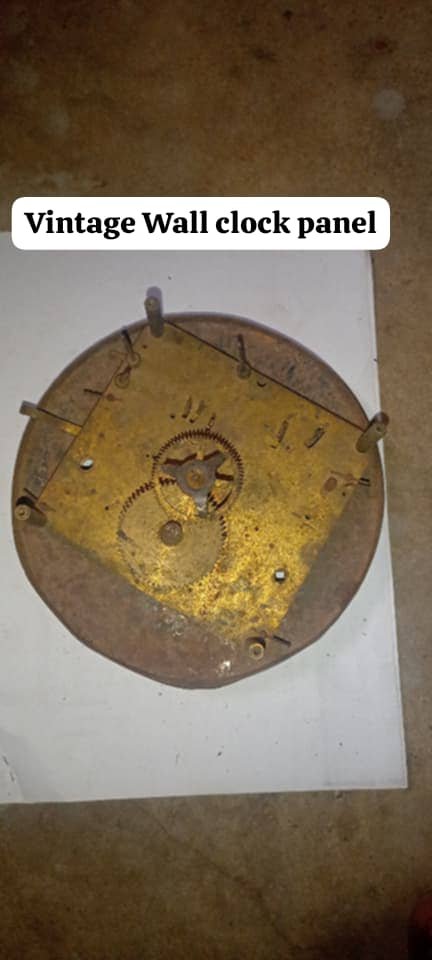
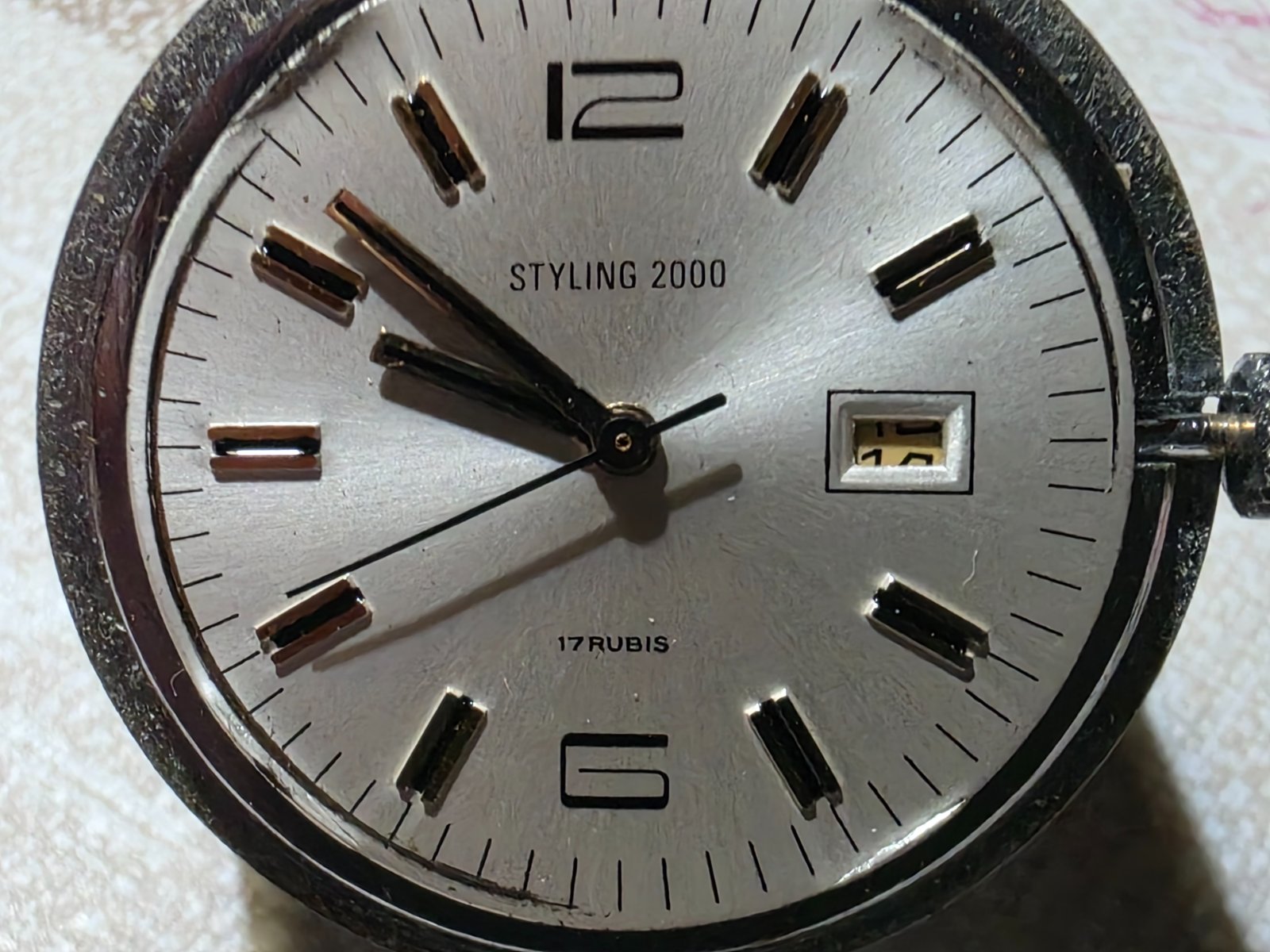
This appears to be the brass backplate and partial geartrain of a vintage wall clock movement. One can observe the remnants of the main spring barrels (or winding arbors) at the center, surrounded by some of the primary gear wheels, indicating the mechanism for timekeeping. It seems to be a skeleton of a movement, likely intended for parts or significant restoration.
CULTURAL ECHOES
Where This Object Echoes
The robust, often exposed, mechanical movements of various German clocks, particularly from the Black Forest region, highlight a tradition of functional clockmaking that prioritized reliability and often simple, yet effective, mechanics.
Meaning Through Time
Clocks were prestige objects, symbols of industriousness and order, often placed prominently in homes and public spaces.
With the rise of more affordable movements and electrical clocks, purely mechanical movements became more commonplace, valued for their utility rather than luxury.
Vintage mechanical movements are now appreciated as artifacts of craftsmanship, historical technology, and sometimes as art, often salvaged for parts or restored by horology enthusiasts.
HISTORICAL STORY
DID YOU KNOW?
Before electricity, mechanical clocks required precise engineering to run accurately, often using weights or springs as power sources and pendulums for regulation.
The gearing mechanisms in early mechanical clocks were often individually cut and fitted by skilled artisans, making each movement subtly unique despite mass production.
MATERIAL & CONDITION
Surface
The brass surface of the movement shows significant oxidation and verdigris, indicating prolonged exposure to moisture and air. The steel components, particularly the screws and some gear parts, exhibit surface rust. The outer rim of what might be a casing or outer plate shows heavier corrosion.
Weight & Feel
Based on the apparent materials (brass and steel) and likely size of a wall clock movement, it would feel moderately heavy, certainly substantial enough to confirm it's not a lightweight modern replica, perhaps 1-2 kilograms for the entire assembly when complete.
Condition
The item is in poor condition, consistent with 'needs restoration.' There's extensive surface corrosion, visible wear on some gear teeth, and components appear to be missing, notably the escapement, balance wheel (if it's not a pendulum clock movement), and potentially crucial winding mechanisms. This is a salvageable movement for parts or a complete overhaul.
RARITY ANALYSIS
Standard antiques commonly found at estate sales and flea markets. Plentiful supply meets modest demand.
Typical Characteristics
- Moderate production runs
- Common at estate sales
- Entry-level collectibles
EXPERT ANALYSIS
Cabinet of Curiosities Generalist
The confidence level is moderate due to the clear visual identification of a mechanical clock movement, coupled with the user's provided context. However, the exact maker and full functionality cannot be determined without further visual information.
KEY EVIDENCE
- 1Visible brass plates and steel gearing are consistent with vintage mechanical clock movements.
- 2The presence of multiple mainspring winding points (or arbor holes) suggests a striking mechanism alongside timekeeping, typical of wall clocks.
- 3Corrosion and wear patterns clearly indicate significant age and neglect.
- 4The general construction points towards a robust, utilitarian design, common in German clock movements.
UNCERTAINTIES
- •Lack of clear maker's marks or identifying numbers, making precise attribution difficult.
- •The object is only a partial movement, significantly impacting its functional value.
WHAT WOULD IMPROVE CERTAINTY
- →Request clearer images of any engravings, stamps, or numbers on the brass plates.
- →Provide overall dimensions of the movement for better identification.
- →Examine the reverse side of the movement for additional components or markings.
ESTIMATED VALUE
Updated: Feb 28, 2026
- Market comparables from auctions & retail
- Condition, completeness & craftsmanship
- Current collector demand & trends
- Low = quick sale, high = patient seller
For informational purposes only, not a formal appraisal.
CONTEXT ANALYSIS
How your provided context compares with Curiosa.com scanner findings.
What Aligned
- User states 'Vintage Wall clock panel' which aligns with the visual evidence of a partial, aged clock movement.
- The user's assessment of 'needs restoration' is strongly supported by the extensive corrosion and missing components observed.
ABOUT MECHANICAL & INDUSTRIAL
Vintage machines, industrial objects, tools, and mechanical curiosities.
Browse all Mechanical & IndustrialSHARE THIS CURIOSITY
Have your own curiosities to discover?
Scan Your Curiosity
COMMENTS
No comments yet. Be the first to share your thoughts!
Sign in to leave a comment