Faceted Garnet Bead Necklace and Bracelet Set
QUICK FACTS
Categories
Era
Mid-20th Century to Contemporary
Origin
🌍 International
Rarity
Average (4/10)
Discovered
Jan 18, 2026
1 months ago
DESCRIPTION
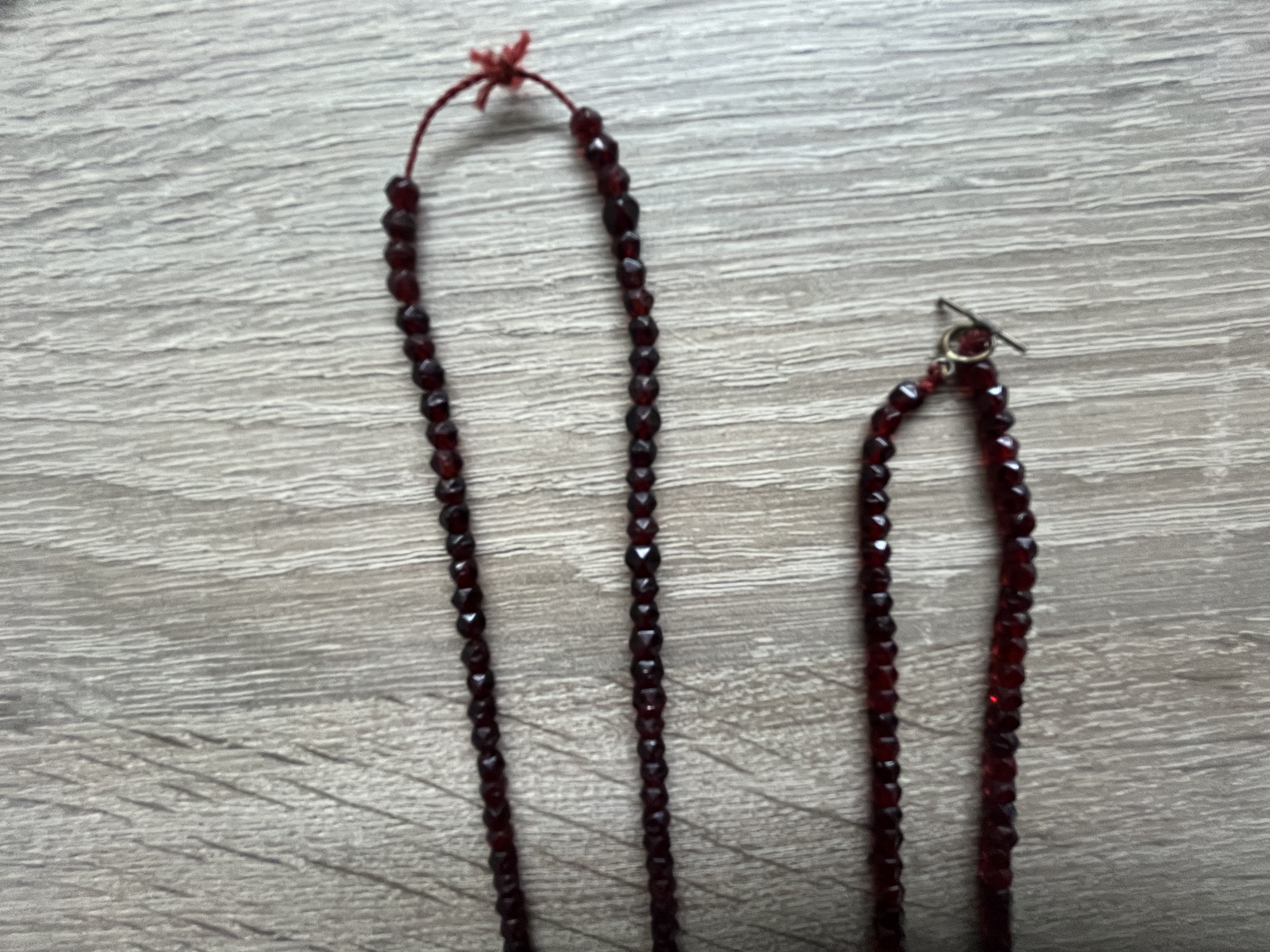
This appears to be a necklace and a coordinating bracelet, both strung with numerous small, faceted dark red beads. The beads exhibit a characteristic deep purplish-red hue often associated with garnets, specifically almandine or rhodolite varieties. The faceting on each bead, while small, is visible, indicating an attempt to maximize their sparkle. The necklace appears to be simply strung and knotted with red thread, while the bracelet features a metal toggle clasp, likely silver or a silver-toned base metal, given its simple design. While I cannot confirm the gemstone type from images alone, the color and facets strongly suggest garnet.
CULTURAL ECHOES
Where This Object Echoes
The popularity of multiple small faceted garnet beads strung into necklaces, rings, and other jewelry was a hallmark of Victorian taste, particularly 'Bohemian Garnet' pieces.
Ritual & Ceremonial Use
- •Gift-giving (garnets are the birthstone for January, making them a popular gift)
- •Adornment and personal expression through jewelry
Meaning Through Time
Garnets were often used as signet rings to stamp wax on important documents, symbolizing authority and authenticity.
Garnets were believed to protect travelers, illuminate the night, and prevent nightmares, often worn as amulets.
HISTORICAL STORY
DID YOU KNOW?
The word 'garnet' comes from the Latin 'granatus,' meaning 'grain' or 'seed,' a reference to its resemblance to the seeds of a pomegranate.
Unlike many other gemstones, garnets are not typically treated to enhance their color. Their natural brilliance and variety of hues are highly valued.
MATERIAL & CONDITION
Surface
The beads present a smooth, polished surface with multiple facets designed to reflect light. The dark red, slightly translucent quality is consistent across the visible beads. Some evidence of minor surface wear or dust is apparent, typical for strung bead jewelry.
Weight & Feel
Given the size of the beads, likely 2-3mm, and assuming they are garnet, the necklace would be lightweight to moderate, while the bracelet would feel delicate but substantial for its size.
Condition
The beads appear to be in good condition with no obvious chips or cracks visible from the provided images. The stringing on the necklace shows a simple knot closure, suggesting a basic stringing technique which may require restringing. The bracelet's toggle clasp seems functional, with some potential for minor tarnish or wear if it's a base metal.
RARITY ANALYSIS
Typical antique shop fare. Requires some searching but regularly available. This is where most genuine antiques fall.
Typical Characteristics
- Standard antique shop items
- Regularly available
- Moderate collector interest
EXPERT ANALYSIS
Jewelry Historian & Gemologist-Informed Appraiser
The visual characteristics, particularly the color and faceting, strongly suggest natural garnet beads, a common material for this style of jewelry. However, definitive gemstone identification requires laboratory testing, hence the confidence rating below 0.85.
KEY EVIDENCE
- 1The deep, consistent purplish-red color of the beads is characteristic of garnet.
- 2Small, uniform faceting on each bead is designed to enhance sparkle, common in bead necklaces.
- 3The necklace uses a simple knotted thread closure, a historical and common stringing method.
- 4The bracelet features a toggle clasp, a popular and secure closure mechanism.
UNCERTAINTIES
- •Without direct examination or magnification, positively identifying the beads as natural garnet versus other materials (e.g., glass, plastic, or treated stones) is impossible.
- •The quality of the stringing thread and absence of knots between beads could affect the long-term integrity of the necklace.
WHAT WOULD IMPROVE CERTAINTY
- →A close-up photograph of the beads under magnification to confirm internal characteristics and material.
- →Identification of any hallmarks or maker's marks on the metal clasp of the bracelet.
- →A refractive index test or specific gravity test by a gemologist to definitively identify the gemstone material.
- →An assessment of the stringing security and material used for both pieces.
ESTIMATED VALUE
Updated: Feb 26, 2026
- Market comparables from auctions & retail
- Condition, completeness & craftsmanship
- Current collector demand & trends
- Low = quick sale, high = patient seller
For informational purposes only, not a formal appraisal.
ABOUT JEWELRY
Fine jewelry, costume pieces, rings, necklaces, bracelets, and brooches.
Browse all JewelrySHARE THIS CURIOSITY
Have your own curiosities to discover?
Scan Your Curiosity
COMMENTS
No comments yet. Be the first to share your thoughts!
Sign in to leave a comment