Edo Period Japanese Iron Tsuba with Feather Motif
DESCRIPTION
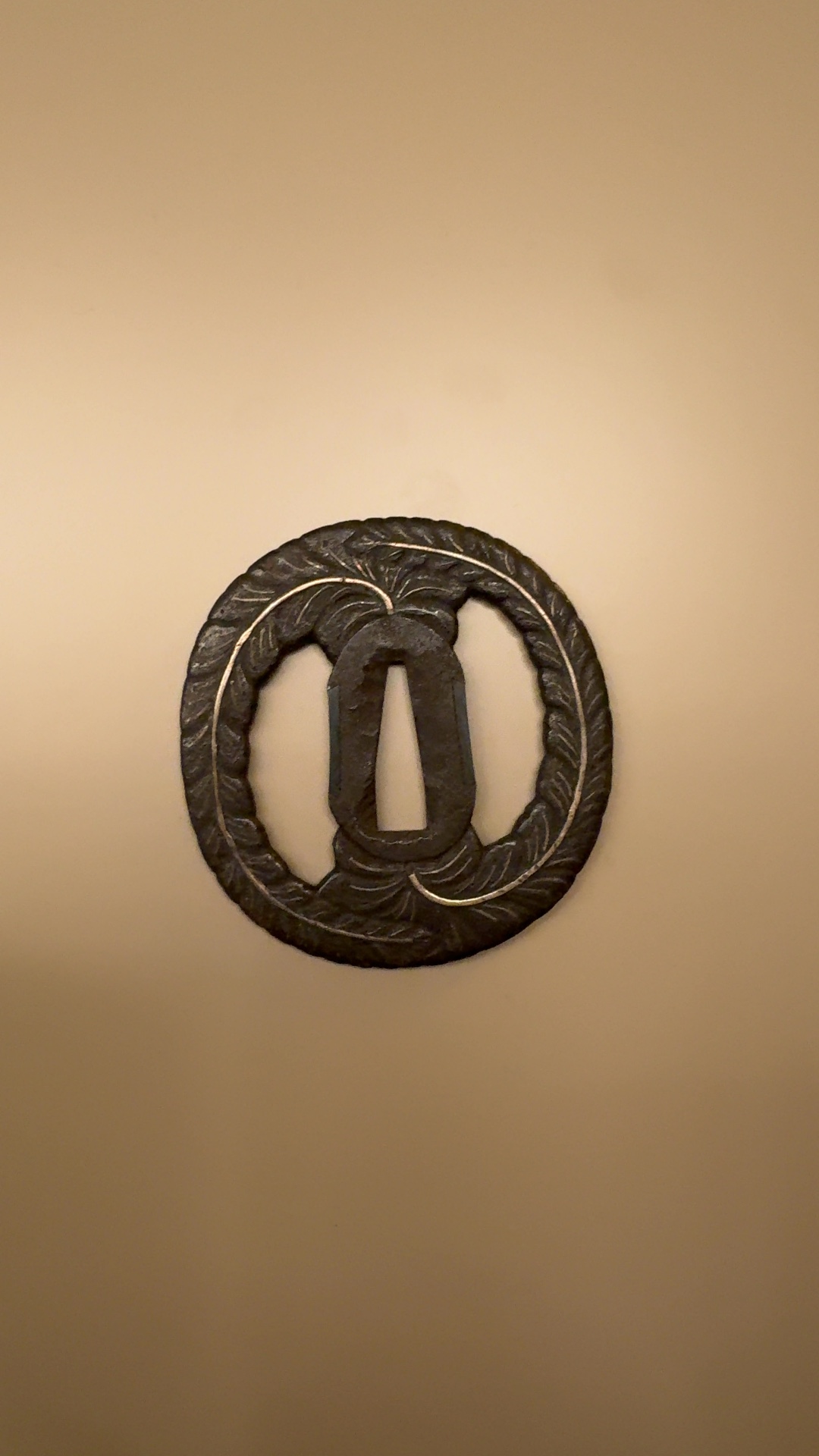
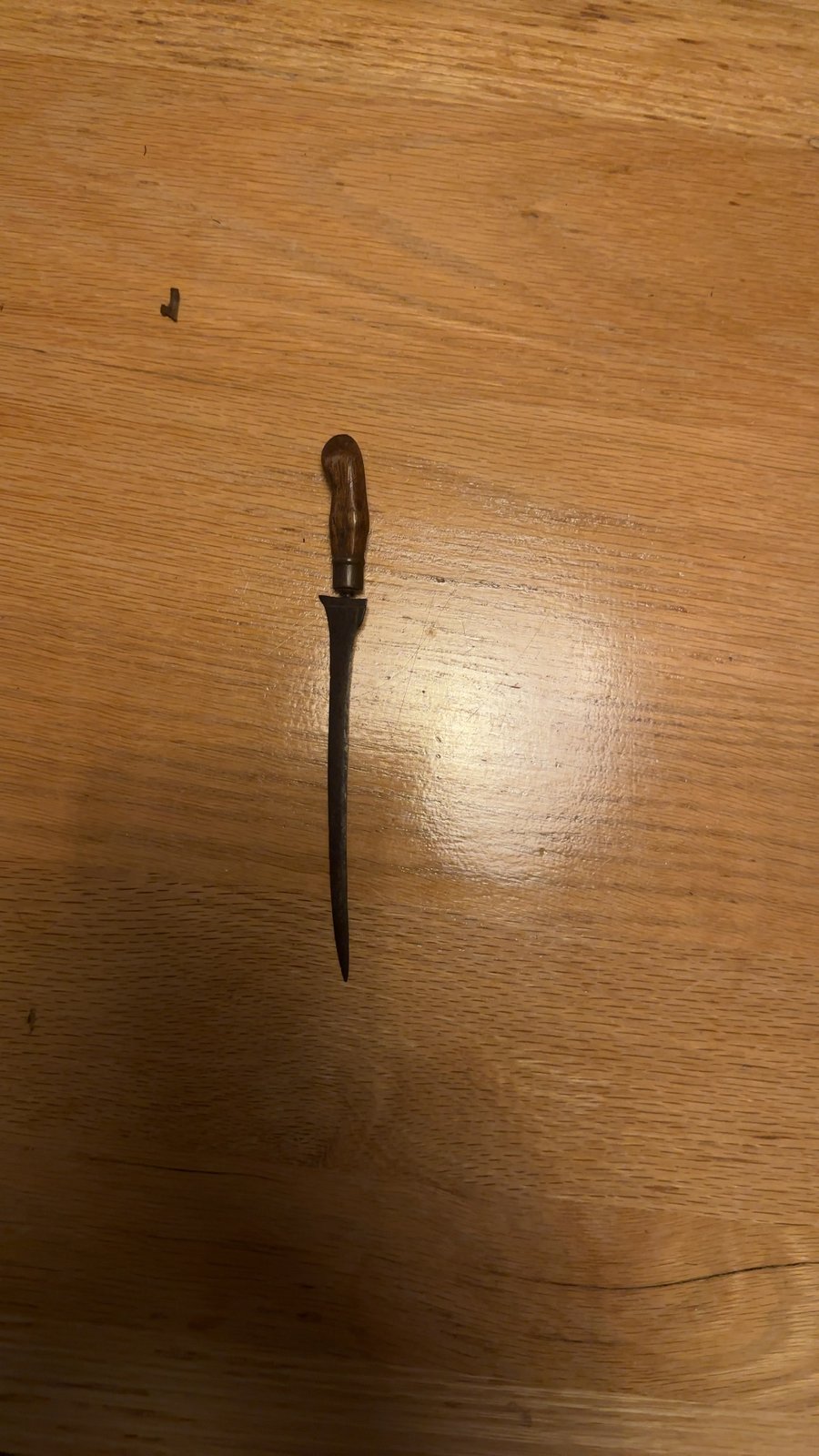
This appears to be a Japanese sword guard, known as a tsuba, crafted from iron with a slightly darker, patinated finish. The design features a circular outline with an openwork motif resembling feathers or stylized foliage around the rim, often referred to as 'sukashi' work. The central portion of the tsuba includes the 'nakago-ana' (blade opening) and likely 'kozuka-ana' and 'kogai-ana' (openings for auxiliary tools), though precise details are obscured. The design elements and overall form suggest manufacture during the Edo period.
CULTURAL ECHOES
Where This Object Echoes
The appreciation for natural forms and the emphasis on the 'wabi-sabi' aesthetic (beauty in imperfection and transience) influenced many aspects of Japanese art, including tsuba design.
Beyond its decorative function, the tsuba was an integral part of the samurai's personal weapons, reflecting their martial spirit and attention to detail in their equipment.
Ritual & Ceremonial Use
- •The custom of 'koshirae' (sword mounting) involved specialized craftsmen who assembled the various parts of a sword, including the tsuba, into a complete and functional art piece.
- •Informal appreciation gatherings where collectors would admire and discuss the finer points of tsuba and other sword fittings.
Meaning Through Time
Primarily a functional sword component, but increasingly an artistic object, status symbol, and personal expression for samurai.
Transformed from a functional weapon part into a collectible art object, appreciated for its historical, artistic, and metallurgical characteristics.
HISTORICAL STORY
DID YOU KNOW?
Even today, some modern custom knifemakers draw inspiration from the intricate designs and robust construction of traditional Japanese tsuba for their own guards and fittings.
During the Edo period, some tsuba were traded as valuable works of art independently of the swords they once guarded, a testament to their skilled craftsmanship.
MATERIAL & CONDITION
Surface
The iron surface exhibits a dark, almost black patination consistent with age and exposure, suggesting a 'tetsu-ji' (iron ground) finish. There's visible texture and minor pitting, often indicative of traditional ironworking processes. The raised details of the feather motif appear to have a slightly brighter, possibly worn or intentionally detailed edge.
Weight & Feel
Given its material and function, this tsuba would feel substantial and dense in hand, providing a necessary counterweight and protection during sword use.
Condition
The tsuba appears to be in good antique condition with a stable surface patina. There are signs of age-appropriate wear, particularly around the 'nakago-ana' (blade opening) which would have seen repeated fitting and removal from a sword. No significant damage or repairs are immediately evident.
RARITY ANALYSIS
Typical antique shop fare. Requires some searching but regularly available. This is where most genuine antiques fall.
Typical Characteristics
- Standard antique shop items
- Regularly available
- Moderate collector interest
EXPERT ANALYSIS
Militaria Historian
The object clearly presents as an iron tsuba, with design and wear consistent with an Edo Period piece. However, the lack of visible maker's marks or specific school indicators, combined with the prevalence of reproductions in this category, dictates a professional but cautious assessment.
KEY EVIDENCE
- 1Openwork (sukashi) design is characteristic of many Edo period tsuba.
- 2Material appears to be aged iron (tetsu-ji), a common material for Japanese sword guards.
- 3Patina and wear patterns are consistent with an antique object, specifically a tsuba that has been mounted and used.
- 4General form and central openings ('nakago-ana') are correct for a Japanese sword fitting.
UNCERTAINTIES
- •No visible maker's signature (mei) which is present on many authentic tsuba and aids in attribution.
- •Specific school or regional style is not immediately apparent from the provided images.
- •Difficulty in assessing the precise metallurgical composition and craftsmanship details from photographs.
WHAT WOULD IMPROVE CERTAINTY
- →High-resolution images of both sides, including close-ups of the rim and any potential markings.
- →Detailed measurements (diameter, thickness, weight) would help in comparison with known examples.
- →Examination by a qualified Japanese sword fittings expert for in-hand analysis of iron quality, patina, and potential hidden 'mei'.
ESTIMATED VALUE
Updated: Feb 26, 2026
- Market comparables from auctions & retail
- Condition, completeness & craftsmanship
- Current collector demand & trends
- Low = quick sale, high = patient seller
For informational purposes only, not a formal appraisal.
ABOUT MILITARIA
Military uniforms, weapons, medals, equipment, and war memorabilia.
Browse all MilitariaSHARE THIS CURIOSITY
Have your own curiosities to discover?
Scan Your Curiosity
COMMENTS
No comments yet. Be the first to share your thoughts!
Sign in to leave a comment