Flintlock Blunderbuss
DESCRIPTION
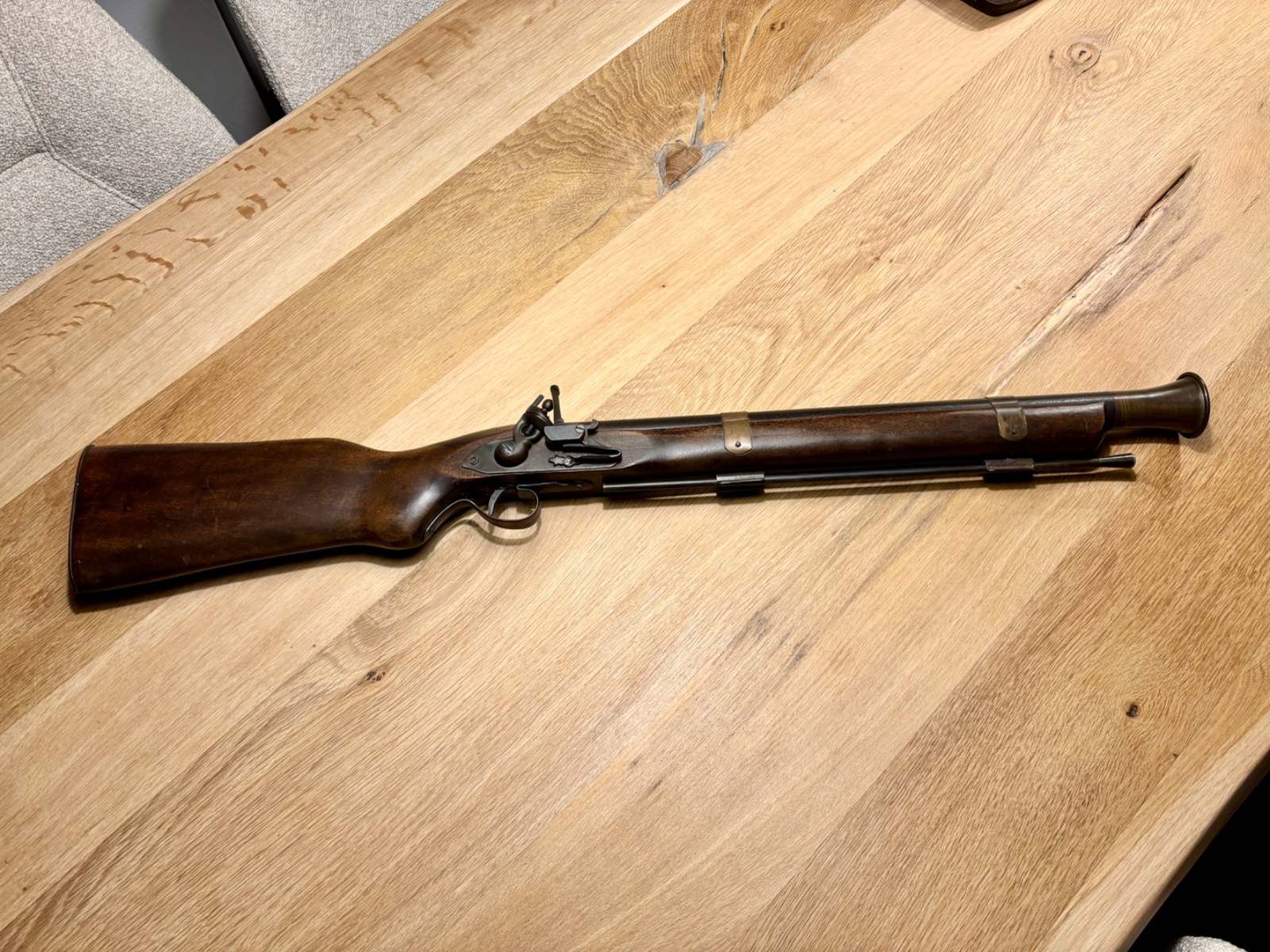
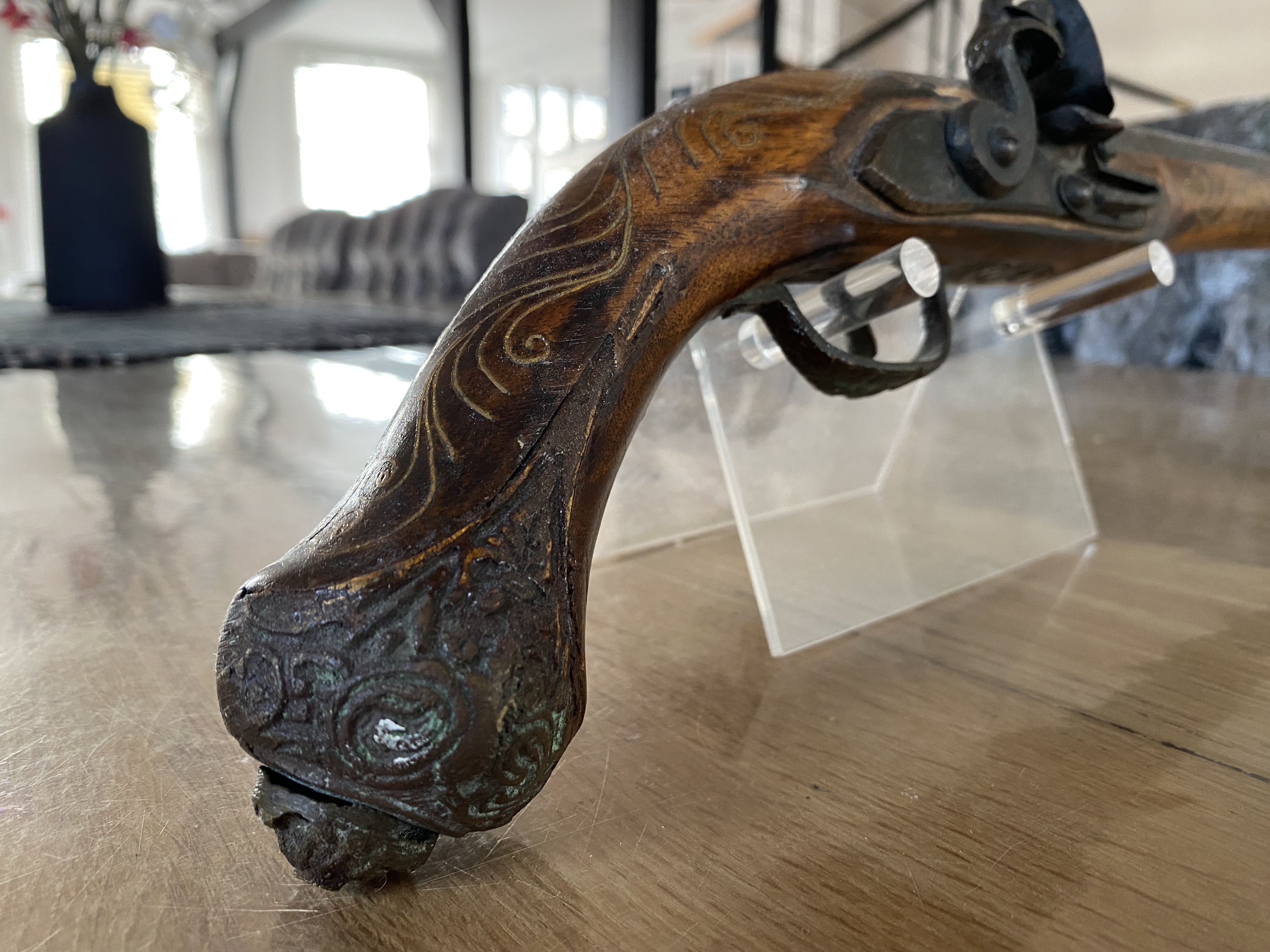
This appears to be a flintlock blunderbuss, characterized by its distinctively flared muzzle and the flintlock ignition mechanism. The stock is crafted from what seems to be dark hardwood, likely walnut or a similar dense timber, showing a rich patina consistent with age and handling. The metal components, including the lock plate, trigger guard, and barrel, exhibit a dark, aged finish, suggesting iron or steel that has developed a natural patination rather than an intentional modern bluing.
CULTURAL ECHOES
Where This Object Echoes
Blunderbusses were widely used by multiple European empires (British, Dutch, French, Spanish) for naval boarding, stagecoach protection, and general close-quarters defensive roles during the 17th-19th centuries.
These firearms were common in the American colonies and early republic, used for self-defense, military applications, and by militias.
Ritual & Ceremonial Use
- •Mounted combat or coach protection: The blunderbuss was ideal for use from horseback or a moving carriage due to its relative compactness and spread of shot.
- •Naval boarding: Its ability to deliver a wide blast was advantageous in close-quarters ship-to-ship actions.
Meaning Through Time
Primarily a practical, close-range defensive and offensive firearm, valued for its immediate impact and utility in tight spaces.
As superior firearms developed, the blunderbuss transitioned into an archaic curiosity, becoming a symbol of historical militaria and early firearm technology.
HISTORICAL STORY
DID YOU KNOW?
Despite popular belief, the flared muzzle of a blunderbuss did not significantly increase the spread of shot; its primary benefit was to facilitate easier and faster loading of multiple projectiles or buckshot, especially on horseback or in motion.
The term 'blunderbuss' is believed to derive from the Dutch 'donderbus', meaning 'thunder gun', a fitting name for a weapon with such a potent roar.
MATERIAL & CONDITION
Surface
The wooden stock exhibits a smooth, hand-rubbed finish with visible grain and minor handling marks typical of an antique firearm. The metalwork, including the lock and barrel, shows a dark, mottled patination, indicative of aged steel or iron rather than a modern blued finish. There are no signs of modern surface treatments.
Weight & Feel
Based on its size and apparent material, this blunderbuss would likely feel substantial and well-balanced, characteristic of period firearms constructed with dense wood stocks and heavy-gauge barrels.
Condition
The overall condition appears good for its age, displaying expected wear and a consistent patina on both wood and metal components. There are no immediately apparent signs of major breaks or repairs, though closer inspection would be required to confirm the integrity of internal mechanisms and absence of wood cracks.
RARITY ANALYSIS
Genuine antiques with fewer examples on the market. Named makers, documented provenance, or early production examples.
Typical Characteristics
- Limited production
- Named makers
- Growing collector demand
EXPERT ANALYSIS
Militaria Historian
Confidence is good based on the clear visual evidence of a flintlock blunderbuss with consistent age and wear characteristics. However, without specific maker's marks or proof stamps, precise attribution and dating remain somewhat generalized.
KEY EVIDENCE
- 1Visible flintlock mechanism, consistent with firearms of the late 18th to early 19th century.
- 2Distinctive flared muzzle, defining the blunderbuss type.
- 3Hardwood stock with age-appropriate patina and wear.
- 4Metal components show consistent aged patination, not modern bluing or deliberate antiquing.
- 5Overall construction appears period-correct based on visual assessment.
UNCERTAINTIES
- •Absence of clearly identifiable maker's marks or proof stamps in the provided images, which are critical for definitive attribution and dating.
- •Potential for modern reproductions or 'marriage' pieces (assemblies of old and new components) which remain common in the antique firearm market.
WHAT WOULD IMPROVE CERTAINTY
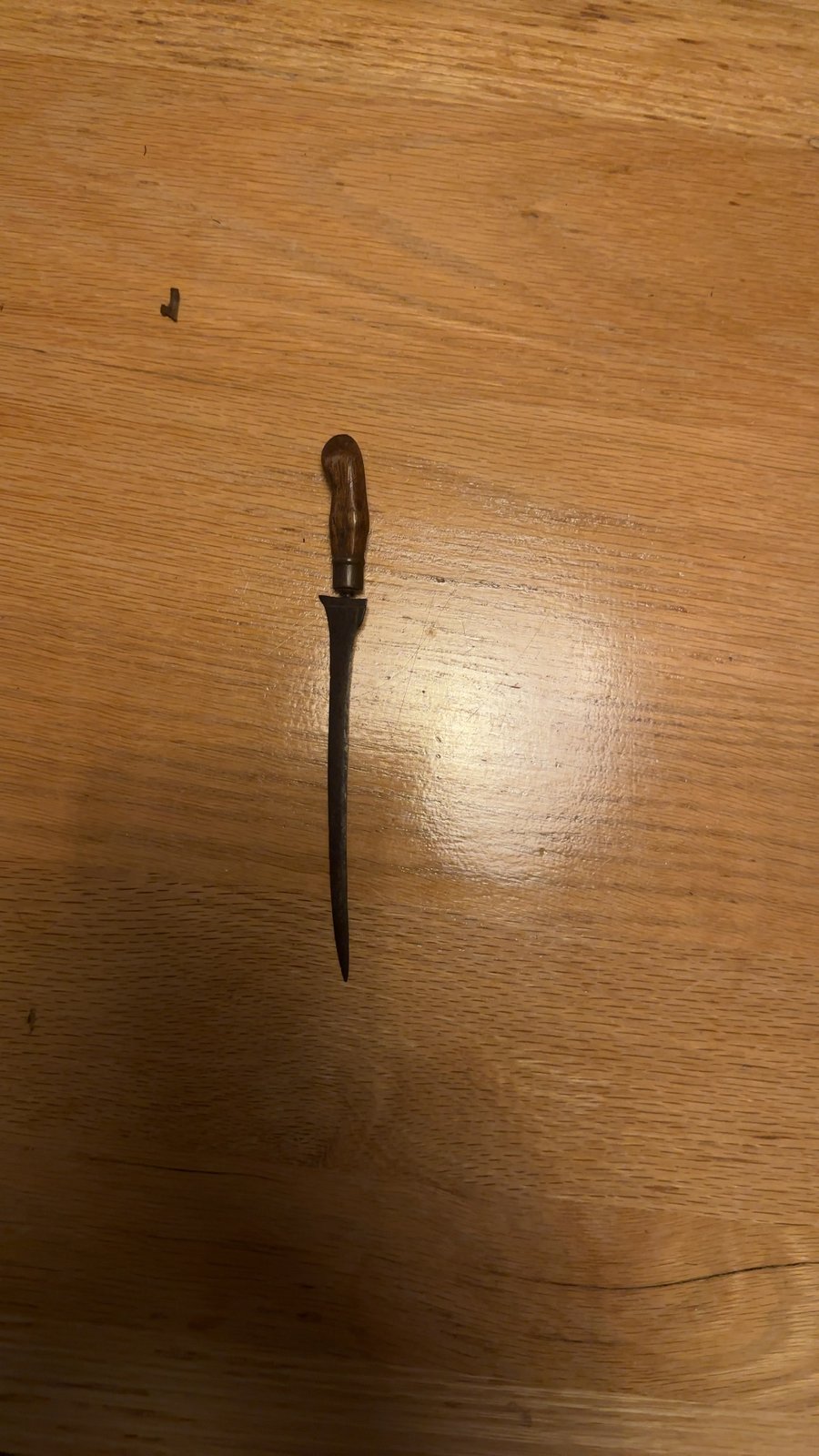
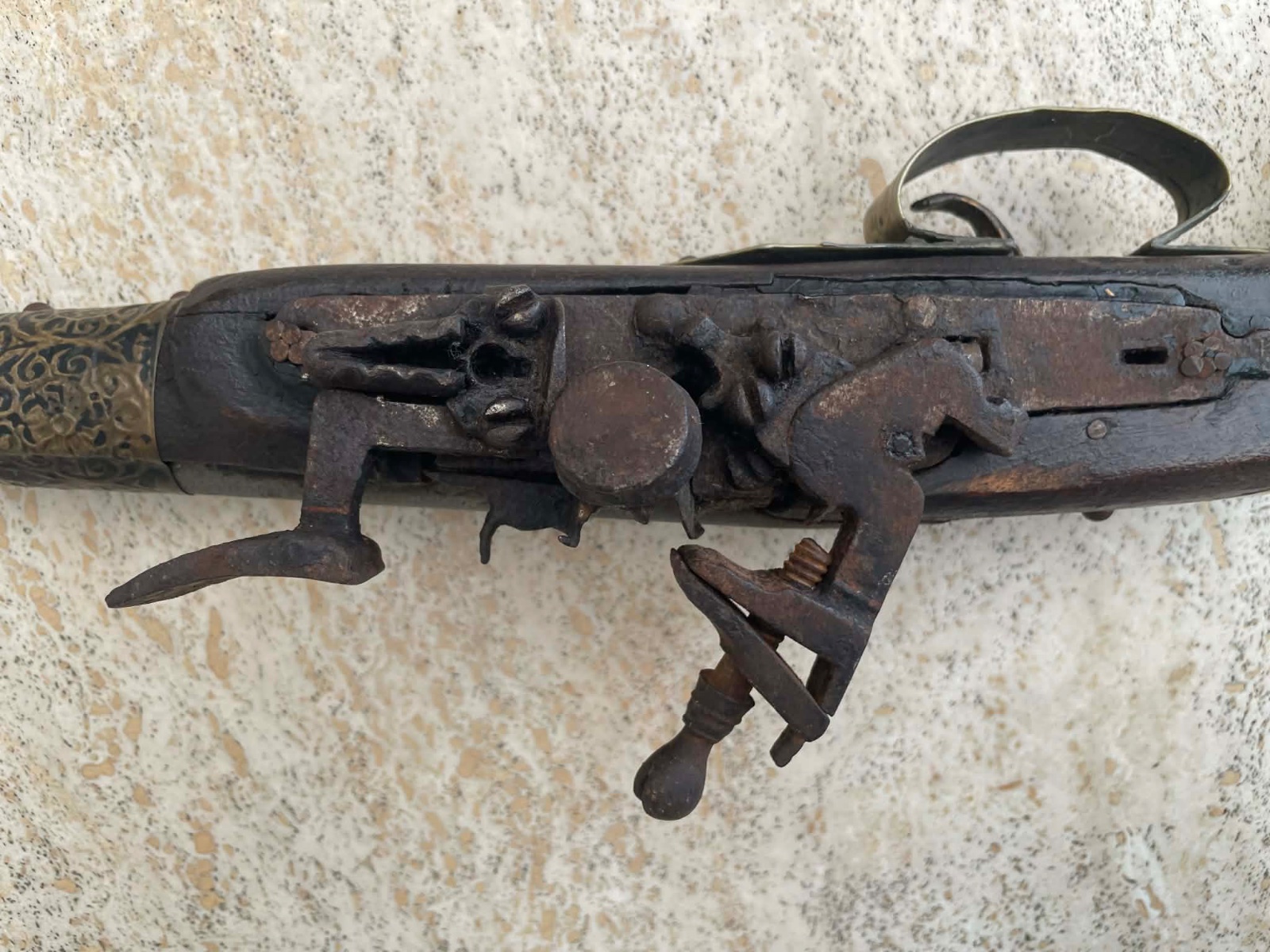
- →High-resolution images of the lock plate, especially behind the hammer and around the pan, to search for maker's marks, proof marks, or unit stamps.
- →Detailed photographs of the barrel near the breech for any proof marks or serial numbers.
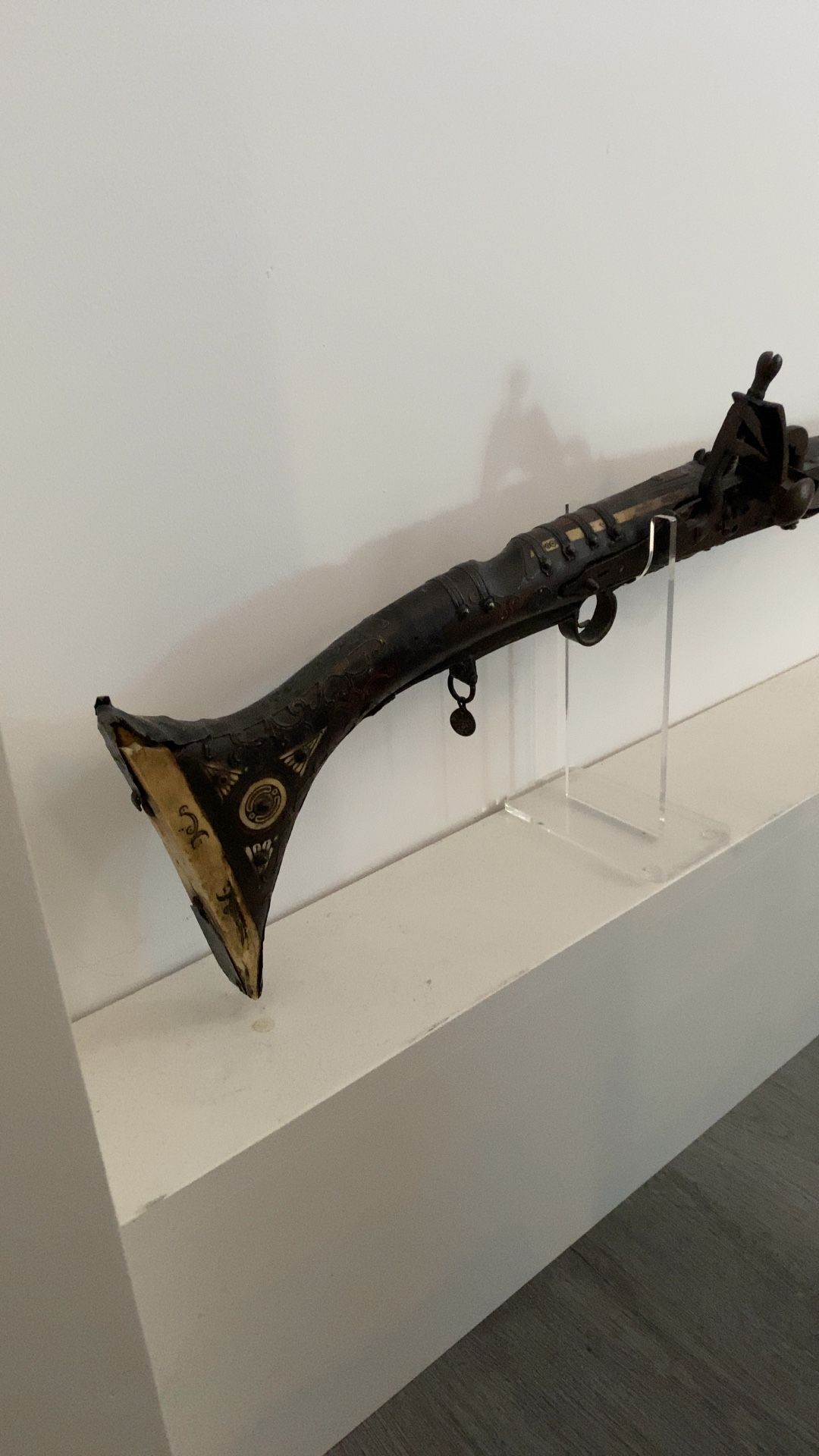
- →Close-up images of all brass fittings and their attachment points for construction consistency.
- →Careful physical inspection by a qualified antique firearms specialist to assess internal components, wood soundness, and overall authenticity.
ESTIMATED VALUE
Updated: Feb 27, 2026
- Market comparables from auctions & retail
- Condition, completeness & craftsmanship
- Current collector demand & trends
- Low = quick sale, high = patient seller
For informational purposes only, not a formal appraisal.
ABOUT MILITARIA
Military uniforms, weapons, medals, equipment, and war memorabilia.
Browse all MilitariaSHARE THIS CURIOSITY
Have your own curiosities to discover?
Scan Your Curiosity
COMMENTS
No comments yet. Be the first to share your thoughts!
Sign in to leave a comment