Edo Period Iron Sukashi Tsuba with Gold Inlay
DESCRIPTION
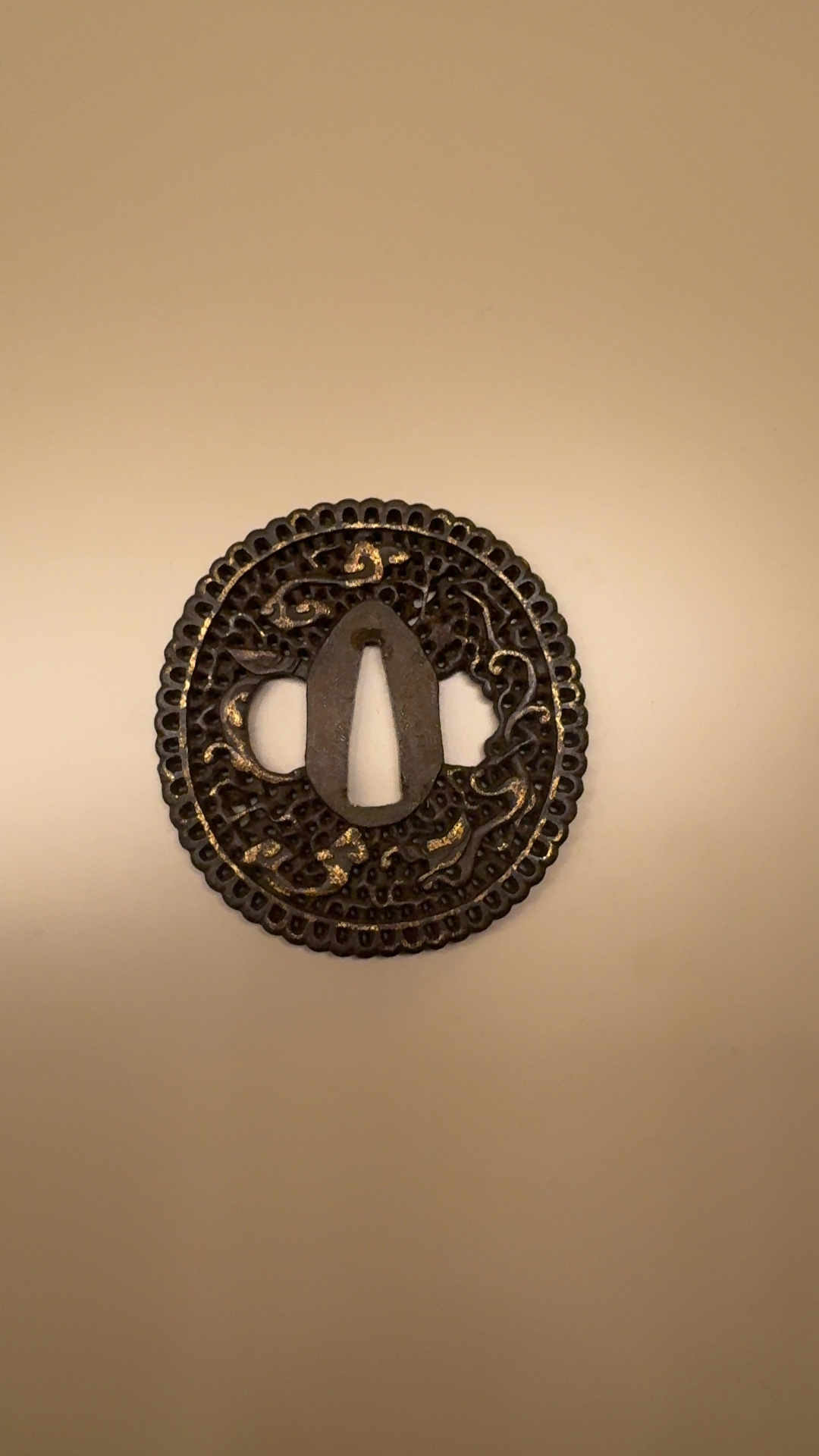
This appears to be a Japanese tsuba, a handguard for a Japanese sword. It is crafted from darkened iron, featuring an openwork (sukashi) design with what looks like karakusa (intertwining vine) motifs. Evident gold inlay, likely hirazōgan (flat inlay), provides decorative accents within the ironwork. The overall scalloped or beaded rim suggests a design element common in certain schools or periods. The central nakago-ana (blade aperture) is prominent, and there are two smaller holes (hitsu-ana), one ryo-hitsu (for the kozuka knife and kogai skewer) which is a common feature on many tsuba used with accompanying sword fittings.
CULTURAL ECHOES
Where This Object Echoes
Tsuba functioned not just as a defensive guard, but as an artistic expression and status symbol for the samurai warrior, often reflecting their family crest or philosophical leanings.
The intricate sukashi (openwork) and zōgan (inlay) techniques displayed in tsuba often mirror the craftsmanship found in other Japanese decorative metal arts like jewelry, censer lids, and ceremonial armour.
Ritual & Ceremonial Use
- •The ceremonial wearing of the samurai's daishō (pair of swords) as a symbol of status and rank, where the tsuba were prominently displayed.
- •The practice of 'sword appreciation' (kanmei), where connoisseurs would examine and discuss the artistry and craftsmanship of individual sword components, including tsuba.
Meaning Through Time
Primarily functional, robust designs focused on protecting the wielder in intense combat, often with simpler, thicker forms.
Shifted to highly decorative and symbolic objects, reflecting the peace of the era and the samurai's status rather than daily battlefield use. More intricate materials and techniques were employed.
After the ban on wearing swords, tsuba transitioned from functional sword parts to collectible art objects, valued for their historical significance and artistic merit, often displayed independently.
HISTORICAL STORY
DID YOU KNOW?
Tsuba designs often conveyed symbolic meanings, reflecting the samurai's personal philosophy, family crest, or a desire for good fortune, frequently featuring plant, animal, or mythological motifs.
Master tsuba makers (tsubakō) were highly esteemed artisans, passing down their techniques and signature designs through generations, with some schools specializing in specific metalwork techniques or materials.
MATERIAL & CONDITION
Surface
The iron surface displays a dark, patinated finish, which is typical for aged iron tsuba. The openwork is well-executed, showing minimal signs of corrosion that would obscure details. Gold inlay is visible in key areas, suggesting a contrast in material and color that was highly valued. There is some wear consistent with age and handling.
Weight & Feel
Based on its iron construction and size, it would likely feel substantial and dense in hand, offering a good balance to a sword's blade.
Condition
The tsuba appears to be in good antique condition. There is clear evidence of age-appropriate patination and some wear, which is expected for an object of this type. The gold inlay, while present, may have some areas of loss or rubbing due to use or cleaning over centuries. No major breaks or repairs are immediately apparent from the images.
RARITY ANALYSIS
Typical antique shop fare. Requires some searching but regularly available. This is where most genuine antiques fall.
Typical Characteristics
- Standard antique shop items
- Regularly available
- Moderate collector interest
EXPERT ANALYSIS
Militaria Historian
The visible details strongly suggest an authentic Edo period iron tsuba with sukashi and gold inlay, consistent with known styles and materials. However, definitive attribution to a specific school or master requires closer examination of unseen details and potential signatures.
KEY EVIDENCE
- 1Material is iron with a dark patina, characteristic of traditional Japanese tsuba.
- 2Openwork (sukashi) design shows intricate karakusa-like motifs, popular during the Edo period.
- 3Presence of gold inlay (hirazōgan) indicates decorative intent and a higher level of craftsmanship.
- 4Central nakago-ana and at least one hitsu-ana (likely two, given the shape) are consistent with a functional sword fitting for a katana or wakizashi.
- 5Scalloped rim suggests specific school influences or period preferences.
WHAT WOULD IMPROVE CERTAINTY
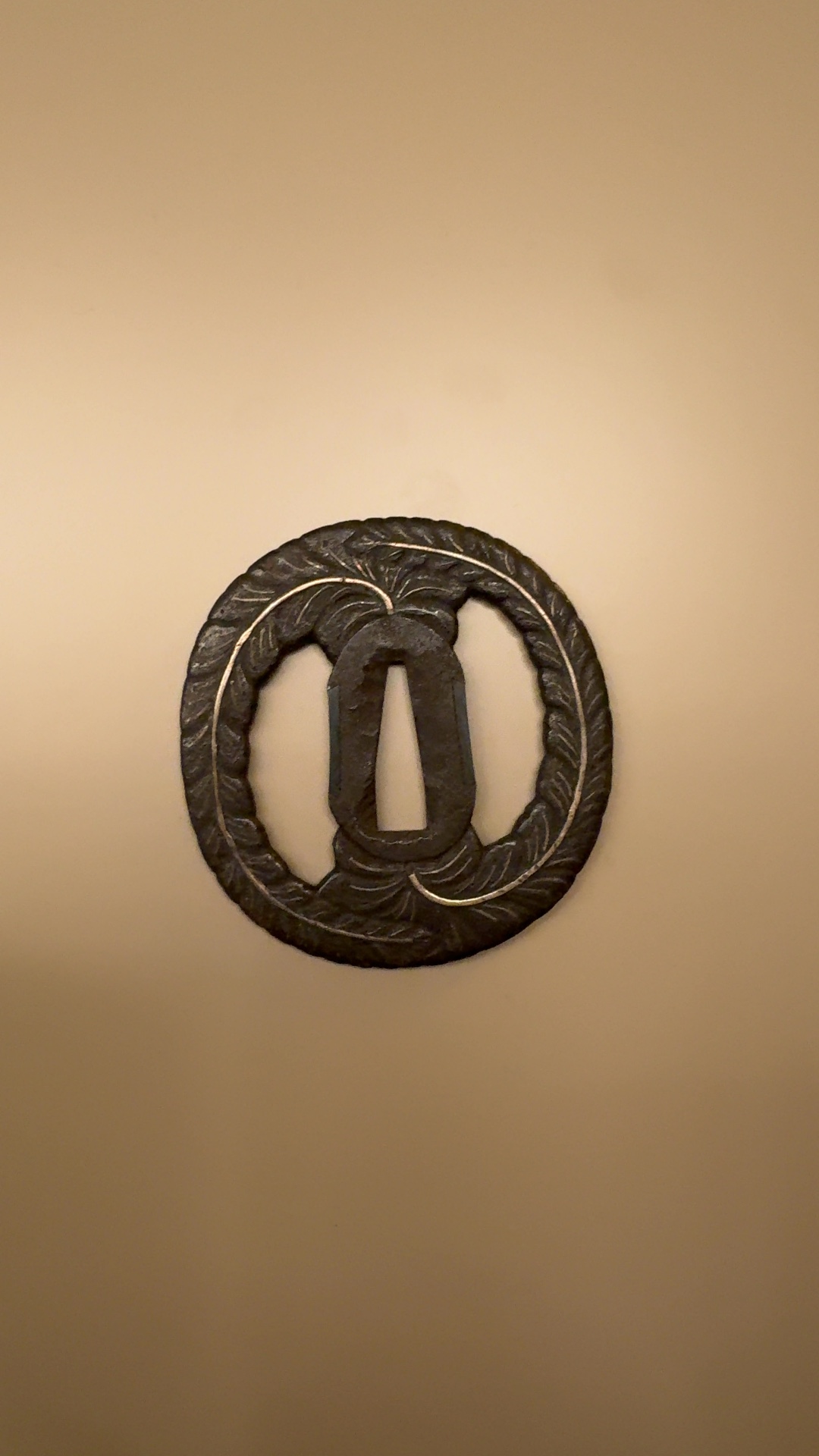
- →Obtain clear, high-resolution images of both front and back sides, as well as the edges (mimi), to examine the construction details and potential maker's marks or signatures.
- →Measure the dimensions (length, width, thickness) to better understand its specific application (e.g., katana vs. wakizashi).
- →Seek expert physical examination to assess the authenticity of the patination, cut-out edges, and gold inlay application, which are critical for dating and attribution.
ESTIMATED VALUE
Updated: Feb 26, 2026
- Market comparables from auctions & retail
- Condition, completeness & craftsmanship
- Current collector demand & trends
- Low = quick sale, high = patient seller
For informational purposes only, not a formal appraisal.
ABOUT MILITARIA
Military uniforms, weapons, medals, equipment, and war memorabilia.
Browse all MilitariaSHARE THIS CURIOSITY
Have your own curiosities to discover?
Scan Your Curiosity
COMMENTS
No comments yet. Be the first to share your thoughts!
Sign in to leave a comment