Antique Flintlock Pistol
QUICK FACTS
Categories
Era
18th - early 19th Century
Origin
🌍 International
Rarity
Uncommon (5/10)
Discovered
Jan 20, 2026
1 months ago
DESCRIPTION
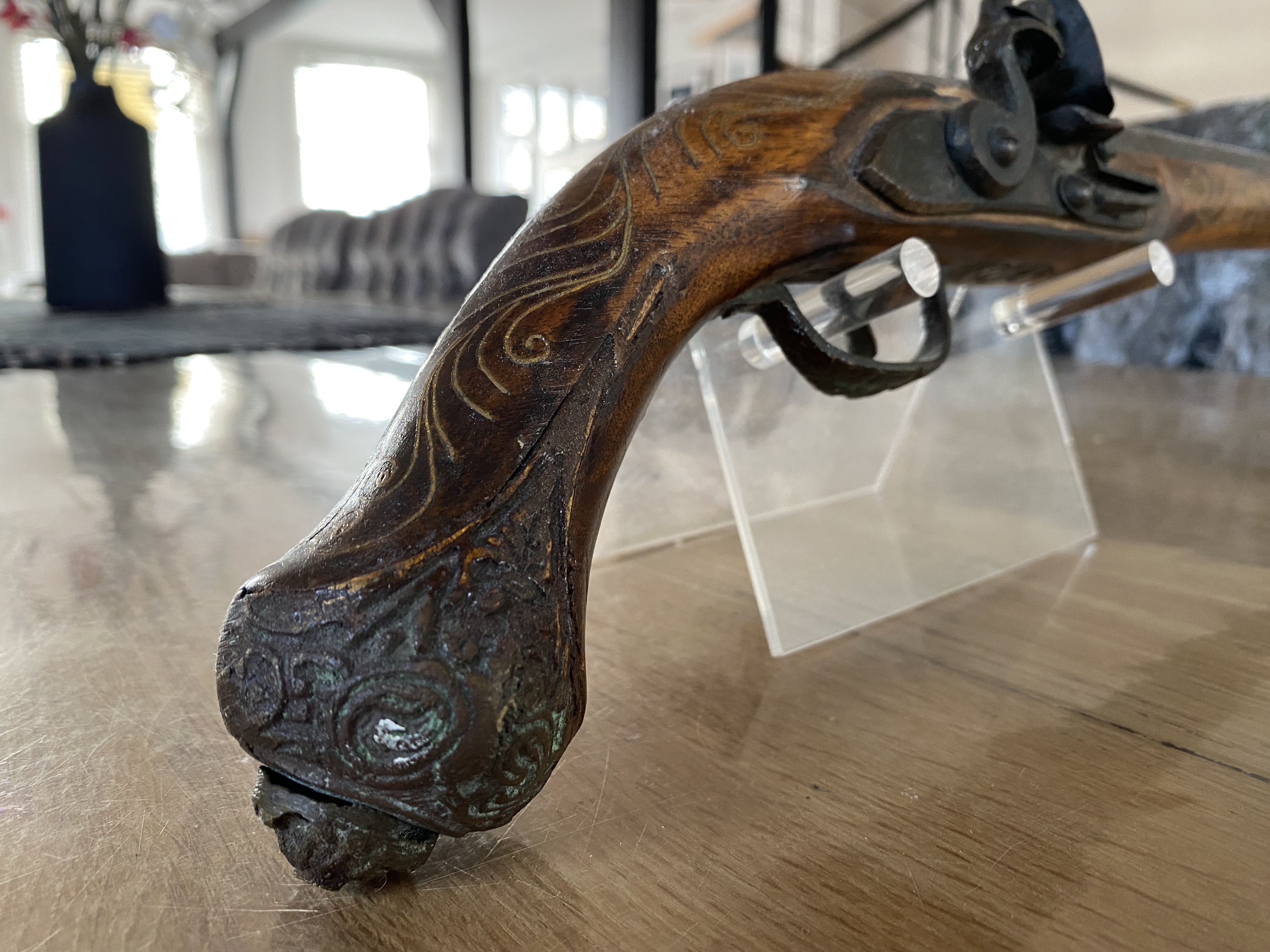
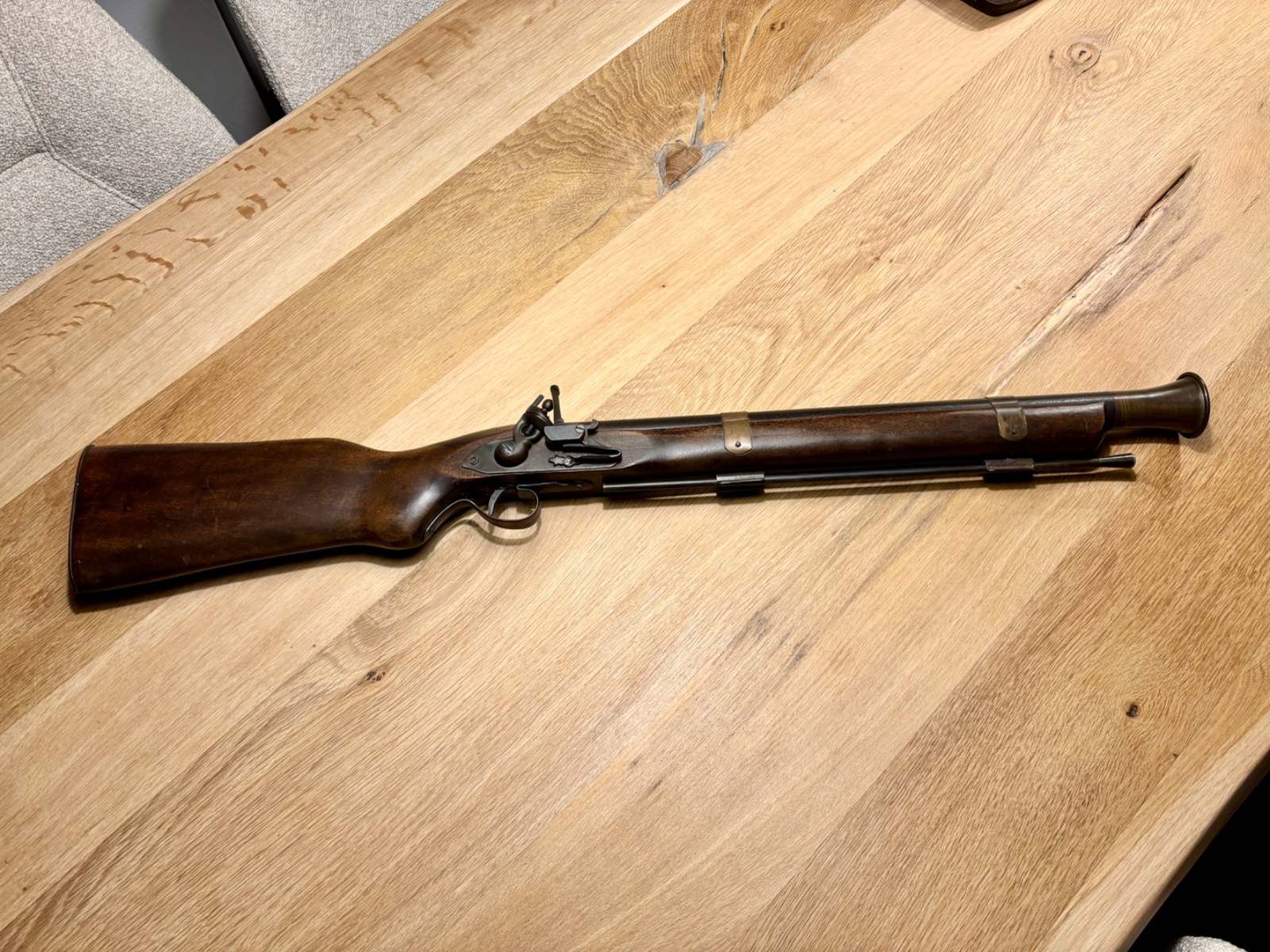
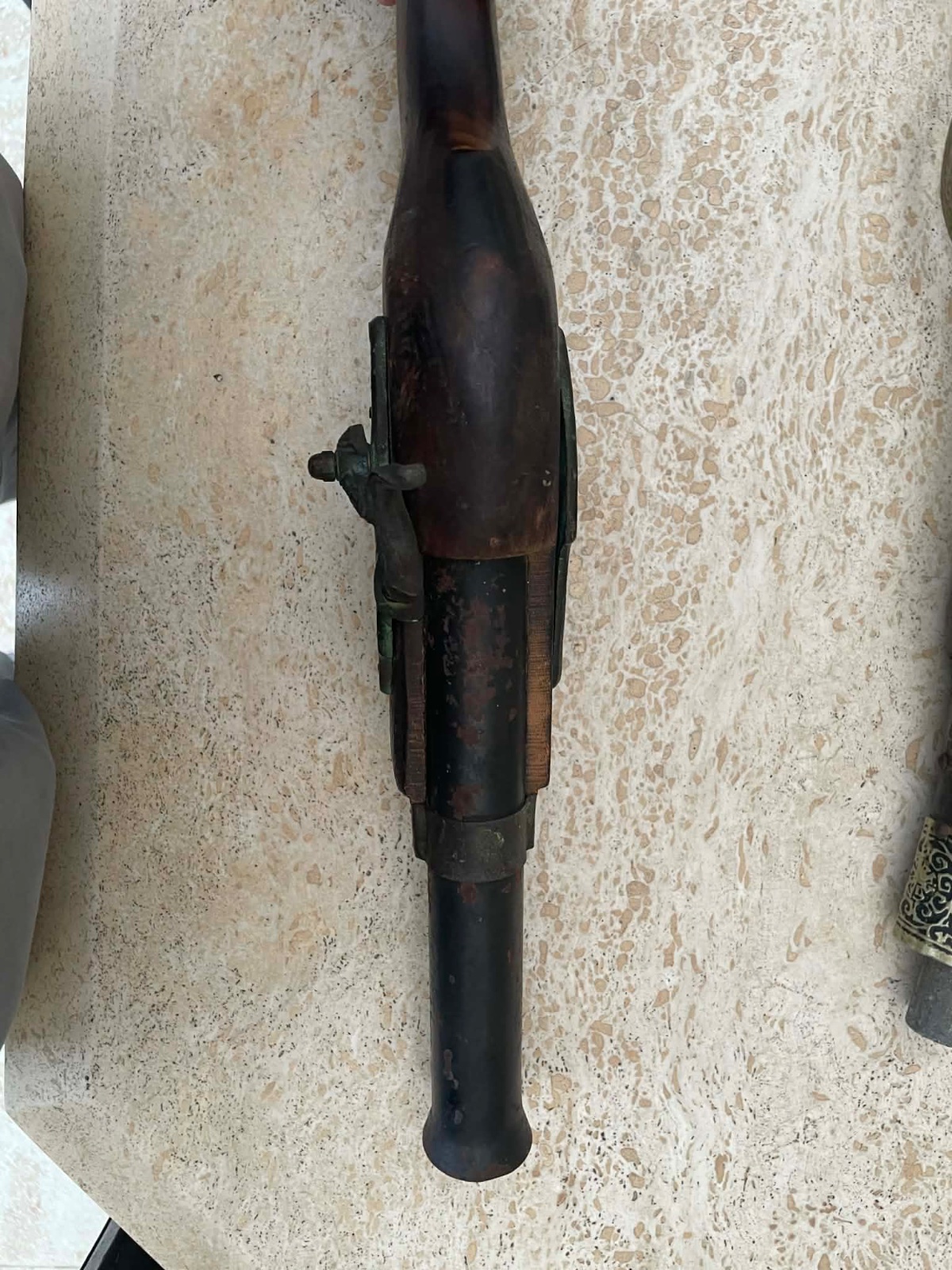
This appears to be an antique flintlock pistol, likely dating from the 18th or early 19th century, characterized by its distinctive firing mechanism and wooden stock. The ornate metalwork on the butt cap and the carved decoration on the stock suggest a piece of some craftsmanship, possibly intended for a more affluent owner or for ceremonial display rather than purely utilitarian military use, though such pistols could be carried by officers.
CULTURAL ECHOES
Where This Object Echoes
The general form and flintlock mechanism align with pistol designs common across various European nations (e.g., France, Britain, Spain) during the 18th century, which often incorporated decorative elements.
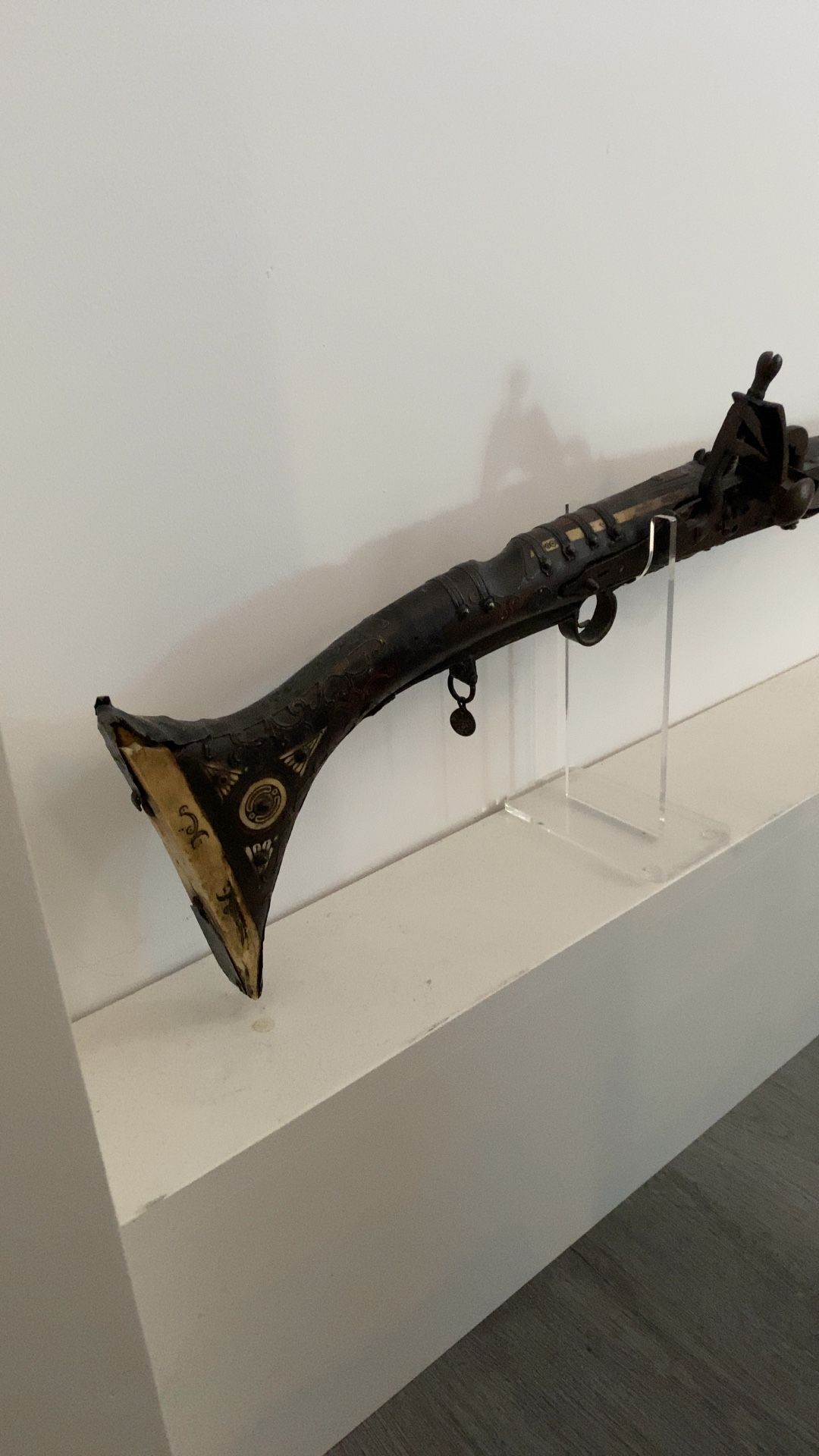
Highly ornate pistols with embellished stocks and butt caps were also characteristic of firearms produced in the Ottoman Empire and North Africa, particularly during the 18th and 19th centuries, often featuring intricate metal overlays and wood carving.
Ritual & Ceremonial Use
- •Dueling: For gentlemen of certain social standing, pistols like this were used in formal duels to settle matters of honor.
- •Symbol of Authority: Carried by officers and officials, these pistols served as symbols of their rank and power.
- •Self-Defense: A personal sidearm for protection in a violent era, especially for travelers or those in dangerous professions.
Meaning Through Time
Primarily a functional weapon, but highly embellished versions also signified social status and wealth.
As percussion caps replaced flintlocks, these pistols transitioned from active service to collector's items, appreciated for their historical and aesthetic value.
HISTORICAL STORY
DID YOU KNOW?
The 'flintlock' designation refers to the firing mechanism where a piece of flint strikes a steel frizzen, showering sparks into a pan of priming powder, which then ignites the main charge in the barrel.
Despite being somewhat unreliable and slow to load, flintlock pistols remained in widespread use for over 200 years due to their relative simplicity and robust design compared to earlier firing systems.
MATERIAL & CONDITION
Surface
The wooden stock exhibits a dark, aged patina with what appears to be inlaid or carved decorative scrollwork, possibly in a lighter wood or ivory, now darkened. The metal components, including the lock plate, hammer, and frizzen, show significant surface oxidation and pitting consistent with iron or steel exposed to the elements over a long period. The butt cap features ornate, possibly cast or engraved, metalwork with remnants of verdigris, suggesting a copper alloy.
Weight & Feel
Based on the materials (wood and iron/steel), this pistol would feel substantial and dense in hand, likely weighing between 2 to 4 pounds.
Condition
The pistol appears largely complete, though heavily patinated and showing clear signs of prolonged age and potential exposure. The wood stock has a deep wear and patina. The metal components of the lock mechanism show significant corrosion, which may impede or prevent proper function without restoration. No obvious signs of major breaks or repairs are visible, but functionality cannot be assessed without direct handling.
RARITY ANALYSIS
Genuine antiques with fewer examples on the market. Named makers, documented provenance, or early production examples.
Typical Characteristics
- Limited production
- Named makers
- Growing collector demand
EXPERT ANALYSIS
Militaria Historian
The confidence level is moderate due to the clear visual evidence of an antique flintlock pistol and its stylistic elements, however, the absence of specific identifying marks in the provided images significantly limits a precise attribution and elevates authenticity concerns.
KEY EVIDENCE
- 1Distinctive flintlock firing mechanism, characteristic of pre-mid-19th century firearms.
- 2Wooden stock with visible age, wear, and ornate carved decoration.
- 3Ornate metal butt cap, likely of a copper alloy given the verdigris.
- 4Significant oxidation and pitting on iron components, consistent with age.
UNCERTAINTIES
- •Absence of clear proof marks or manufacturer's stamps, which are critical for attribution and authentication.
- •Potential for this to be a period reproduction, re-enactor's piece, or a modern decorative copy.
- •The ornate decoration, while period-appropriate, also makes it a target for modern fakers to enhance a less valuable piece.
WHAT WOULD IMPROVE CERTAINTY
- →High-resolution photographs of any markings on the lock plate, barrel, and underside of the stock.
- →Examination of the barrel to determine caliber and any proof marks.
- →Professional inspection by a qualified antique firearms expert to assess originality, functionality, and potential restoration needs.
- →Measurement of overall length and barrel length to help identify specific models.
ESTIMATED VALUE
Updated: Feb 26, 2026
- Market comparables from auctions & retail
- Condition, completeness & craftsmanship
- Current collector demand & trends
- Low = quick sale, high = patient seller
For informational purposes only, not a formal appraisal.
ABOUT MILITARIA
Military uniforms, weapons, medals, equipment, and war memorabilia.
Browse all MilitariaSHARE THIS CURIOSITY
Have your own curiosities to discover?
Scan Your Curiosity
COMMENTS
No comments yet. Be the first to share your thoughts!
Sign in to leave a comment