Vintage Filigree Brooch with Blue Cabochon
DESCRIPTION
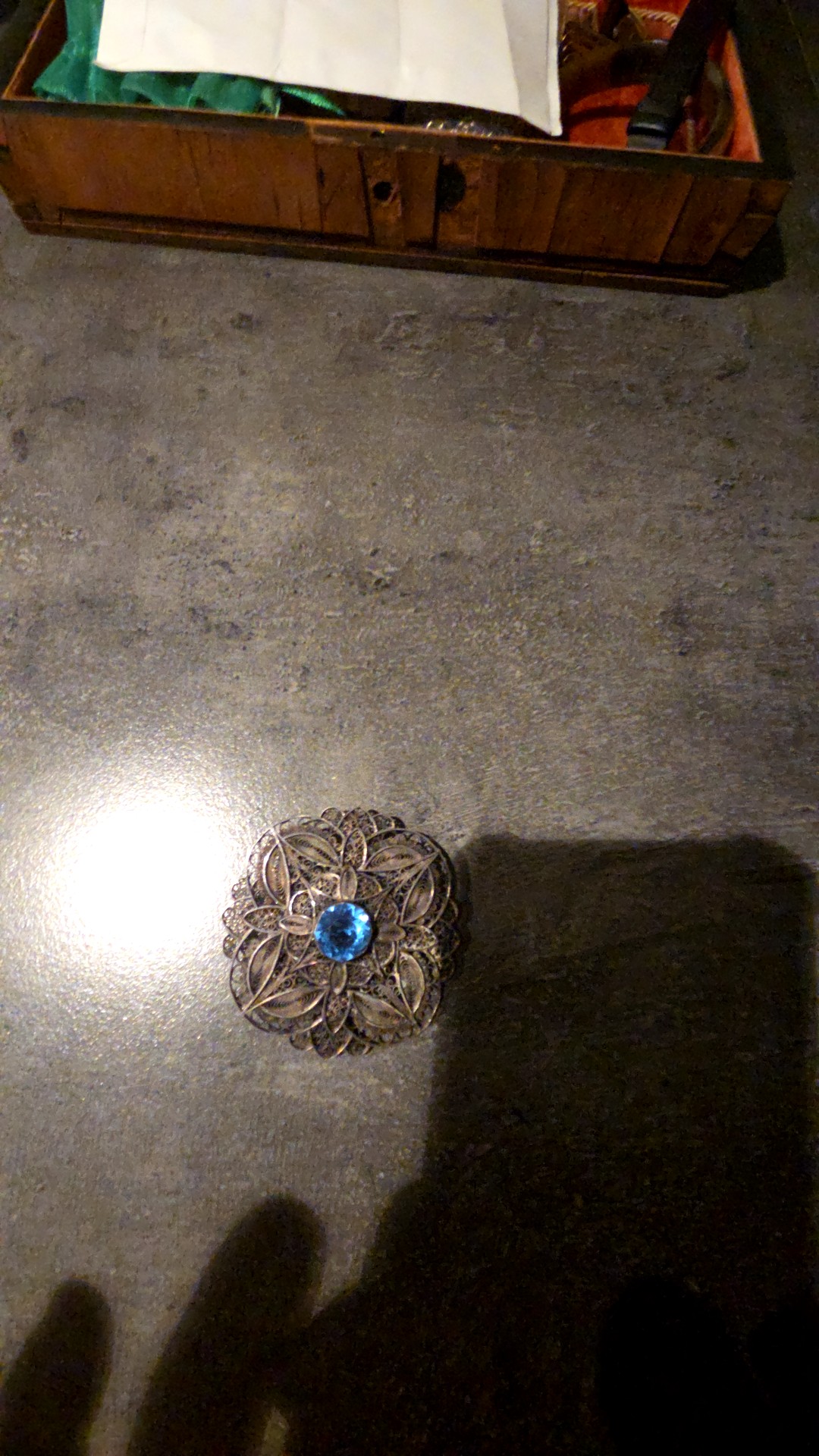
This appears to be a vintage brooch, likely crafted from a base metal with a silver-tone finish. Its design features intricate filigree work, forming a botanical or foliate pattern with a central, round, blue cabochon-cut 'gemstone'. The construction suggests a period where detailed metalwork was popular for decorative jewelry items.
CULTURAL ECHOES
Where This Object Echoes
The intricate, often floral or naturalistic designs with some openwork are reminiscent of mid-to-late Victorian jewelry, though this piece appears slightly later.
The emphasis on organic forms and detailed craftsmanship in filigree relates to the design principles of these movements.
Ritual & Ceremonial Use
- •Personal adornment and expression through fashion, particularly for formal or semi-formal occasions.
- •Gift-giving, especially for milestones or as a sentimental keepsake, where brooches were popular choices.
Meaning Through Time
Brooches were often used as functional garment clasps, signifying both status and aesthetic taste.
Brooches evolved into more purely decorative items, used to accessorize outfits and add a touch of elegance or flair.
HISTORICAL STORY
DID YOU KNOW?
Filigree work was often used to give the impression of a larger, more ornate piece of jewelry without the need for extensive amounts of precious metal, making it an economical choice for elaborate designs.
The brooch, once a highly fashionable and versatile accessory, has seen several revivals throughout history, adapting to different sartorial trends from functional cloak-fasteners to purely decorative adornments.
MATERIAL & CONDITION
Surface
The metallic surface exhibits a dark, possibly tarnished or patinated silver-tone, consistent with aged base metal or tarnished silver. The filigree elements show fine detail and openwork, with no obvious signs of significant damage. The central 'stone' is smooth and polished.
Weight & Feel
Given the filigree construction, the brooch would likely feel lightweight for its size, belying its intricate appearance. It should be relatively delicate due to the fine metalwork.
Condition
The brooch appears to be in good overall condition for its age, though the metal shows a dark patina consistent with aging. Without closer inspection, it's difficult to assess the security of the pin mechanism or any potential breaks in the fine filigree wires.
RARITY ANALYSIS
Typical antique shop fare. Requires some searching but regularly available. This is where most genuine antiques fall.
Typical Characteristics
- Standard antique shop items
- Regularly available
- Moderate collector interest
EXPERT ANALYSIS
Jewelry Historian & Gemologist-Informed Appraiser
The visible intricate filigree design and the cabochon-set 'stone' strongly indicate a decorative brooch from a specific period, but the lack of clear hallmarks or reverse images prevents precise material, maker, or stone identification, leading to a good but not definitive confidence level.
KEY EVIDENCE
- 1Ornate openwork filigree construction indicates an emphasis on crafted detail.
- 2Presence of a central, rounded, blue cabochon-cut 'gemstone' suggests it's a decorative, possibly costume, piece.
- 3The dark, aged patina on the metal is consistent with vintage jewelry made from base metals or tarnished silver.
- 4General design aesthetics point to post-Victorian, mid-20th century decorative tendencies.
UNCERTAINTIES
- •Lack of visible hallmarks or maker's marks, which would aid definitive material identification and dating.
- •Inability to determine the material of the blue 'gemstone' from photographs; it could be glass, plastic, or a natural stone.
- •Ambiguity in specific metal composition (silver, silver-plate, base metal alloy).
WHAT WOULD IMPROVE CERTAINTY
- →Obtain clear, high-resolution close-up photographs of the reverse side, focusing on any potential hallmarks, maker's marks, or pin mechanism details.
- →A gentle cleaning to remove surface grime could reveal hidden marks.
- →A professional examination under magnification (e.g., a jeweler's loupe) would clarify construction details and gemstone properties.
- →Weight measurement would help assess potential metal types.
- →If desired, an X-ray fluorescence (XRF) test could accurately determine the metal composition without damage.
ESTIMATED VALUE
Updated: Feb 26, 2026
- Market comparables from auctions & retail
- Condition, completeness & craftsmanship
- Current collector demand & trends
- Low = quick sale, high = patient seller
For informational purposes only, not a formal appraisal.
ABOUT JEWELRY
Fine jewelry, costume pieces, rings, necklaces, bracelets, and brooches.
Browse all JewelrySHARE THIS CURIOSITY
Have your own curiosities to discover?
Scan Your Curiosity
COMMENTS
No comments yet. Be the first to share your thoughts!
Sign in to leave a comment