1920s Saargebiet and Czechoslovakia Philatelic Approval Packets
Authenticity
1920S SAARGEBIET AND CZECHOSLOVAKIA PHILATELIC APPROVAL PACKETS: IDENTIFICATION
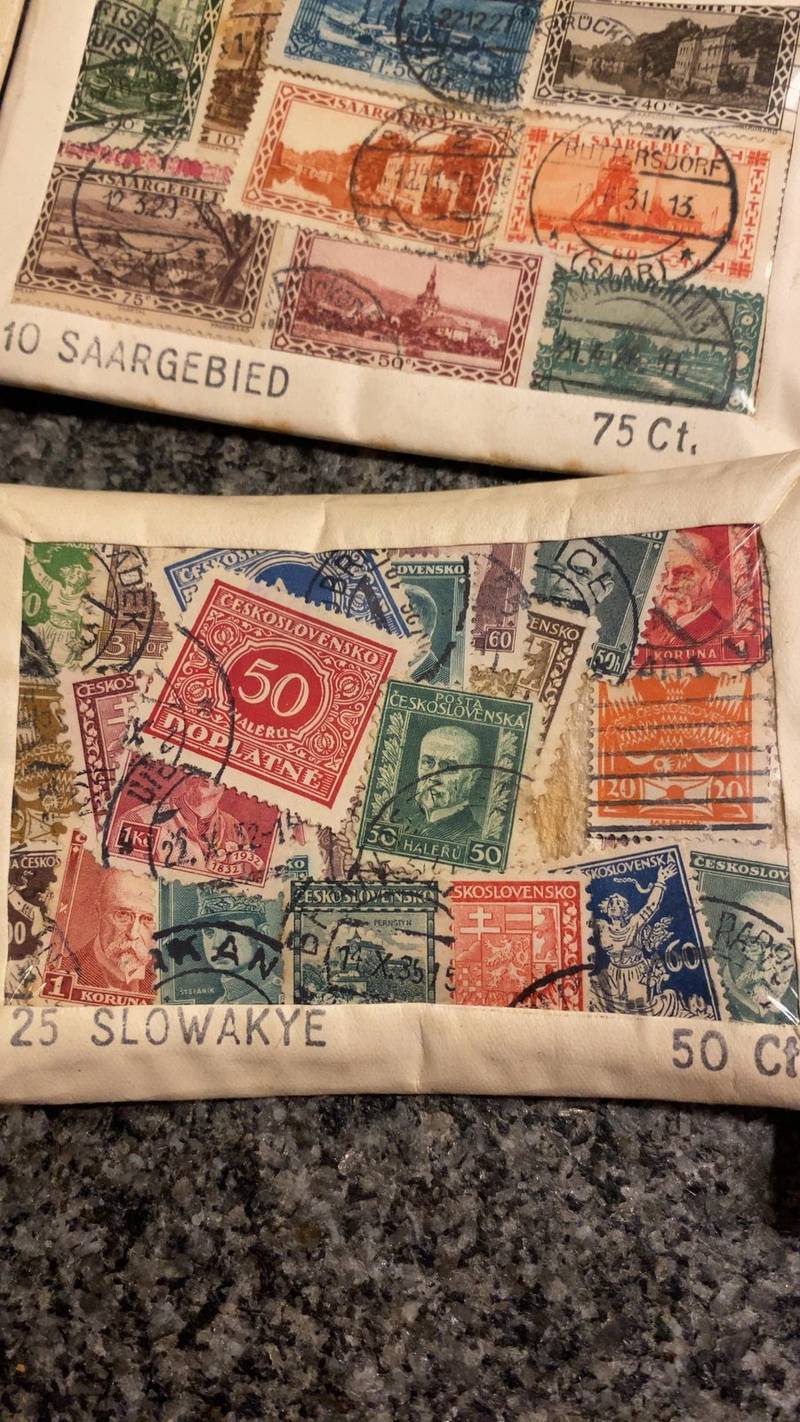
Two vintage philatelic approval packets or souvenir sets containing used stamps from the Saar Basin Territory (Saargebiet) and Czechoslovakia. The top packet features 10 Saar stamps, including definitive and pictorial issues from the 1921-1932 period, with visible cancellations from Saarbrücken and Blittersdorf. The lower packet contains 25 Czechoslovakian issues, featuring 'Doplatne' (Postage Due) stamps and definitive portraits of Tomáš Masaryk. The stamps are mounted behind a transparent membrane on a printed card stock typical of mid-20th-century mass-market philatelic retail.
CROSS-CULTURAL PARALLELS
Where This Object Echoes
Reflects the cartographic and political volatility following the collapse of the Austro-Hungarian and German Empires.
Ritual & Ceremonial Use
- •The 'Stamp Approval' ritual where collectors would receive packets by mail, keep what they wanted, and send back payment or the remaining stamps.
Meaning Through Time
Operational tools for postal revenue and territorial identification.
Historical artifacts representing the 'Dead Country' collecting niche.
POSTAL HERITAGE
PHILATELIC NOTES
The Saar stamps include the 1921 landscape series, where the German name 'Saargebiet' was overprinted on existing German or Bavarian stamps before unique regional designs were produced.
Post-WWI territorial shifts made 'Dead Countries' (entities no longer issuing stamps) like Saargebiet highly popular among collectors following the 1935 plebiscite.
SCARCITY
Standard antiques commonly found at estate sales and flea markets. Plentiful supply meets modest demand.
Typical Characteristics
- Moderate production runs
- Common at estate sales
- Entry-level collectibles
Confidence Factors
- Common period packet material with standard cancellations
- Paper and ink types are consistent with interwar European production
- Low commercial value of individual stamps makes forgery unlikely
PHILATELIST'S VERDICT
Philatelist
High confidence in identification of the territories and eras based on extremely clear typography and standard period designs. Retail packet context is unmistakable to a specialist.
KEY EVIDENCE
- 1Presence of Saargebiet landscape issues (Scott #85-98 equivalents)
- 2Circular date stamps (CDS) consistent with German-style postal markings of the Weimar era
- 3Czechoslovakia 50h Doplatne (Postage Due) issue visible in red
- 4Retail packaging style typical of 1930s-50s philatelic wholesalers (e.g., H.E. Harris)
UNCERTAINTIES
- •Stamps are overlapped, potentially hiding thins, tears, or missing perforations
- •Condition of gum cannot be verified through the membrane
WHAT WOULD IMPROVE CERTAINTY
- →Gently remove stamps to check for watermarks (e.g., Cross and Ring for Saar)
- →Use a perforation gauge to distinguish between different printings of the Masaryk issues
- →Inspect the back for any dealer marks or hinge remnants
CONDITION & GRADE
Grading breakdown
Stamps are heavily overlapped, common for 'packet material.' Visible centering on the 'Doplatne' 50h issue is average for the period. The packaging shows minor foxing and surface dirt.
Condition
The packets show signs of vertical creasing and some edge wear to the card backing. Most stamps appear to be used (cancelled) and overlapping, which is standard for retail packets but prevents inspection of the perfs and gum. Visible cancels include a 17.5.31 date on the orange Saar issue.
PHILATELIC VALUATION
Updated: May 11, 2026
Similar interwar European packets often achieve $10-20 per card at specialized philatelic auctions or retail platforms like eBay (Sold Listings 2023-2024).
Who buys this
Entry-level philatelists, collectors of 'Dead Countries,' and buyers of vintage ephemera or 'nostalgia' items.
What increases value
- •Integrity of the original retail packaging
- •Legibility of specific town cancellations (e.g., Saarbrücken)
- •Popularity of Saargebiet as a niche European territory
What lowers value
- •Damage to stamps during removal from old adhesive or packaging
- •Hidden defects like 'thins' caused by previous hinge removal
- •Heavy cancels obscuring the central design
What makes top-tier examples
- •Town-specific cancels of rare villages
- •Unusually wide margins (centering)
- •Scarce color varieties identifiable only under UV or magnification
Grade & condition
Centering of the designs, clarity of the cancellations, and integrity of the paper (lack of creases/thins).
Rarity & demand
For informational purposes only, not a formal appraisal.
ABOUT STAMPS
Rare stamps, postal history, first day covers, and philatelic treasures.
Stamps value and rarity guideSHARE THIS CURIOSITY
Have your own curiosities to discover?
Scan Your Curiosity
COMMENTS