Massive Milky Quartz Specimen
Estimated value
$10 - $35Rarity
Common(2/10)Category
Natural HistoryEra
Holocene / Modern RecoveryOrigin
InternationalAuthenticity
MASSIVE MILKY QUARTZ SPECIMEN: IDENTIFICATION
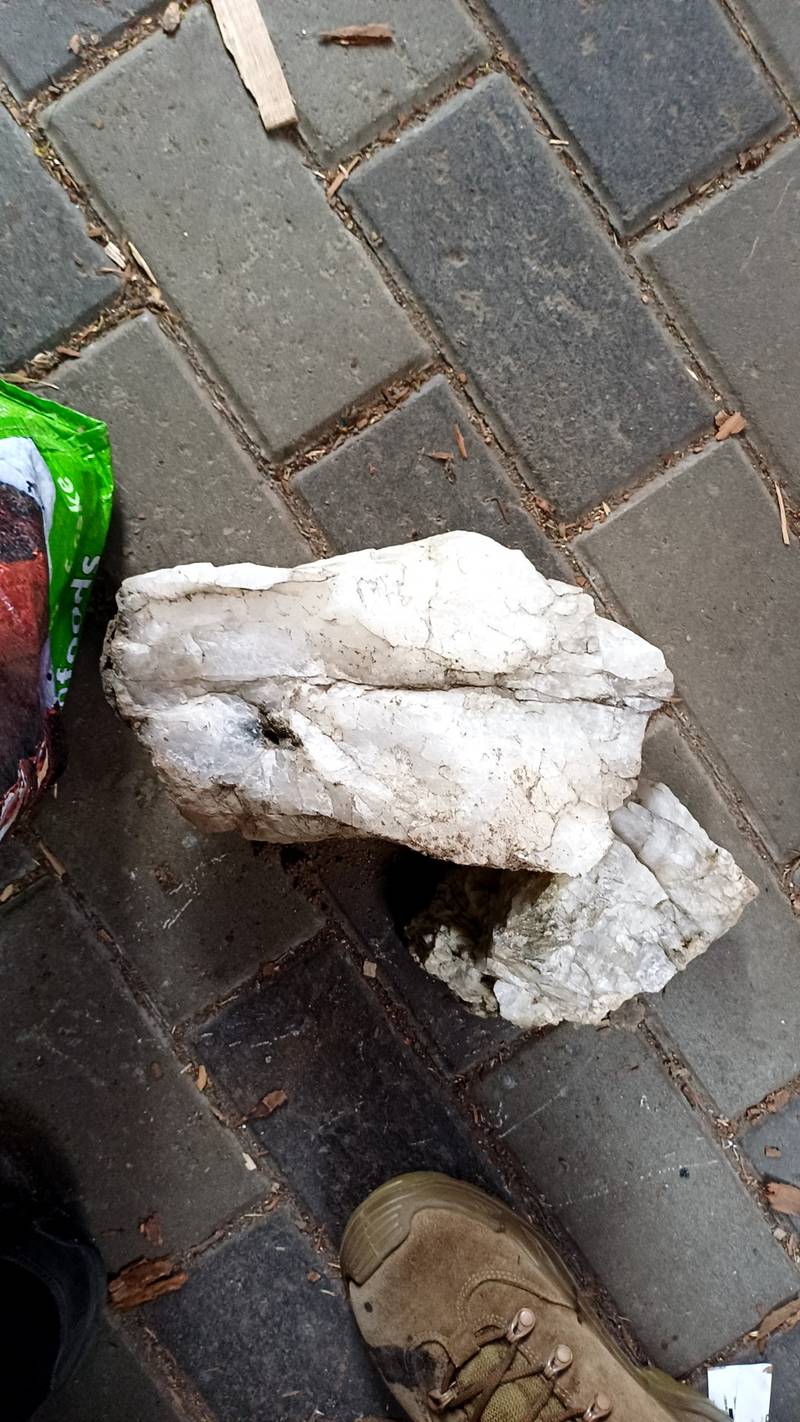
A large, unpolished specimen of bull quartz (milky quartz) featuring a dense, microcrystalline structure with visible conchoidal fractures. The secondary image reveals a vug or small pocket containing dark mineral staining, possibly iron or manganese oxides, common in hydrothermal vein deposits. The overall specimen size exceeds 20 cm in length based on proximity to the size 10-12 (approximate) work boot.
SCARCITY
Older mass-produced items still widely available. Easy to find on eBay, antique malls, and estate sales in large quantities.
Typical Characteristics
- Mass produced historically
- High survival rate
- Readily available everywhere
Confidence Factors
- Natural mineral characteristics are consistent with standard geological quartz formations.
- Low market value for raw bulk quartz makes forgery economically non-viable.
NATURALIST'S ASSESSMENT
Natural History Curator & Specimen Preparator
The visual identification of milky quartz is highly certain due to the characteristic fracture patterns and opacity. Uncertainty remains only regarding the exact locality of origin.
KEY EVIDENCE
- 1Conchoidal (shell-like) fracture patterns visible in the close-up shot.
- 2Opaque white 'milky' coloration caused by fluid inclusions.
- 3Visible vug containing dark mineral oxides.
- 4Hardness and density indicators consistent with SiO2 (Silicon Dioxide).
WHAT WOULD IMPROVE CERTAINTY
- →Perform a simple scratch test on glass to confirm Mohs 7 hardness.
- →Thoroughly clean with water and a soft brush to reveal possible hidden crystals or terminations in the vug.
- →Check for any metallic inclusions (pyrite or gold) occasionally found in hydrothermal quartz veins.
CONDITION & GRADE
Condition
Raw, uncleaned field state with heavy surface contamination and sharp, jagged edges consistent with mechanical extraction. No evidence of intentional lapidary work or polishing.
Weight & feel
Estimated between 3 kg and 6 kg based on the volume and the specific gravity of quartz (2.65 g/cm³).
SPECIMEN VALUATION
Updated: May 10, 2026
Similar raw quartz chunks sold as 'garden rocks' or 'landscape specimens' typically retail for $2 to $5 per kilogram in mineral shops.
Who buys this
Novice mineral collectors, garden designers, and practitioners of alternative therapies who value the stone for size and raw aesthetic.
What increases value
- •Total mass and weight of the piece
- •Potential for internal crystal structures inside the central vug
What lowers value
- •Commonality of the material limits price ceiling
- •Surface staining and lack of terminations (points)
What makes top-tier examples
- •Presence of clear rock crystal points
- •Rarity of associated minerals like native gold or galena
Grade & condition
Determined by lack of bruising, clarity of color, and presence of interesting mineral inclusions.
Rarity & demand
For informational purposes only, not a formal appraisal.
ABOUT NATURAL HISTORY
Fossils, minerals, taxidermy, shells, and natural specimens.
Natural History value and rarity guideSHARE THIS CURIOSITY
Have your own curiosities to discover?
Scan Your Curiosity
COMMENTS