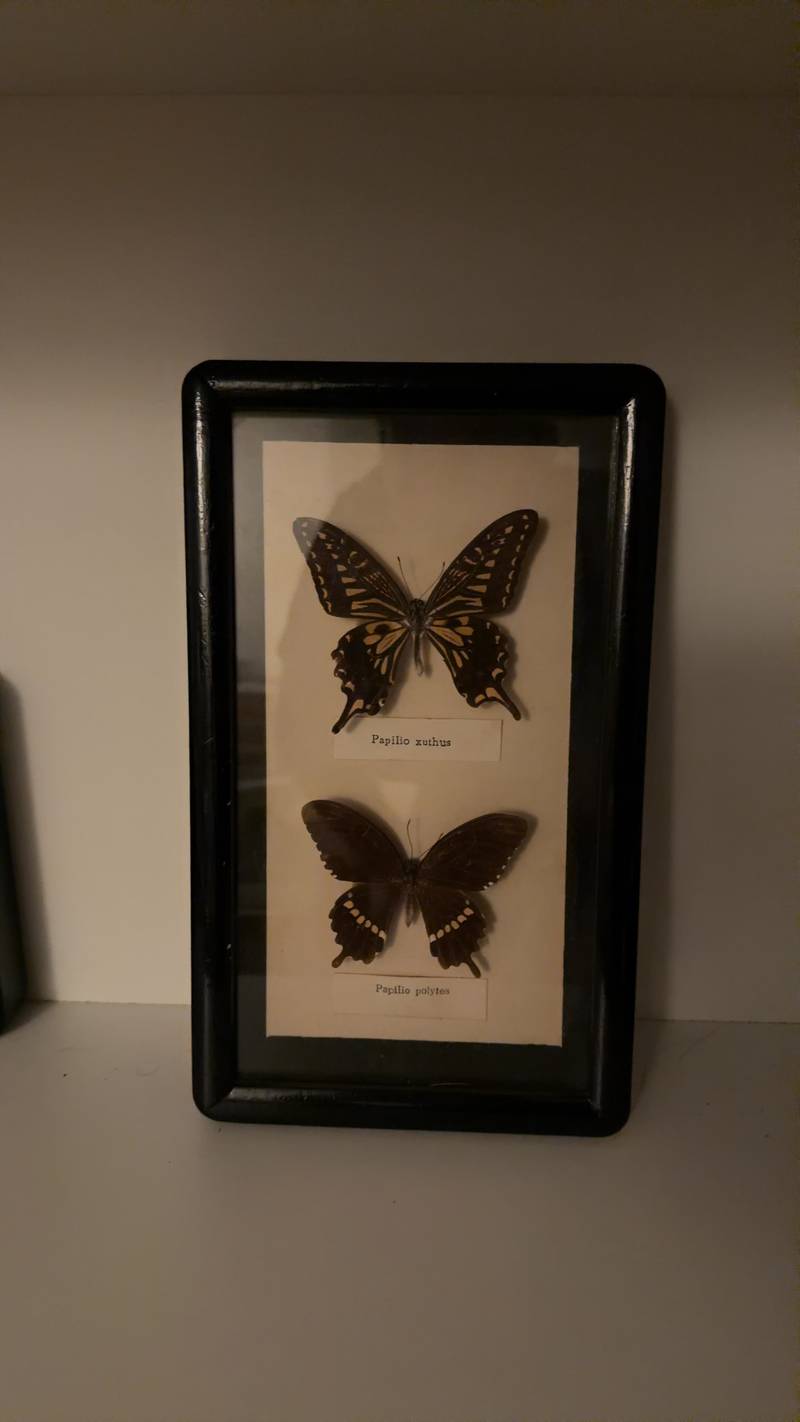
Framed Butterfly Specimen Display (Papilio xuthus & Papilio polytes)
Estimated value
$75 - $250Rarity
Average(4/10)Category
Natural HistoryEra
Mid-20th CenturyOrigin
InternationalAuthenticity
FRAMED BUTTERFLY SPECIMEN DISPLAY (PAPILIO XUTHUS & PAPILIO POLYTES): IDENTIFICATION
This is a framed entomological display featuring two mounted butterfly specimens: a Papilio xuthus (Asian Swallowtail) and a Papilio polytes (Common Mormon). Both specimens appear to be pinned to a backing board, likely cork or foam, and protected under glass within a simple, dark-stained wooden frame. The scientific names are clearly labeled beneath each butterfly, which is standard practice in entomological collections.
SCARCITY
Typical antique shop fare. Requires some searching but regularly available. This is where most genuine antiques fall.
Typical Characteristics
- Standard antique shop items
- Regularly available
- Moderate collector interest
Confidence Factors
- Species are correctly identified and typical for entomological displays.
- Mounting style and frame are consistent with period practices.
- Reproduction of such common species is generally not economically viable, reducing forgery risk.
NATURALIST'S ASSESSMENT
Natural History Curator & Specimen Preparator
The clear species identification from the labels and visual characteristics of the butterflies, combined with the typical presentation of an entomological display, allows for a high level of confidence in the object's basic identification. Further details would require physical examination.
KEY EVIDENCE
- 1Clear identification of two common Papilio species: P. xuthus and P. polytes.
- 2Specimens are pinned and labeled, consistent with standard entomological practices.
- 3The frame style and paper aging suggest mid-20th century construction.
- 4The species selected are not rare or endangered, reducing provenance concerns.
UNCERTAINTIES
- •The overall lighting in the images makes it difficult to assess the exact coloration fidelity of the butterflies.
- •The extent of any pest damage (dermestid beetles, etc.) cannot be determined through the glass or from these images.
- •Lack of collection locality or date on the labels, which would add significant scientific value and provenance.
WHAT WOULD IMPROVE CERTAINTY
- →Inspect the specimens closely under good lighting for any signs of pest damage, fading, or repair.
- →Check for any additional labels on the reverse of the frame that might indicate collection details or a preparator.
- →Assess the stability of the mounting pins and condition of the glass seal within the frame.
CONDITION & GRADE
Condition
The specimens appear to be intact, though slight wing damage or antenna loss is common in older mounts and cannot be definitively assessed without closer inspection. The paper labels show age-appropriate yellowing. The frame itself seems stable with minimal visible damage.
SPECIMEN VALUATION
Updated: Feb 27, 2026
- Market comparables from auctions & retail
- Condition, completeness & craftsmanship
- Current collector demand & trends
- Low = quick sale, high = patient seller
For informational purposes only, not a formal appraisal.
ABOUT NATURAL HISTORY
Fossils, minerals, taxidermy, shells, and natural specimens.
Natural History value and rarity guideSHARE THIS CURIOSITY
Have your own curiosities to discover?
Scan Your Curiosity
COMMENTS