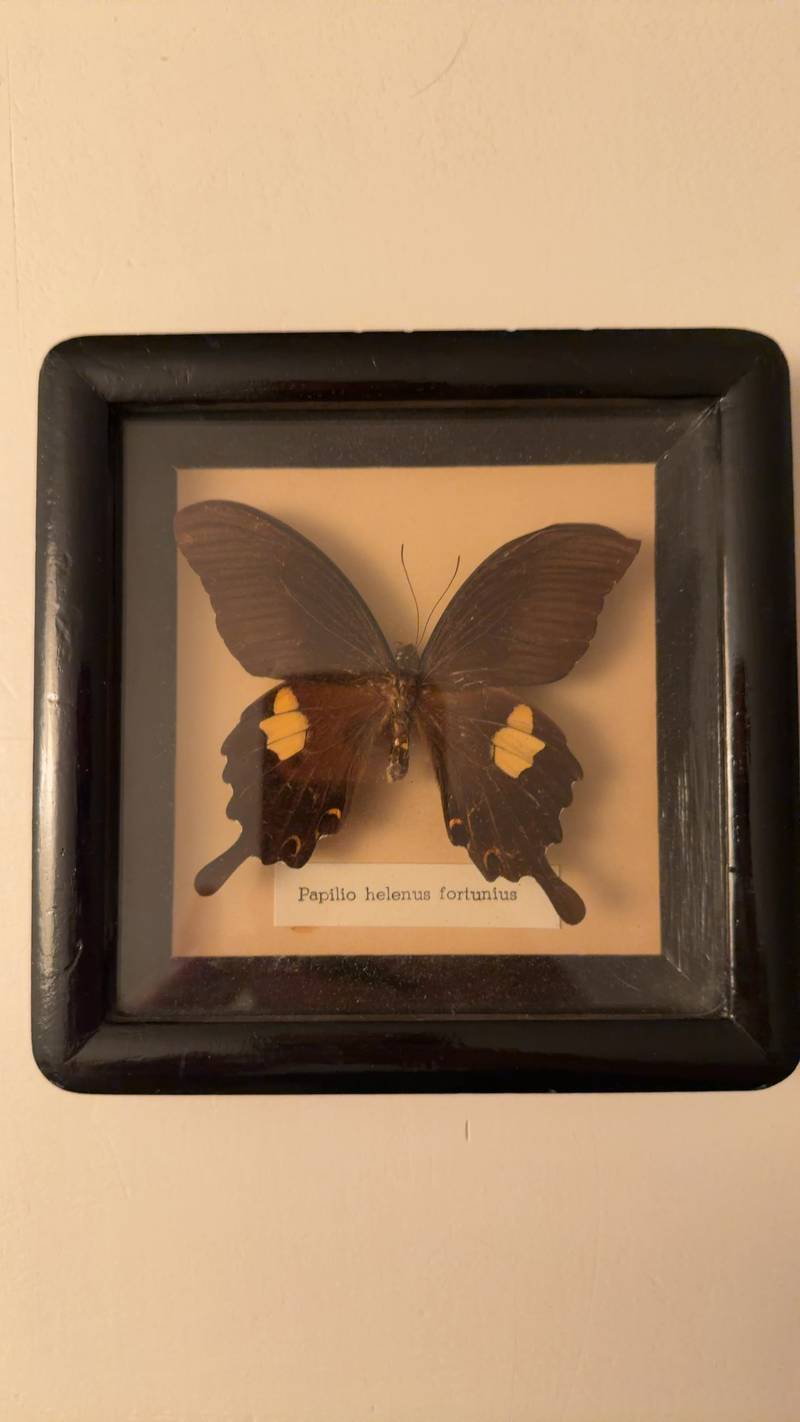
Helena's Swallowtail (Papilio helenus fortunius) Framed Butterfly Specimen
Estimated value
$80 - $250Rarity
Average(4/10)Category
Natural HistoryEra
Mid-20th CenturyOrigin
InternationalAuthenticity
HELENA'S SWALLOWTAIL (PAPILIO HELENUS FORTUNIUS) FRAMED BUTTERFLY SPECIMEN: IDENTIFICATION
This specimen presents a beautifully preserved Helena's Swallowtail butterfly, identified by the label as Papilio helenus fortunius. The butterfly exhibits the characteristic dark brown-to-black wings with prominent yellow-orange 'eyespot' markings on the hindwings, and slender tails. It is mounted in a vintage-style black wooden frame with a glass cover, against a light-colored background typical for entomological display. The antennae are intact, and the wings are spread in the classic 'set' position, suggesting professional or semi-professional preparation.
SCARCITY
Typical antique shop fare. Requires some searching but regularly available. This is where most genuine antiques fall.
Typical Characteristics
- Standard antique shop items
- Regularly available
- Moderate collector interest
Confidence Factors
- The species appears consistent with known imagery of Papilio helenus fortunius.
- The mounting style and frame align with typical entomological displays, offering no immediate red flags for significant misrepresentation beyond potential age or origin details.
NATURALIST'S ASSESSMENT
Natural History Curator & Specimen Preparator
Confidence is high for the species identification based on the visible label and characteristic morphology. The overall presentation as a vintage entomological display is also clear. Uncertainty remains only regarding precise collection provenance and definitive age.
KEY EVIDENCE
- 1Species identified by label as Papilio helenus fortunius, a known swallowtail butterfly subspecies.
- 2Specimen is well-preserved with wings intact and antennae present, indicating careful preparation.
- 3Mounted in a classical entomological display frame with a light background.
- 4The frame style and minor wear suggest a vintage origin, consistent with mid-20th century.
- 5Physical appearance of the butterfly matches known characteristics of Helena's Swallowtail.
UNCERTAINTIES
- •Lack of collection data (date, locality, collector) on the label, which is critical for scientific provenance.
- •It's difficult to verify the exact age and origin of the specimen or frame without more information or clearer markings.
- •The CITES status of subspecies can sometimes be intricate, and without proof of legal acquisition, a precise evaluation of its trade legality is challenging, though Papilio helenus as a species is generally not listed on CITES Appendix I or II.
WHAT WOULD IMPROVE CERTAINTY
- →Examine the frame for any maker's marks or labels on the reverse side.
- →Carefully inspect the specimen for any signs of repair or composite elements under magnification.
- →Research current CITES and local regulations regarding the commercial trade of Papilio helenus species.
- →Consult with a professional entomologist for precise verification of the subspecies identification and to determine if it is wild-caught or from a butterfly farm.
CONDITION & GRADE
Condition
The butterfly specimen appears to be in very good condition, with intact wings and antennae. No obvious tears or significant fading are visible. The frame shows minor cosmetic wear, such as small scratches and nicks, which is typical for a piece of its presumed age. The overall presentation is clean and well-preserved.
SPECIMEN VALUATION
Updated: Feb 27, 2026
- Market comparables from auctions & retail
- Condition, completeness & craftsmanship
- Current collector demand & trends
- Low = quick sale, high = patient seller
For informational purposes only, not a formal appraisal.
ABOUT NATURAL HISTORY
Fossils, minerals, taxidermy, shells, and natural specimens.
Natural History value and rarity guideSHARE THIS CURIOSITY
Have your own curiosities to discover?
Scan Your Curiosity
COMMENTS