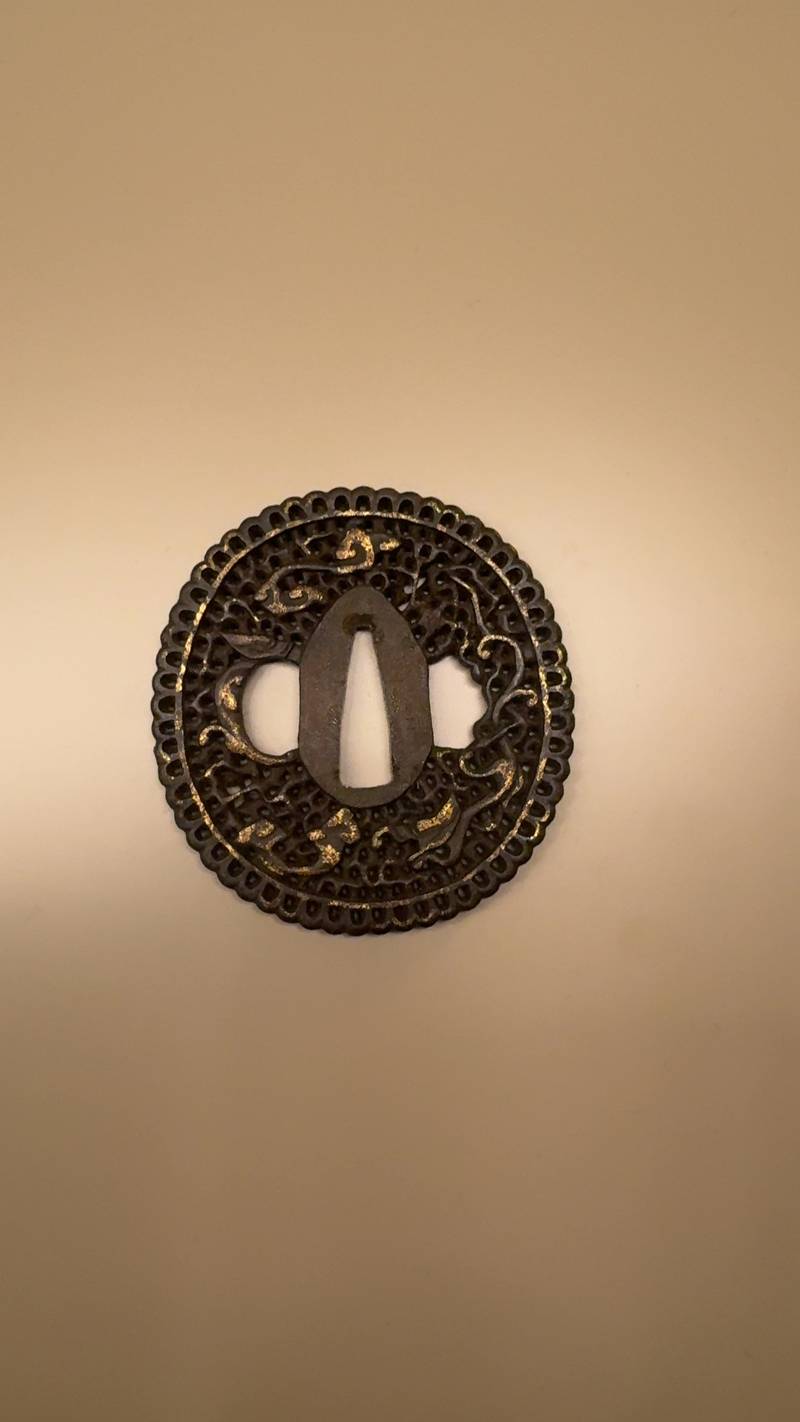
Namban Style Iron Tsuba with Dragon and Tendril Inlay
Estimated value
$250 - $600Rarity
Average(4/10)Category
MilitariaEra
Edo Period, circa 1750-1850Origin
JapanAuthenticity
NAMBAN STYLE IRON TSUBA WITH DRAGON AND TENDRIL INLAY: IDENTIFICATION
An iron sword guard (tsuba) executed in the Namban (Southern Barbarian) style, featuring an openwork 'sukashi' design of stylized dragons and floral tendrils. The central nakago-ana for the sword blade is surrounded by two hitsu-ana for accessory tools. The rim is decorated with a repeating kiku (chrysanthemum) petal motif. Significant remnants of gold 'nunome-zogan' (cloth-weave overlay) are visible on the raised dragons and scrolling vine patterns, highlighting the influence of European and Chinese decorative arts on 17th-18th century Japanese sword furniture.
CROSS-CULTURAL PARALLELS
Where This Object Echoes
The scrolling floral motifs (karakusa) directly mirror Chinese metalwork patterns from the 18th century.
Ritual & Ceremonial Use
- •The 'Koshirae' assembly process where the tsuba is selected to harmonize with other sword fittings (fuchi, kashira) for formal wear.
Meaning Through Time
Symbolized the owner's cosmopolitan tastes and the integration of foreign 'Southern Barbarian' aesthetics into samurai culture.
ISSUE & SERVICE HISTORY
SCARCITY
Typical antique shop fare. Requires some searching but regularly available. This is where most genuine antiques fall.
Typical Characteristics
- Standard antique shop items
- Regularly available
- Moderate collector interest
Confidence Factors
- High prevalence of modern cast reproductions of Namban designs
- Evidence of hand-carving and nunome-zogan technique suggests period production
- Lack of 'sekigane' (soft metal plugs) in hitu-ana for custom fit
MILITARY HISTORIAN'S TAKE
Militaria Historian
The identification of style and era is high based on the specific nunome-zogan wear patterns and Namban iconography, though physical verification of the iron's forged structure is required for definitive authentication.
KEY EVIDENCE
- 1Classical Namban openwork featuring dragons and arabesque vines
- 2Application of gold nunome-zogan indicates an authentic traditional technique over modern casting
- 3Standardized Mid-Edo petal-style rim (mimi) common to late 18th-century workshops
- 4Dimensionality and undercutting in the carving suggest hand-tooling rather than mass casting
UNCERTAINTIES
- •Surface rust in recesses may obscure potential workshop marks
- •Uniformity of the scrollwork could suggest a higher-volume provincial workshop rather than a master smith
WHAT WOULD IMPROVE CERTAINTY
- →Examine the nakago-ana walls for file marks (yasurime) characterizing hand-finishing
- →Conduct a magnet test to confirm base metal is forged iron and not a cast alloy
- →Clear photograph of the 'mimi' (rim) edge to check for a forge seam
CONDITION & GRADE
Condition
Moderate wear to the gold overlay consistent with age and occasional mounting on a blade. The iron shows stable patina but does have light surface rust in the recessed areas of the openwork that requires careful stabilization.
MILITARIA VALUATION
Updated: May 11, 2026
Boningtons and Heritage have sold similar unsigned Edo-period Namban tsuba for $300-$550 in 2022-2023.
Who buys this
Collectors of Japanese Nihonto fittings and specialists in Edo-period metalwork arts.
What increases value
- •Percentage of remaining gold nunome-zogan
- •Complexity of the sukashi undercutting
- •Integrity of the iron patina
What lowers value
- •Active 'red rust' (oxidation) can pit the surface and significantly devalue iron fittings
- •Deep scratches on the central plate from improper mounting
What makes top-tier examples
- •Presence of a signature (mei) from a known school like the Shoami or Bushu
- •Finely detailed dragon scales and expressive facial features
Grade & condition
Condition is judged by the sharpness of the carving and the preservation of the original rust-resistant 'dark chocolate' patina.
Rarity & demand
For informational purposes only, not a formal appraisal.
ABOUT MILITARIA
Military uniforms, weapons, medals, equipment, and war memorabilia.
Militaria value and rarity guideSHARE THIS CURIOSITY
Have your own curiosities to discover?
Scan Your Curiosity
COMMENTS