North African Miquelet-Lock Musket (Moukhala)
Estimated value
$450 - $1,200Rarity
Average(4/10)Category
MilitariaEra
Late 19th Century (circa 1870-1900)Origin
InternationalAuthenticity
NORTH AFRICAN MIQUELET-LOCK MUSKET (MOUKHALA): IDENTIFICATION
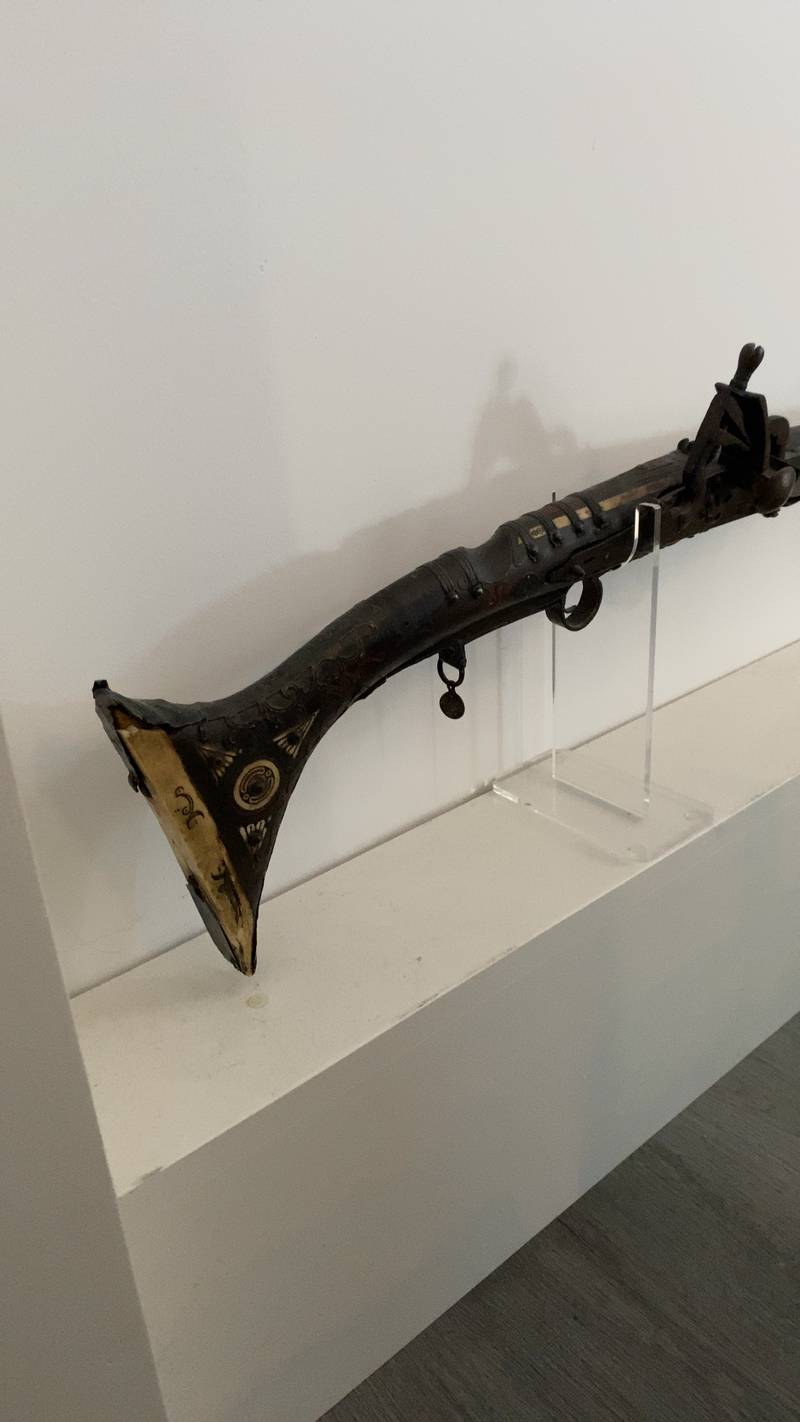
A long-barreled North African musket, commonly known as a Moukhala, featuring a characteristic miquelet-lock ignition system. The stock is crafted from dark wood with substantial bone or ivory decorative inlays across the buttstock, featuring etched geometric motifs. The barrel is secured to the stock by multiple wide metal bands, known as capucines, which are characteristic of Maghreb firearms from the 18th and 19th centuries.
ISSUE & SERVICE HISTORY
COLLECTOR NOTES
The extreme length of the barrel, often exceeding 150 cm, was designed to maximize the burn of low-quality local black powder and improve accuracy over long desert distances.
SCARCITY
Typical antique shop fare. Requires some searching but regularly available. This is where most genuine antiques fall.
Typical Characteristics
- Standard antique shop items
- Regularly available
- Moderate collector interest
Confidence Factors
- High prevalence of late 20th-century 'tourist' versions made for export/decoration using older parts.
- Lock mechanism appears potentially non-functional or assembled from disparate parts.
- Inlay patterns are simplified, which can sometimes indicate later production for the souvenir trade.
MILITARY HISTORIAN'S TAKE
Militaria Historian
The form and construction are clearly identifiable as a North African Moukhala, but determining whether it is a mid-19th century combat arm or a late-19th century ceremonial/souvenir piece requires closer inspection of the lock's internal mechanics and metal quality.
KEY EVIDENCE
- 1Miquelet-style lock with external mainspring is historically accurate for Maghreb region firearms.
- 2Presence of multiple wide 'capucine' barrel bands confirms North African (likely Moroccan or Algerian) origin.
- 3Stylized geometric bone inlays on the buttstock are characteristic of Kabyle or Moroccan craftsmanship.
- 4Barrel length and ramrod channel construction align with 19th-century black powder muzzleloader standards.
UNCERTAINTIES
- •The lack of visible proof marks on the breech (often found on European-imported barrels used in these muskets).
- •The cleanliness of the bone inlays suggests they may have been cleaned or replaced.
WHAT WOULD IMPROVE CERTAINTY
- →Check the top of the barrel for maker's marks or 'London' export stamps often found on barrels traded to North Africa.
- →Photograph the lock mechanism in high detail to determine if it is a working original or a decorative casting.
- →Verify if the barrel is rifled or smoothbore (most originals are smoothbore).
CONDITION & GRADE
Grading breakdown
The primary value rests in the decorative inlays and the completeness of the metal barrel bands; the oxidation on the lock and wood shrinkage around inlays are typical for specimens of this age.
Condition
Moderate wear consistent with age; visible cracks in the bone inlays at the buttstock. The lock mechanism shows surface rust and may be seized; the ramrod appears to be a later replacement or is partially missing.
Weight & feel
Approximately 3.5 to 4.5 kg, with a significantly front-heavy balance due to the excessive barrel length and metal capucines.
MILITARIA VALUATION
Updated: May 11, 2026
Similar specimens in 'Good' condition frequently appear at Rock Island Auction and Hermann Historica between $600 and $900.
Who buys this
Collectors of Ottoman-era arms, ethnographic weapon enthusiasts, and interior designers focusing on North African motifs.
What increases value
- •Integrity and detail of the bone inlays
- •Originality of the lock mechanism
- •Number and condition of the barrel bands
What lowers value
- •Evidence of modern glue in the inlays (indicates 'tourist' origin)
- •Severe barrel pitting or 're-conversions' of the lock
- •Missing ramrod or broken stock wood
What makes top-tier examples
- •Silver wire inlay or niello work on the barrel and lock
- •European barrels from prestige makers like Lazarino Cominazzo
- •Exceptional length exceeding 180 cm
Grade & condition
Mechanical functionality of the lock, completeness of inlays, and degree of corrosion on the iron components.
Rarity & demand
For informational purposes only, not a formal appraisal.
ABOUT MILITARIA
Military uniforms, weapons, medals, equipment, and war memorabilia.
Militaria value and rarity guideSHARE THIS CURIOSITY
Have your own curiosities to discover?
Scan Your Curiosity
COMMENTS