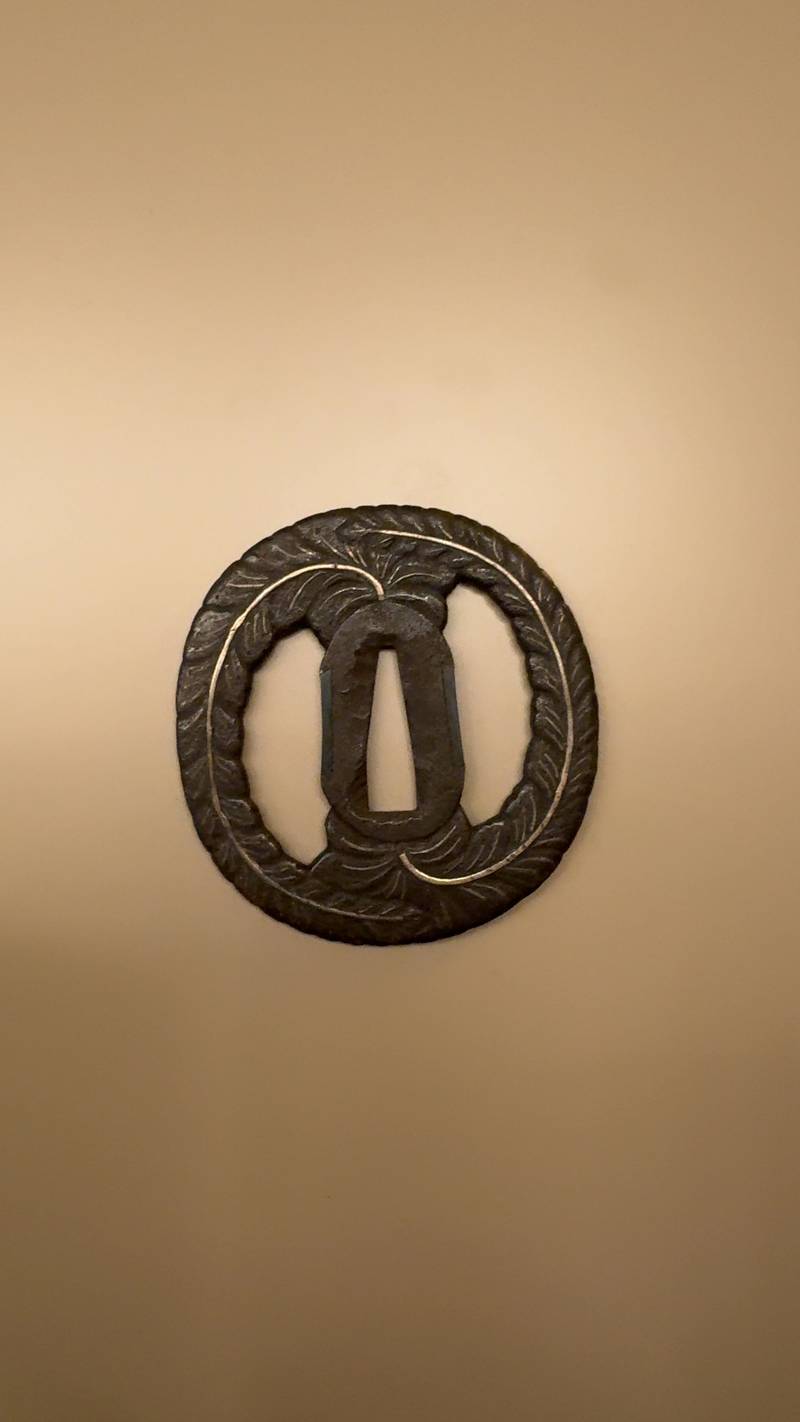
Edo Period Iron Tsuba with Musashino Grass and Silver Inlay
Estimated value
$250 - $600Rarity
Average(4/10)Category
MilitariaEra
Edo Period, circa 1750-1850Origin
JapanAuthenticity
EDO PERIOD IRON TSUBA WITH MUSASHINO GRASS AND SILVER INLAY: IDENTIFICATION
An oval-shaped tsuba (Japanese sword guard) constructed from forged iron, featuring a pierced sukashi design of stylized pampas grass, often associated with the Musashino plain motif. The plate exhibits a dark, oxidised patina with silver wire inlay (hon-zogan) tracking the central veins of the leaves. The central nakago-ana (blade aperture) shows evidence of sekigane (soft metal plugs) at the top and bottom, indicates it was once fitted to a specific sword tang.
CROSS-CULTURAL PARALLELS
Where This Object Echoes
The 'Musashino' landscape aesthetic, prioritizing the beauty of transition and autumn.
Ritual & Ceremonial Use
- •Koshirae-naoshi: The ritualized process of refurbishing or changing a sword's mountings to suit the owner's status or the season.
Meaning Through Time
Tsuba functioned primarily as hand protection and balance weights.
Tsuba became symbols of refinement, class, and adherence to the Bushido code during peacetime.
SCARCITY
Typical antique shop fare. Requires some searching but regularly available. This is where most genuine antiques fall.
Typical Characteristics
- Standard antique shop items
- Regularly available
- Moderate collector interest
Confidence Factors
- Heavy surface pitting can sometimes be used to disguise modern casting, though the inlay application looks period-correct.
- The absence of a signature (mumei) is common for this grade but requires closer inspection of the punch marks around the nakago-ana.
MILITARY HISTORIAN'S TAKE
Militaria Historian
The construction details like the sekigane and the specific wear of the silver inlay align with period-correct manufacturing, though the signature-less nature and surface condition prevent a definitive attribution to a specific forge.
KEY EVIDENCE
- 1Hon-zogan silver inlay technique consistent with mid-Edo decorative trends.
- 2Presence of sekigane (soft metal plugs) confirms domestic use rather than tourist production.
- 3Iron forging patterns suggestive of Shoami school influence.
- 4Oxidation depth matches the 150-250 year age profile.
UNCERTAINTIES
- •Surface pitting is somewhat uniform, which occasionally points to acid-aging on 20th-century reproductions.
- •Lack of visible tagane-ato (punch marks) on the original surface around the tang hole.
WHAT WOULD IMPROVE CERTAINTY
- →Take a macro photo of the edges (mimi) to check for forging laminations.
- →Gently check if the silver inlay is flush with the iron or sits on top.
- →Review the punch marks around the central hole for signs of artisan tool use.
CONDITION & GRADE
Condition
Significant surface oxidation is present across the iron plate, though it appears stable. There is visible loss to the finer silver inlay lines, and the sekigane plugs show deformation from historical mounting and removal.
MILITARIA VALUATION
Updated: May 11, 2026
Similar mumei iron tsuba with silver inlay typically realize between $300 and $500 at specialized auctions such as Bonhams or Christie's Japanese Art sales.
Who buys this
Collectors of Japanese Nihonto (swords) and Tosogu (fittings), as well as enthusiasts of Edo-period metalwork.
What increases value
- •Retention of original silver inlay
- •Complexity of the sukashi (openwork) carving
- •Appeal of the Musashino grass theme
What lowers value
- •Active red rust (not present here, but a high risk factor)
- •Total loss of inlay
- •Modern casting lines on the inner rim
What makes top-tier examples
- •Attribution to a known master like those of the Shoami or Umetada schools
- •Preservation of fine surface 'tegane' (tool marks)
Grade & condition
Condition of the iron patina (rust vs. desirable black magnetite) and the percentage of remaining precious metal inlay.
Rarity & demand
For informational purposes only, not a formal appraisal.
ABOUT MILITARIA
Military uniforms, weapons, medals, equipment, and war memorabilia.
Militaria value and rarity guideSHARE THIS CURIOSITY
Have your own curiosities to discover?
Scan Your Curiosity
COMMENTS