Javanese Sewar or Rencong-style Dagger
Authenticity
JAVANESE SEWAR OR RENCONG-STYLE DAGGER: IDENTIFICATION
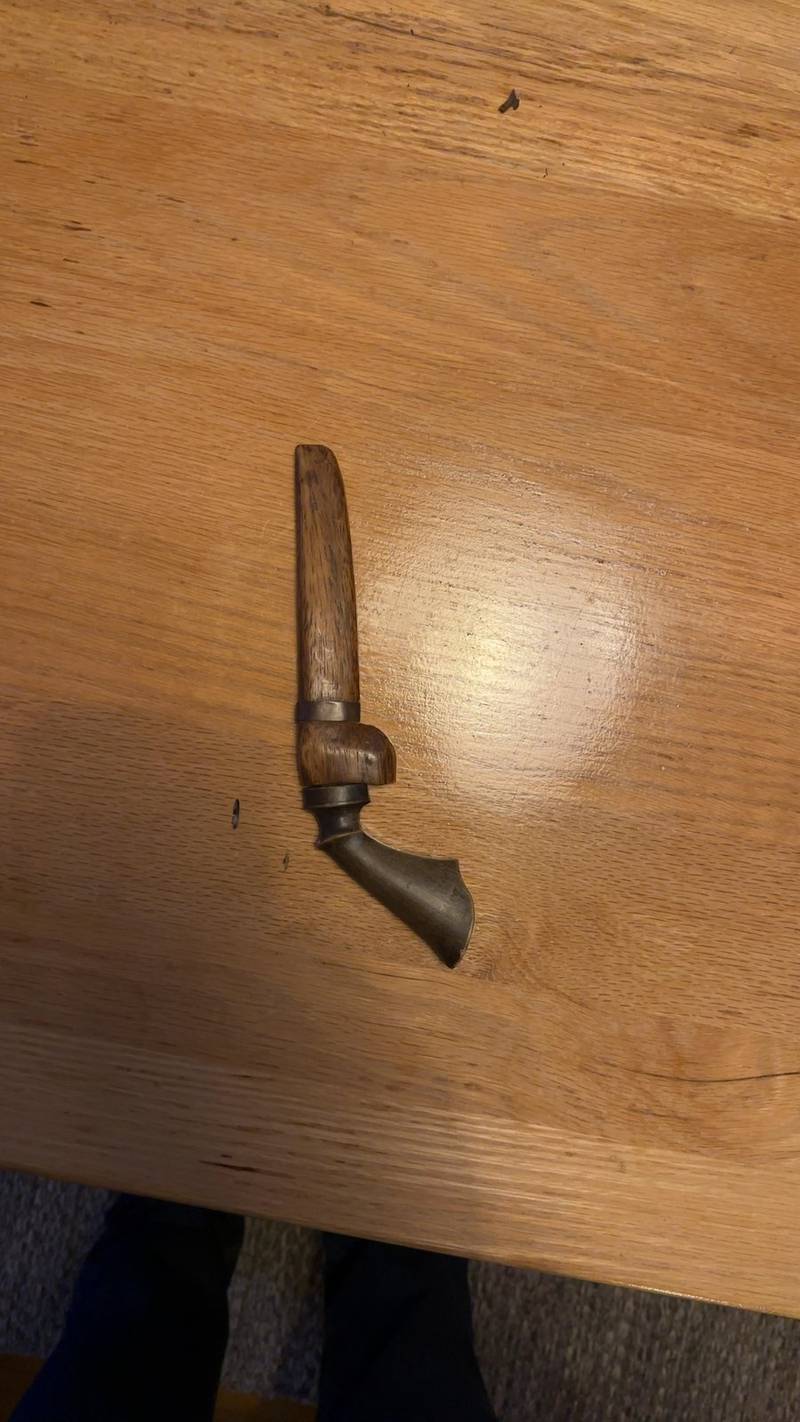
A small Indonesian utility or concealment dagger featuring a pistol-grip hilt and a single-edged steel blade. The hilt is carved from a dark, dense material, likely Water Buffalo horn (Karbau), shaped with a distinct 'l'-shaped protrusion common in Malay and Javanese edge weapons. The blade is straight with a convex edge profile, exhibiting heavy oxidation and a dark patina. The wooden scabbard (sarung) is constructed from two pieces of medium-grained wood secured by a single metal band, likely brass or a low-grade silver alloy, with a flared throat designed to seat the hilt securely.
SCARCITY
Typical antique shop fare. Requires some searching but regularly available. This is where most genuine antiques fall.
Typical Characteristics
- Standard antique shop items
- Regularly available
- Moderate collector interest
Confidence Factors
- Material wear on the hilt is consistent with early 20th-century horn-carving techniques
- Oxidation patterns on the blade suggest genuine age rather than chemical distressing
- The simple construction aligns with utilitarian 19th/20th-century regional production
MILITARY HISTORIAN'S TAKE
Militaria Historian
The object matches well-documented regional forms and materials, though the absence of clear marks and the heavy oxidation of the blade prevent a definitive pinpointing of the exact sub-district of origin.
KEY EVIDENCE
- 1Pistol-grip hilt shape characteristic of Indonesian 'Sewar' daggers
- 2Construction materials including buffalo horn and locally sourced timber
- 3Presence of a simple metal throat band on the scabbard commonly seen in regional trade daggers
- 4Blade profile consistent with Sumatra/Java utility knives
UNCERTAINTIES
- •Heavy oxidation makes identifying potential maker stamps or 'pamor' (pattern welding) difficult
- •Missing scabbard tip or possible missing decorative bands
WHAT WOULD IMPROVE CERTAINTY
- →Gently clean the blade with fine steel wool and oil to check for pattern welding (pamor)
- →Examine the hilt under magnification for small repair plugs or hidden maker inscriptions
- →Cross-reference the hilt shape with Zonneveld's 'Traditional Weapons of the Indonesian Archipelago'
CONDITION & GRADE
Condition
The blade is heavily oxidized with significant surface pitting and loss of original edge geometry. The hilt is in good condition with no visible cracks, though the scabbard shows minor abrasions and a loose metal throat band.
MILITARIA VALUATION
Updated: May 11, 2026
Similar Sewar and Rencong daggers frequently appear in specialized ethnographic auctions like Hermann Historica or Czerny's, typically realizing between $100 and $250 for utilitarian examples.
Who buys this
Collectors of Indonesian ethnographic weaponry and enthusiasts of Malay-Indonesian traditional arts.
What increases value
- •Intact horn hilt without cracks
- •Presence of the original scabbard
- •Potential for pattern welding (pamor) under the oxidation
What lowers value
- •Heavy blade pitting significantly reduces aesthetic appeal
- •Loss of scabbard fittings
- •Commonality of this specific utility grade
What makes top-tier examples
- •Elaborately carved silver or gold hilt mounts
- •High-contrast 'pamor' blade patterns
- •Documented provenance to a specific regional noble family
Grade & condition
Blade integrity, hilt material quality, and completeness of scabbard furniture.
Rarity & demand
For informational purposes only, not a formal appraisal.
ABOUT MILITARIA
Military uniforms, weapons, medals, equipment, and war memorabilia.
Militaria value and rarity guideSHARE THIS CURIOSITY
Have your own curiosities to discover?
Scan Your Curiosity
COMMENTS