Indonesian Kris-form Letter Opener (Tjuring style)
Authenticity
INDONESIAN KRIS-FORM LETTER OPENER (TJURING STYLE): IDENTIFICATION
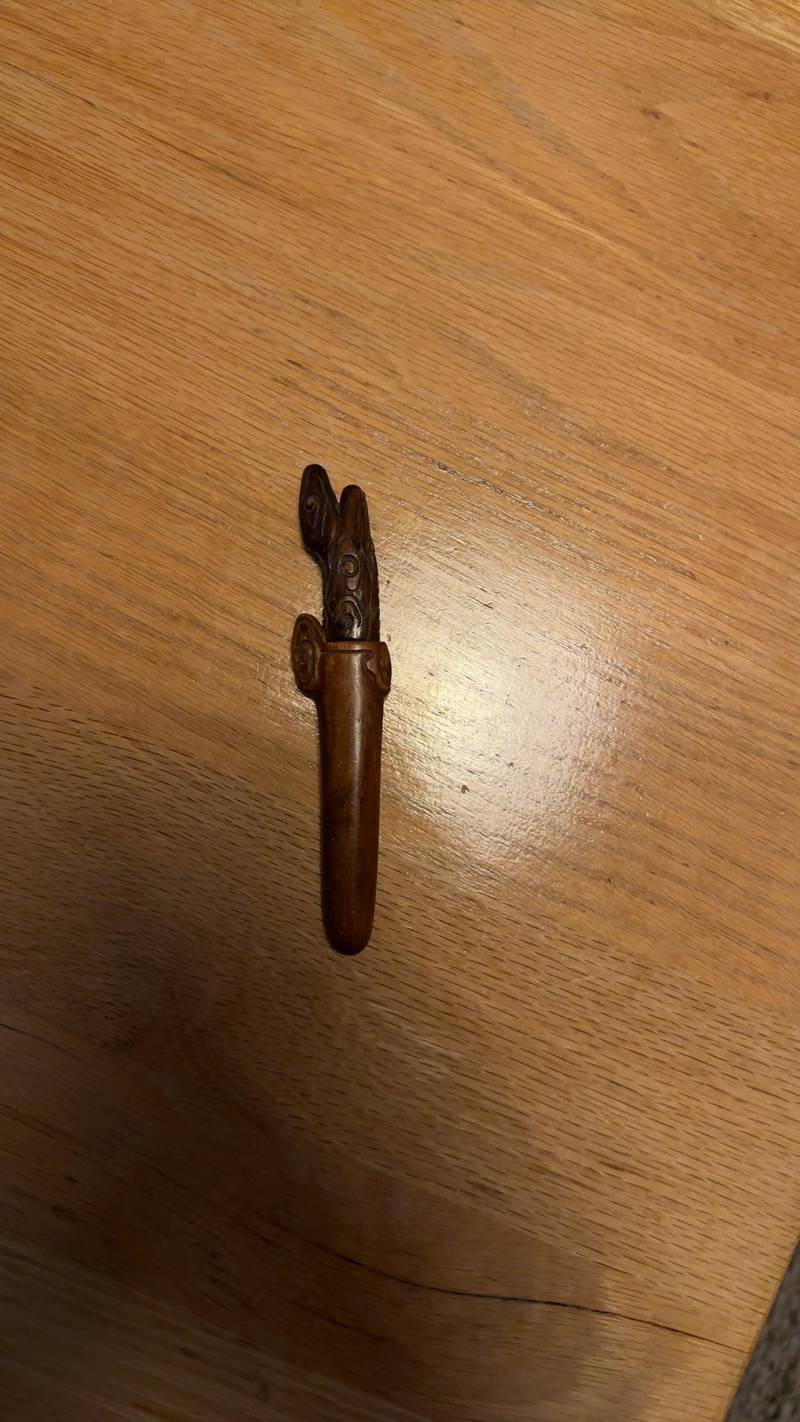
A miniature desk accessory or souvenir letter opener modeled after a traditional Indonesian kris or tjuring. It features a carved dark wood hilt and matching sheath, likely from sawo or teak wood, depicting stylized zoomorphic or floral motifs common in Javanese or Balinese craftsmanship. The needle-style blade is thin, unsharpened, and appears to be made of patinated steel or iron, lacking the distinctive pamor (nickel lamination) found on functional ceremonial weapons.
ISSUE & SERVICE HISTORY
SCARCITY
Standard antiques commonly found at estate sales and flea markets. Plentiful supply meets modest demand.
Typical Characteristics
- Moderate production runs
- Common at estate sales
- Entry-level collectibles
Confidence Factors
- Commonly produced souvenir item with consistent material usage
- Lacks the complex metalwork (pamor) of authentic ceremonial weapons
- Construction and scale are typical for mid-20th century export wares
MILITARY HISTORIAN'S TAKE
Militaria Historian
The item is a very standard example of Indonesian export craft from the mid-20th century with clear stylistic markers and material consistency.
KEY EVIDENCE
- 1Needle-style blade profile without a 'ganja' (cross-piece), identifying it as a miniature or letter opener rather than a functional dagger.
- 2Wrangka (sheath top) shape in the Javanese tradition but simplified for mass-production.
- 3Absence of pamor lamination on the blade, confirming secondary decorative status.
- 4Patina on the hilt consistent with mid-century handled items.
UNCERTAINTIES
- •The blade shows no tang or structural connection visible in photos, suggesting a simple adhesive or friction fit.
WHAT WOULD IMPROVE CERTAINTY
- →Inspect the base of the blade where it meets the hilt for any faint maker's marks or 'Indonesia' stamps.
- →Verify if the blade is magnetized, which can help determine the type of steel used.
CONDITION & GRADE
Condition
The wood shows excellent preservation with no visible cracks or splitting. The blade displays a dark, stable oxidation consistent with age but no active rust or structural pitting.
MILITARIA VALUATION
Updated: May 11, 2026
Similar items frequently sell on eBay and at regional antique malls for $20-$40 depending on the complexity of the carving (eBay Sold Records 2023-2024).
Who buys this
Collectors of desk accessories, travelers interested in Indonesian culture, and entry-level militaria enthusiasts.
What increases value
- •Quality of the hilt carving
- •Completeness (presence of the original sheath)
- •Condition of the wood finish
What lowers value
- •Commonality of these items in the market limits upside potential
- •Rust or pitting on the steel blade significantly reduces appeal
What makes top-tier examples
- •Higher detail in hilt carving depicting specific deities like Ganesha
- •Use of silver or brass fittings at the throat of the sheath
Grade & condition
Completeness of the set and lack of chips in the delicate carved wood points.
Rarity & demand
For informational purposes only, not a formal appraisal.
ABOUT MILITARIA
Military uniforms, weapons, medals, equipment, and war memorabilia.
Militaria value and rarity guideSHARE THIS CURIOSITY
Have your own curiosities to discover?
Scan Your Curiosity
COMMENTS