Hinged Gold-Tone Bangle Bracelet
QUICK FACTS
Categories
Era
Mid-20th Century
Origin
🌍 International
Rarity
Ordinary (3/10)
Discovered
Jan 24, 2026
1 months ago
DESCRIPTION
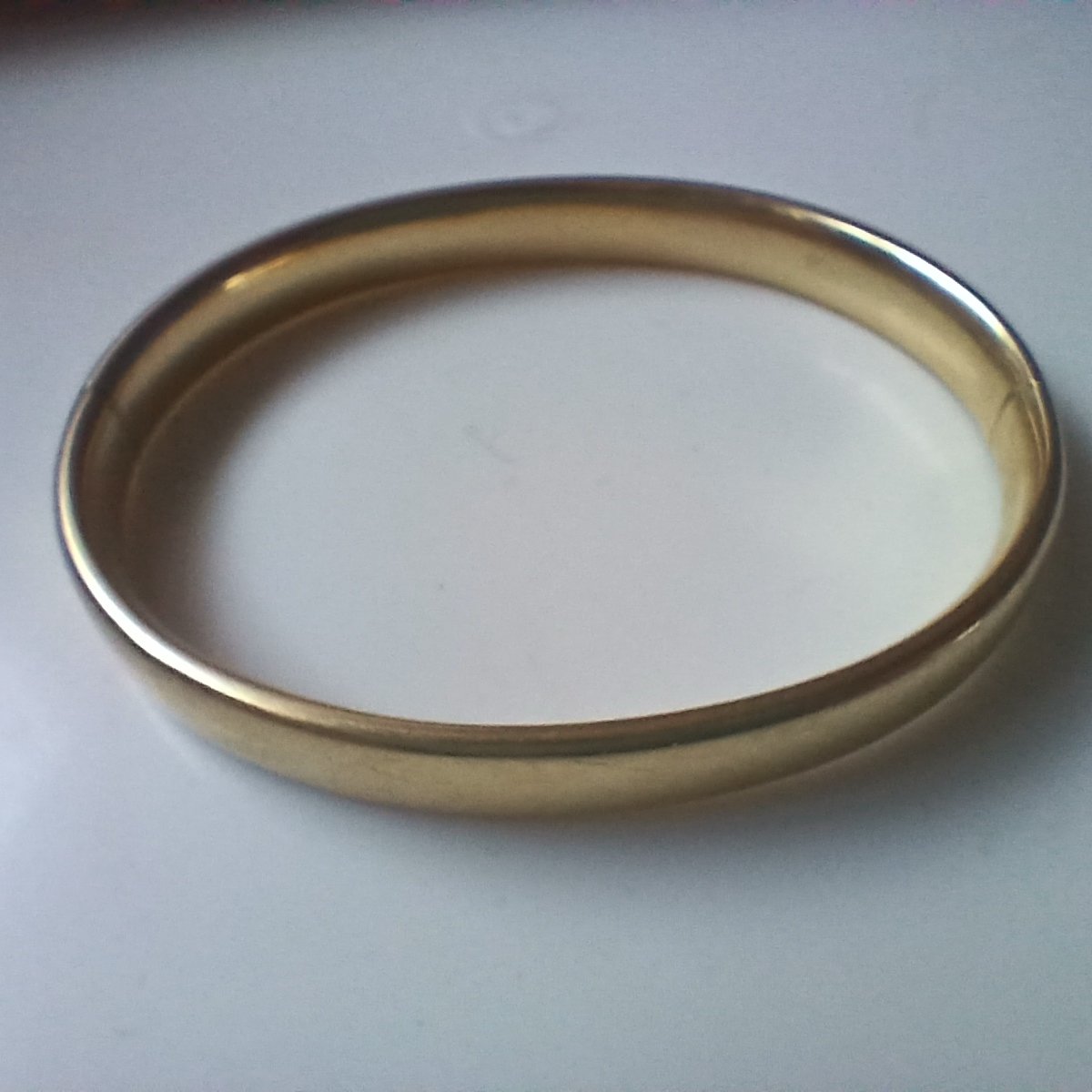
This appears to be a hinged bangle bracelet, circular in shape with a smooth, polished gold-toned surface. The design is simple and unadorned, suggesting a focus on form and potential material. The hinge mechanism and clasp are visible, indicating it was designed for easy wear and removal.
CULTURAL ECHOES
Where This Object Echoes
Ancient Roman women wore bangles made of various metals, including gold, often in plain, unadorned styles similar in form to this piece.
While more elaborate designs predominated, simple, geometric forms like smooth bangles were also incorporated into everyday wear, often in gold or platinum.
Ritual & Ceremonial Use
- •Gift-giving for milestones and celebrations, symbolizing enduring affection or success.
- •Everyday accessorizing, used to complete an outfit or express personal style.
Meaning Through Time
Often symbolic of status, wealth, or tribal affiliation; sometimes believed to offer protective qualities.
Worn as a fashion statement, often stacked, with symbolism sometimes derived from engravings or hidden compartments.
Primarily a fashion accessory, ranging from costume jewelry to high-value investment pieces, often chosen for personal style or sentiment.
HISTORICAL STORY
DID YOU KNOW?
Hinged bangles became particularly popular in the Victorian era as they were easier to put on and take off than solid, closed bangles, accommodating more wrist sizes.
The term 'bangle' originates from the Hindi word 'bangri' or 'bangali', meaning 'ring-shaped ornament'.
MATERIAL & CONDITION
Surface
The surface is smooth and appears to have a polished, reflective gold-tone finish. Some surface scratches and minor abrasions are visible, consistent with wear. The overall sheen suggests a metal or metal-plated material.
Weight & Feel
Based on the width and apparent material, it likely has a moderate weight but is not exceptionally heavy, suggesting it could be hollow-formed or a base metal with plating.
Condition
The bracelet shows noticeable surface wear, including scratches and scuffs, particularly visible in the third image. The plating (if present) appears intact overall, but close inspection for areas of thinning or loss would be necessary to fully assess its integrity. The hinge mechanism seems functional from the images provided.
RARITY ANALYSIS
Standard antiques commonly found at estate sales and flea markets. Plentiful supply meets modest demand.
Typical Characteristics
- Moderate production runs
- Common at estate sales
- Entry-level collectibles
EXPERT ANALYSIS
Jewelry Historian & Gemologist-Informed Appraiser
The confidence level is moderate because the form and wear patterns are clearly visible, allowing for a general identification of the object type and condition. However, crucial details such as metal composition and the presence of maker's marks are not discernible from the provided images, which limits a precise attribution or valuation to a significant degree.
KEY EVIDENCE
- 1Hinged construction suggests ease of wear and potentially a practical design approach.
- 2Smooth, polished gold-toned surface indicates either solid precious metal, gold-filled, or gold-plated material.
- 3Visible surface scratches and wear patterns are consistent with an older, used piece of jewelry.
- 4Lack of discernible hallmarks prevents immediate material or maker identification.
UNCERTAINTIES
- •The exact metal composition (solid gold, gold-filled, gold-plated) cannot be determined from images alone, which is crucial for valuation.
- •Absence of visible maker's marks or purity stamps leads to uncertainty regarding origin and specific age.
WHAT WOULD IMPROVE CERTAINTY
- →Examine the interior of the bracelet thoroughly with a jeweler's loupe for any faint hallmarks, stamps, or maker's marks.
- →Measure the internal diameter and width of the bangle for accurate sizing.
- →Perform a metal acid test to determine the purity of the gold alloy or confirm if it is plated metal.
- →Measure the weight of the bracelet to further assess if it is hollow or solid.
ESTIMATED VALUE
Updated: Feb 27, 2026
- Market comparables from auctions & retail
- Condition, completeness & craftsmanship
- Current collector demand & trends
- Low = quick sale, high = patient seller
For informational purposes only, not a formal appraisal.
ABOUT JEWELRY
Fine jewelry, costume pieces, rings, necklaces, bracelets, and brooches.
Browse all JewelrySHARE THIS CURIOSITY
Have your own curiosities to discover?
Scan Your Curiosity
COMMENTS
No comments yet. Be the first to share your thoughts!
Sign in to leave a comment