Gentleman's Gold-Tone Signet Ring with Dark Inlay
DESCRIPTION
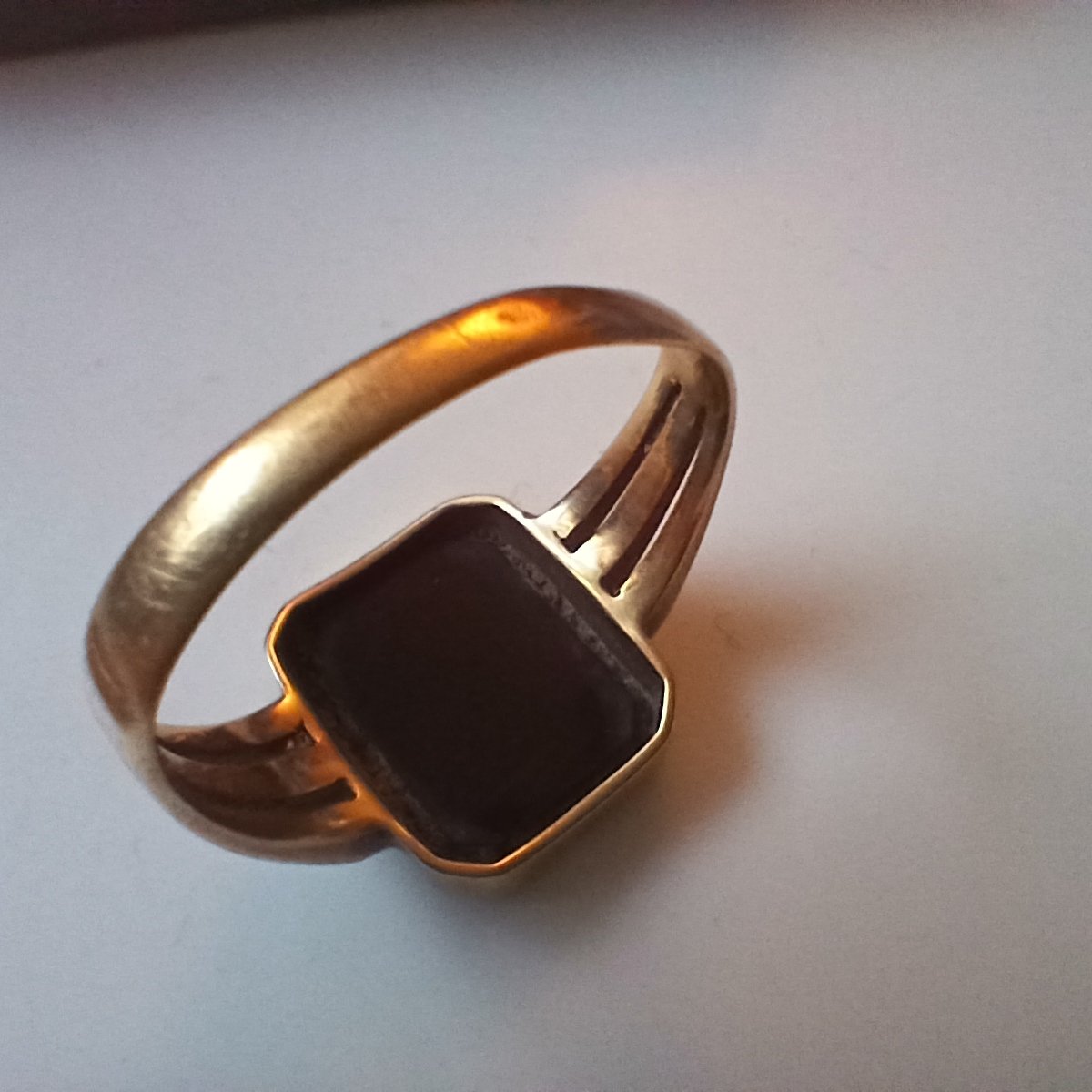
This appears to be a gentleman's signet-style ring, characterized by its rectangular, flat-topped bezel. The ring features a broad, angular shank that splits into three distinct bands at the shoulders before converging into the main band. The metal, which appears gold-toned, securely holds a rectangular, dark cabochon inlay, likely a gemstone or a synthetic material, set flush with the bezel's surface. The design is robust and masculine, suggestive of an era where such rings often served as personal seals or statements of identity.
CULTURAL ECHOES
Where This Object Echoes
Early signet rings were used by Roman officials and citizens to stamp official documents and letters, signifying authenticity and authority.
During this period, signet rings often featured family crests or monograms and were passed down through generations, embodying family heritage.
The clean lines and geometric forms of this ring align well with the aesthetic principles of Art Deco, which favored bold, simplified designs in jewelry.
Ritual & Ceremonial Use
- •Wearing a signet ring often acted as a subtle declaration of one's lineage or membership in a particular society or club.
- •In some traditions, signet rings were worn on specific fingers to denote marital status or social standing.
- •The tradition of passing down signet rings within families creates a ritual of inheritance and continuity.
Meaning Through Time
Primarily a functional tool for sealing documents, a symbol of authority and authenticity.
Evolved into a status symbol and a marker of aristocratic identity, often engraved with armorial bearings.
Shifted to personal adornment and expression, moving beyond pure function to represent personal style, club affiliations, or educational achievements.
HISTORICAL STORY
DID YOU KNOW?
Historically, the signet ring was often destroyed upon the owner's death to prevent unauthorized use of their personal seal.
Despite their decline in practical use, signet rings remained a popular medium for expressing regimental affiliations, club memberships, or academic achievements.
MATERIAL & CONDITION
Surface
The metallic surfaces exhibit a smooth, polished texture with some minor abrasions consistent with wear. The interior of the band and recessed areas show some darkening, which could be natural patination or residue. The dark, rectangular inlay has a smooth, glossy surface, showing no overt signs of scratches or significant wear.
Weight & Feel
Based on its substantial design and the apparent thickness of the metal, the ring likely feels solid and moderately weighty on the finger, as is typical for a gentleman's signet ring.
Condition
The ring appears to be in good vintage condition with visible surface wear, including minor scratches and rubbing on the band and bezel. The dark inlay appears intact and securely set, without any visible chips or cracks. The overall integrity of the piece seems sound, with no obvious signs of repair.
RARITY ANALYSIS
Standard antiques commonly found at estate sales and flea markets. Plentiful supply meets modest demand.
Typical Characteristics
- Moderate production runs
- Common at estate sales
- Entry-level collectibles
EXPERT ANALYSIS
Jewelry Historian & Gemologist-Informed Appraiser
Confidence is good regarding the ring's style and approximate era based on visible design elements and construction. However, the lack of visible hallmarks and the inability to identify the inlay material significantly reduce certainty about material composition and thus, potential value.
KEY EVIDENCE
- 1The overall robust construction and broad shoulders are typical of a gentleman's signet ring.
- 2The multi-band shank design is a common stylistic treatment seen from the mid-20th century.
- 3The dark, rectangular inlay is cut as a cabochon, suggesting materials like onyx, black chalcedony, or a synthetic.
- 4The gold-tone metal appears worn in areas, hinting that it might be plated or gold-filled, not solid gold, though this requires testing.
UNCERTAINTIES
- •No visible hallmarks to indicate metal purity or maker, which reduces confidence in material identification.
- •The exact nature of the dark inlay (gemstone vs. synthetic) cannot be determined from images, which impacts value.
- •The extent of plating wear (if it is plated) is not fully clear from the images.
WHAT WOULD IMPROVE CERTAINTY
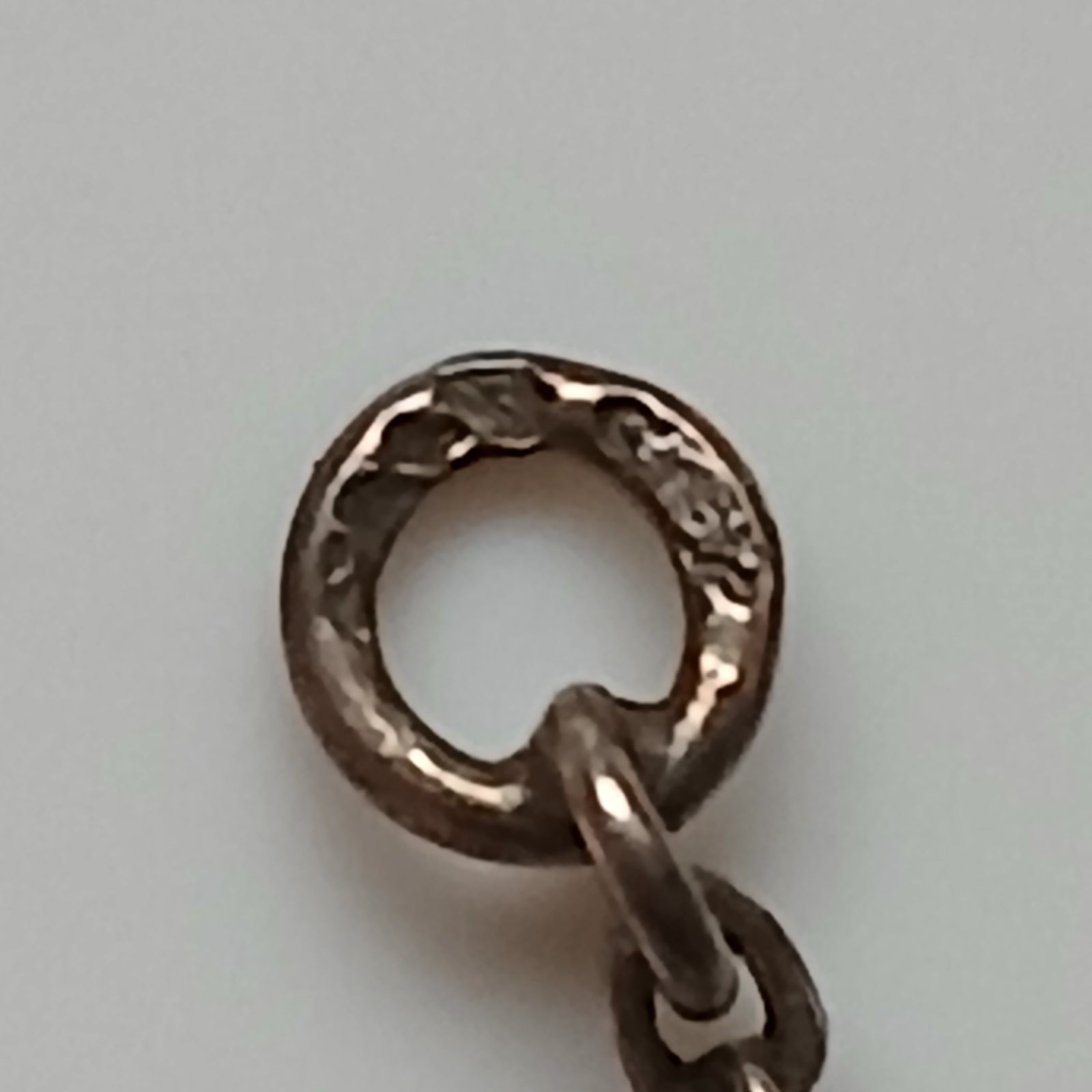
- →A clear, magnified image of the inner band is needed to check for any hallmarks or maker's stamps.
- →Close-up images of the setting and any edges of the dark inlay would help determine if it's natural stone or another material.
- →An X-ray fluorescence (XRF) test would definitively identify the metal composition (e.g., solid gold, gold-filled, plated base metal).
- →A gemological examination of the inlay under magnification would be necessary to identify the material and rule out synthetics.
ESTIMATED VALUE
Updated: Feb 27, 2026
- Market comparables from auctions & retail
- Condition, completeness & craftsmanship
- Current collector demand & trends
- Low = quick sale, high = patient seller
For informational purposes only, not a formal appraisal.
ABOUT JEWELRY
Fine jewelry, costume pieces, rings, necklaces, bracelets, and brooches.
Browse all JewelrySHARE THIS CURIOSITY
Have your own curiosities to discover?
Scan Your Curiosity
COMMENTS
No comments yet. Be the first to share your thoughts!
Sign in to leave a comment