French Gilt Bronze and Patinated Spelter Figural Mantle Clock
QUICK FACTS
Categories
Era
c. 1870-1900
Origin
🇫🇷 France
Rarity
Average (4/10)
Discovered
Feb 3, 2026
3 weeks ago
DESCRIPTION
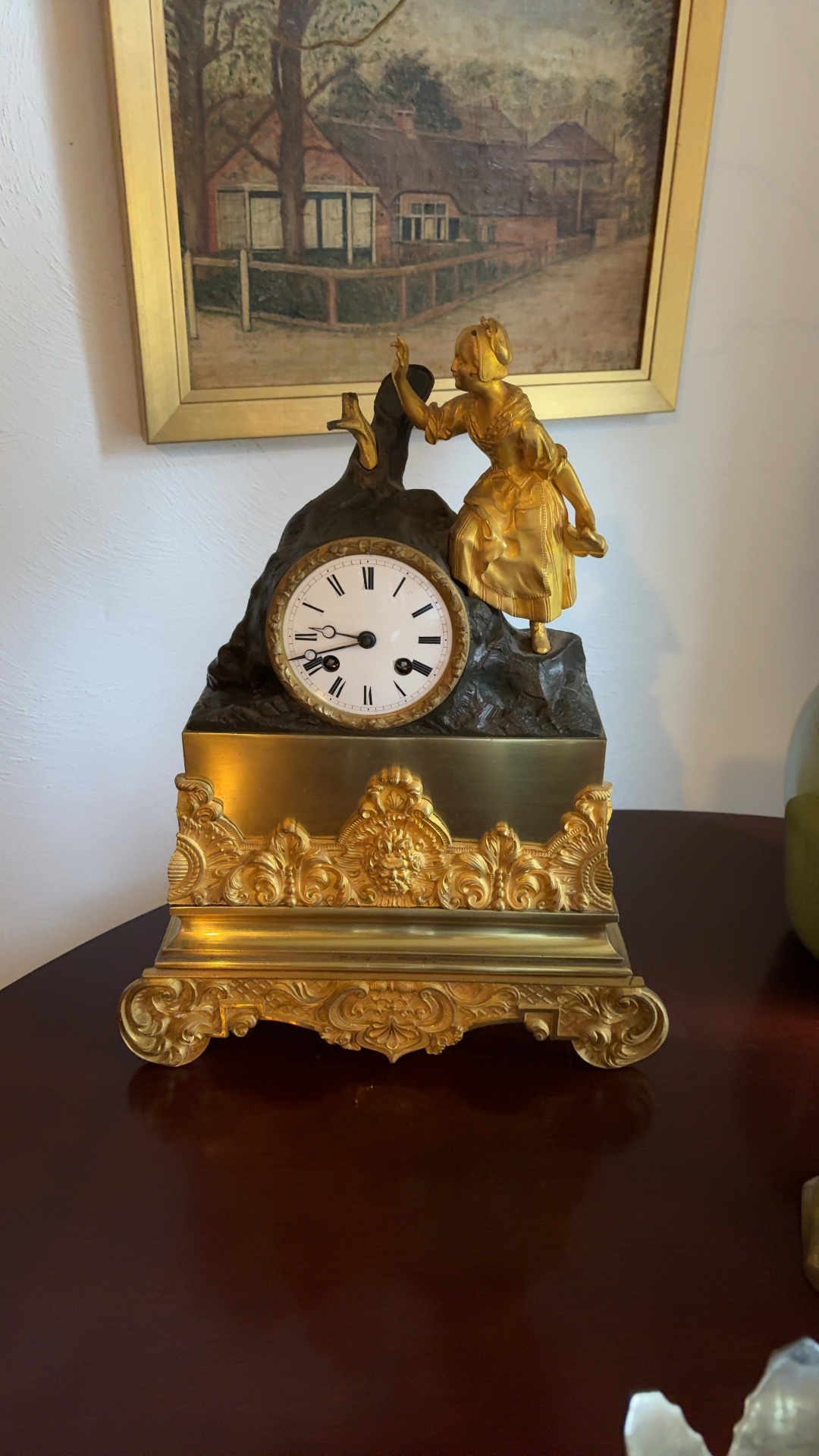
This appears to be a late 19th-century French figural mantle clock, characteristic of the 'rococo revival' style often seen from Paris workshops. The clock features a central white enamel dial with Roman numerals, set within a patinated spelter or bronze case designed to resemble naturalistic rockwork. Perched atop this rockwork is a highly detailed, gilt bronze or brass figure of a young woman, posed dynamically. The entire assembly rests on a heavily adorned, gilt bronze or brass rococo-style base with intricate scrolling, foliage, and possibly a central cartouche.
CULTURAL ECHOES
Where This Object Echoes
The elaborate, asymmetrical scrolling and figural elements echo the 18th-century Rococo style, which experienced a significant resurgence in popularity during the mid-19th century.
The opulence, detailed casting, and blend of materials (gilt and patinated) are indicative of the decorative arts trends often seen in Europe leading up to the turn of the 20th century.
Ritual & Ceremonial Use
- •Serving as a domestic focal point, a mantle clock like this would have been placed prominently in a salon or drawing-room, marking the rhythm of daily life and social engagements.
- •A symbol of status and cultural refinement, these clocks were often bought as wedding gifts or to mark significant achievements within a household.
Meaning Through Time
These clocks symbolized accuracy, the march of progress, and the owner's appreciation for fine craftsmanship and classical or allegorical narratives.
Today, they are valued more for their aesthetic beauty, historical significance as decorative arts, and the intricate mechanical engineering they represent, rather than their primary function as timekeepers.
HISTORICAL STORY
DID YOU KNOW?
Many of these figural clocks told a narrative, with the figures often representing classical virtues, muses, or literary characters, inviting contemplation beyond mere timekeeping.
Spelter, an alloy primarily of zinc, was commonly used in the 19th century as a more affordable alternative to bronze for decorative objects, which could then be patinated or gilded to mimic the appearance of more expensive metals.
MATERIAL & CONDITION
Surface
The clock presents a striking duality in its surface treatment: highly polished and ornate gilt-metal on the base and the figure contrasts sharply with the dark, textured, and patinated finish of the central rock formation housing the dial. There are areas where the gilt has worn slightly, revealing a darker metal beneath, and the patinated elements show a rich, aged surface typical of spelter or bronze.
Weight & Feel
Given the use of spelter for the rockwork and bronze/brass for the base and figure, the clock should feel substantial and solid, with a noticeable heft, especially in the elaborately cast base.
Condition
Cosmetically, the gilding on the figure and base shows some expected wear and tarnishing consistent with age, particularly on raised areas. The patinated finish on the rockwork appears largely intact. The enamel dial is visible but minor cracks or chips are difficult to discern from these images. The hands appear original. The functional state of the movement is unknown, but cosmetic condition suggests it has generally been cared for.
RARITY ANALYSIS
Typical antique shop fare. Requires some searching but regularly available. This is where most genuine antiques fall.
Typical Characteristics
- Standard antique shop items
- Regularly available
- Moderate collector interest
EXPERT ANALYSIS
Vintage Technology Restorer & Historian
Confidence is high for the general identification based on clear stylistic cues, material combinations, and typical design elements of French mantle clocks from the late 19th century. However, the lack of visible maker's marks or internal views prevents a more precise attribution or functional assessment.
KEY EVIDENCE
- 1The ornate gilt-metal base and the style of the figure strongly suggest a French origin from the late 19th century.
- 2The contrast between the gilt figure and base and the dark, textured rock-like housing for the dial is a common stylistic choice of the period.
- 3The visible Roman numerals on the white enamel dial are consistent with clock designs of this era.
- 4The substantial casting evident in the decorative base indicates quality of manufacture typical of mantle clocks intended as prominent decorative pieces.
UNCERTAINTIES
- •It's unclear if the movement is original to the case, as 'married' clocks are common.
- •The exact material of the dark rock formation is not definitively discernible as bronze or spelter without closer inspection.
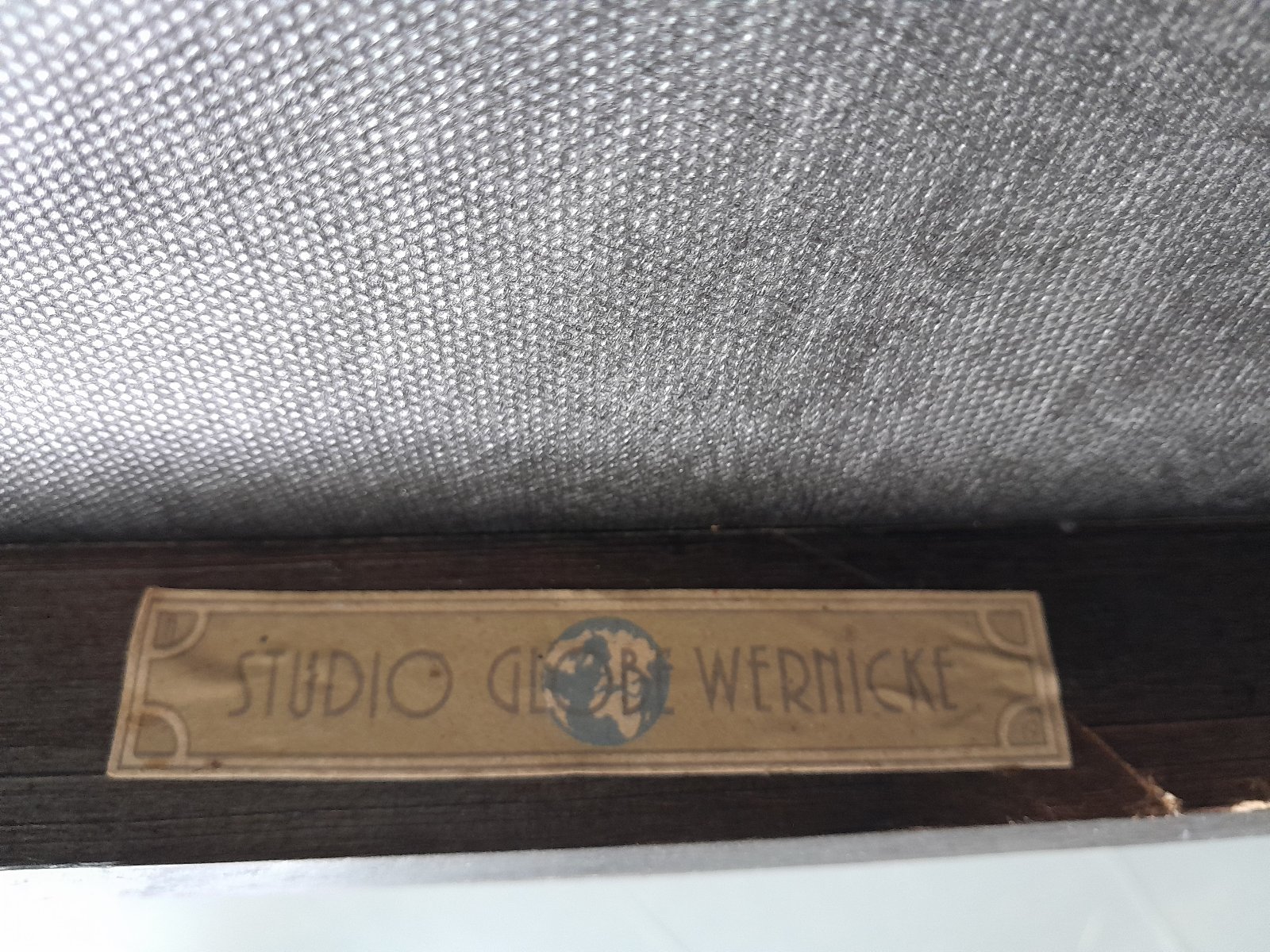
- •The presence of any maker's marks or serial numbers is not visible in the provided images.
WHAT WOULD IMPROVE CERTAINTY
- →Examine the clock movement for any maker's names, numbers, or stamps, particularly on the backplate or pendulum.
- →Inspect the dial for any hairline cracks, chips, or restoration work.
- →Verify the material composition of the darker metal using a magnet (spelter is non-magnetic, some bronzes may have ferrous components).
- →Request clearer, direct frontal and side views of the entire clock to assess overall symmetry and condition further.
- →If possible, open the back panel to inspect the movement's completeness and condition, though this should ideally be done by a professional.
ESTIMATED VALUE
Updated: Feb 27, 2026
- Market comparables from auctions & retail
- Condition, completeness & craftsmanship
- Current collector demand & trends
- Low = quick sale, high = patient seller
For informational purposes only, not a formal appraisal.
ABOUT INTERIOR
Furniture, lamps, lighting, chandeliers, decorative objects for the home.
Browse all InteriorSHARE THIS CURIOSITY
Have your own curiosities to discover?
Scan Your Curiosity
COMMENTS
No comments yet. Be the first to share your thoughts!
Sign in to leave a comment