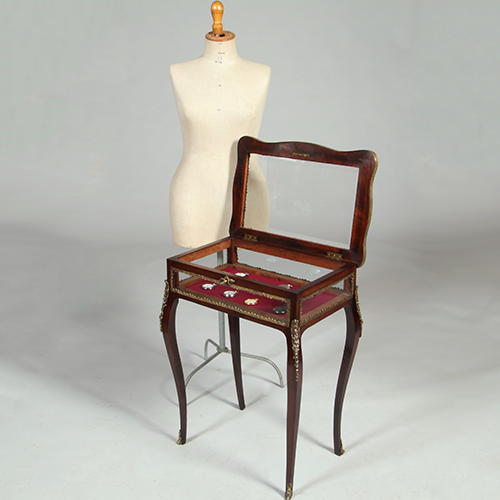
Louis XV Style Brass-Mounted Vitrine Table / Display Cabinet
QUICK FACTS
Categories
Era
Late 19th Century
Origin
🇫🇷 France
Rarity
Uncommon (5/10)
Discovered
Jan 15, 2026
1 months ago
DESCRIPTION
This is an elegant vitrine table, crafted in a distinct Louis XV Revival style, characterized by its cabriole legs, ornate brass mounts, and a serpentine-shaped top and apron. The hinged glass top opens to reveal a velvet-lined display compartment, likely intended for jewelry, watches, or other small decorative arts. The display area also features glass panels on the sides, allowing for multi-directional viewing of its contents. The primary wood appears to be mahogany or a similar dark, fine-grained timber, creating a rich contrast with the gilt brass or bronze embellishments.
CULTURAL ECHOES
Where This Object Echoes
The original 18th-century style emphasizing curves, asymmetry, and natural motifs, which this piece expertly reinterprets.
The era saw a resurgence of historical styles and a growing fascination with collecting and displaying small, precious objects, making such vitrines highly fashionable.
Ritual & Ceremonial Use
- •The ritual of domestic display, where personal collections of objets d'art, jewelry, or curios were carefully arranged and admired.
- •Connoisseurship and collecting among the bourgeoisie, showcasing wealth and cultural refinement.
Meaning Through Time
Originally, a symbol of aristocratic elegance and a more intimate, residential aesthetic, moving away from grand 'state' furniture.
Re-emerged as a symbol of bourgeois taste, demonstrating a knowledge of historical styles and providing a dedicated space for prized possessions within increasingly ornate interiors.
HISTORICAL STORY
DID YOU KNOW?
The term 'vitrine' comes from the French word 'vitre', meaning window pane, perfectly describing its function as a transparent display case.
Louis XV furniture emphasized comfort and intimacy over the grandeur of Louis XIV's Baroque style, introducing smaller, more specialized furniture forms like this elegant display table.
MATERIAL & CONDITION
Surface
The wood surface appears to be a polished dark timber, likely mahogany, with some visible grain, suggesting a traditional French polish or shellac finish. The brass mounts, featuring rococo scrolling and foliate designs, exhibit a warm, aged patina, consistent with gilt bronze or brass of considerable age. The glass panels are clear, allowing for unobstructed viewing.
Weight & Feel
Based on its construction from solid wood and the extensive brass or ormolu mounts, this vitrine table would feel substantial for its size. It is not overly large, but the materials suggest a dense and solid object, likely weighing between 20-40 pounds.
Condition
Visually, the vitrine appears to be in good antique condition. There may be minor abrasions or surface wear to the wood finish consistent with age and use. The brass mounts generally seem intact, though a closer inspection would reveal any lifting or detachment. The interior velvet lining shows some compression from the presence of objects.
RARITY ANALYSIS
Genuine antiques with fewer examples on the market. Named makers, documented provenance, or early production examples.
Typical Characteristics
- Limited production
- Named makers
- Growing collector demand
EXPERT ANALYSIS
Decorative Arts Specialist
The confidence level is good as the visual evidence strongly points to a Louis XV Revival vitrine table from the late 19th century, based on its stylistic elements and material appearance. However, the lack of maker's marks or detailed structural views prevents a higher certainty regarding exact origin or workshop.
KEY EVIDENCE
- 1Cabriole legs and serpentine form are characteristic of Louis XV style.
- 2Ornate brass ormolu mounts with rococo scrolling and foliate decoration.
- 3Hinged glass top and side panels indicate a vitrine or display cabinet function.
- 4Dark, polished wood finish consistent with mahogany or similar fine timber popular in late 19th-century furniture.
- 5Interior lined with red velvet, a common luxurious material for displaying valuables.
UNCERTAINTIES
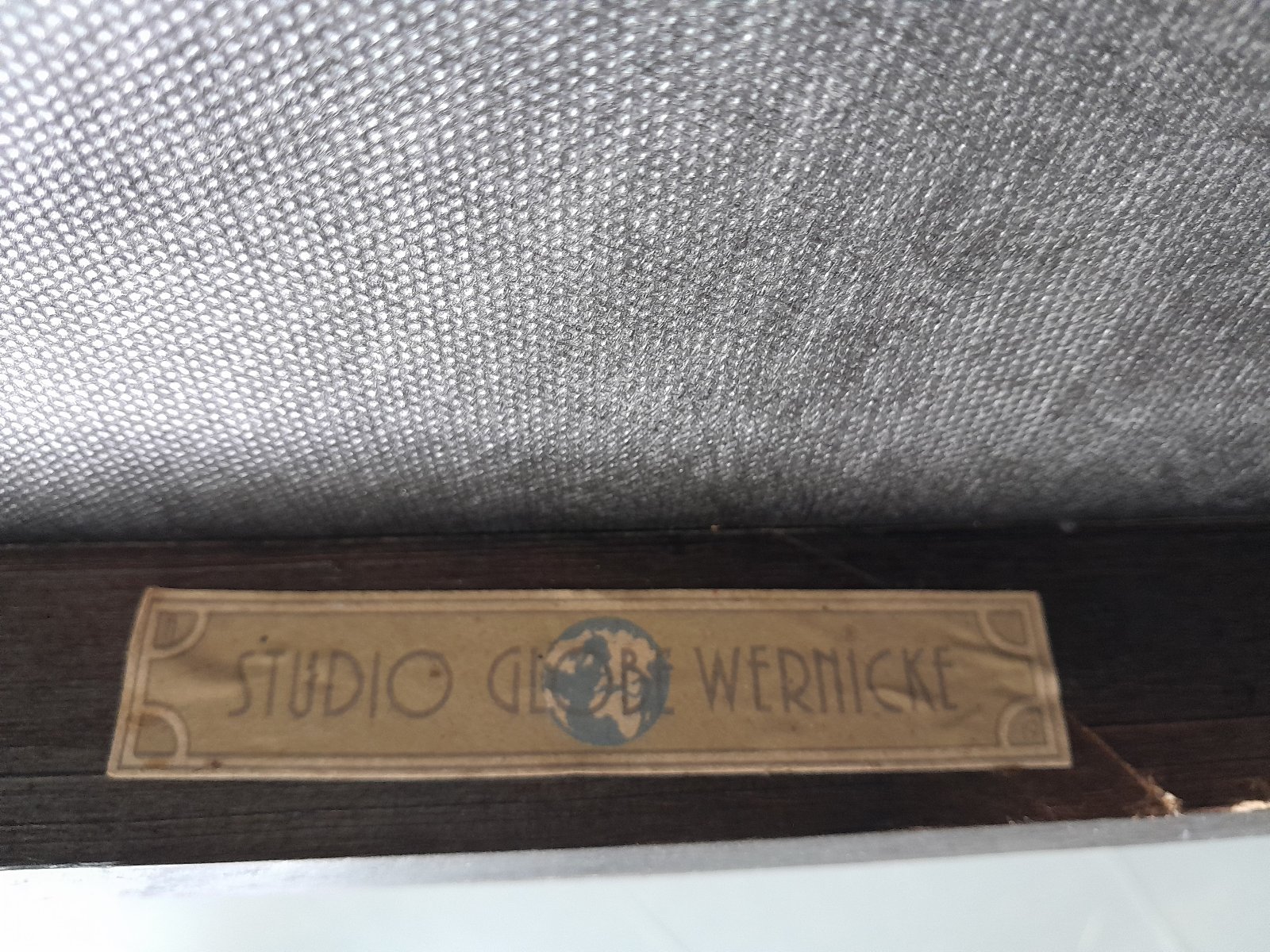
- •No visible maker's marks or stamps, which could assist in precise dating and attribution.
- •The general popularity of Louis XV revival styles makes it difficult to ascertain specific workshop origin without further detail.
WHAT WOULD IMPROVE CERTAINTY
- →Examine the underside and interior for any stamps, labels, or inscriptions.
- →Inspect the quality and attachment method of the ormolu mounts to discern if they are original or later additions.
- →Close-up photographs of joinery and construction techniques could help confirm the period of manufacture.
- →A UV light test could reveal any repairs or restorations to the wood finish or mounts.
- →Examine for any signs of original hardware or locks.
ESTIMATED VALUE
Updated: Feb 26, 2026
- Market comparables from auctions & retail
- Condition, completeness & craftsmanship
- Current collector demand & trends
- Low = quick sale, high = patient seller
For informational purposes only, not a formal appraisal.
ABOUT INTERIOR
Furniture, lamps, lighting, chandeliers, decorative objects for the home.
Browse all InteriorSHARE THIS CURIOSITY
Have your own curiosities to discover?
Scan Your Curiosity
COMMENTS
No comments yet. Be the first to share your thoughts!
Sign in to leave a comment