Art Deco Demi-Lune Club Chair by Studio G. B. Wernicke
QUICK FACTS
Categories
Era
Circa 1930s-1940s
Origin
🇩🇪 Germany
Brand
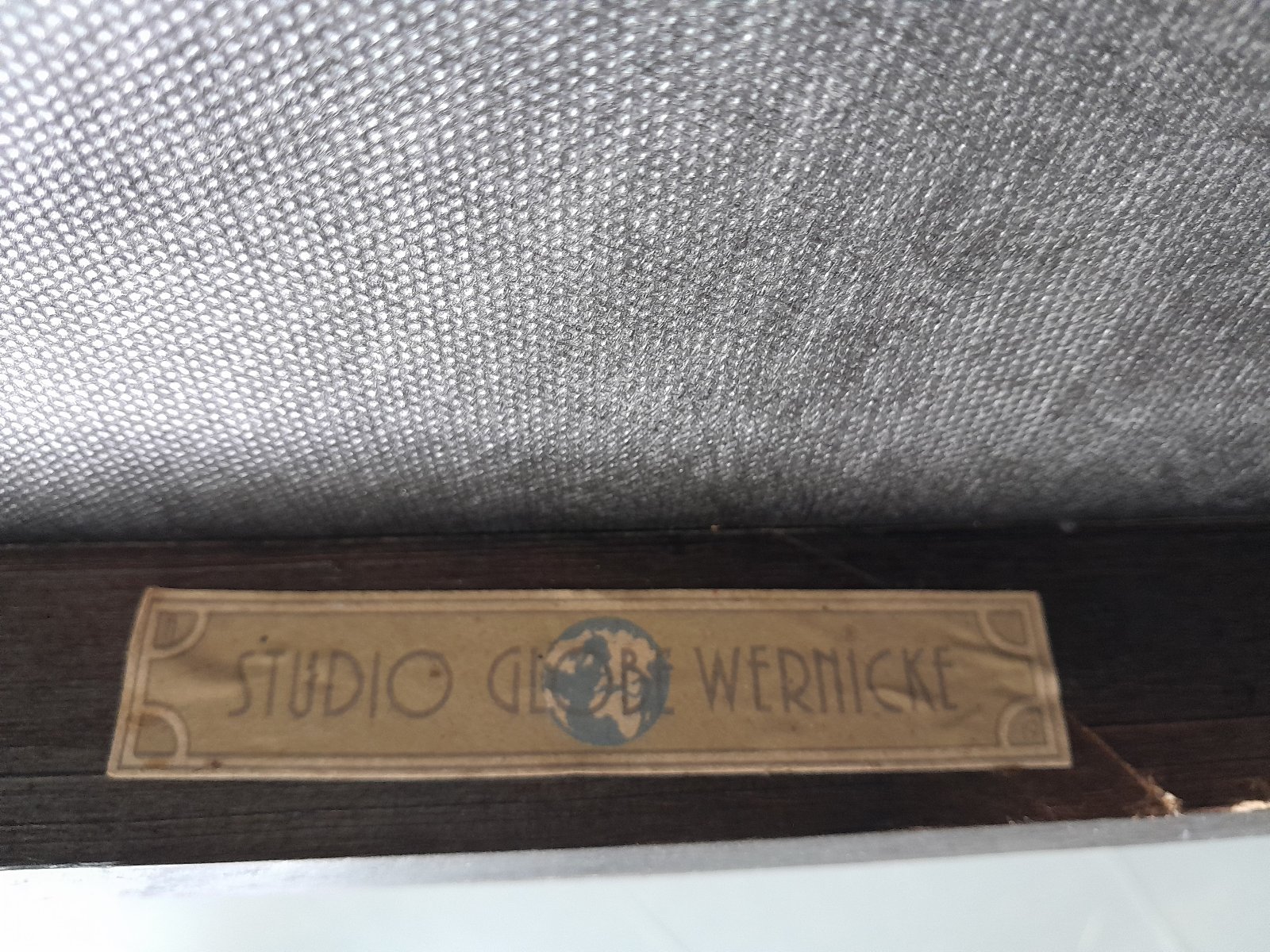
Studio G. B. Wernicke
Rarity
Uncommon (5/10)
Discovered
Feb 8, 2026
2 weeks ago
DESCRIPTION
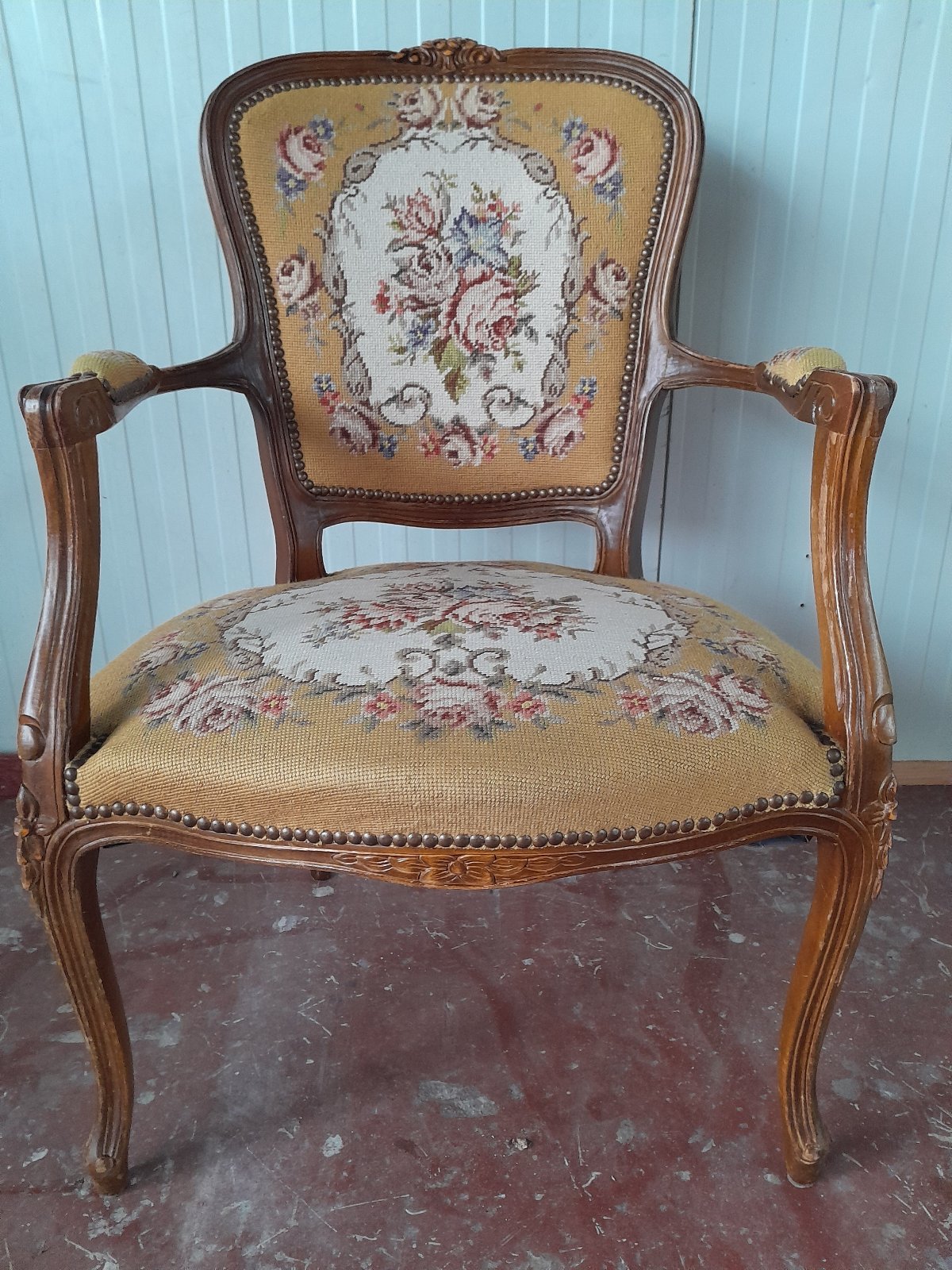
This appears to be a distinctive demi-lune (half-moon) club chair, characterized by its elegant curved back and arms, constructed from veneered wood, likely mahogany or a similar rich red-brown timber. The upholstery, a dark, possibly black, material, provides a clear contrast to the warm wood tones, typical of the Art Deco aesthetic. The piece's form demonstrates a strong adherence to the sleek, curvilinear lines popular in the mid-20th century.
CULTURAL ECHOES
Where This Object Echoes
While not strictly Bauhaus, the clean lines and functionality-forward design of this chair parallel the broader modernist movements in Germany and Central Europe during the same period.
The curvilinear forms and use of luxurious woods in Art Deco furniture were largely popularized by French designers like Émile-Jacques Ruhlmann and Jules Leleu, whose influence extended across Europe.
Ritual & Ceremonial Use
- •Residential furnishing in reception rooms or studies, providing a stylish yet practical seating option.
- •Commercial interiors such as hotel lobbies, upscale lounges, or executive offices, where its distinctive design would convey sophistication.
Meaning Through Time
Symbolized modern luxury, progress, and a departure from historical decorative styles, often associated with the 'machine age' aesthetic softened by elegant materials.
Viewed as vintage or 'old-fashioned' by some, as tastes shifted towards more minimalist or postmodern designs.
Recognized as a classic example of Art Deco design, highly sought after by collectors and interior designers seeking period authenticity and timeless style.
HISTORICAL STORY
DID YOU KNOW?
The demi-lune (half-moon) shape, common in Art Deco furniture, was a sophisticated departure from the rectilinear designs dominant in earlier periods, offering a softer, more fluid appearance.
The use of exotic veneers like mahogany was highly prized during the Art Deco era, lending a sense of luxury and global influence to otherwise minimalist forms.
MATERIAL & CONDITION
Surface
The wooden frame exhibits a polished, possibly lacquered, finish that highlights the grain of the veneer. There are visible signs of age and wear to this finish, including minor abrasions and dulling. The upholstered surface, likely a deep, somewhat matte black, shows visible cracking and flaking, indicating potential age or material degradation.
Weight & Feel
Based on its size and solid-looking construction, this chair would be quite substantial and relatively heavy, reflecting the robust build quality of the era. The curved plywood or bentwood construction, combined with the dense wood, would lend it a reassuring heft.
Condition
The overall structural integrity appears sound from the images. The wooden frame shows surface wear consistent with age and use, including scratches and areas where the finish may be compromised. The upholstery, however, is significantly distressed, with noticeable cracks and flaking across the seat and back, suggesting it will require eventual restoration or reupholstering.
RARITY ANALYSIS
Genuine antiques with fewer examples on the market. Named makers, documented provenance, or early production examples.
Typical Characteristics
- Limited production
- Named makers
- Growing collector demand
EXPERT ANALYSIS
Furniture Historian & Restoration Specialist
The clear manufacturer's label, combined with evident Art Deco design characteristics and consistent aging, provides a strong basis for a high confidence assessment. The form language and material usage are entirely congruent with the identified period and maker.
KEY EVIDENCE
- 1The 'STUDIO G.B. WERNICKE' label clearly visible on the underside unequivocally identifies the manufacturer.
- 2The demi-lune silhouette, curved armrests, and use of veneered wood are strong indicators of the Art Deco style.
- 3Visible wood grain and finish present as authentic to mid-20th century European furniture manufacturing.
- 4The wear on the upholstery is consistent with an original material from the estimated period.
WHAT WOULD IMPROVE CERTAINTY
- →Close-up photographs of the joinery, particularly where curves meet straight sections, to assess construction techniques.
- →A detailed inspection of the secondary wood species (e.g., drawer sides, back panels) if available, which can provide further dating clues.
- →UV light test on the wood finish to investigate any potential localized repairs or over-sprays.
- →Examination of the hardware (feet/glides) for any maker's marks or period-appropriate fasteners.
ESTIMATED VALUE
Updated: Feb 27, 2026
- Market comparables from auctions & retail
- Condition, completeness & craftsmanship
- Current collector demand & trends
- Low = quick sale, high = patient seller
For informational purposes only, not a formal appraisal.

ABOUT INTERIOR
Furniture, lamps, lighting, chandeliers, decorative objects for the home.
Browse all InteriorSHARE THIS CURIOSITY
Have your own curiosities to discover?
Scan Your Curiosity
COMMENTS
No comments yet. Be the first to share your thoughts!
Sign in to leave a comment