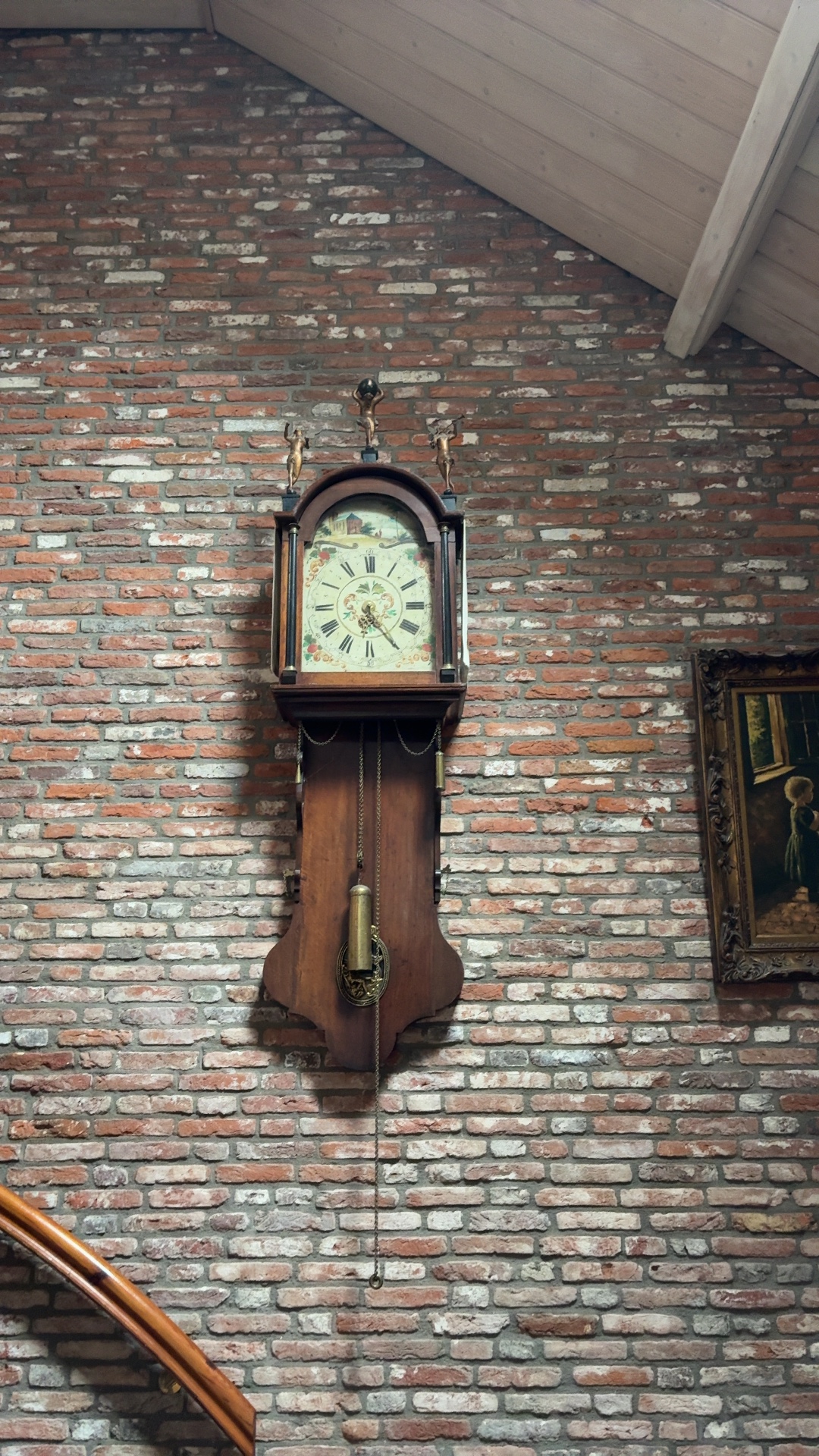
Dutch or German Wall Clock (Laterndluhr Style) with Painted Dial
QUICK FACTS
Era
Early to Mid-19th Century
Origin
🇳🇱 Netherlands
Rarity
Average (4/10)
Discovered
Feb 3, 2026
3 weeks ago
DESCRIPTION
This appears to be a large wall clock, likely Dutch or German in origin, exhibiting features reminiscent of a Laterndluhr or other regional longcase/tallcase influenced designs, adapted for wall mounting. The case is constructed of polished wood, possibly fruitwood or a stained hardwood, featuring a prominent arched pediment and decorative finials, specifically three figural elements. The painted dial, with its floral spandrels and a scenic arch, immediately draws the eye, suggesting a folk-art or regional decorative influence rather than a high-precision, plain scientific dial.
CULTURAL ECHOES
Where This Object Echoes
The decorative painted dial and the presence of figural ornaments align with regional folk art traditions applied to utilitarian objects.
While not strictly Biedermeier, the emphasis on domestic utility, solid craftsmanship, and often plainer forms with decorative accents shares aesthetic principles with this Central European design movement.
Ritual & Ceremonial Use
- •Domestic timekeeping, serving as a focal point in a central living space.
- •The regular winding of weights and setting of the pendulum, a daily or weekly ritual of engagement with the household's rhythm.
Meaning Through Time
A necessary household utility, a marker of middle-class prosperity, and a decorative object reflecting regional taste.
A decorative antique, valued for its craftsmanship, historical appeal, and nostalgic connection to past eras, less for its primary timekeeping function.
HISTORICAL STORY
DID YOU KNOW?
The 'Laterndluhr' style, from which clocks like this drew inspiration, is characterized by its elongated, often veneered cases and highly decorative dials, originally developed in Vienna in the early 19th century.
The use of painted dials on clocks became widespread after the mid-18th century as a more affordable alternative to engraved brass dials, allowing for greater artistic expression and regional variations in decoration.
MATERIAL & CONDITION
Surface
The wooden case exhibits a warm, polished finish, possibly shellac or varnish, showing expected signs of age such as minor scratches or rubs. The painted metal dial features a creamy background with vibrant polychrome floral designs in the spandrels and a landscape scene within the arched aperture. The brass weights and pendulum bob show a pleasing, darkened patina.
Weight & Feel
Given its size and solid wood construction, along with the brass weights and pendulum, this clock would be quite substantial, requiring robust wall mounting.
Condition
Visually, the clock appears to be in good, aged condition. The painted dial shows some minor wear or discoloration consistent with its age, but the details remain clear. The wood case has a consistent patination. The finials appear intact, and the pendulum and chains are present. Without hands-on inspection, the working condition of the movement cannot be assessed, nor can any internal repairs or replacements.
RARITY ANALYSIS
Typical antique shop fare. Requires some searching but regularly available. This is where most genuine antiques fall.
Typical Characteristics
- Standard antique shop items
- Regularly available
- Moderate collector interest
EXPERT ANALYSIS
Decorative Arts Specialist
Confidence is high for the general type, era, and likely origin based on visible stylistic elements and construction. However, specific attribution to a maker and verification of mechanical originality require closer inspection.
KEY EVIDENCE
- 1Wooden case with arched pediment and figural finials typical of regional wall clocks.
- 2Painted dial with Roman numerals, Arabic minute track, floral spandrels, and landscape central scene.
- 3Visible brass weights and pendulum, indicating a weight-driven movement.
- 4Overall aesthetic suggests a German or Dutch production from the 19th century.
UNCERTAINTIES
- •No visible maker's marks or date stamps on the dial or accessible case parts.
- •Uncertainty regarding the originality of the figural finials.
- •Inability to assess the mechanical integrity or originality of the movement.
WHAT WOULD IMPROVE CERTAINTY
- →Obtain closer photographs of the clock dial, especially any signatures or markings.
- →Examine the movement by opening the case; look for maker's marks, serial numbers, or pendulum length markings.
- →Inspect the back of the case and movement for any labels or repair dates.
- →If possible, a UV light inspection for dial restoration could be invaluable.
ESTIMATED VALUE
Updated: Feb 27, 2026
- Market comparables from auctions & retail
- Condition, completeness & craftsmanship
- Current collector demand & trends
- Low = quick sale, high = patient seller
For informational purposes only, not a formal appraisal.
ABOUT DECORATIVE OBJECTS
Ceramics, silver, porcelain, glassware, and decorative arts.
Browse all Decorative ObjectsSHARE THIS CURIOSITY
Have your own curiosities to discover?
Scan Your Curiosity
COMMENTS
No comments yet. Be the first to share your thoughts!
Sign in to leave a comment