Mid-Century Modern Studio Pottery Dish by H.R. Nardi
QUICK FACTS
Categories
Era
Mid-20th Century (1950s-1970s)
Origin
🌍 International
Artist/Maker
H.R. Nardi
Rarity
Uncommon (5/10)
Discovered
Feb 1, 2026
3 weeks ago
DESCRIPTION
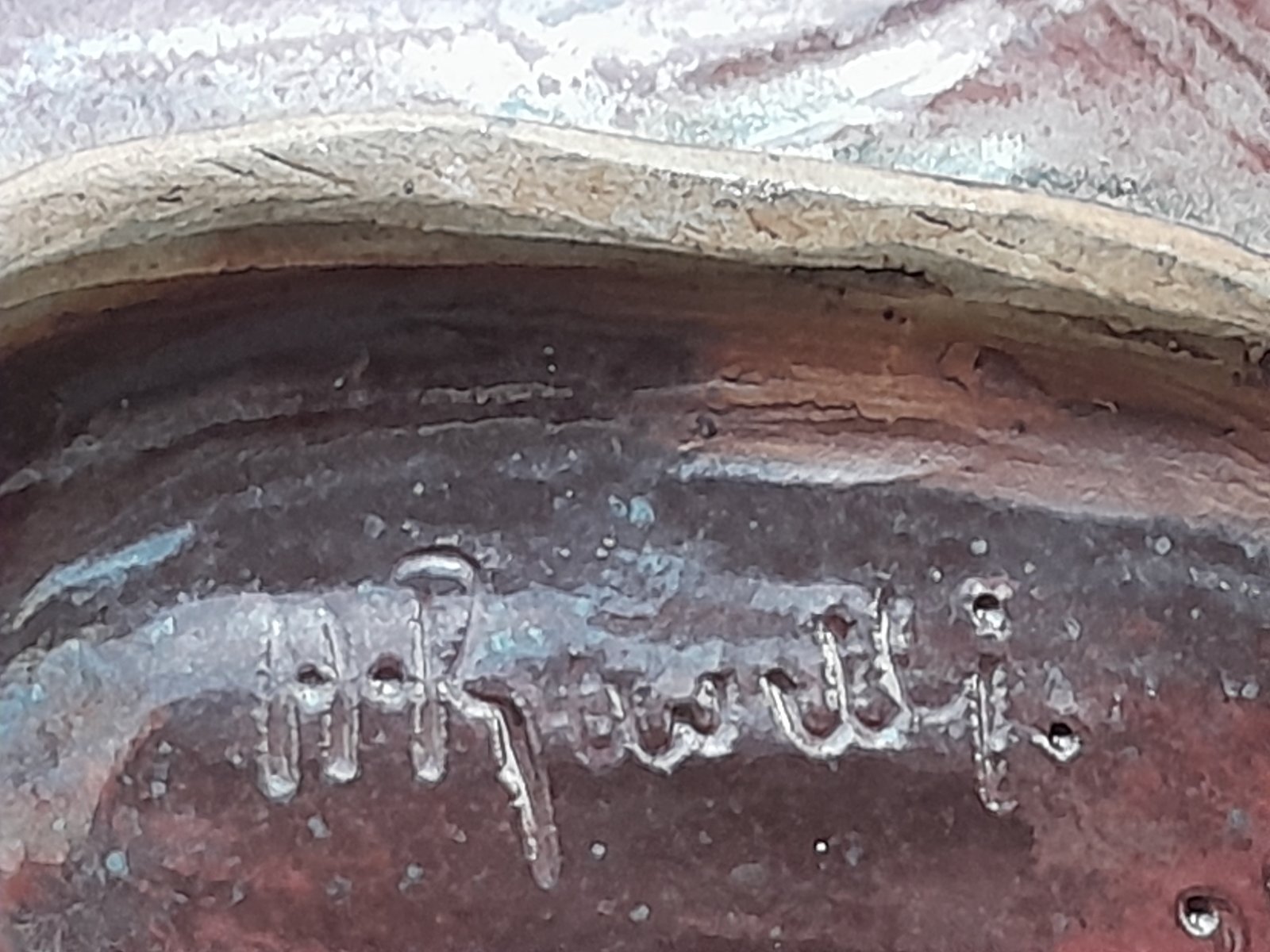
This appears to be a studio ceramic dish, likely a decorative bowl or plate, characterized by its organic, irregular form and a textured, earthy glaze. The inscription on the base, 'H.R. Nardi', identifies the maker, suggesting it is a piece of art pottery rather than mass-produced tableware. The abstract circular motifs on the interior further point to a mid-20th-century aesthetic prevalent in studio pottery.
CULTURAL ECHOES
Where This Object Echoes
The emphasis on sculptural form and organic abstraction in this dish echoes the Japanese Sōdeisha movement (1948-1998), which pushed the boundaries of functional ceramic art into purely aesthetic expression.
Many American studio potters of the mid-century, such as Peter Voulkos and Paul Soldner, also embraced abstract forms and textural glazes, moving away from traditional utilitarian ware.
Ritual & Ceremonial Use
- •Often used as a functional yet artistic centerpiece on a coffee table or sideboard, elevating everyday display into an aesthetic experience.
- •Collected as 'art for the home,' these pieces reflect a mid-century cultural shift towards incorporating handcrafted artistry into domestic spaces.
Meaning Through Time
Ceramics largely viewed as craft or industrial utility, with artistic merit often secondary to function.
Studio pottery emerges, challenging traditional hierarchies and establishing ceramics as a legitimate form of fine art, appreciated for its sculptural and expressive qualities independent of strict function.
HISTORICAL STORY
DID YOU KNOW?
The organic, flowing shapes and earthy glazes seen in this dish are characteristic of the 'Art Pottery' movement, which championed individual creativity over industrial replication.
Studio pottery pieces often feature unique glazes and firing techniques, making each piece subtly distinct, a testament to the hands-on process of the ceramic artist.
MATERIAL & CONDITION
Surface
The dish exhibits a rich, variegated reddish-brown glaze with areas of darker saturation and subtle metallic sheens. The interior surface features applied circular motifs in an unglazed or contrasting light-colored clay, creating a textural and visual contrast. The underside is deeply textured, likely impressed with patterns before glazing.
Weight & Feel
Based on its ceramic material and moderate thickness, the dish would feel substantial and firm in hand, indicating a well-fired piece of stoneware or earthenware.
Condition
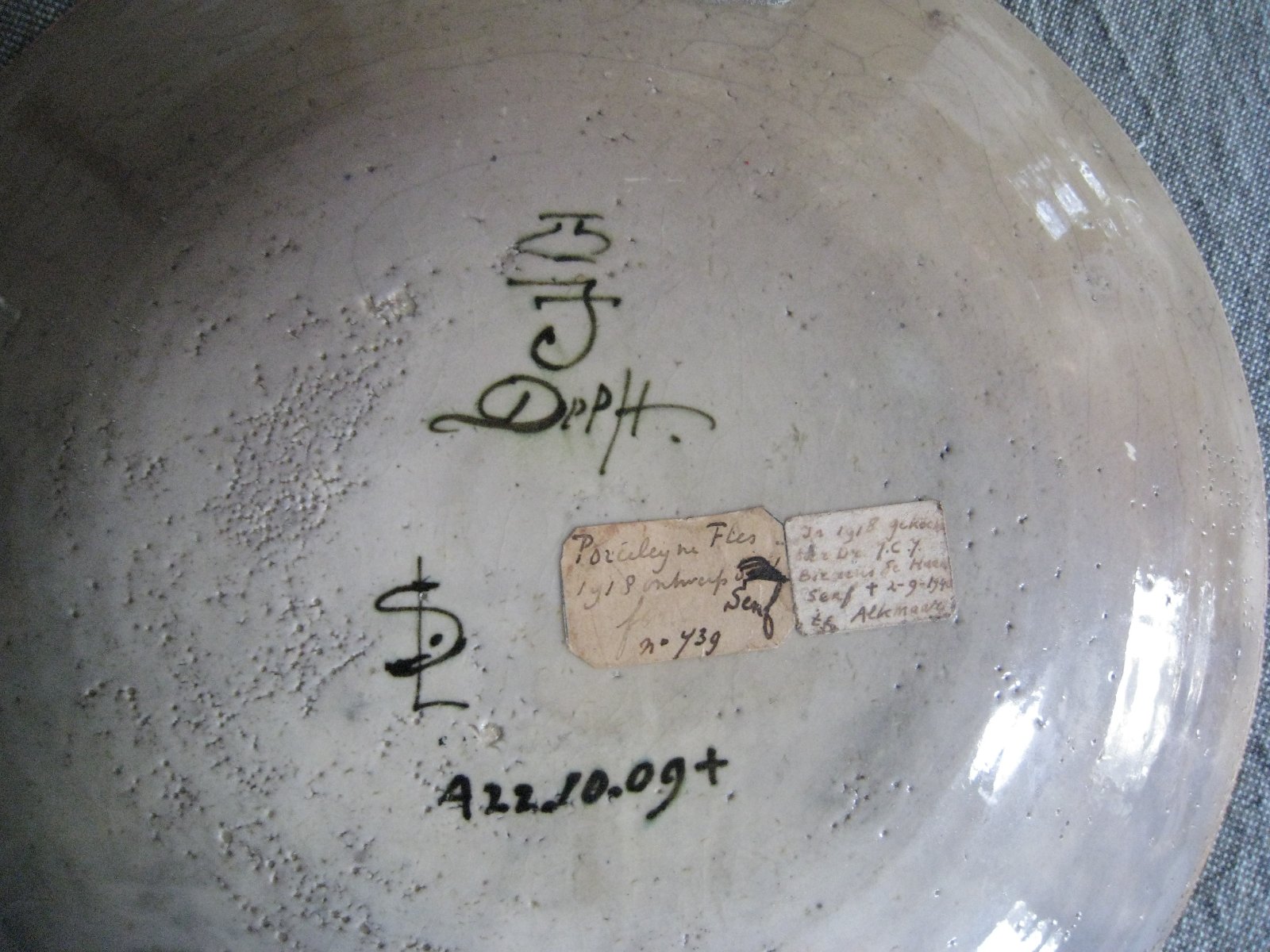
The overall condition appears to be very good with minimal visible wear. There are no apparent chips, cracks, or significant abrasions. The glaze retains its original luster, consistent with careful handling and display over time. A small sticker with 'S.19' is visible on the base, likely an inventory or sale tag.
RARITY ANALYSIS
Genuine antiques with fewer examples on the market. Named makers, documented provenance, or early production examples.
Typical Characteristics
- Limited production
- Named makers
- Growing collector demand
EXPERT ANALYSIS
Museum-Trained Art Historian
Confidence is high due to the clear artist's signature and the consistent stylistic and material characteristics aligning perfectly with mid-century studio pottery. The lack of broader artist records is the primary limiting factor for higher certainty.
KEY EVIDENCE
- 1Clear impressed signature 'H.R. Nardi' on the base, identifying the artist.
- 2Organic, asymmetrical form and abstract glazed motifs characteristic of mid-century studio pottery.
- 3Earthy, multi-toned glaze with textural variations, typical of handcrafted ceramic art.
- 4An inventory sticker (S.19) on the base provides a potential clue to its past ownership or sale.
UNCERTAINTIES
- •No specific biographical information or exhibition history for H.R. Nardi is immediately apparent, which somewhat limits precise dating or regional attribution without further research.
WHAT WOULD IMPROVE CERTAINTY
- →Conduct a thorough search for 'H.R. Nardi' in museum databases, auction records, and ceramic art archives to establish the artist's full name, nationality, and exhibition history.
- →Examine the 'S.19' sticker for any additional identifying marks or labels from a gallery or collection.
- →Consult with a specialist in mid-century studio ceramics to gain further insight into the artist's oeuvre and market presence.
ESTIMATED VALUE
Updated: Feb 27, 2026
- Market comparables from auctions & retail
- Condition, completeness & craftsmanship
- Current collector demand & trends
- Low = quick sale, high = patient seller
For informational purposes only, not a formal appraisal.

ABOUT DECORATIVE OBJECTS
Ceramics, silver, porcelain, glassware, and decorative arts.
Browse all Decorative ObjectsSHARE THIS CURIOSITY
Have your own curiosities to discover?
Scan Your Curiosity
COMMENTS
No comments yet. Be the first to share your thoughts!
Sign in to leave a comment