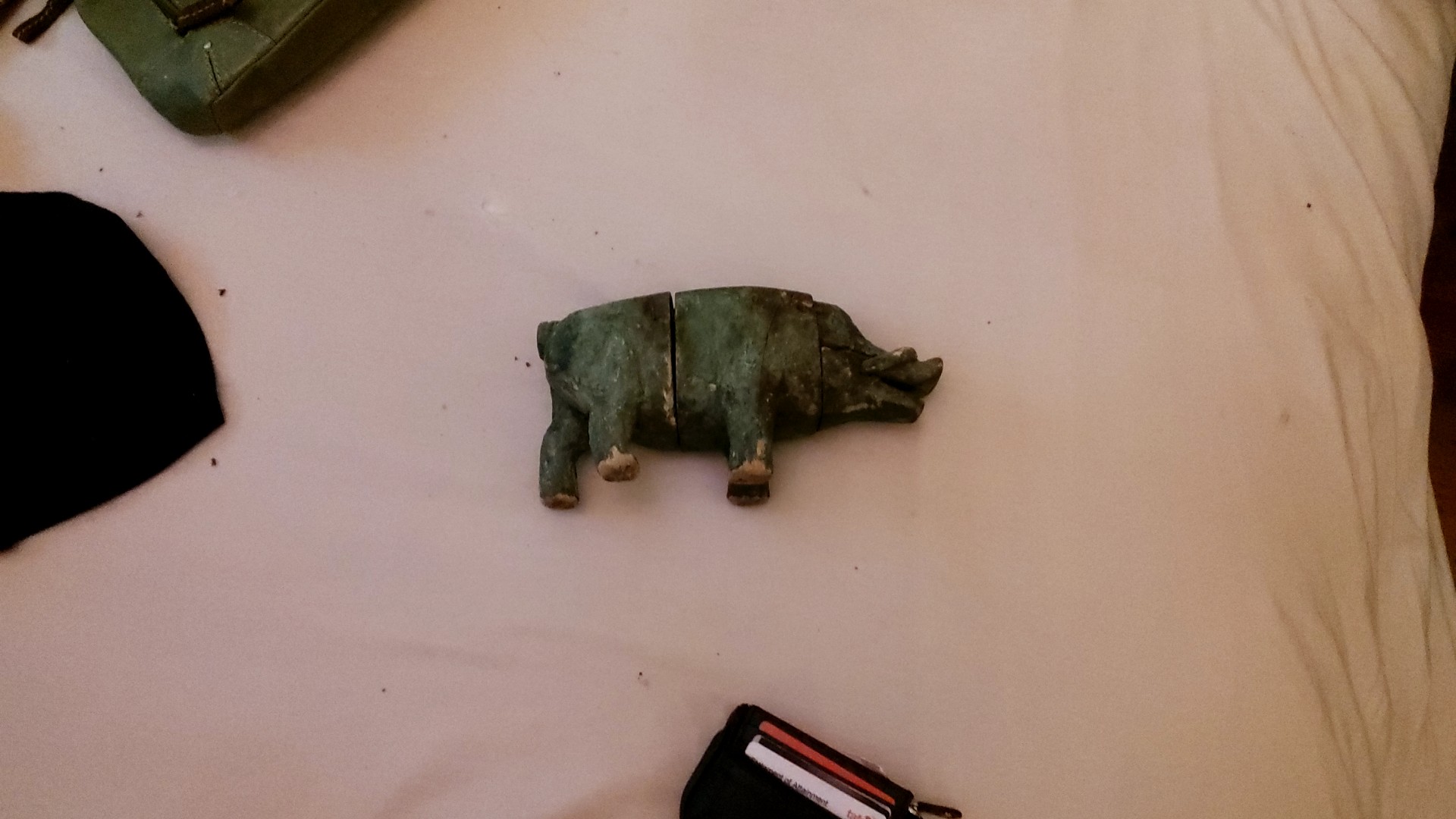
American Folk Art Carved Wooden Wild Boar Figure
QUICK FACTS
Categories
Era
1930s
Origin
🇺🇸 United States
Rarity
Uncommon (5/10)
Discovered
Feb 26, 2026
3 days ago
DESCRIPTION
This appears to be a hand-carved wooden figure of a wild boar, exhibiting characteristics consistent with American folk art. The surface shows a patinated green finish, likely paint or a stain, with areas of exposed natural wood, particularly along cracks and wear points. The carving style is expressive and somewhat stylized, focusing on the essential form of the animal rather than intricate detail.
CULTURAL ECHOES
Where This Object Echoes
The wild boar (Eber) holds significant symbolism in Germanic and Central European cultures, often representing strength, ferocity, and the untamed wilderness. This symbolism likely influenced European immigrants contributing to early American folk art traditions.
Carved animals, often with a raw, unrefined quality, are a staple of Appalachian and Southern folk art, utilizing local wood and traditional carving techniques.
Ritual & Ceremonial Use
- •Historically, animal carvings like this might have served as decorative elements in a home, representing connection to nature or hunting prowess.
- •Could have been a personalized gift, carved by hand for a family member or friend, embodying a more intimate form of artistic expression.
Meaning Through Time
During the Great Depression, folk art like this often symbolized resilience, resourcefulness, and a connection to traditional, simpler values.
Today, such pieces are valued for their authenticity, artistic merit, and as tangible links to a past era of handmade craftsmanship, representing a contrast to mass-produced goods.
HISTORICAL STORY
DID YOU KNOW?
Wild boars, while not native to all parts of America, were introduced centuries ago and became a significant part of hunting lore and a symbol of rugged wilderness, often inspiring folk art.
American folk art flourished during periods of economic hardship, like the Great Depression, as people turned to local materials and traditional crafts for both necessity and creative expression.
MATERIAL & CONDITION
Surface
The surface is characterized by a textured, possibly painted or stained, green patina that has weathered and worn over time. Visible are sections where the underlying light-colored wood is exposed, particularly at the joints of the two main carved sections and along areas of high contact or age-related cracking within the wood grain itself. The finish appears matte rather than glossy, suggesting a naturalistic or intentionally aged aesthetic.
Weight & Feel
Given its size and solid appearance, it would likely feel substantial and dense in hand, indicative of a solid wood carving.
Condition
The piece exhibits noticeable signs of age and wear. There are prominent vertical cracks, suggesting that the carving was made from at least two pieces of wood joined together or that a single block has split. The painted surface has chipped and worn away in several areas, revealing the base wood. This wear is consistent with an object of its age and material, though the specific breaks in the wood warrant careful handling.
RARITY ANALYSIS
Genuine antiques with fewer examples on the market. Named makers, documented provenance, or early production examples.
Typical Characteristics
- Limited production
- Named makers
- Growing collector demand
EXPERT ANALYSIS
Decorative Arts Specialist
Confidence is high for the general identification as a folk art wooden boar, given the visual cues aligning with the user's provided information. However, without closer inspection of joins, tool marks, and potential maker's signatures, specific attribution remains elusive, impacting dating precision within the era.
KEY EVIDENCE
- 1Hand-carved wooden form showing tool marks and a simplified, expressive animal representation indicative of folk art.
- 2Patinated green surface with significant wear, revealing the lighter wood beneath, consistent with age.
- 3Cracks and wood separation along the grain and at a likely join line, suggesting a natural aging process or early construction method.
- 4Lack of sophisticated finishes, consistent with self-taught 'folk' artistic practices.
UNCERTAINTIES
- •The prominent separation line where the body meets, while possibly part of the original construction, could also indicate an old repair or 'marriage' of two separate pieces.
WHAT WOULD IMPROVE CERTAINTY
- →A close-up image of the underside and any potential manufacturer's marks or artist's initials would be highly beneficial.
- →A UV light examination could reveal areas of restoration or overpainting not obvious to the naked eye.
- →More clear, well-lit images from various angles to better assess the carving technique and surface nuances.
ESTIMATED VALUE
Updated: Feb 26, 2026
- Market comparables from auctions & retail
- Condition, completeness & craftsmanship
- Current collector demand & trends
- Low = quick sale, high = patient seller
For informational purposes only, not a formal appraisal.
CONTEXT ANALYSIS
How your provided context compares with Curiosa.com scanner findings.
What Aligned
- The visual evidence of hand-carved wood and an unsophisticated, expressive style aligns well with the description of 'wooden wild boar' and 'American folk art'.
- The visible wear and age of the wood and finish are consistent with a '1930s' time period and 'minor wear' for an object of that age.
- The aesthetic of the piece is typical of items that would be considered 'Original/Authentic' within the folk art genre.
ABOUT DECORATIVE OBJECTS
Ceramics, silver, porcelain, glassware, and decorative arts.
Browse all Decorative ObjectsSHARE THIS CURIOSITY
Have your own curiosities to discover?
Scan Your Curiosity
COMMENTS
No comments yet. Be the first to share your thoughts!
Sign in to leave a comment